The Great Bolivian adventure

Got back late yesterday from our three days out of range in southern Bolivia. 🇧🇴. It’s another 5am start as we have a travel day and head to northern Argentina. I can’t sleep so I’ll write instead.

In still trying to process everything that we’ve seen , the spectacle of it all, so many highlights, so many wonderful moments, truely been a highlight of this leg of our adventures.

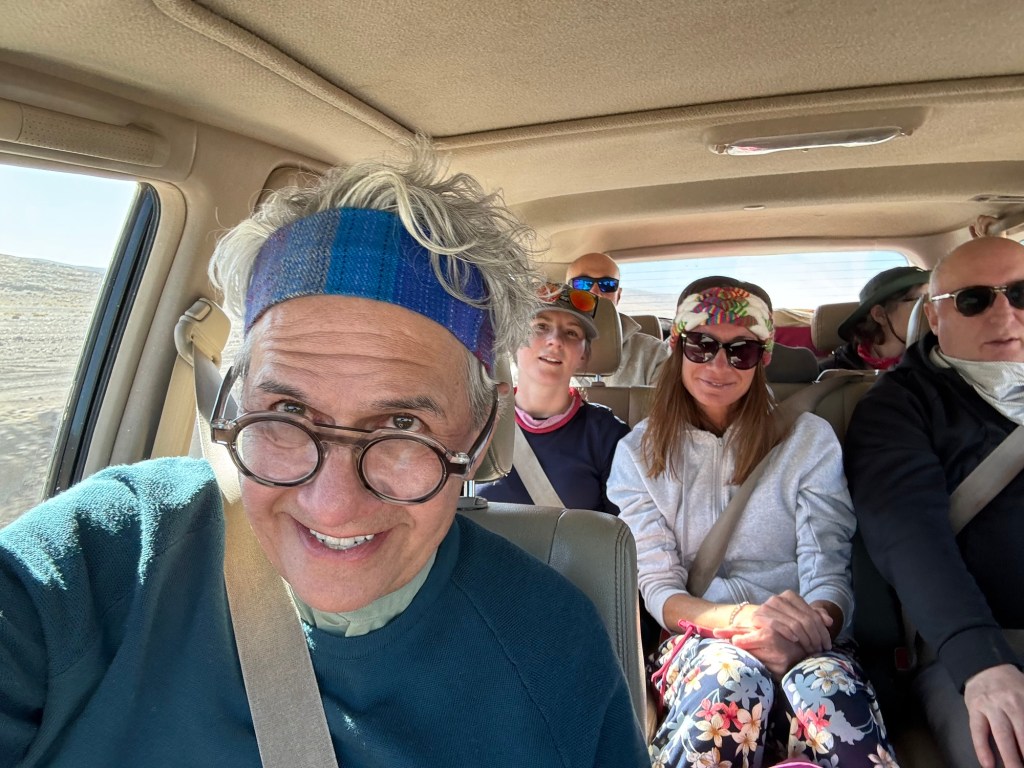
As is always the case an early start and we were off in our 4WD. It’s kinda cozy the 6 of us plus the driver, but from the outset we regularly rotate. The back seats being a particular squeeze!

By this stage we are still on dirt or gravel roads , that will change to something that doesn’t even resemble roads , but for now our very skilled driver keeps us on track, but it’s bumpy and we are in close proximity! Unfortunately our guide Tina is in another car, so we only get to see her on breaks. We are kind of going into this blind, never really sure what’s next, how long to the next stop but we just ride with it.
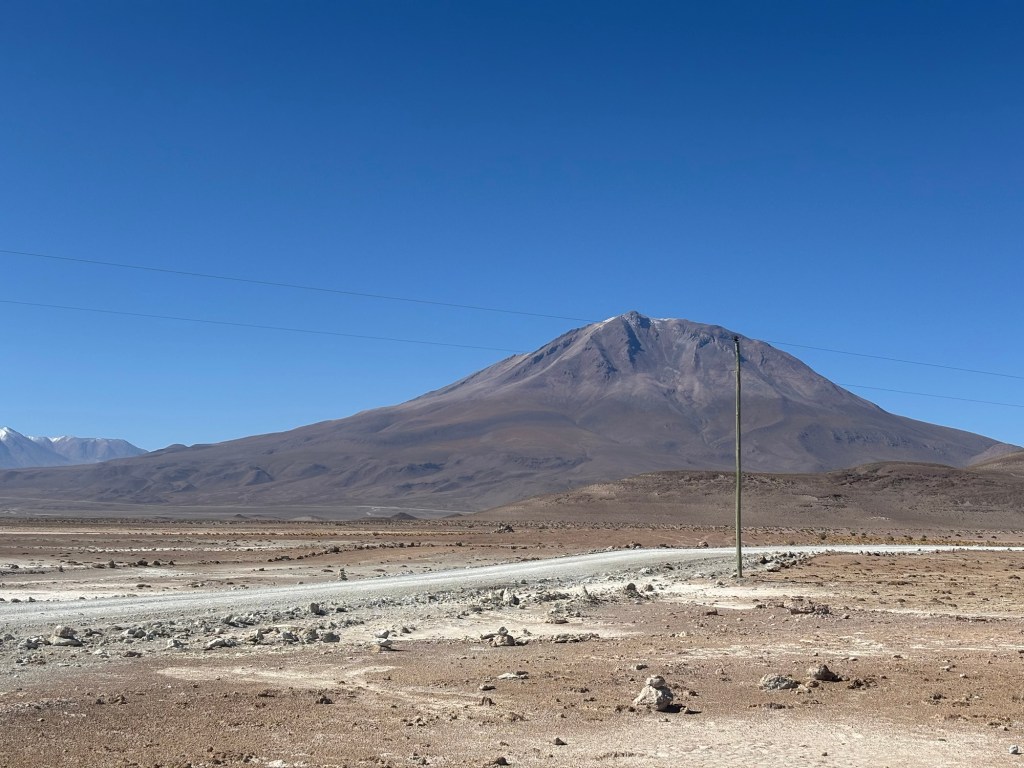
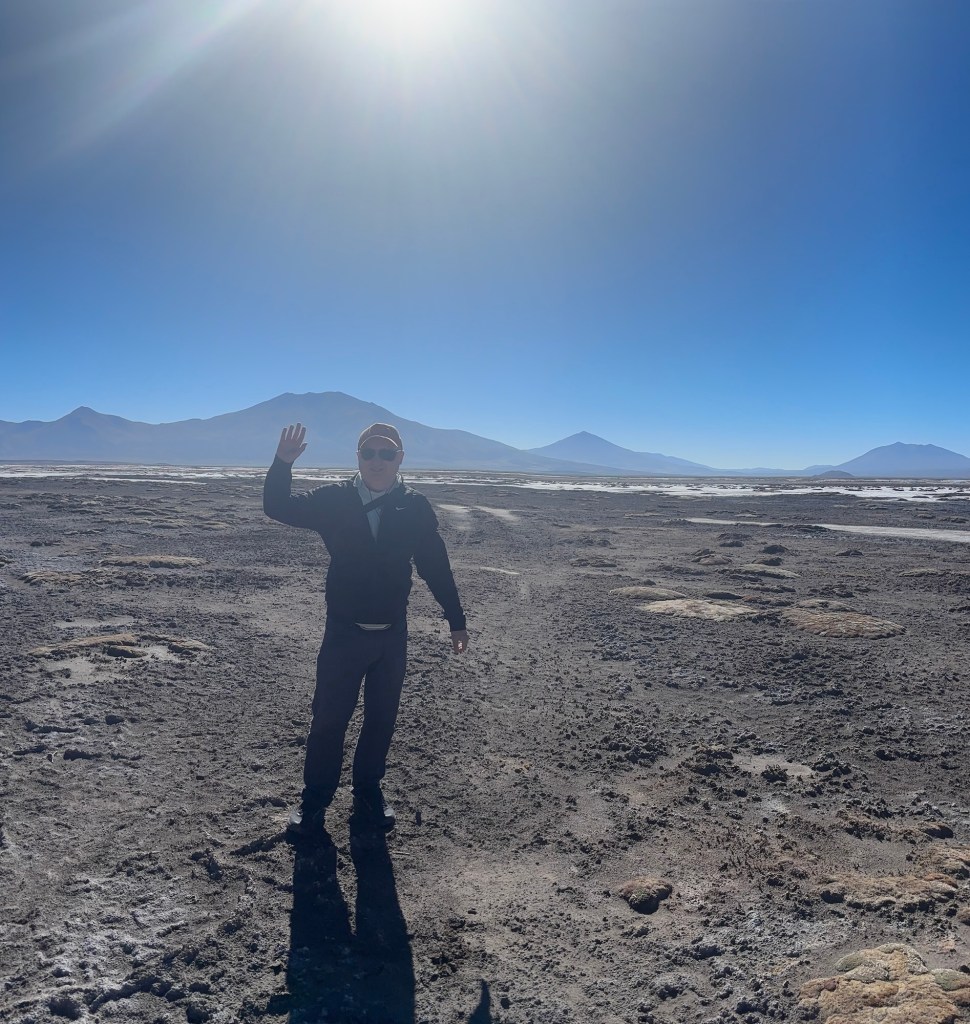
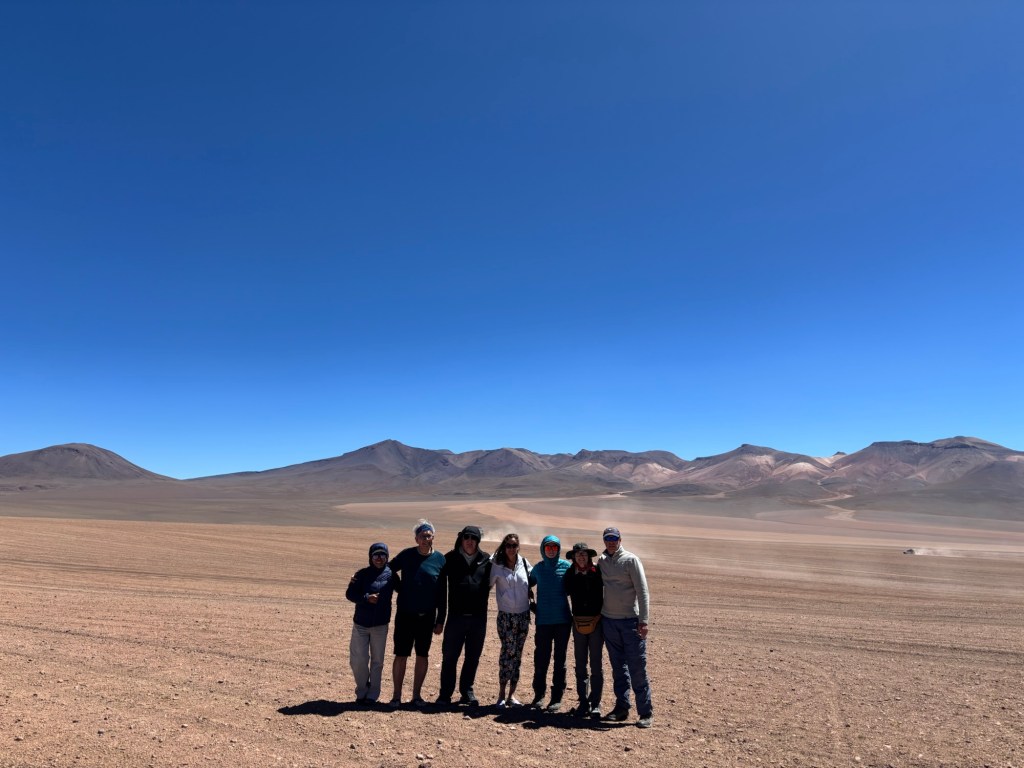
After what seems like an hour and a half or so we stop for a photo op and leg stretch and it becomes the first of many just wow moments in that you find yourself a tiny speck in this magnificent and huge landscape. We are told that what we are looking at is both Chile and Bolivia. And that we are only 5kms from the border ( you know I love a border!), and after taking a few pics we head that way. Kinda joking that it would be fun to quickly crossover. Well, before we know it we are at the border and we are crossing into a demilitarised zone. Our driver doesn’t speak English and for all intents and purposes it looks like we are going to cross. We head straight to the border arm and then take a sharp left and just like that, it’s Chile on our right and Bolivia on our left. And off we go. Driver is completely unperturbed, bd clearly this is a normal route , but we had no idea what was happening! 😂

We were at the Tofagasta crossing ascending back into the mountains! Turns out that a lot of the next few days will be on the border between Chile and Bolivia. Bit of history there I’ll dive into in my next post ! But fair to say for now Bolivia not happy with the outcome ! Even though it’s been over a 100 years.
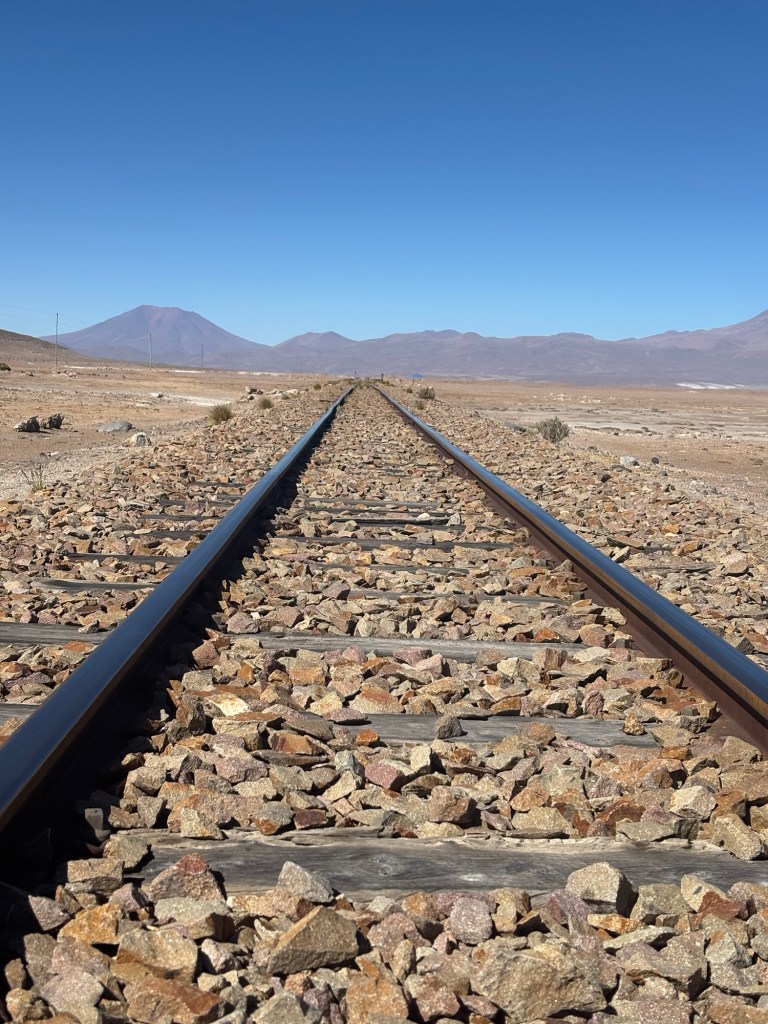
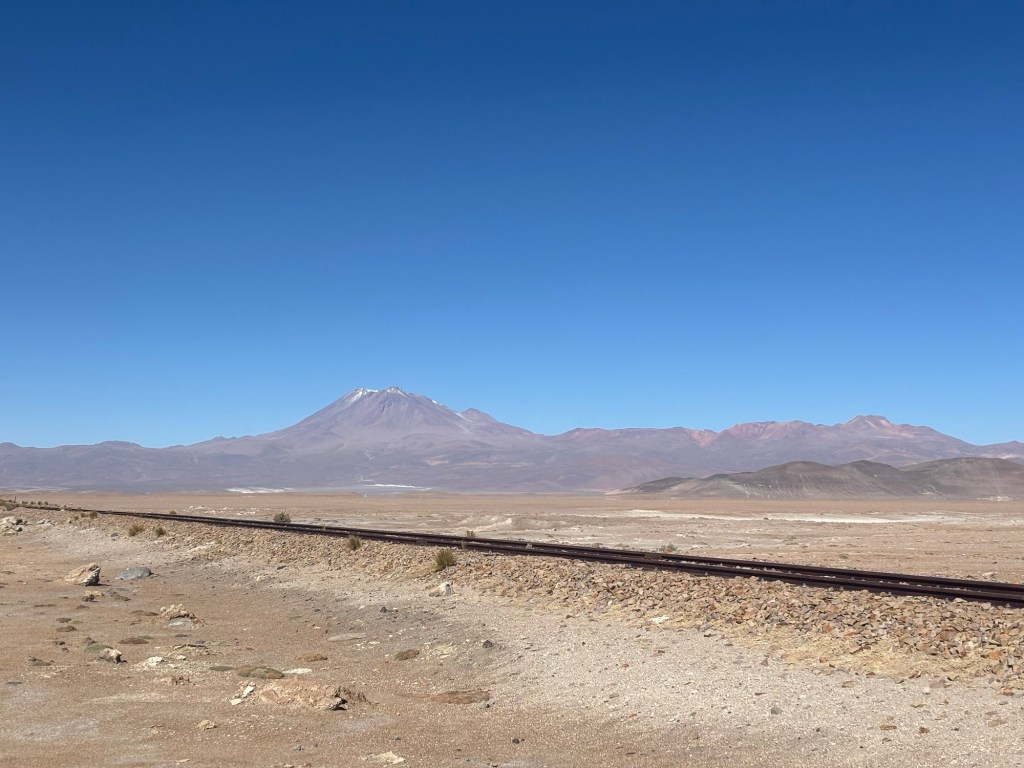
Train tracks to Chile

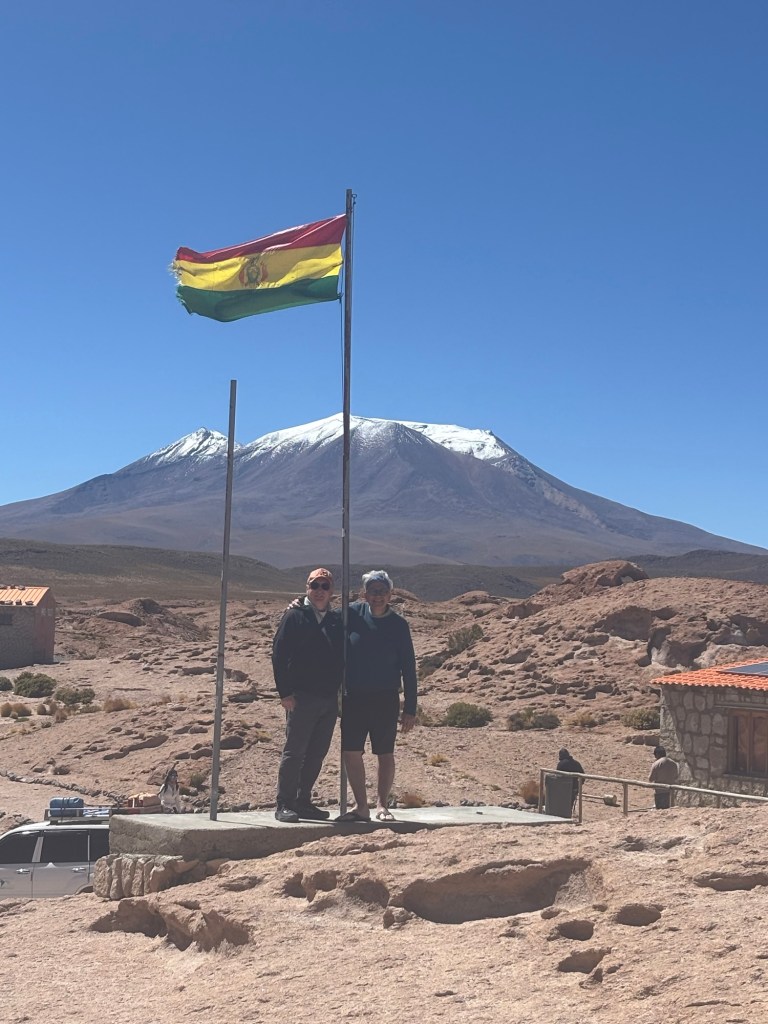
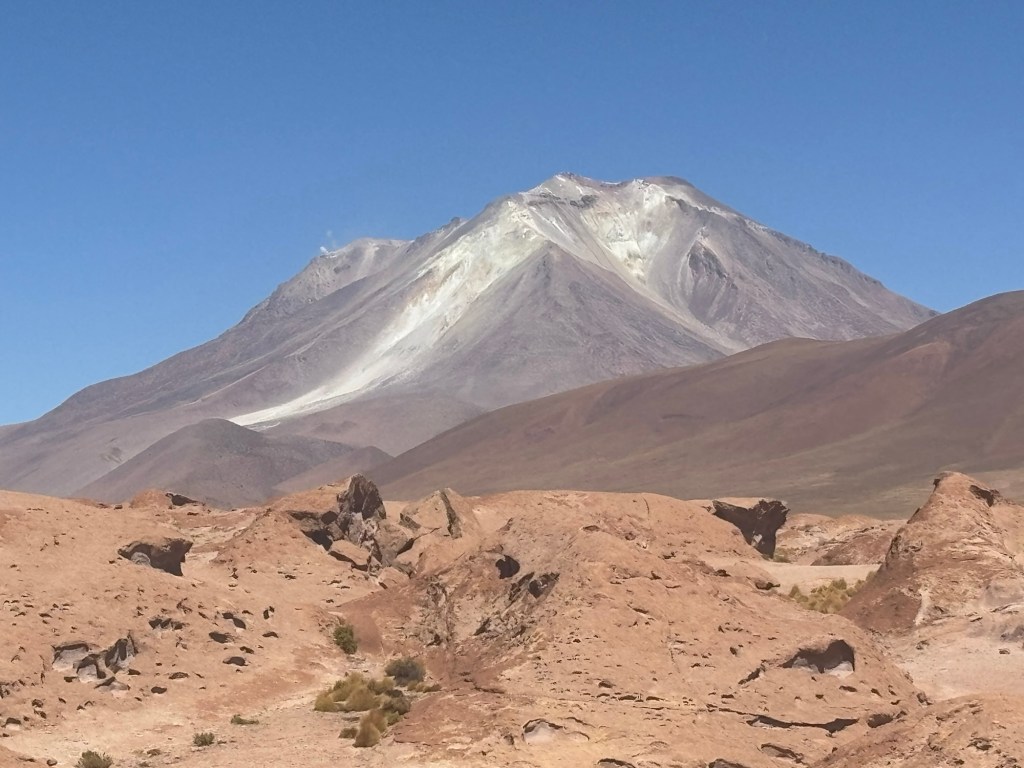
Next stop was a volcanic lookout. Everyone was quite excited because Mt Ollague was active and smoking. Let’s be clear this was no White Island scenario! There was the odd whisp of steam coming from a vent , which was great. But t in be honest we were both getting used to the thin air over the 4000m mark.
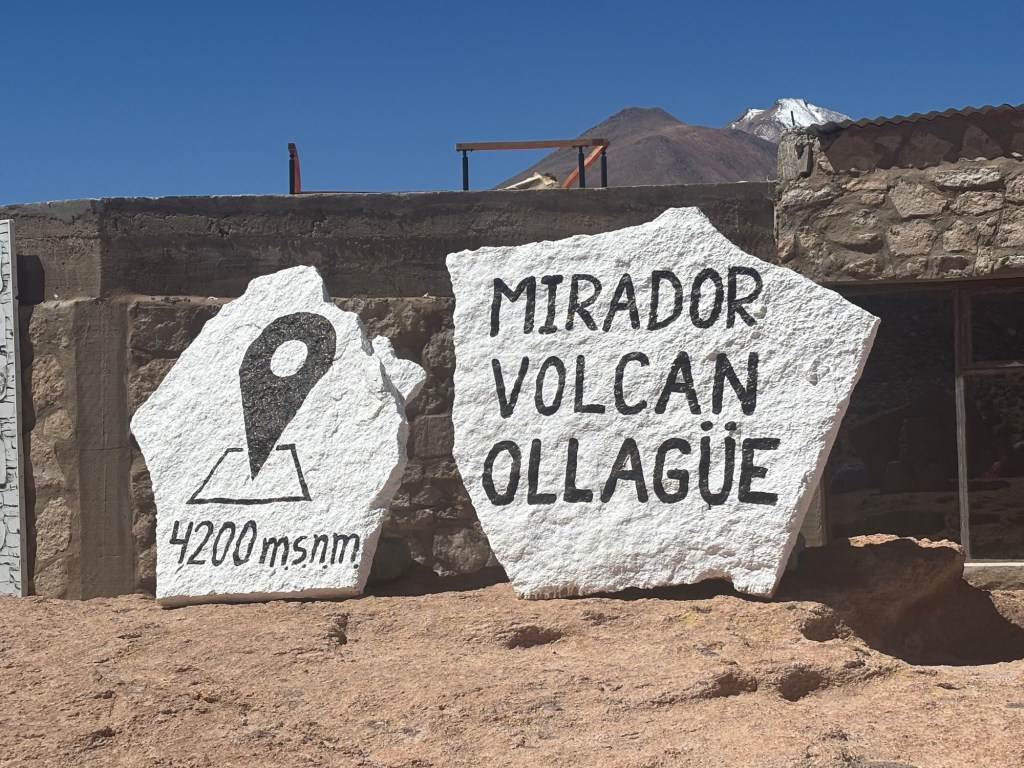
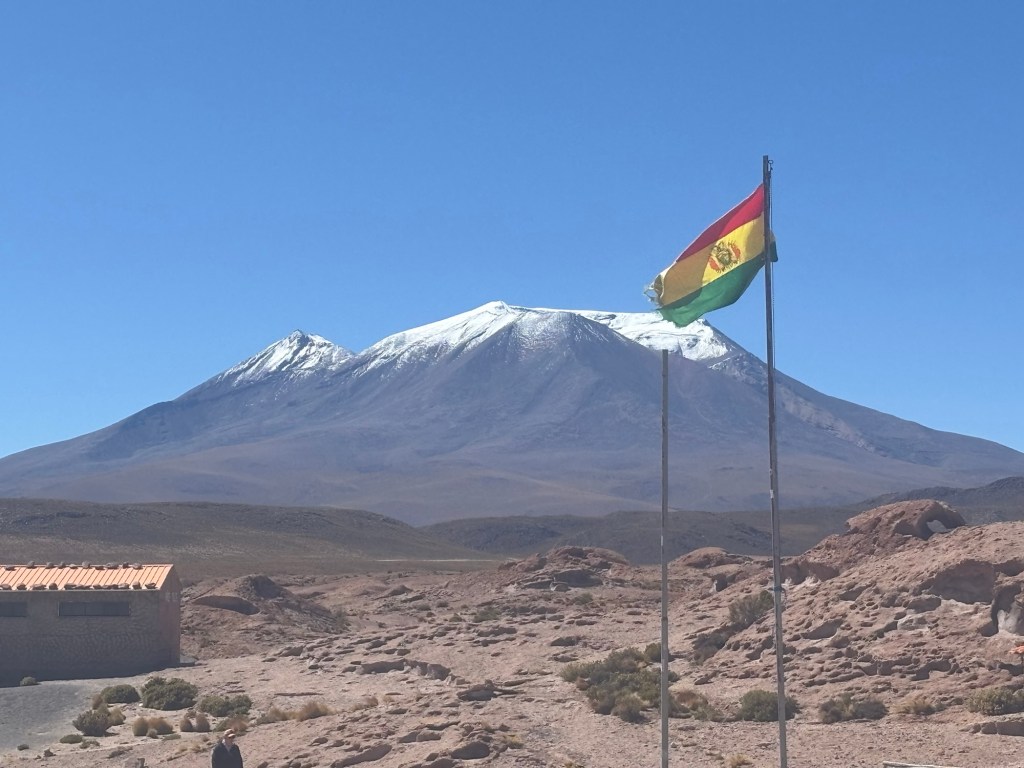
If you squint on the left hand side three quarters of the way up you can see see some steam.

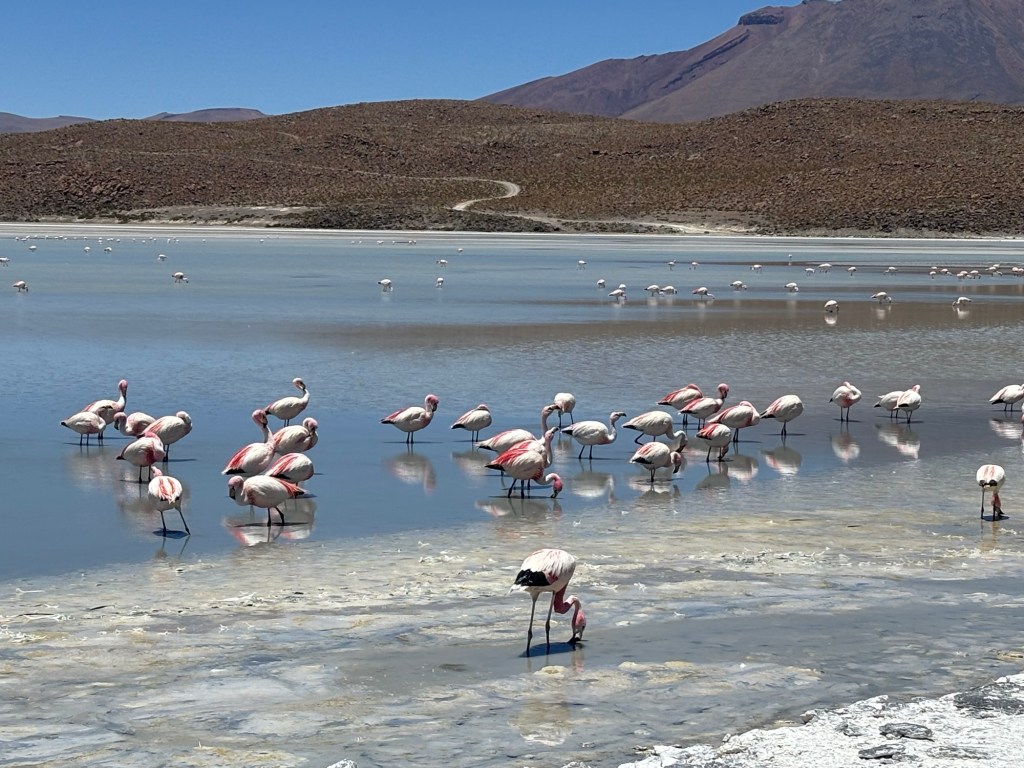
With that done it was back in the 4WD off to see some high altitude lagoons , where , we were told if we we were lucky we would see Flamingo”s. Turns out we were going to be very very lucky.

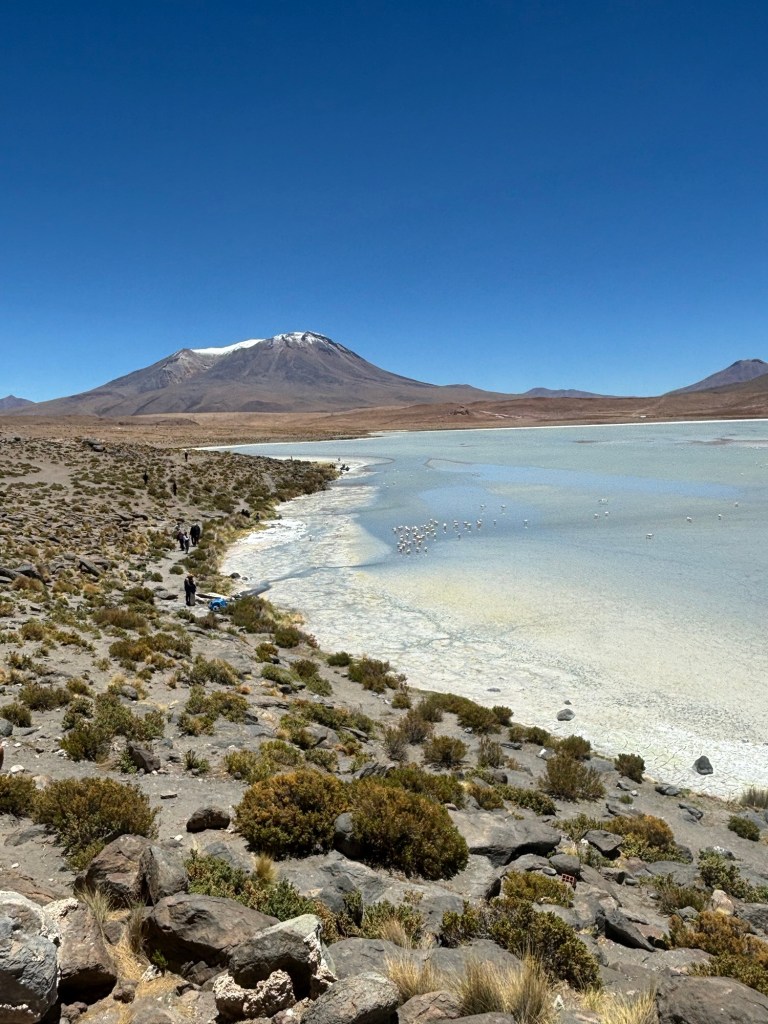
We were heading to a series of lagoons , each different and with its own characteristics, almost all of them with Flamingos along with other wildlife. This is high/back country. It’s only accessible by 4wd there are no shops, or anywhere to eat, no running water and apart from solar and generators no electricity…getting there is no day trip so what they’ve done is set up a few spots where tourist operators çan bring their guests, but you bring the food with you and they “venue” is essentially a picnic spot. No waste , what you bring with you you consume or take back with you. The venue provides tables chairs cutlery, and I expect some hearing facilities! All very civilised .

Anyway back to the Flamingos 🦩 they were spectacular. They did their thing and you could from the shore watch them, they seemed unbothered by our presence and our gasps of delight!
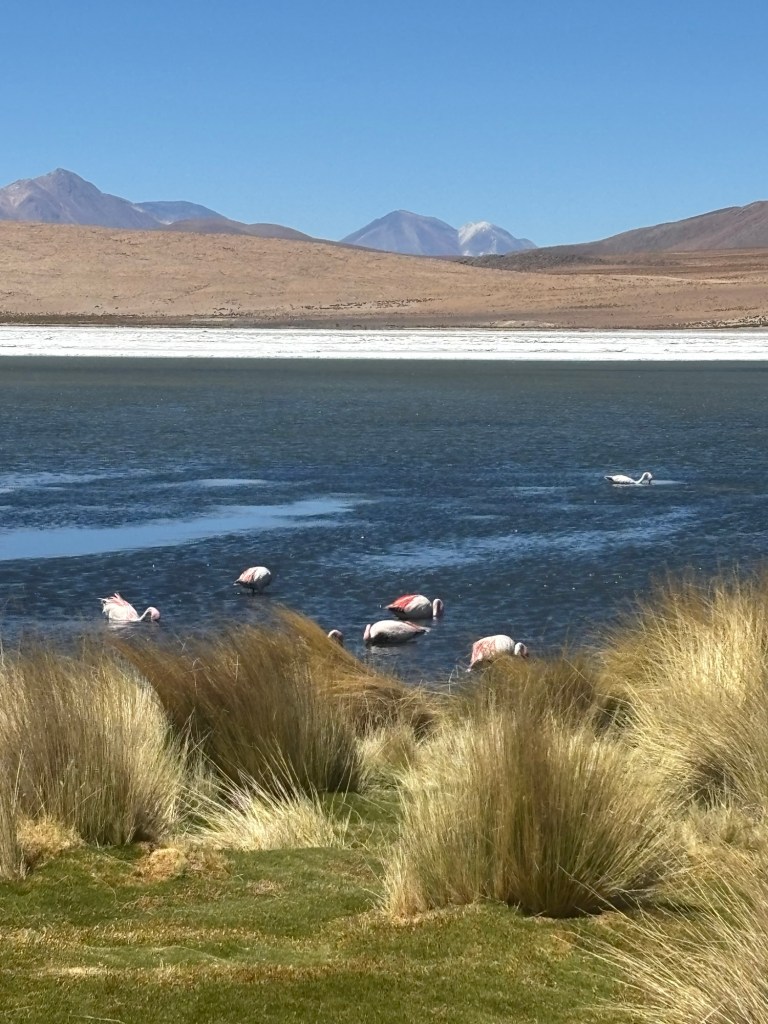
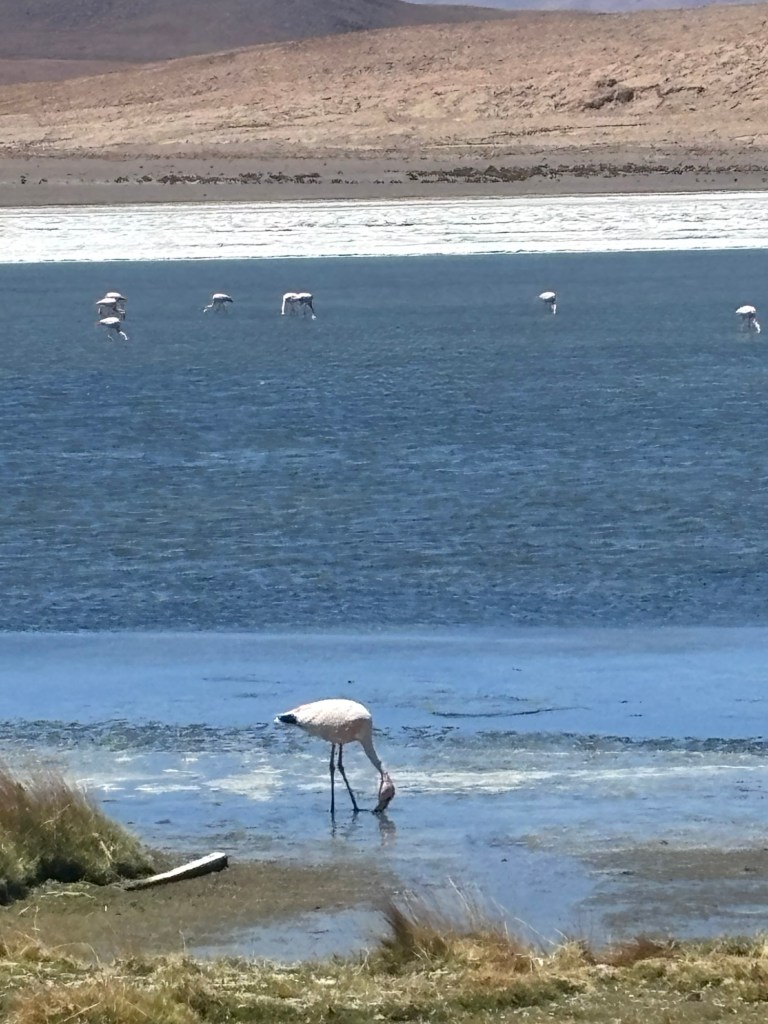
The view from our lunch spot.

So up and up we went and by now the roads, if you could call them that are pretty dodgy we are essentially fully off road now, driving up the moraine of old glaciers , pebbles , rocks that seem at times to be a kilometre wide. The sheer scale of this is impossible to capture with a phone camera. It was stunning, at one point a member of the group said she was running out of adjectives, we all agreed and simply reverted to simple wows. Totally inadequate as those expressions were
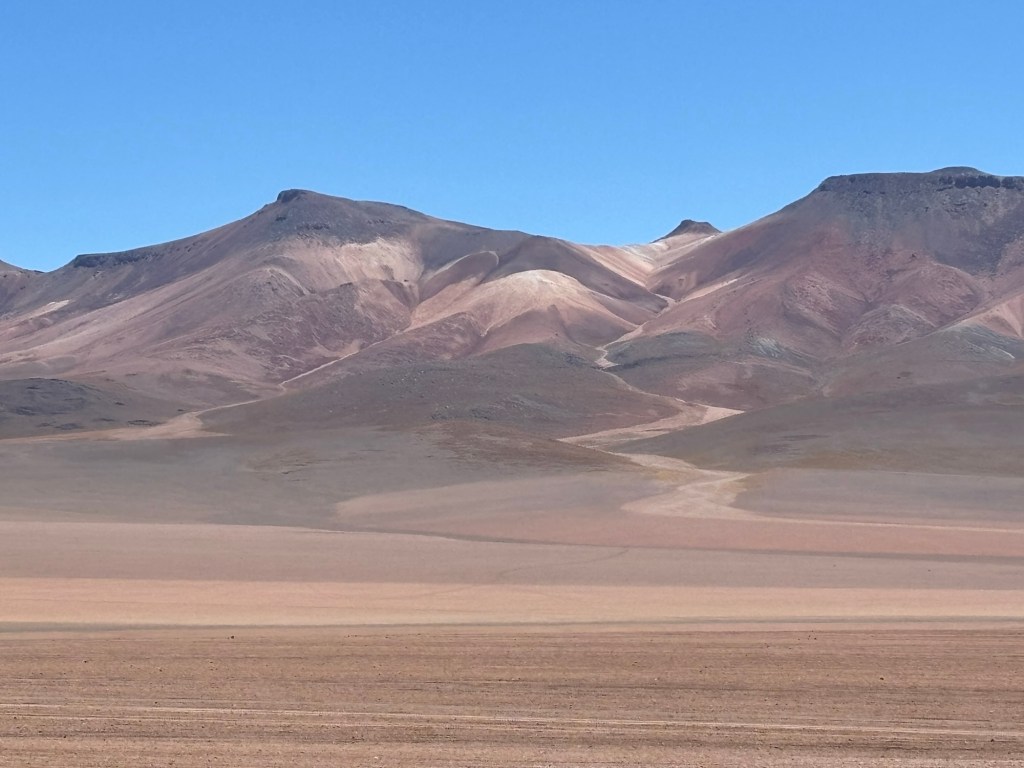
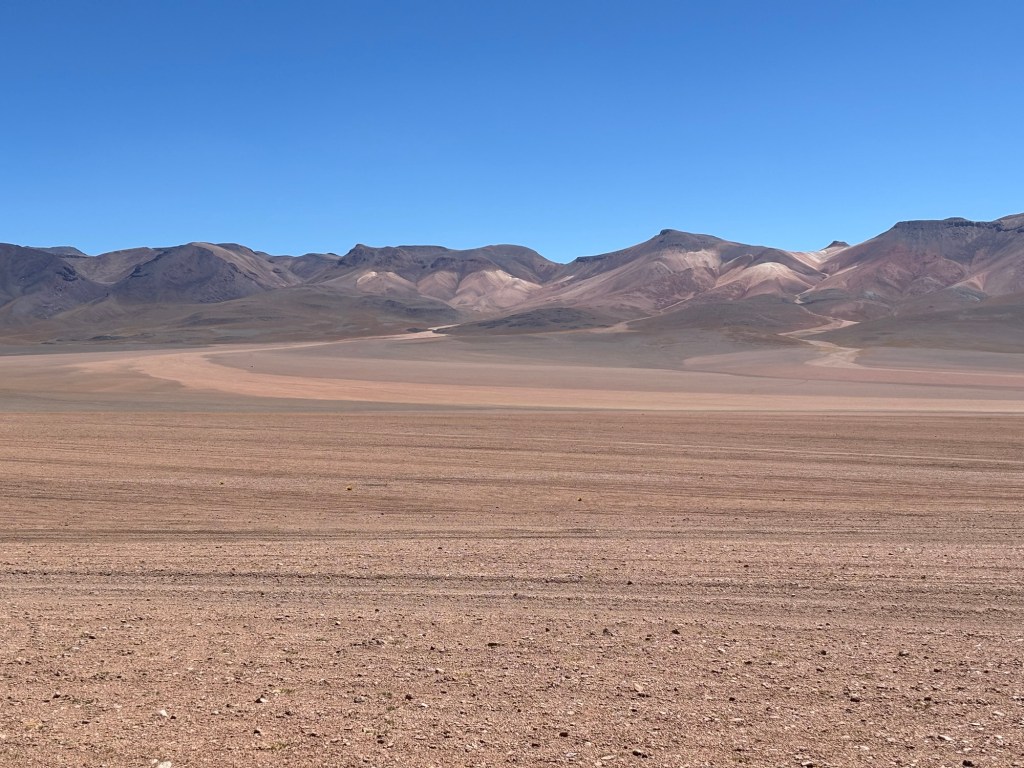
Just stunning

And so back in we pile after volcanos , lagoons , flamingos and spectacular scenery what else could possibly be next. Well, how about this for cute?
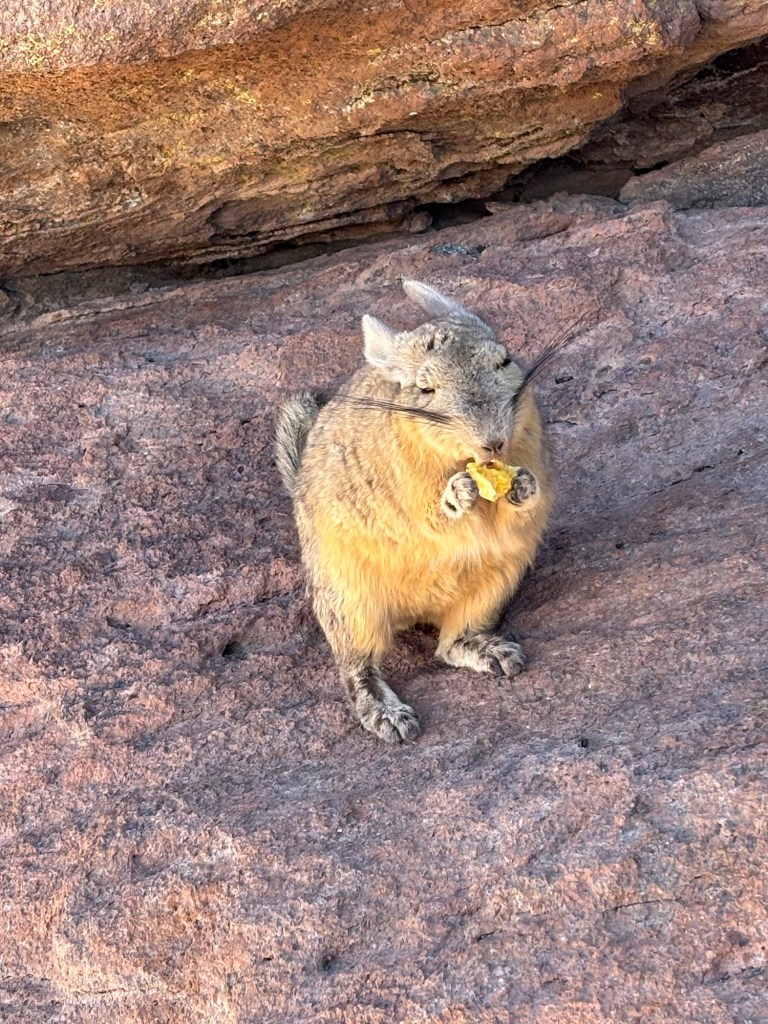
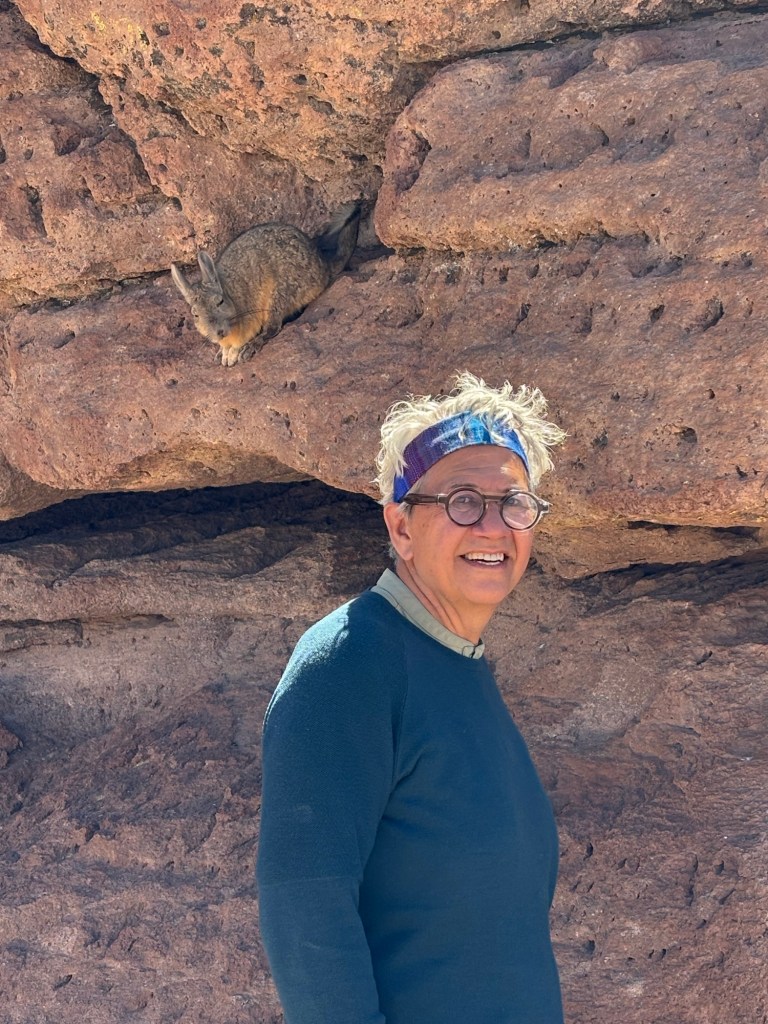
A chinchilla chiling

Not sure how this came about but on this outcrop of rocks in the middle of nowhere, an extremely arid environment is a colony of Chinchillas, they’ve clearly become used to visitors and expected to be fed , cute! I swear that the one above eating bananas was almost tripping with delight. ( turns out I was not too far wrong as the sugar gives them a high and is not good for them). Normally they eat bark, grasses and cacti. But in the meantime feast your eyes on these little cuties.
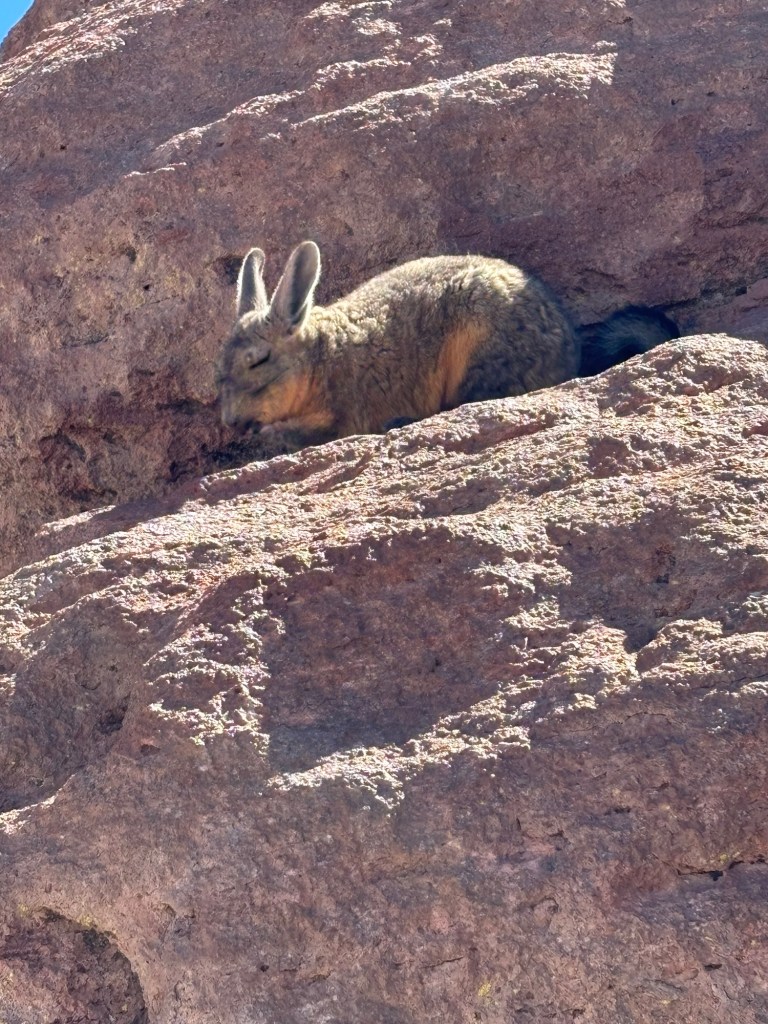
By now are cup runneth over but apparently the day is not yet over so onwards we drive !

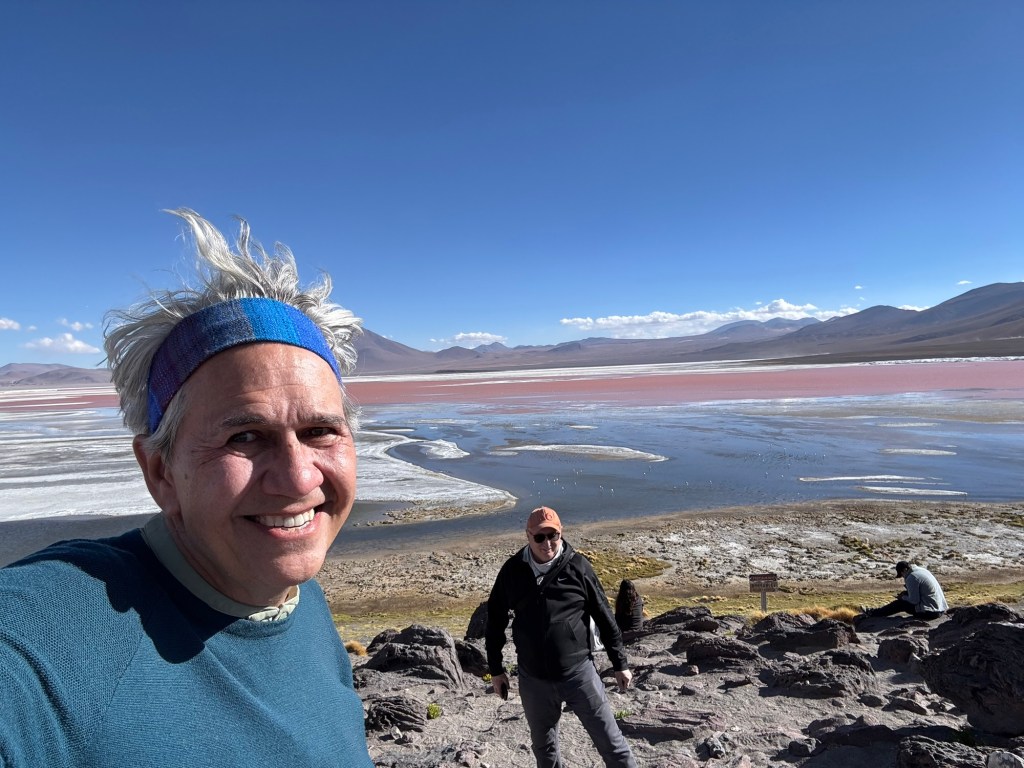
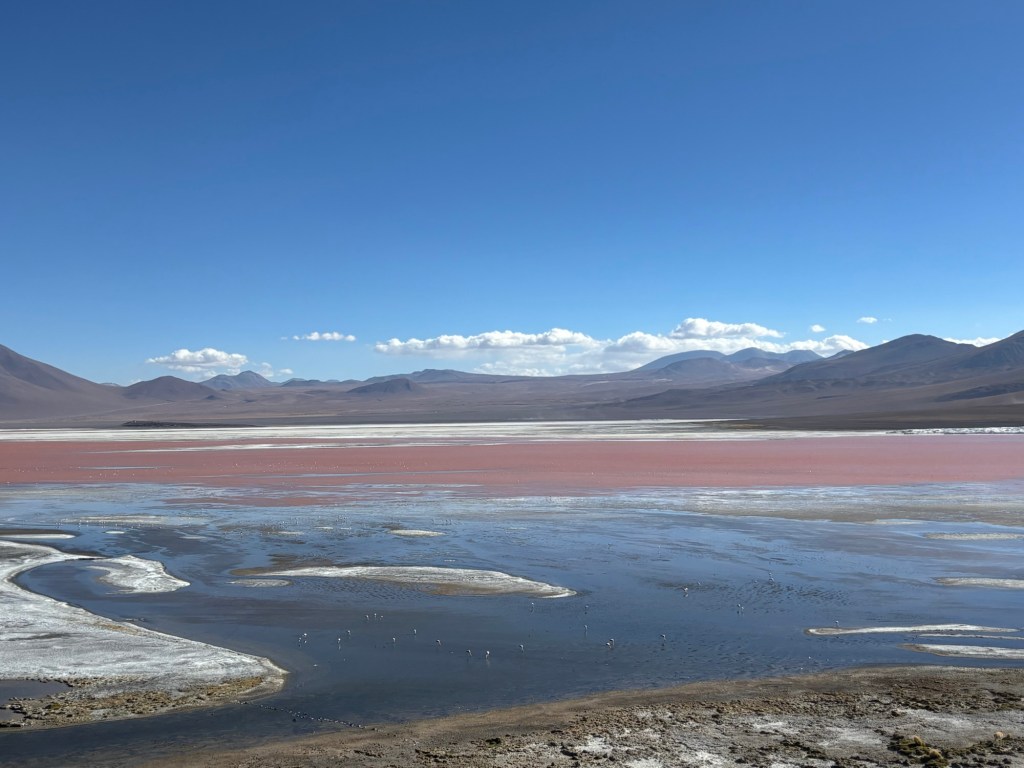
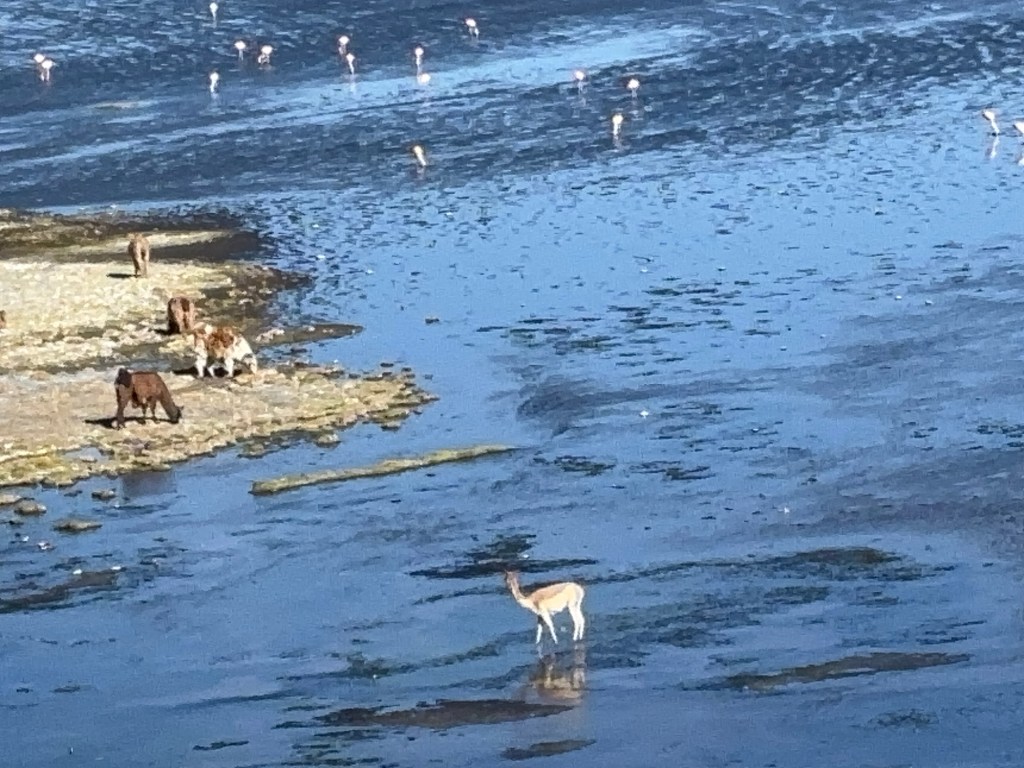
We eventually make it to the gate of Sernap national park. Tina arranges our entry for our final lagoon viewing for the day. And it’s a doozie. The pink lagoon ! Yup. Pink. As a result of the thermal springs in the Lagoon you get a lot of pink/red algae which the Flamingos feast on! We stopped and just watched them for half an hour it was stunning.
We then made it to our accommodation for the night, quite basic , only ran on solar and generators , first time I’ve been somewhere where a shower was an additional cost, but to be honest it was a bed and that’s all we needed. We had a birthday to celebrate and it was a 4:30sm start the next day so we were in bed by 8:30 grateful that the two “old” dudes had yet again been given their own room. What an extraordinary day. And there is still more to come.

So back up at 4am at over 4500m it’s -5 degrees as we pile into our vehicle. Been vague promises of perhaps an opportunity to get into a hot spring so togs are on under the hats and scarves ( really do we want to swim?). No point grumbling get on with it , even if packing with a bloody head torch is a pain and you’re sure you only just went to sleep.

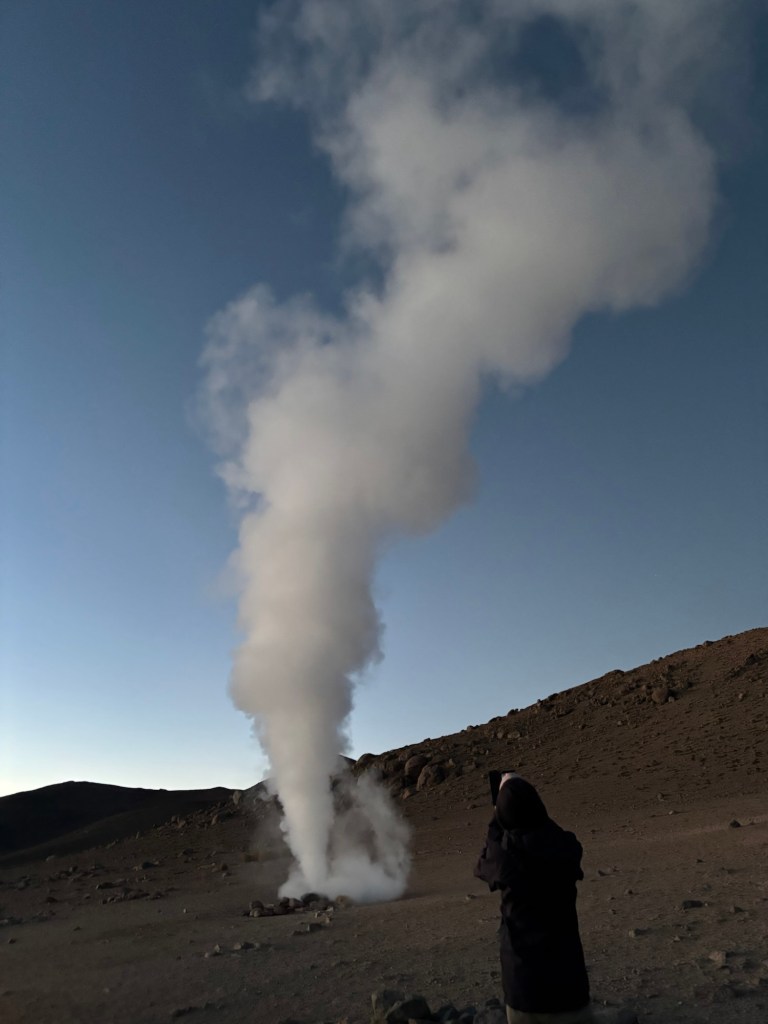
And then we climb, up and up I realise when I see David’s hands are beginning to tingle , that’s one of his altitude symptoms. I check the compass app ( offline function) and sure enough we are at 4800m , we just about hit 5000m ( remember Everest base camp is 5200m so this is high) and I realise we are on the lip of a volcanic crater… in we plunge. I had no idea that this was going to happen. And next I knew we were next to what was being called a geyser ( but was actually a steam vent ) that was in full blast. Out we pile, no guard rails , no warning signs just it would seem get in amongst it. We then had a look at a few other active spots that were bubbling away in the cauldron. Of course for David and I the tragedy of whaakari/ White Island was not far from our minds. Clearly was not on anyone else’s as others peered over the edges. Way too close for my liking, but that’s a “they” problem !

Fair to say as well at that altitude the thin air, the fatigue we were feeling the effects, so we were pleased when we started to descend!
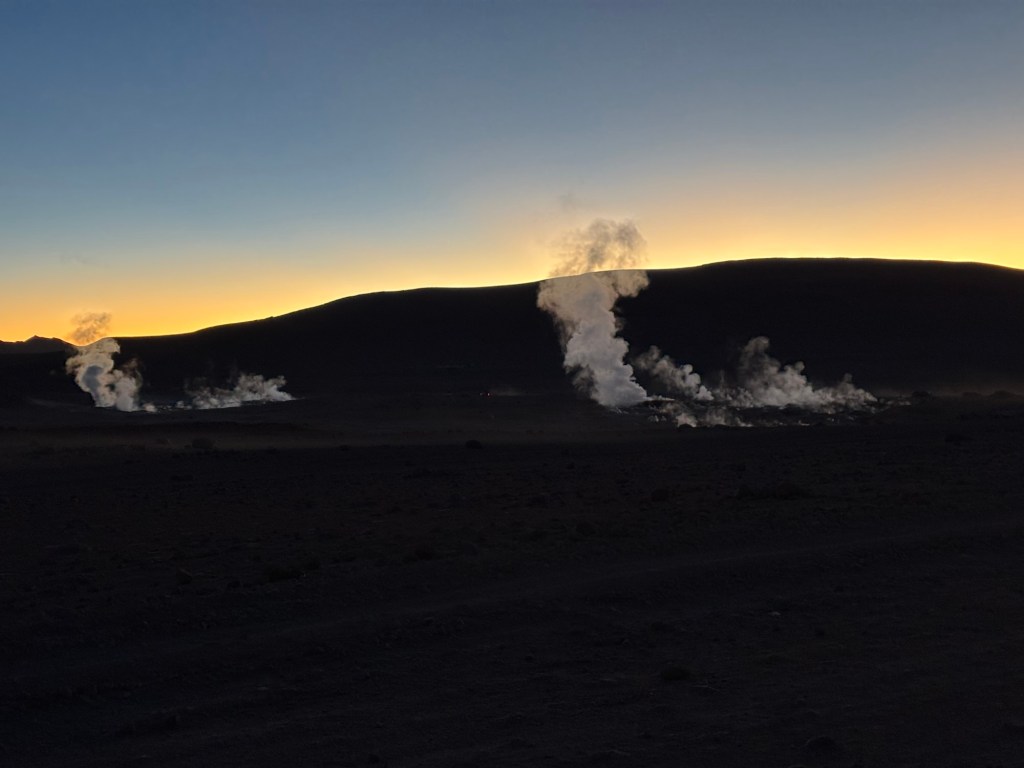
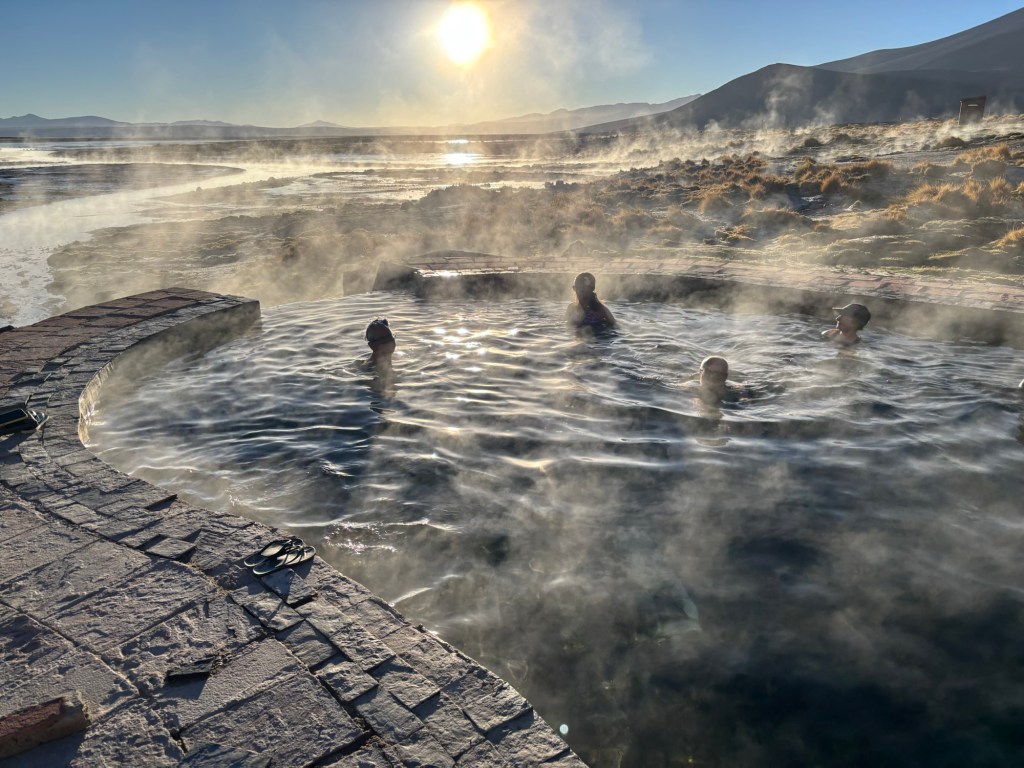
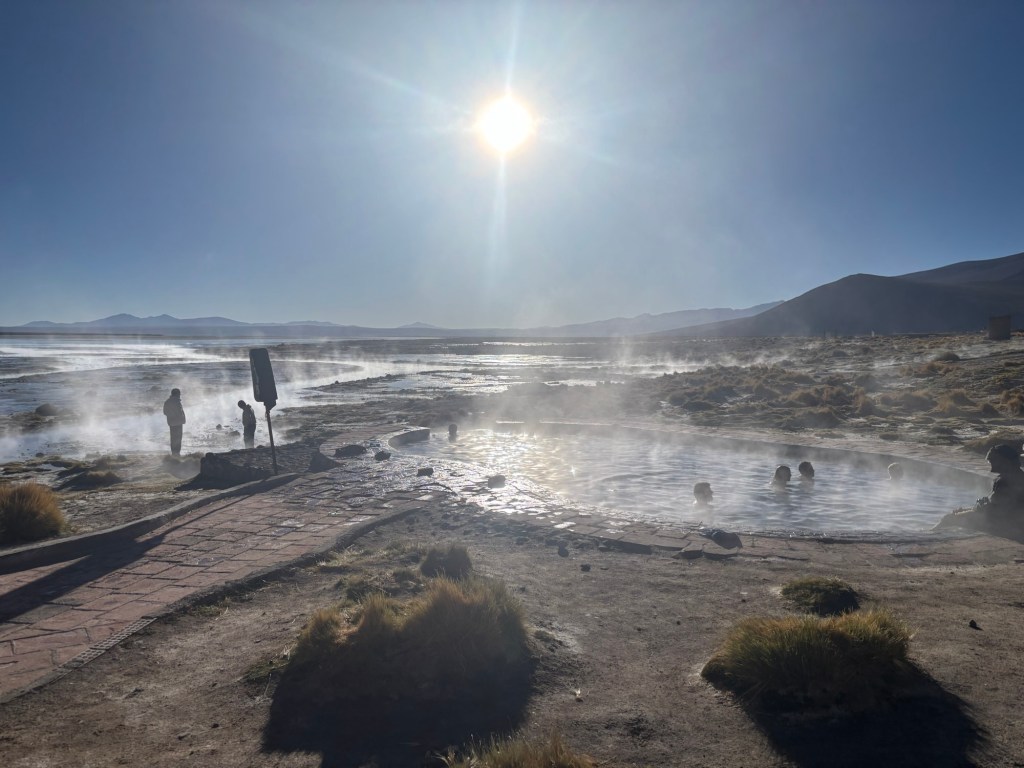
So by now the sun is rising and we are racing down the side of a volcano with no discernible roads, towards our next destination the hot springs. We see another lagoon this time with thermal springs and a group of Flamingos literally taking a spa. Without hesitation its gear off and in we get. Didn’t even feel the sub zero temps. It was a huge amount of fun.
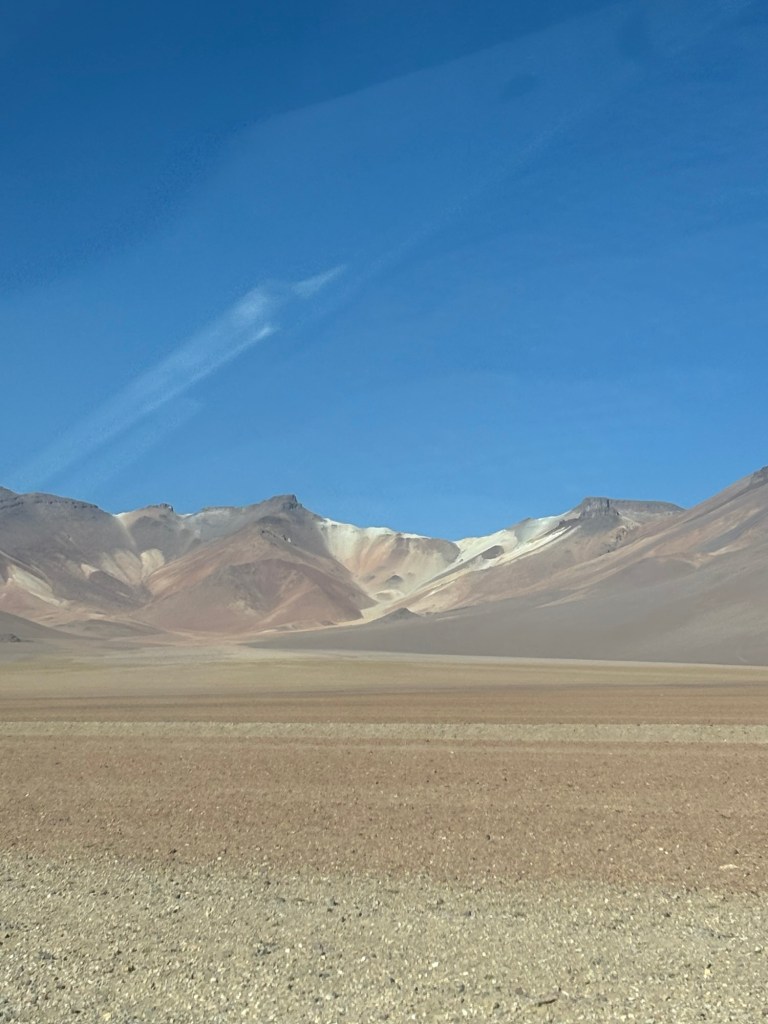
Next stop and again another vista. This time just ten minutes up the road. To a spot where the apparently Dali had been inspired. While I can absolutely see the parallels, turns out Dali never came to Bolivia. So looks like some poetic license on this. Regardless, stunning.
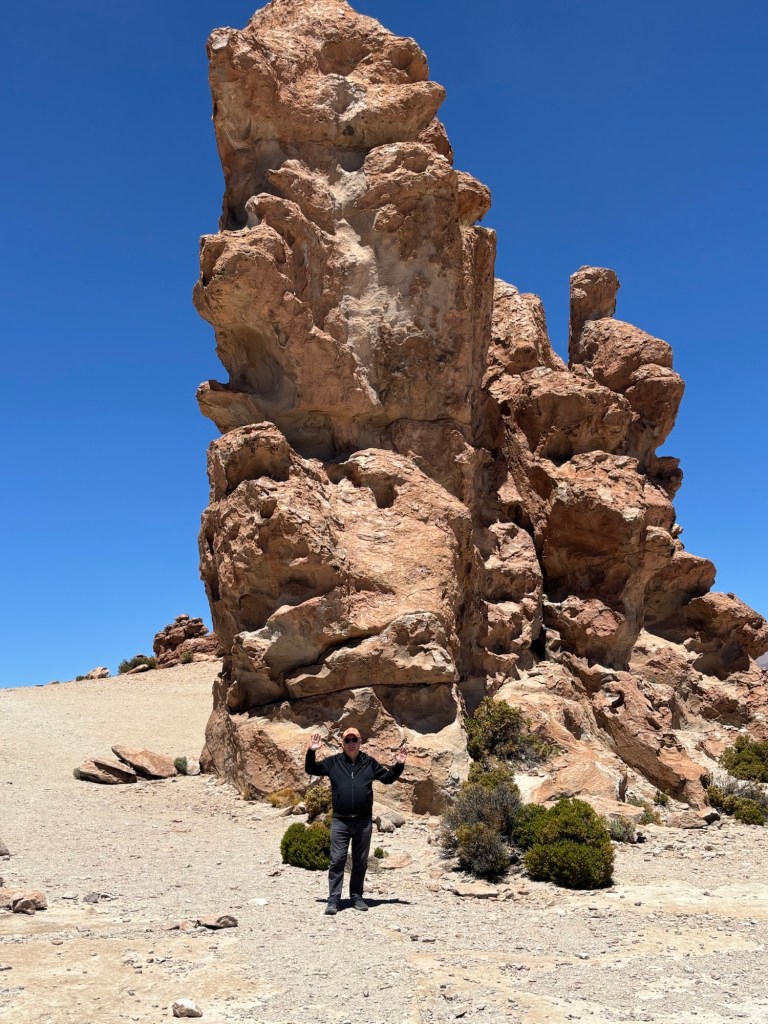
We then started the long drive back to Uyuni. Via the valley of the rocks. Hard again to see the scale of these and I’d be fascinated to know the geology. But to be honest, beginning by this stage to get a bit tired, keen for a shower, a comfy seat and a bit of down time. While the rest of the crew were heading back to the salt flats for more reflective pics, as we were going past the hotel David and I bailed went back to the hotel, had a shower washed some clothes and repacked our bags. Another 4:30am start and off to 🇦🇷. Thanks Bolivia you’ve been great.
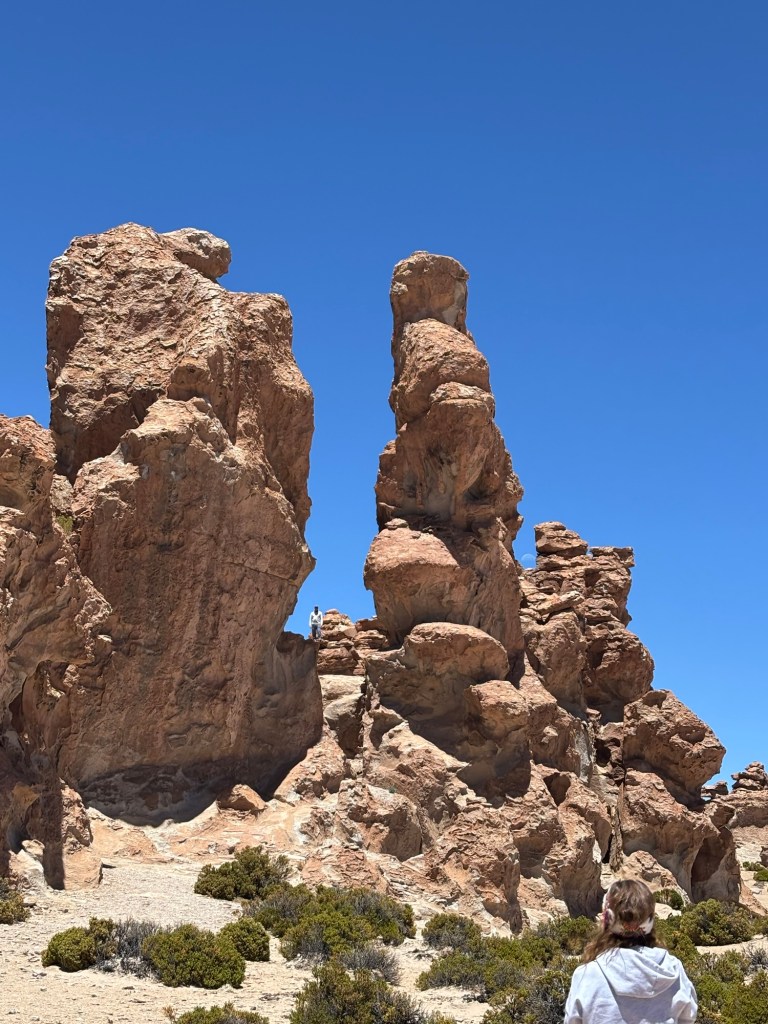
Uyuni salt flats

Finally, probably what we had probably booked this tour for we headed to Uyuni.

Another 4 hour bus ride from Potosi ( after the delays of the day before something we were not looking forward to. But when you’re not the person responsible and you’re literally just along for the ride , you just roll with it – lesson in life there I’m sure.

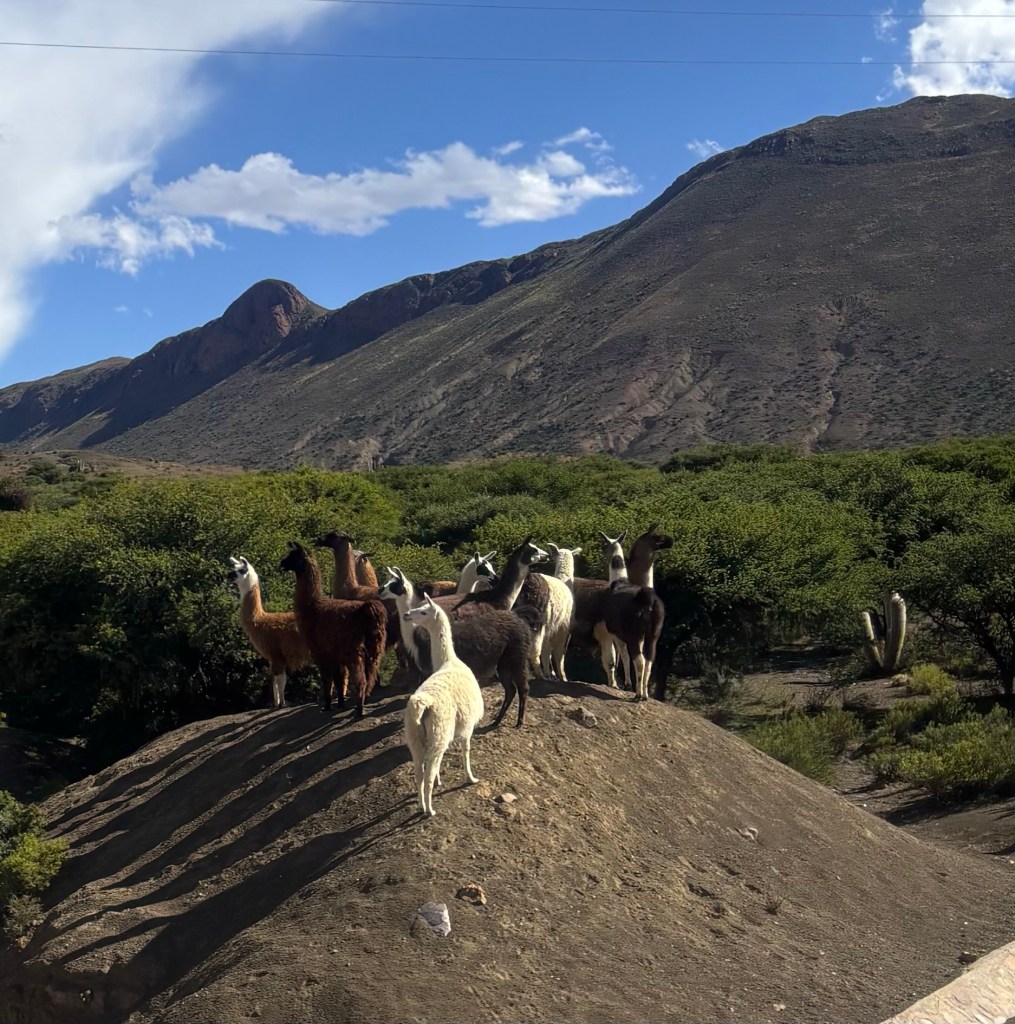
We left on time, had great seats thanks to Tina our guide and off we went. Scenery once we got out of potosi was stunning. Very grand and dramatic. Dramatic sweeping mountains, arid almost desert like hills with cacti and then suddenly a green oasis with crops planted by a flowing river. Lamas, lots and lots of Lama’s. They seem to be able to adapt to all conditions. They often have small bits of fabric on by their ears or in their coats as identifiers.

Very cute!
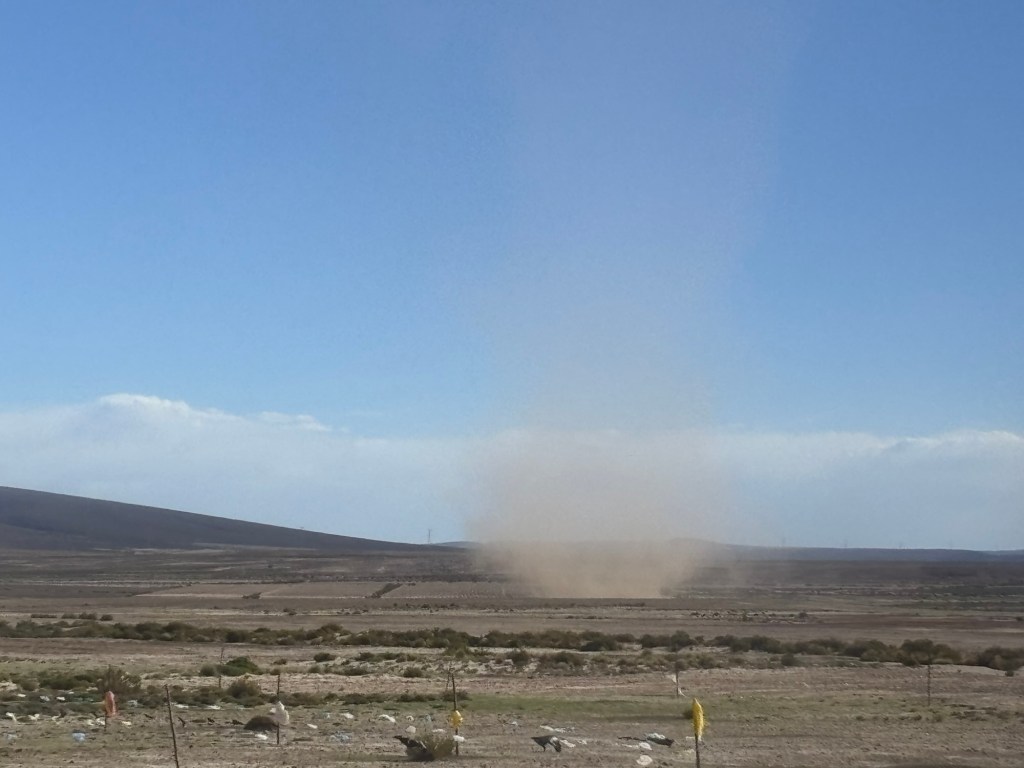
Little dust devil for entertainment en route

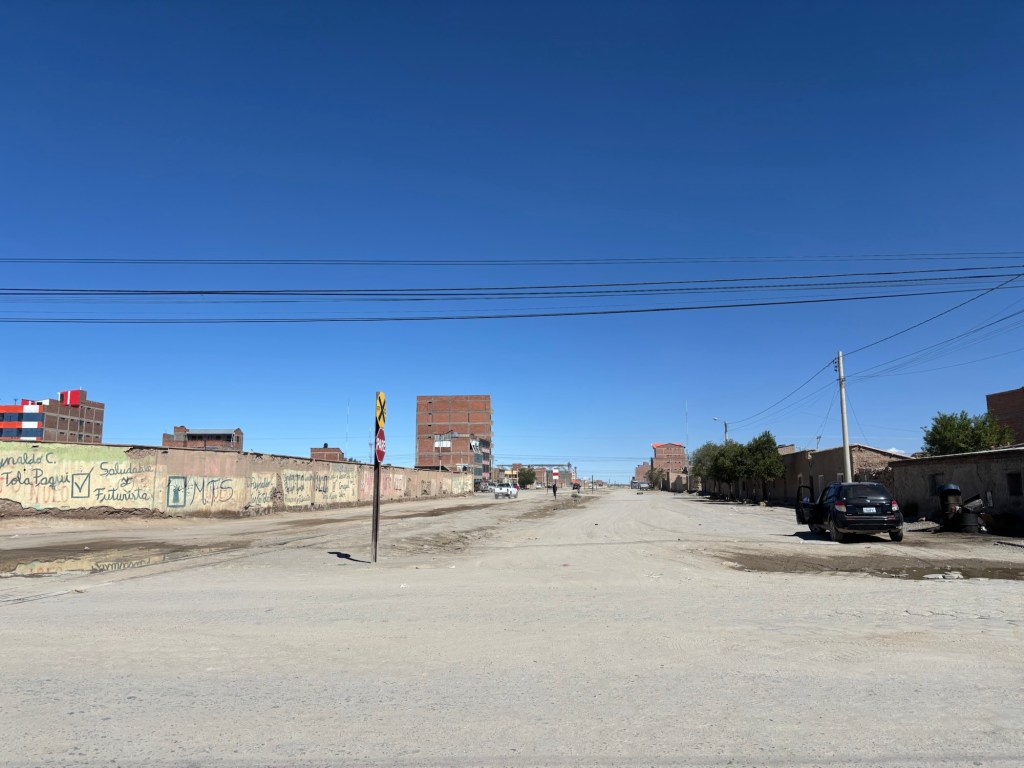
So we arrive quite late in Uyuni , if it wasn’t grey and red dust instead you’d swear you were outback Australia. Very wide roads , mostly single level dwellings and a kind of bleak sense to it. The tourists being the ones keeping it propped up.

Turn that dust red and it’s the outback !

Next day after our briefing ( love these , the we are doing this, bring this, don’t forget this be here at this time) we piled into our 4 wheel drive to our first stop. And it was a weird one.

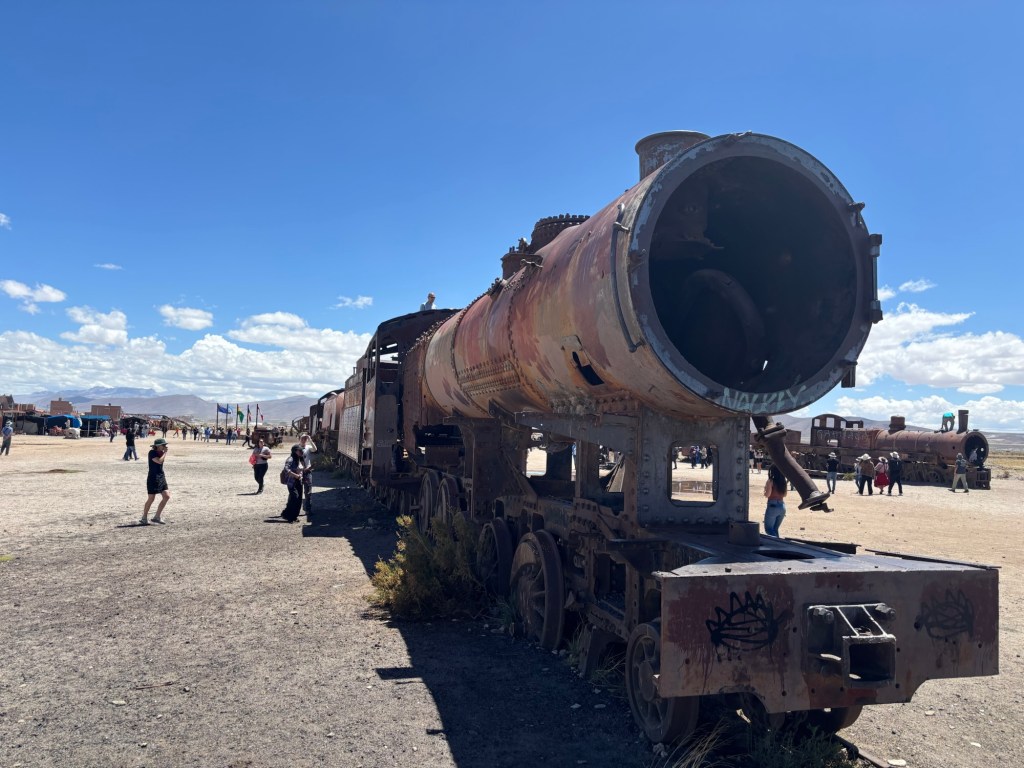
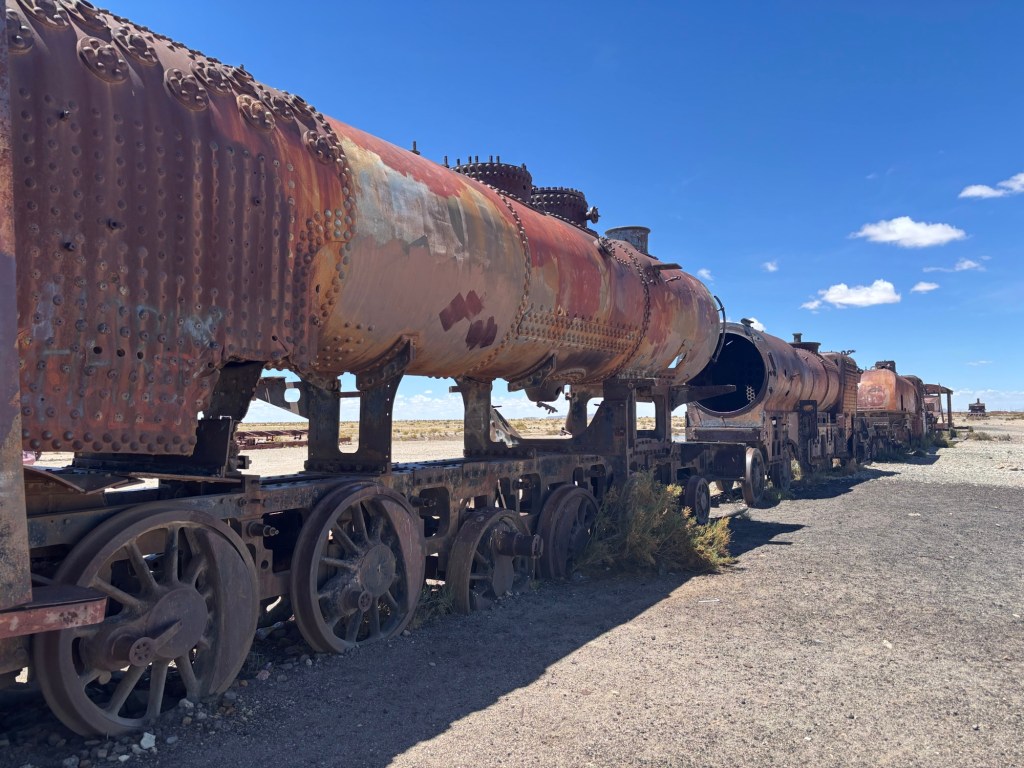
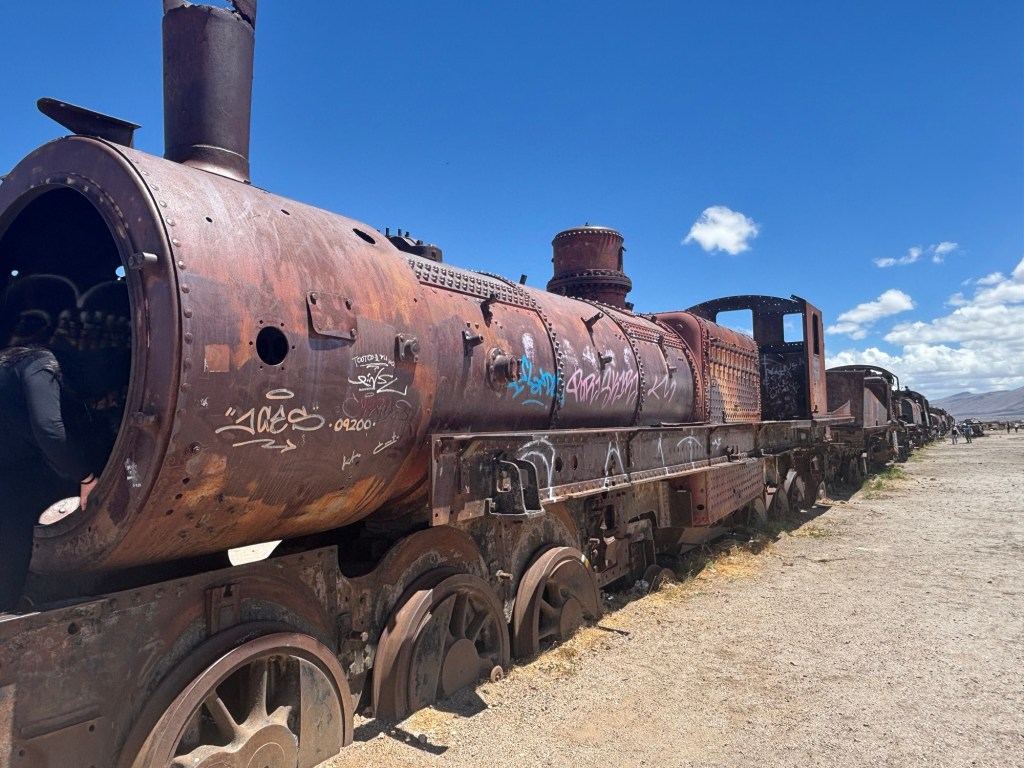
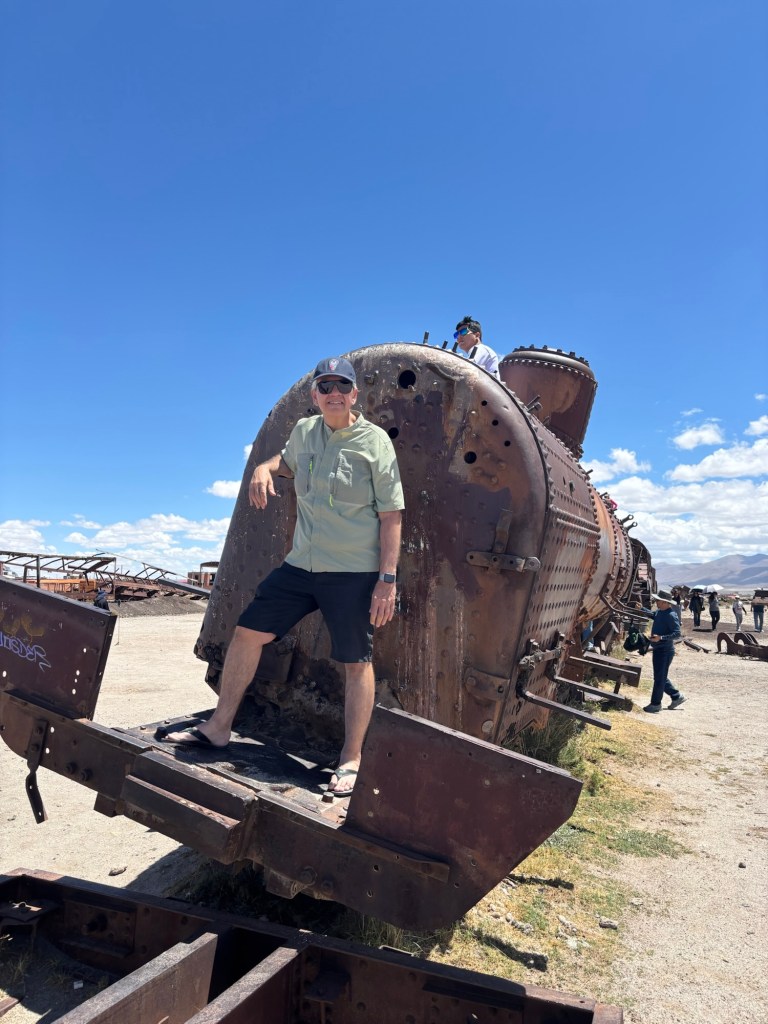
The train cemetery.

Uyuni was a transfer port in the late 19th century for minerals to the port in what is now northern Chile. There was a war, Bolivia lost the port and suddenly they had no sea access and no where for these trains to go to. So they sat in Uyuni and have been there ever since.

It was kinda eerie , and weird at the same tone. Crawling with tourists it had not been open the days prior due to the roads being too muddy but here it was now! And dry as a bone. Odd the things that become tourist attractions, yet again absolutely no restrictions and tourists were on top of, inside of and even dismantling these rusty hulks to get their own souvenirs. Surely there must be accidents? Tetanus, broken bones? I must be getting old. The folly of youth .

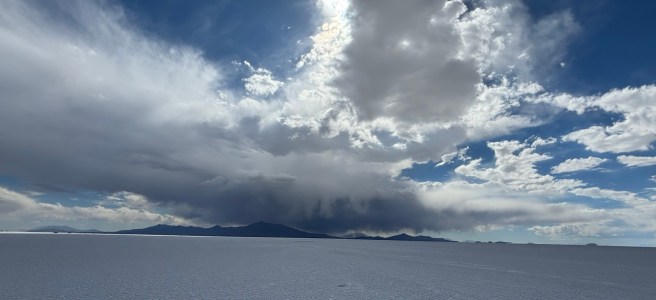
Then back into the 4 wheel drive and after some lunch we headed off to salt flats. Pictures ( and geez there are a lot of them) do not do this justice.

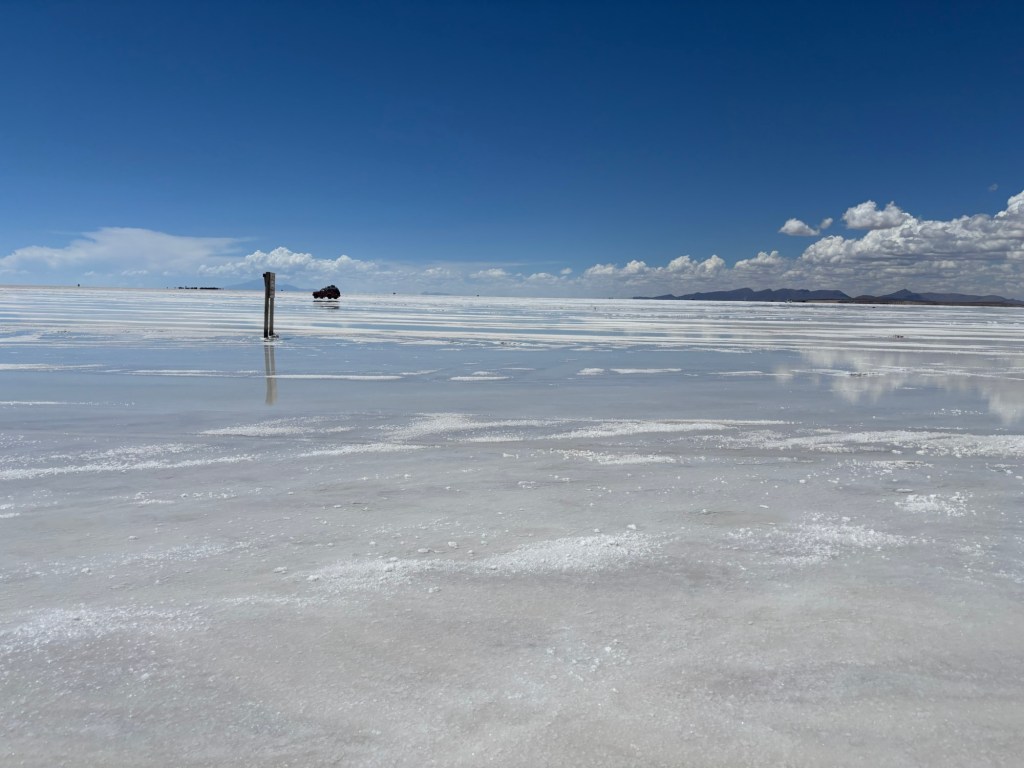
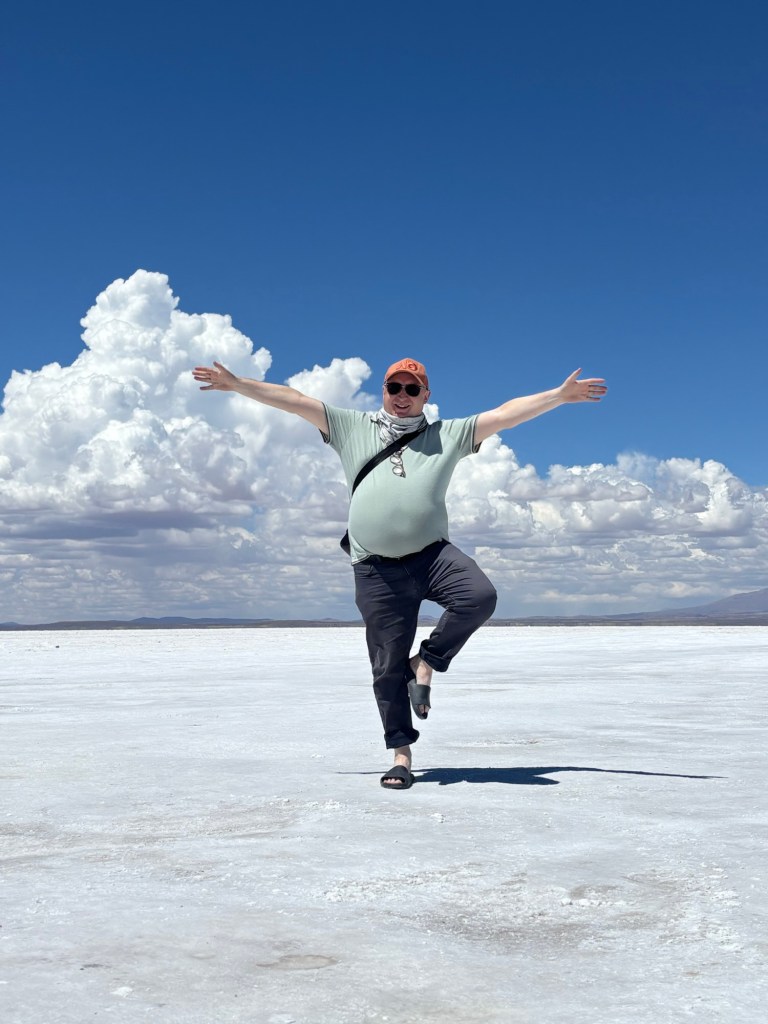
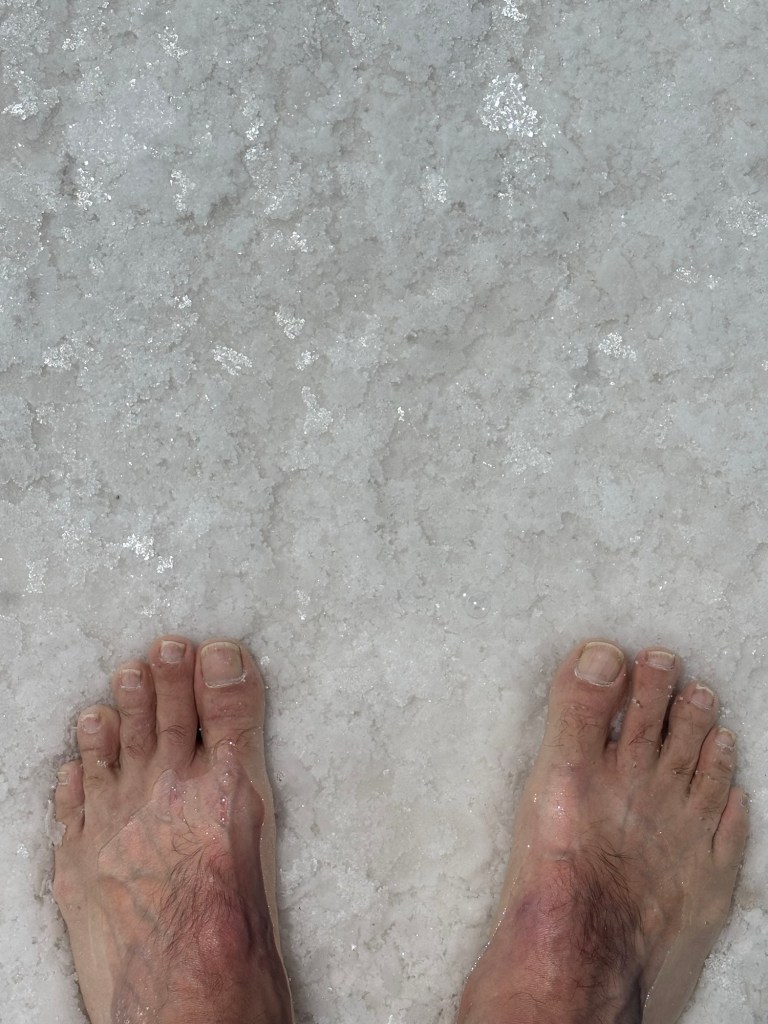
Uyuni salt flats are 10,500 sq kilometres. They were formed tens of thousands of years ago when tectonic forces landlocked the sea that was there and then slowly the water was evaporated leaving only the salt behind. The salt layer is on average 10m thick and up to 130m thick in place. The brine underneath is the world’s biggest source of lithium. This place is immense and beautiful. Apparently Neil Armstrong saw the reflection of Uyuni from space and decided he needed to sed it so visited in the early 70’s and it’s only really been popular as a tourist destination since the 1990’s. You may have heard of the Bonneville flats in Utah, also salt beds. A place famous for setting land speed records ( Burt Munro and the movie fastest little Indian) by comparison Bonneville flats are 100sq km.

We had blue skies and clear weather, but this is rainy season and many people come at this time of year to see the mirror effect of the water sitting on top of the salt but in the last few days it has all evaporated, that didn’t matter to me. Still spectacular.

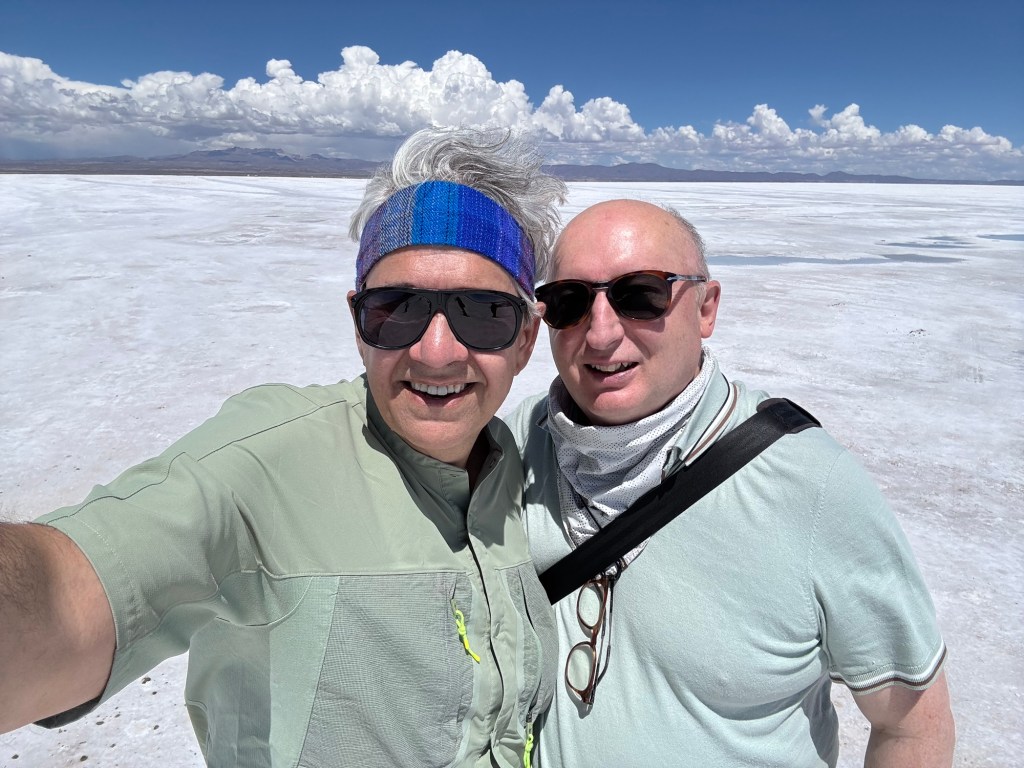
Headband for me going forward in lieu of hair products!😂
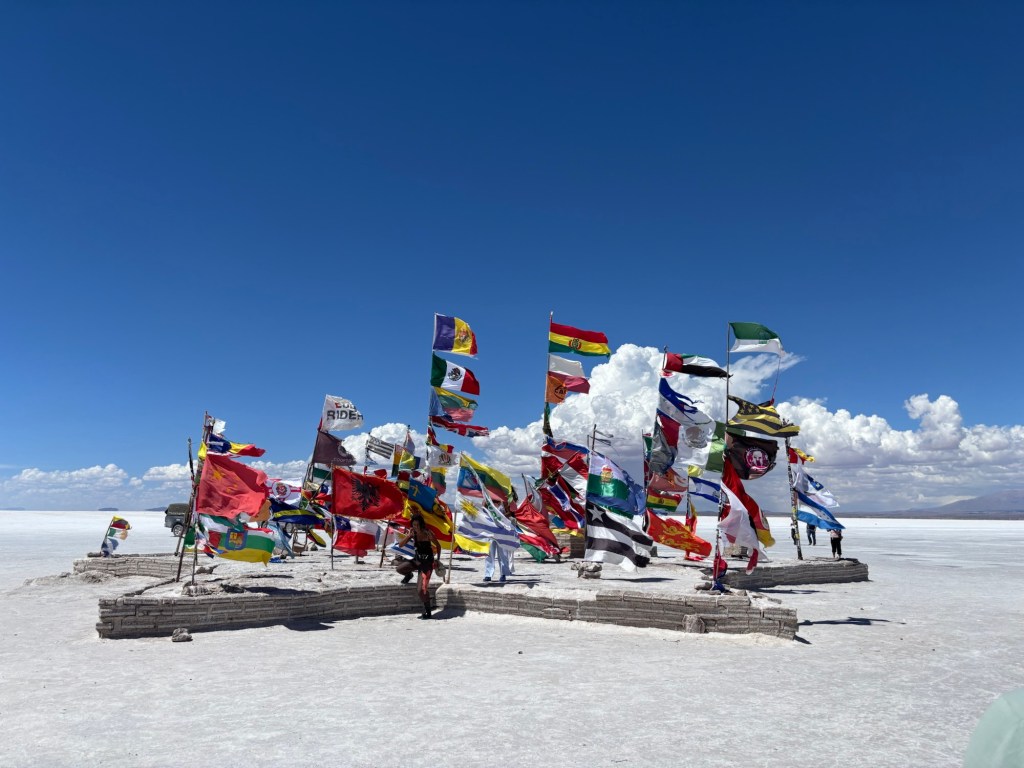
Was slid the start some years ago for the Dakar race
Sure there a spa somewhere that charges for this

Lots of trick photography shots seems to be a thing to do as well so feast your eyes. When in Rome…

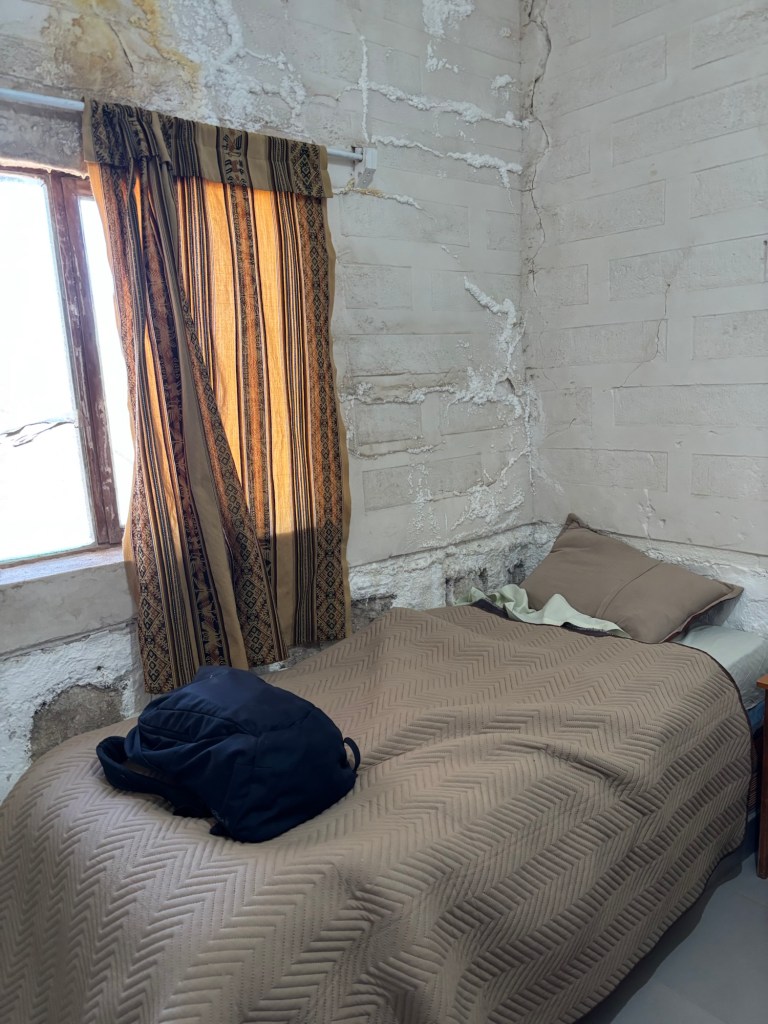
Having driven over the lake and gone another hour over land we headed to what was being called homestay but was called a hostel in the brochure. But again, we need not have worried, David and I were given a great room with two beds and an ensuite in walls built completely of salt bricks. Definitely more hostel than homestay but that’s fine. No wifi which is great so I’m writing this offline and will publish later.

One of advantage of being so remote is the night sky, it’s quite spectacular with no city lights. So lights out , early to bed and with the odour of salt it wasn’t long before we were fast asleep..

Wonder what the next day will bring?

Our salt block room!!!
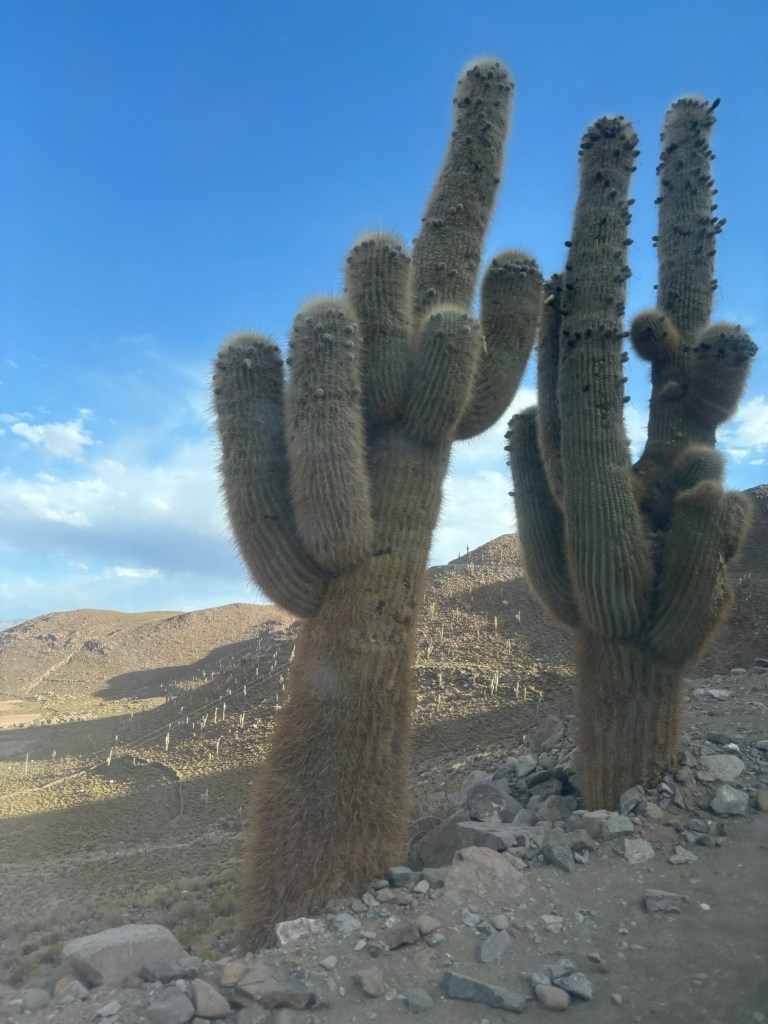
Giant Cacti on the way.
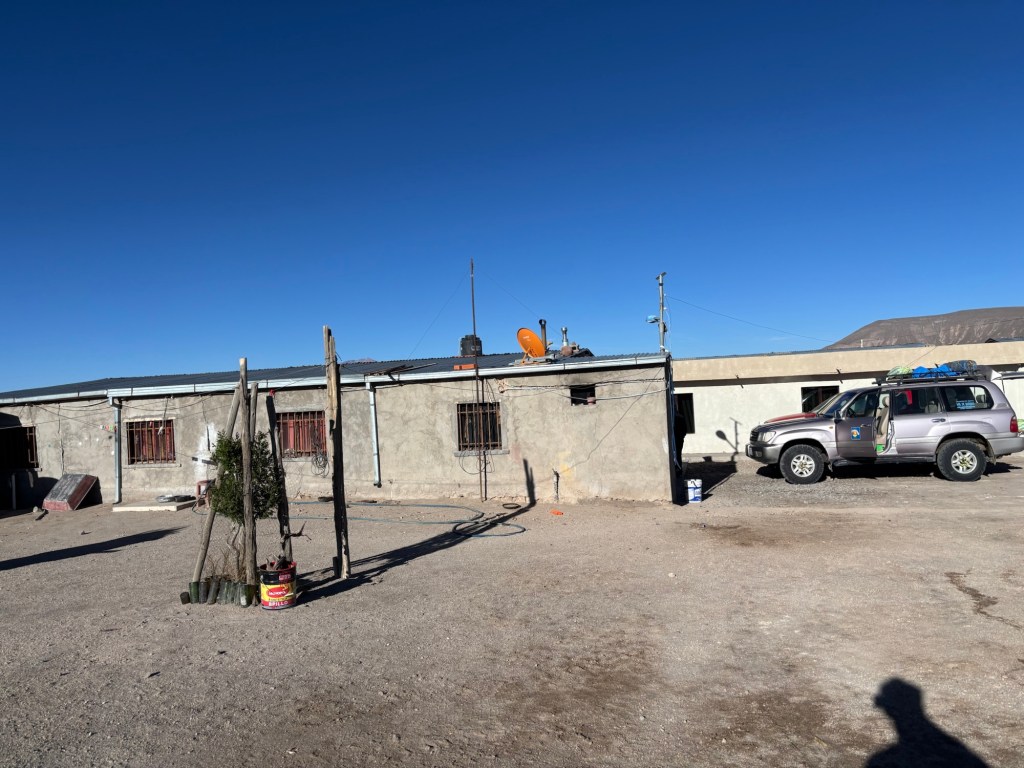
Our modest accommodation
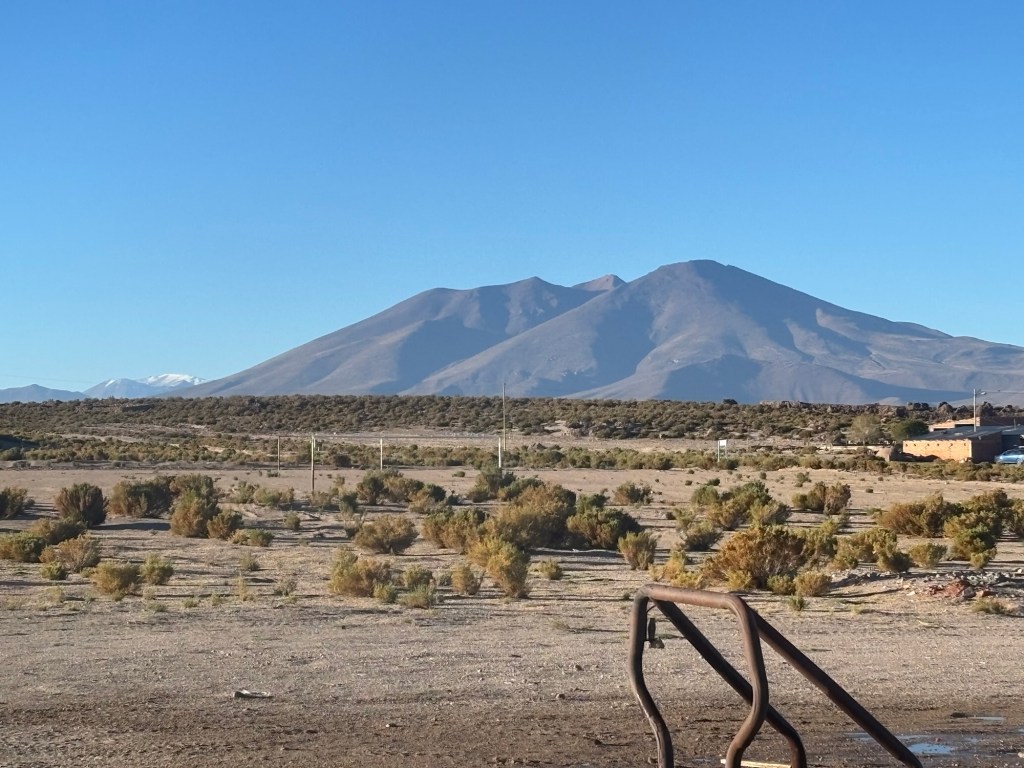
And the stunning view

Bolivian time…

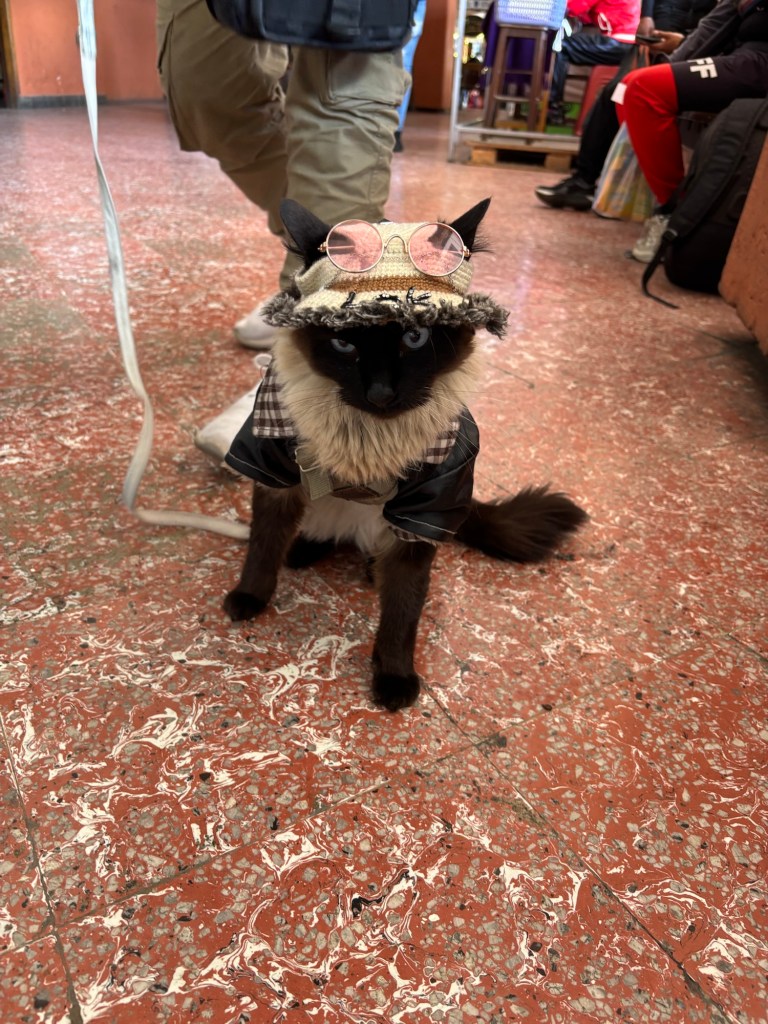
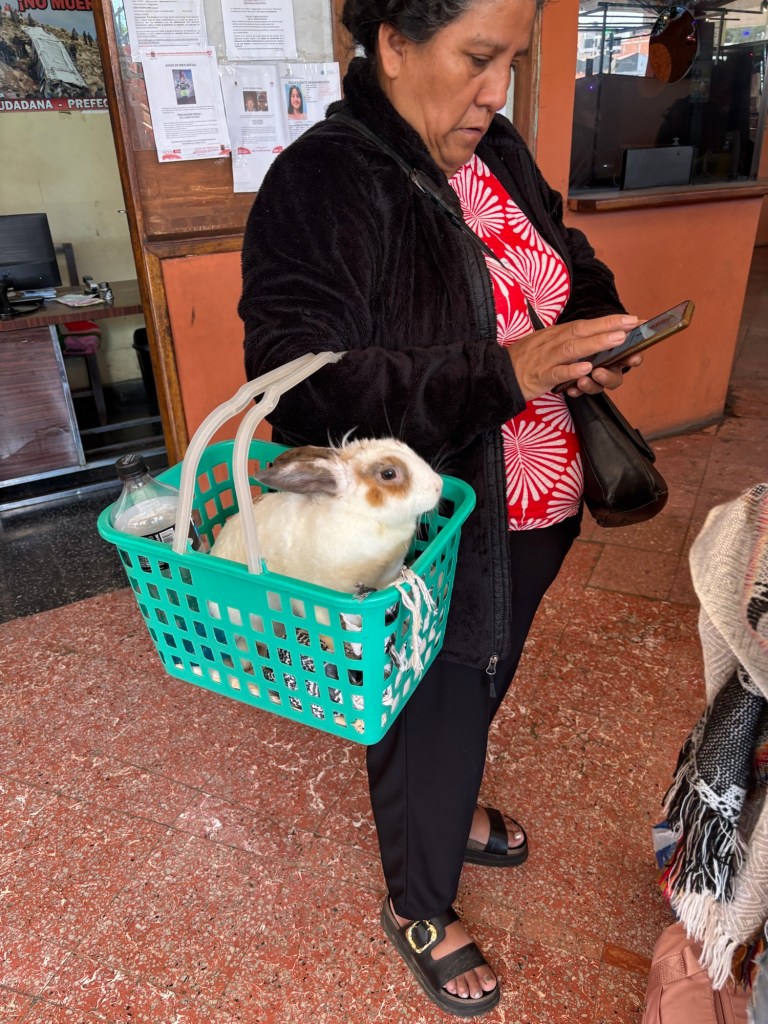
Yesterday ended up being a travel day, we were to be ready at 9 to get a 4 hour ten bus to Potosi our next destination. Departure time was 10. We got to the the station well in advance, tickets sorted , bus found we were ready to go. The station was a rainbow of characters, surprisingly the number of pets ready to board was interesting . A very cool Diane Keaton dressed cat, a rabbit in a basket looking like it was ready for Easter. And of course multiple dogs , usually in an outfit of some description.

So on we get, and we wait. It’s boiling hot and the windows don’t open and ten o’o’clock comes and goes. We then find out the departure time is now eleven o’oclock, why? No idea that then becomes 11:15 and ar 11:15 it becomes 11:25. It’s Bolivian time we are told. Given yesterday’s ongoing gut issues, not ideal but finally we are off. We arrive ready to eat, find a cafe , order and it takes almost an hour to arrive. Bolivian time the owner jokes. By now it’s 4:30 and we the museum and convent excursions were closed , but I’m kinda over the religious stuff.

It’s definitely been a feature that time is loose here, opening hours are a “guide” only and several times I have turned up to advertised opening times only to find things are closed. Bolivian time indeed.

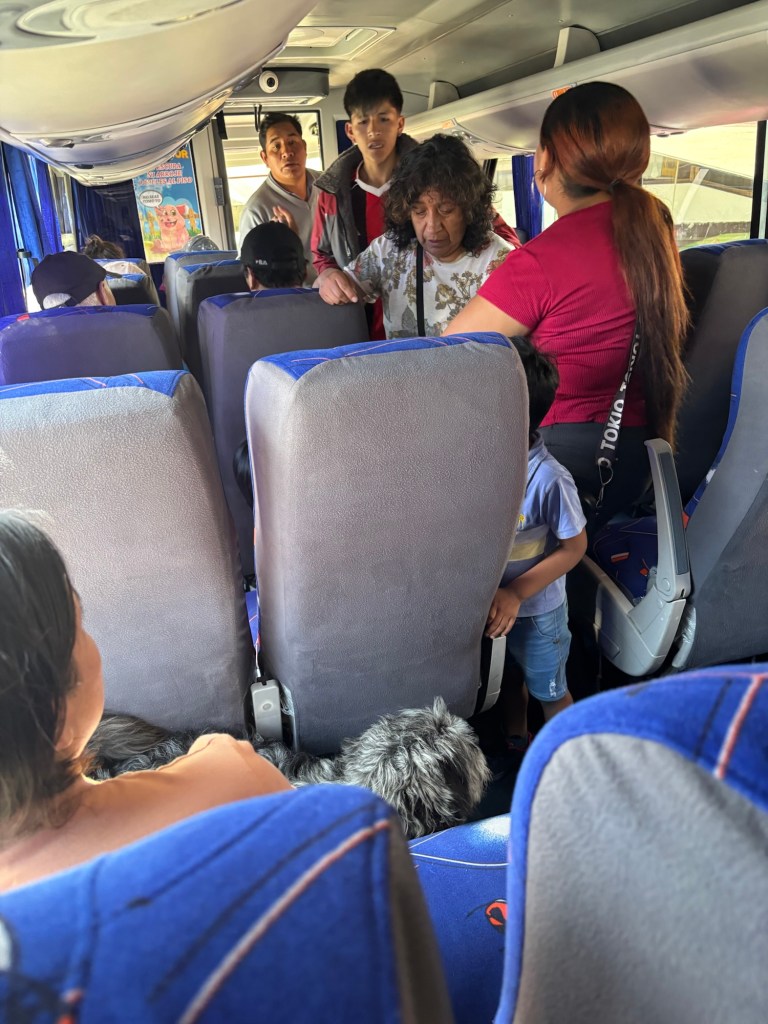
Bus station passengers!
The pooch in front who remained completely quiet the whole trip.

Potosi

Potosi has a couple of claims to fame. It’s the highest altitude city in the world at 4090m. ( although that seems very close to El Alto so it may be in contention). It’s a Unesco heritage site. Sometimes known as the Imperisl city. And at one point was the most wealthy city in South America. Why? Mining. The mountain that dominates the city Cerro Richo or Rich mountain has been mined for almost 500 years.

At one point when the Spanish were in charge so much silver was being produced it flooded the Spanish economy, causing a massive inflationary effect. Half of the world’s silver in the second half of the 16th century came from Potosi.

Today it continues to be the main economic heart for the region. But its days of wealth are well behind it.

While the relics of its once famous wealth are evident in some of the architecture , to me there was an air of sadness and desperation.

As part of the tour Intrepid had given us the option to do a mine tour. The wording in the guide was rather circumspect, citing potential danger. Nevertheless we decided to go.

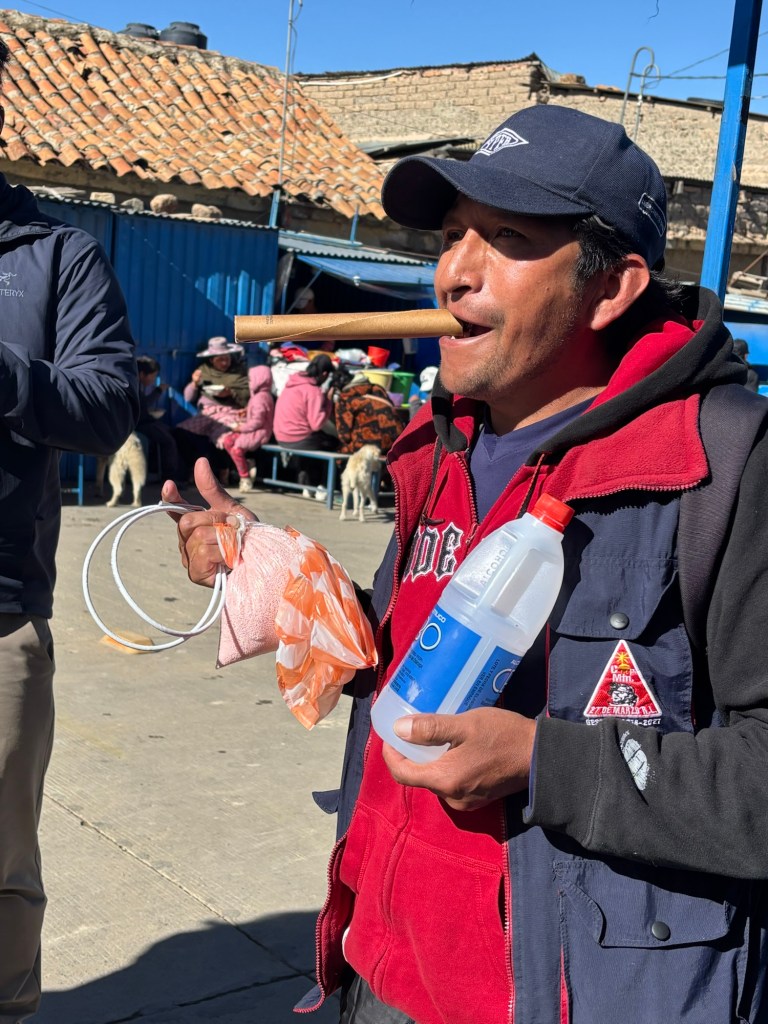
So off we went, picked up by a former miner who now runs tours. We were initially taken to a miners market where miners can pick up supplies. This included items like cocoa leaves ( for energy) alcohol and dynamite! I kid you not.

Dynamite anyone?

We were encouraged to buy “gifts” for miners we would see on the tour, cocoa leaves, gloves, drinks , one young Australian decided he wants to buy dynamite as a gift- as you do.

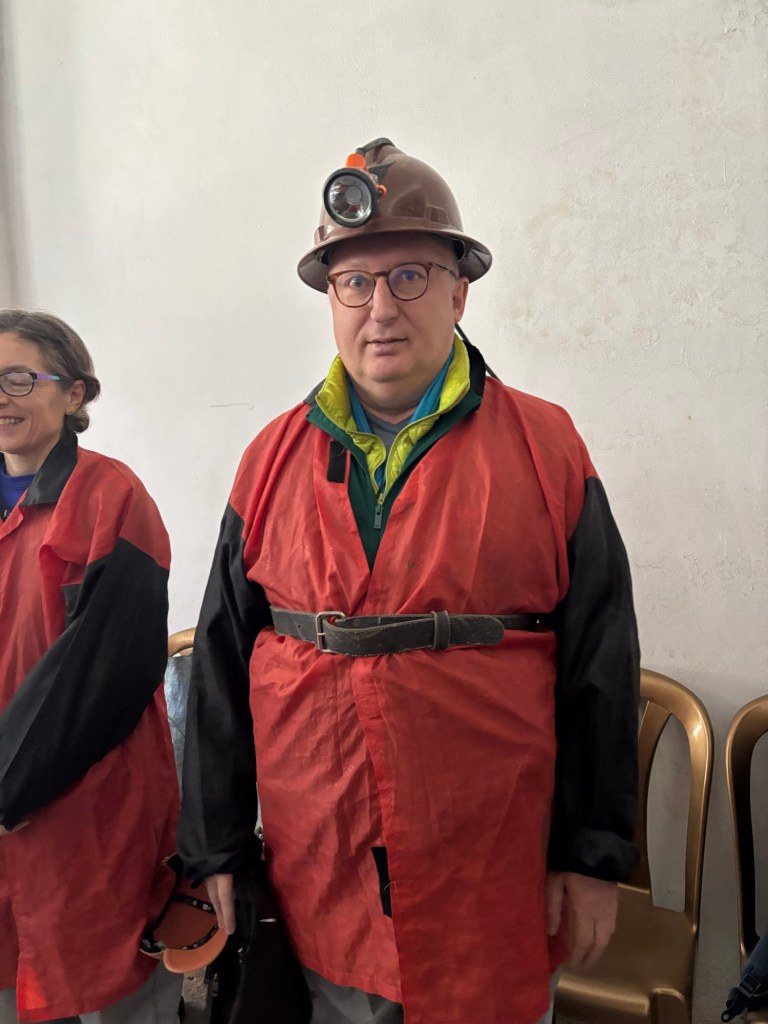
We were then taken to a central place , given a briefing and put into our mining gear. I sort of knew we were going to be near a mine , but by now it’s becoming clear we are going in.

So off we go. But first a little more history.

After passing through various foreign ownership the mines were nationalised in the 1950,s. But decades of failed investment saw the infrastructure gradually degrade and the huge refinery was closed. Today , it’s basically a system of thousands of independent contractors, some working under fairly loose cooperative structures, chancing their luck on striking it rich. Spoiler alert. Most don’t. It’s now pretty much completely unregulated, with absolutely appalling conditions and using techniques that seem to be from centuries gone by. Hand carts. Picks, axes, crushing stones by hand with mallets. Of course health and safety is almost non existent and the average life expectancy for men is in their 40’s. As someone whose profession has centred around dignity in the workplace, I found it very confronting. There is a whole secondary economy for the widows who, along with their children try to eke out a living in desperately difficult conditions for the tailings

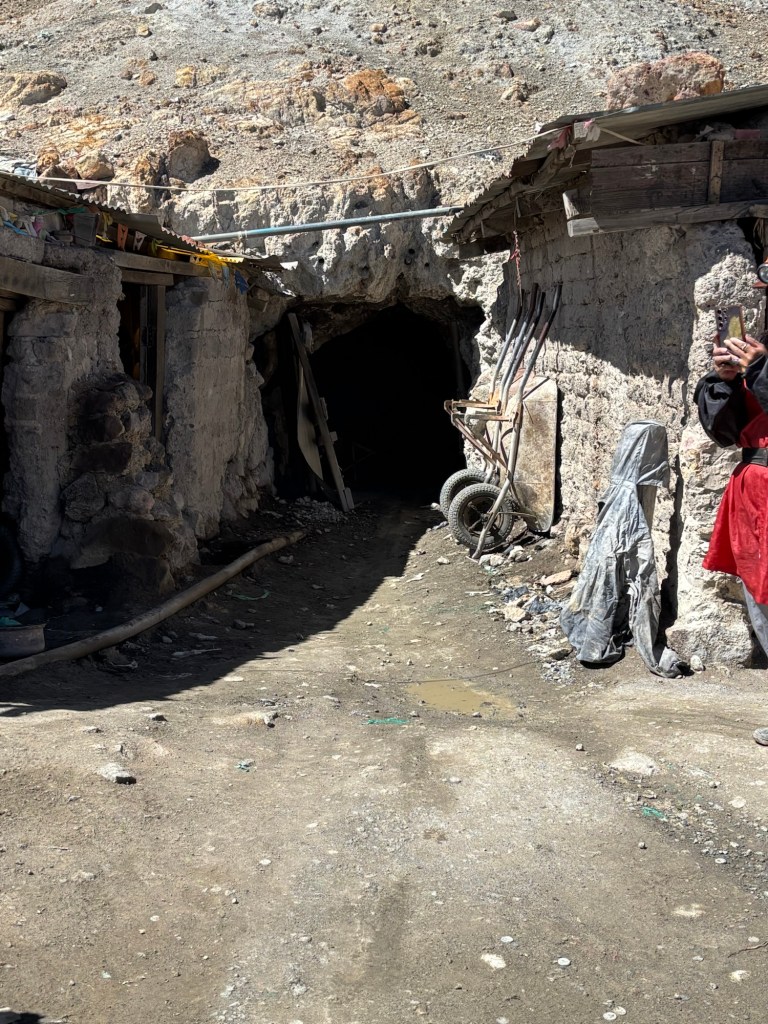
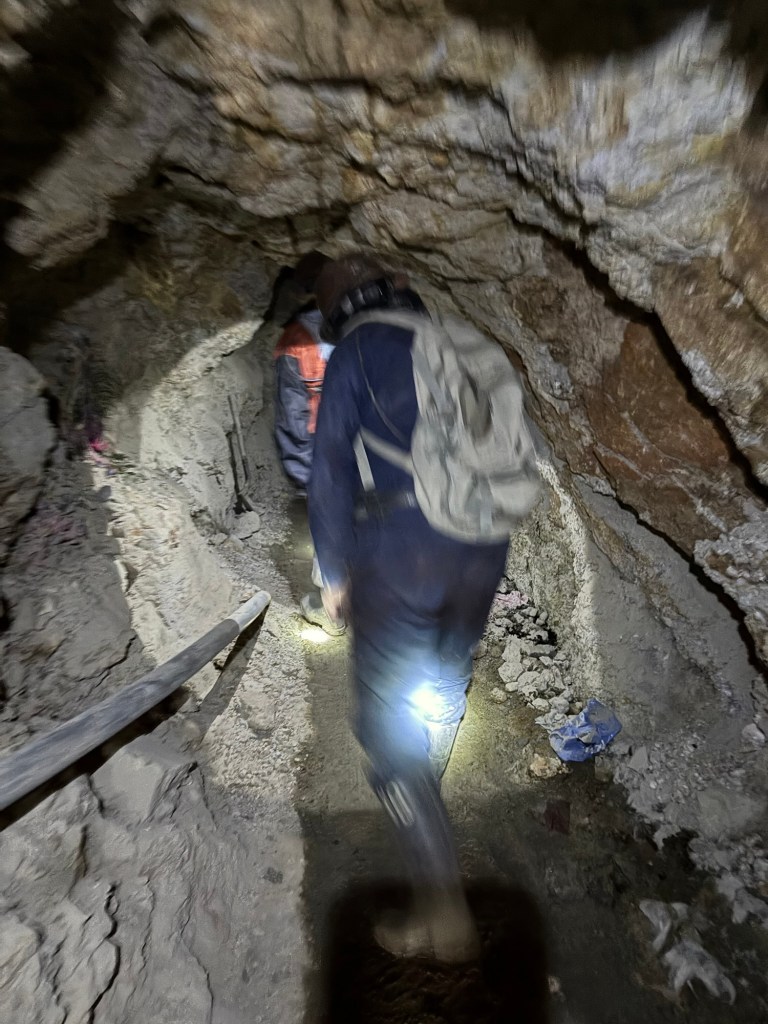
So we arrived and the entrance to the mine we were going into was barely a hole in the side of a hill. Jagged edges, no obvious support structures, and at times I felt like I should almost be crawling. I didn’t like it at all.

Yup. That’s what we were waking into

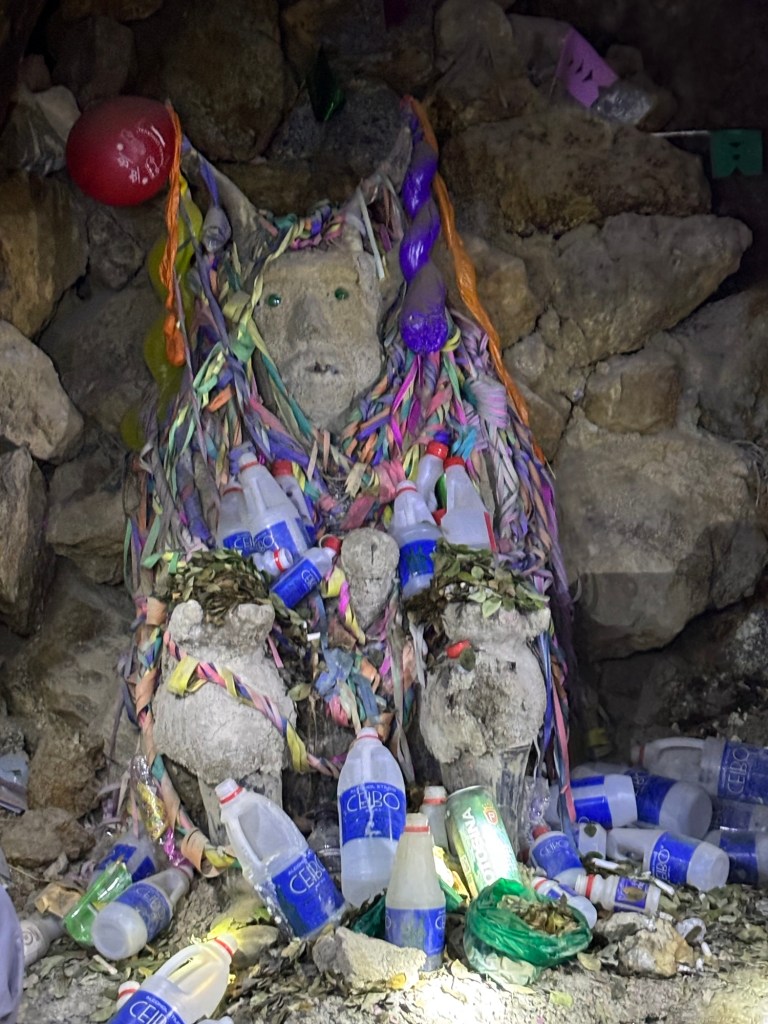
The smell of chemicals was in the air, the dust, the dryness it was all a bit overwhelming, of course no electrical lights and apparently no full maps exist and it’s no wonder there are many deaths. It was full on. We got to a point probably only 50m in where we stopped. Young men with wheel barrows of rocks were still running in and out and we stopped. There was an effigy of a quechen god that the miners pay respect to , mostly with cocoa leaves, cigarettes and the alcohol of choice. A 96% proof moonshine. ( if things were not already bad enough – let’s add alcohol).

By now David had exited and when it came time to go further in I decided to also turn back.

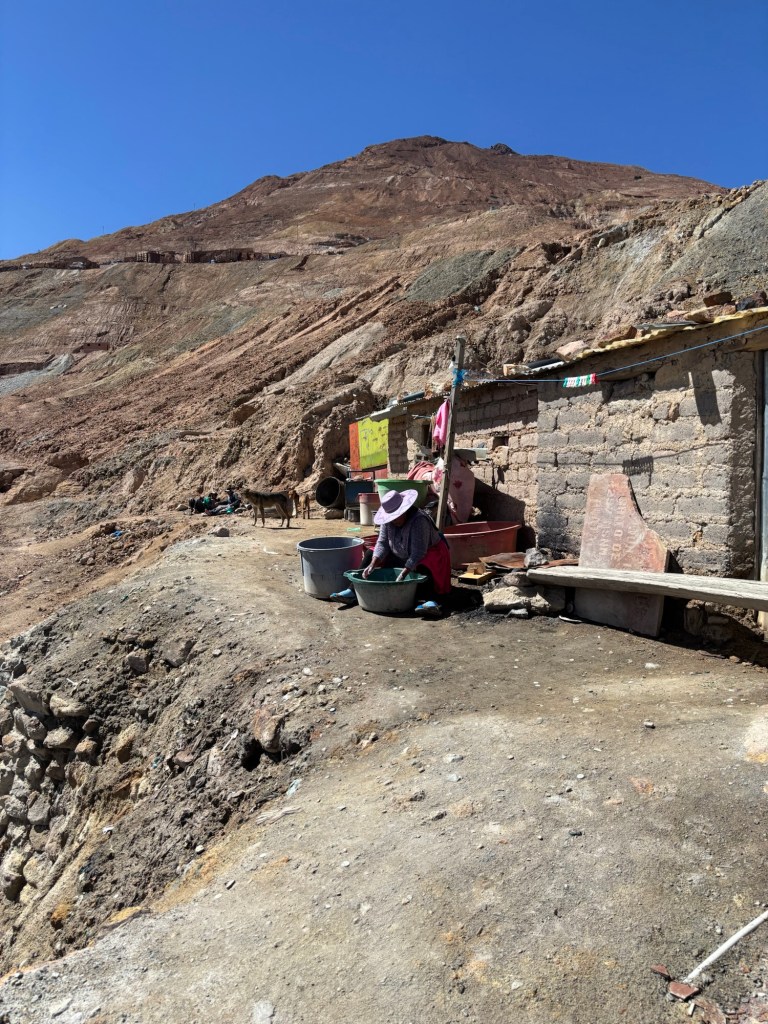
While we waited we watched the men carry on with their work. All by hand. Honestly it was like being back in the 19th century. While they worked a woman was doing some washing, one of the widows who along with her children, try’s to survive. They looked unwell. As did the skinny dogs. It was all very depressing. But they do it for the potential riches. As we were leaving we saw a canary yellow new Hummer , clearly that particular miner did well. But I wonder how long he will survive and what will happen to his family then? but hope is the currency they trade on here.

A widow outside her house doing the washing

It’s such a massive failure on so many levels . The state who have failed these people , who see so little value in lives. No regulation, no safety- where is the public responsibility here? Or is this just a privilege concept of the west? I really didn’t enjoy this day at all.

So bloody narrow.
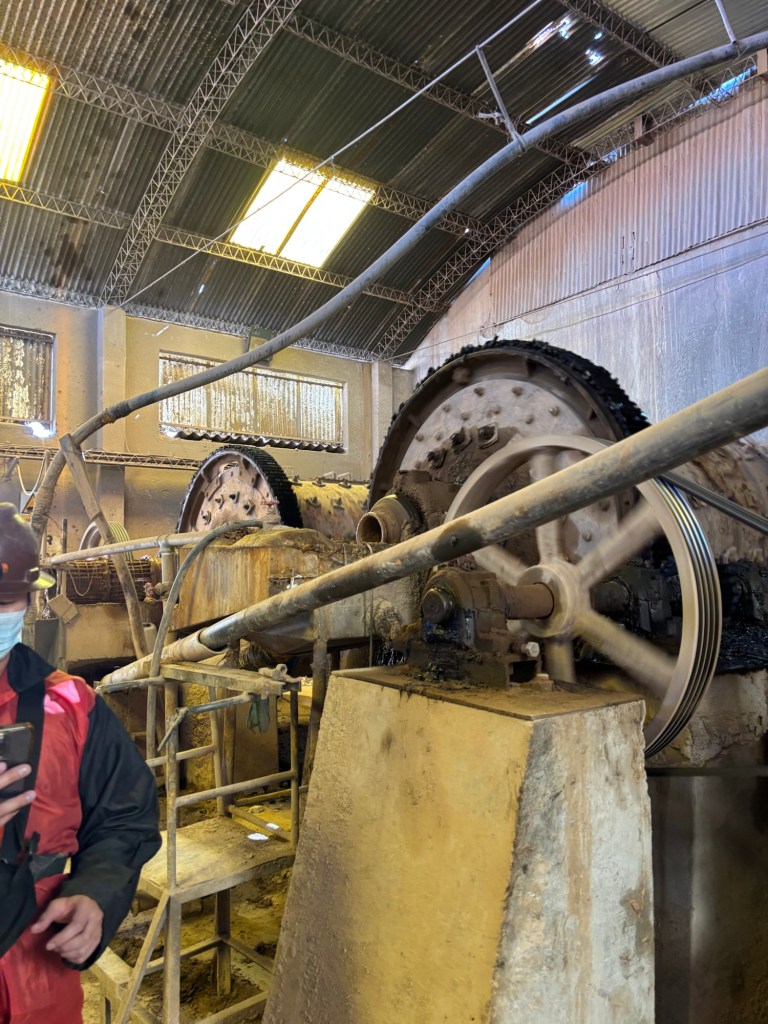
Massive machinery
Hard at work. Very hard at work.

What’s the capital of Bolivia?

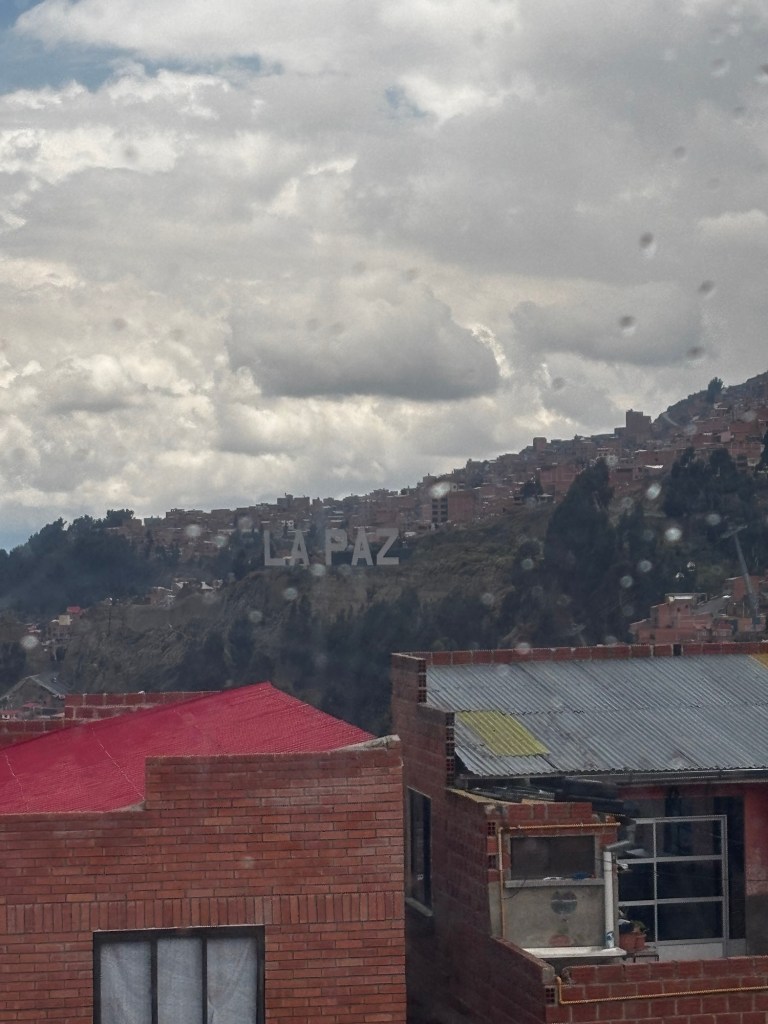
Sucre is the official capital of Bolivia, I always thought it was La Paz, in truth government and administrative functions do sit in La Paz. But that does not stop this city from being incredibly charming. So, so different from the craziness, grit and crowds of La Paz. Sucre is cool , calm and ordered.

We arrived two nights ago by overnight bus, not that much fun to be honest , it felt like we were off road for hours, turns out we actually were. So we arrived early morning and our guide had arranged a table in the plaza for breakfast.

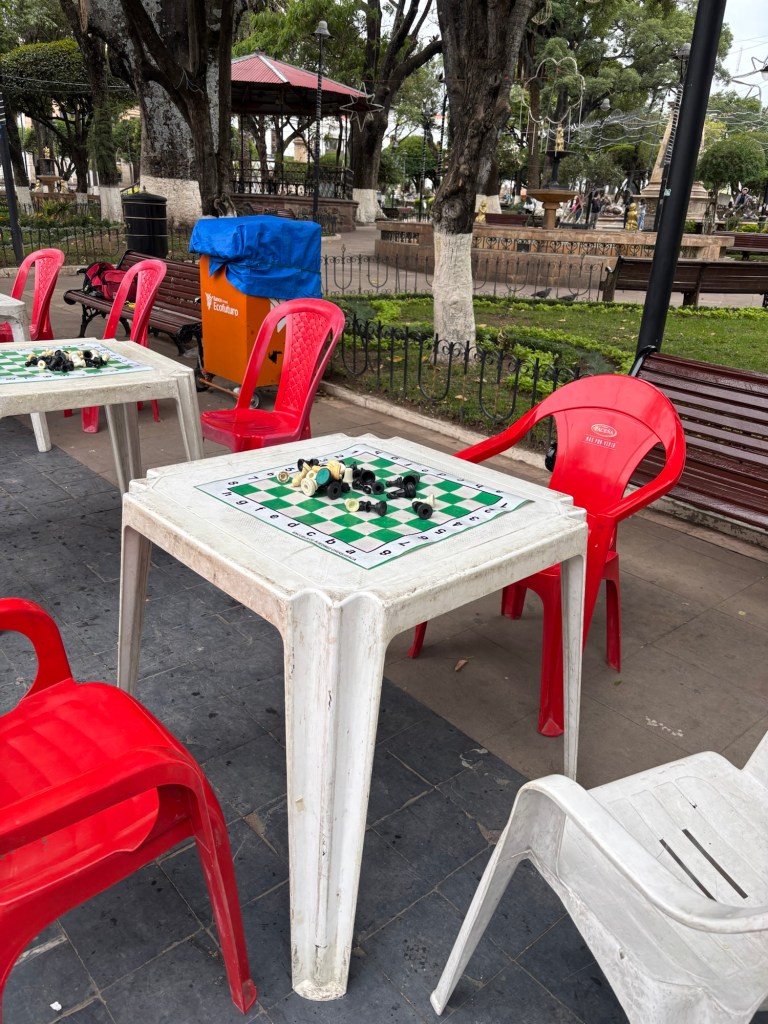
Sundays the plaza between 6am and 6pm are traffic free zones. So various community activities are arranged. Kids bikes, chess tables are set up, there’s a stage for performing and market stalls are set up. Sucre feels very European and is also known as the white city, with the white washed buildings it’s a stunner. Fancy chocolate shops, Bolivians dressed up in their finery it could not be more of a contrast from La Paz

Chess ready to go
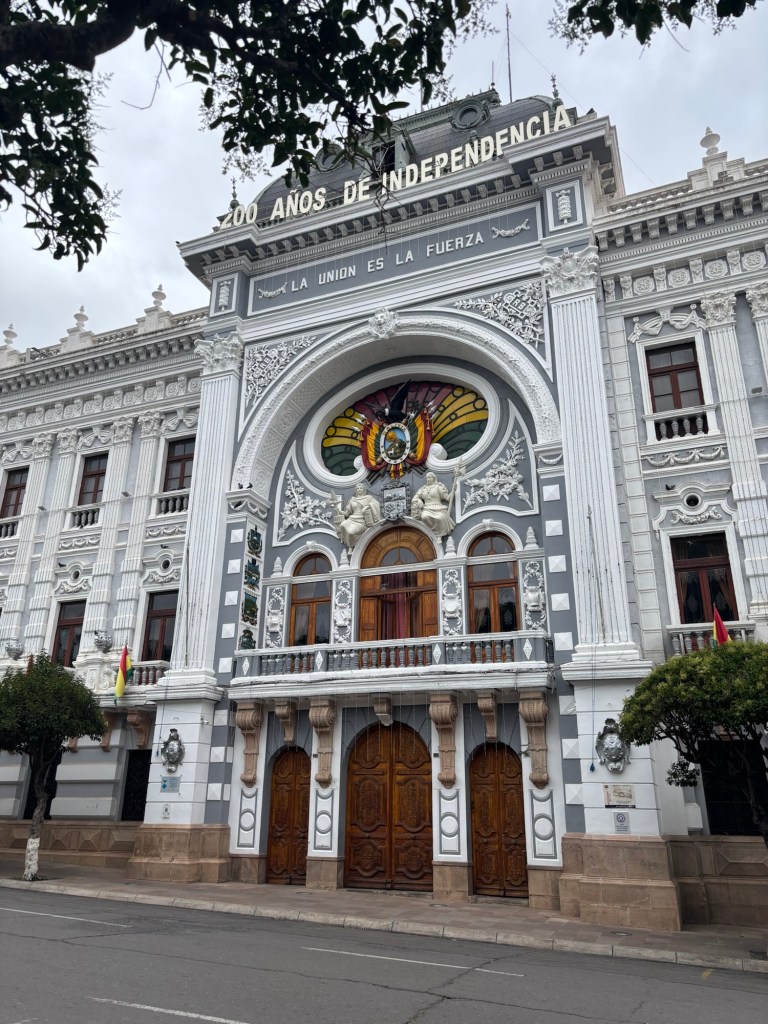
The town hall still celebrating 200 years of independence
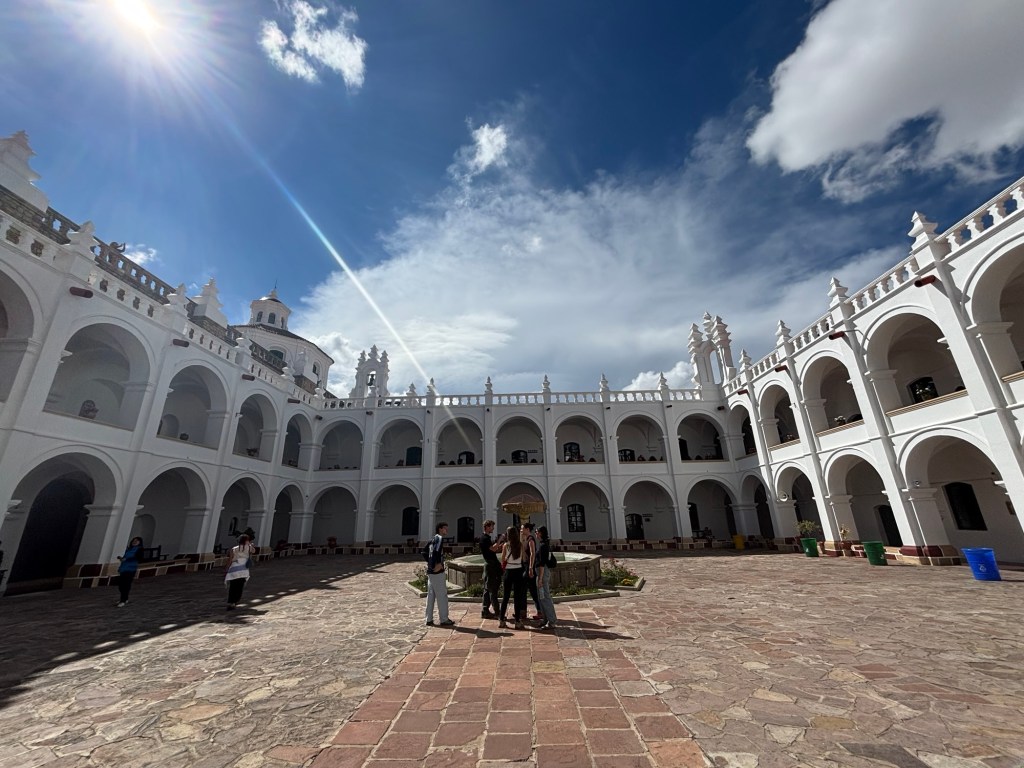
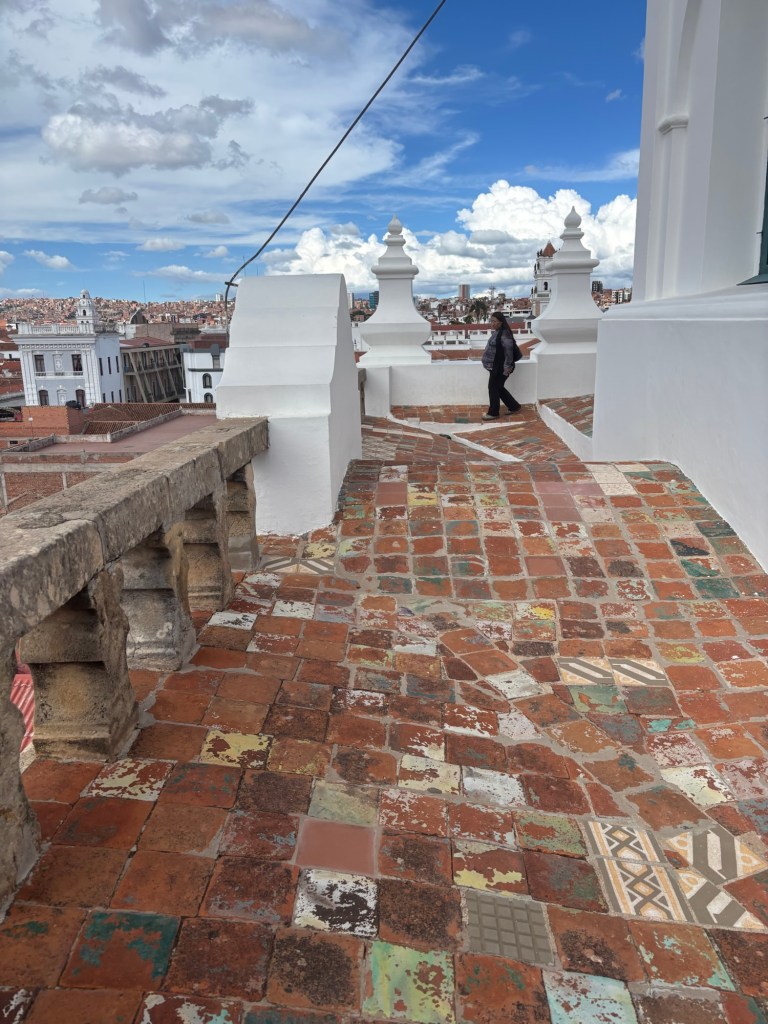
On top of the old convent
Now a school the old convent.
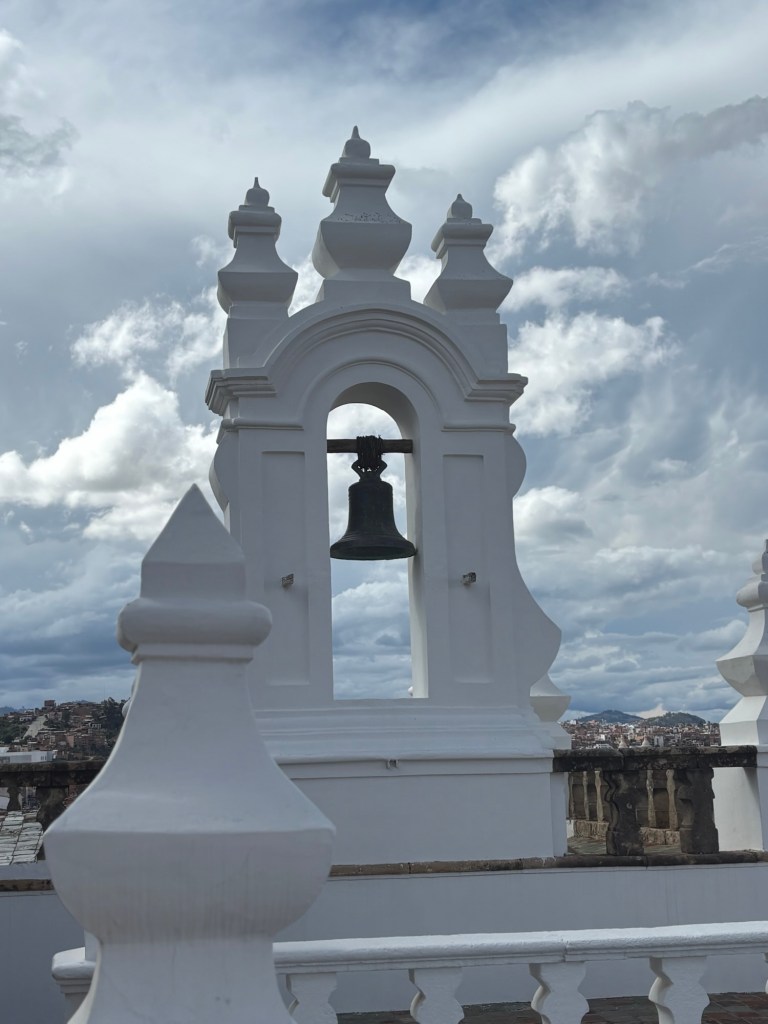
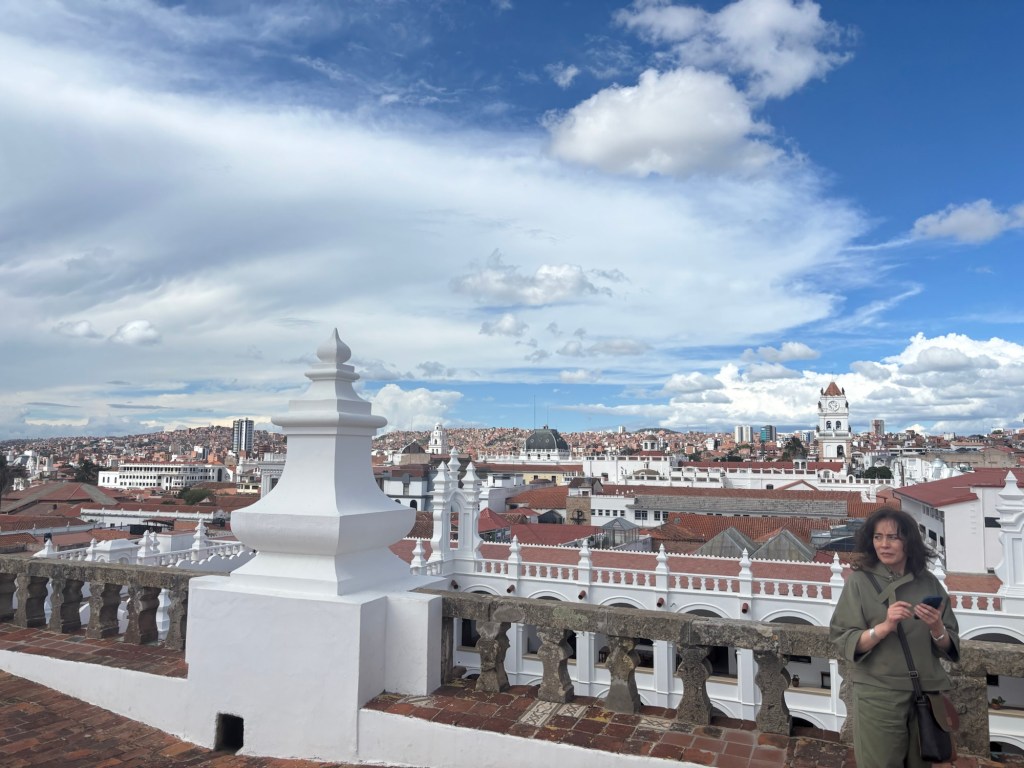
A rooftop view of Sucre
You can’t really see it here but you are allowed to walk over the roof tiles that are different shapes and “roll” over the building!
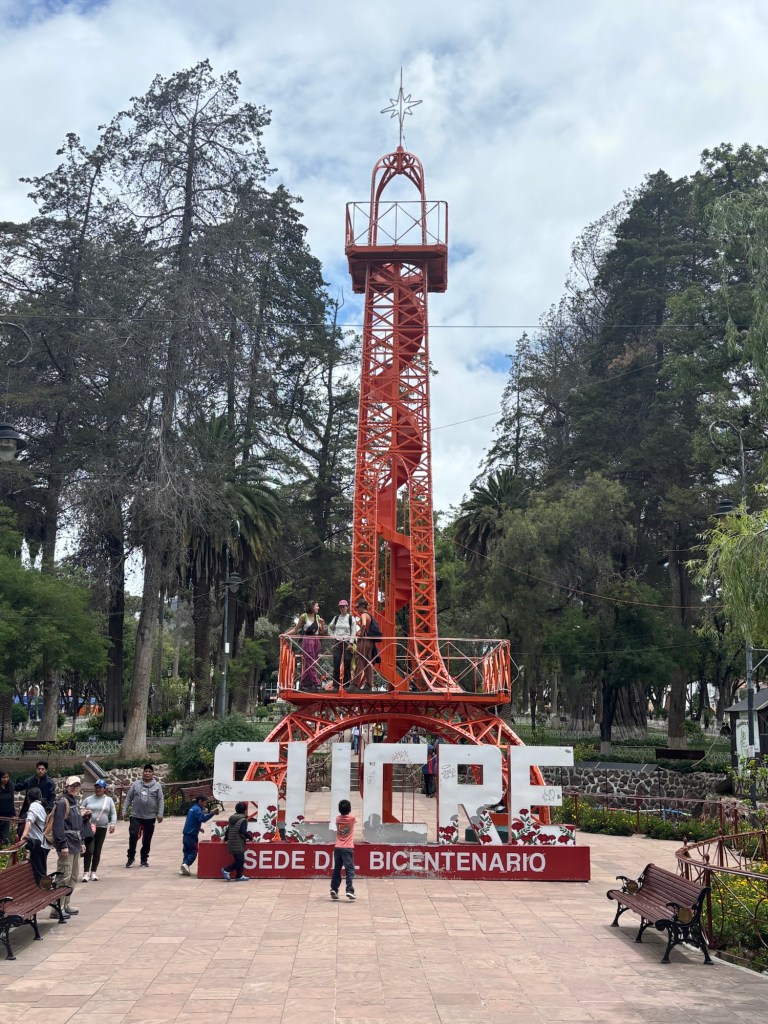
Apparently designed by the original architect of “the” Eiffel Tower

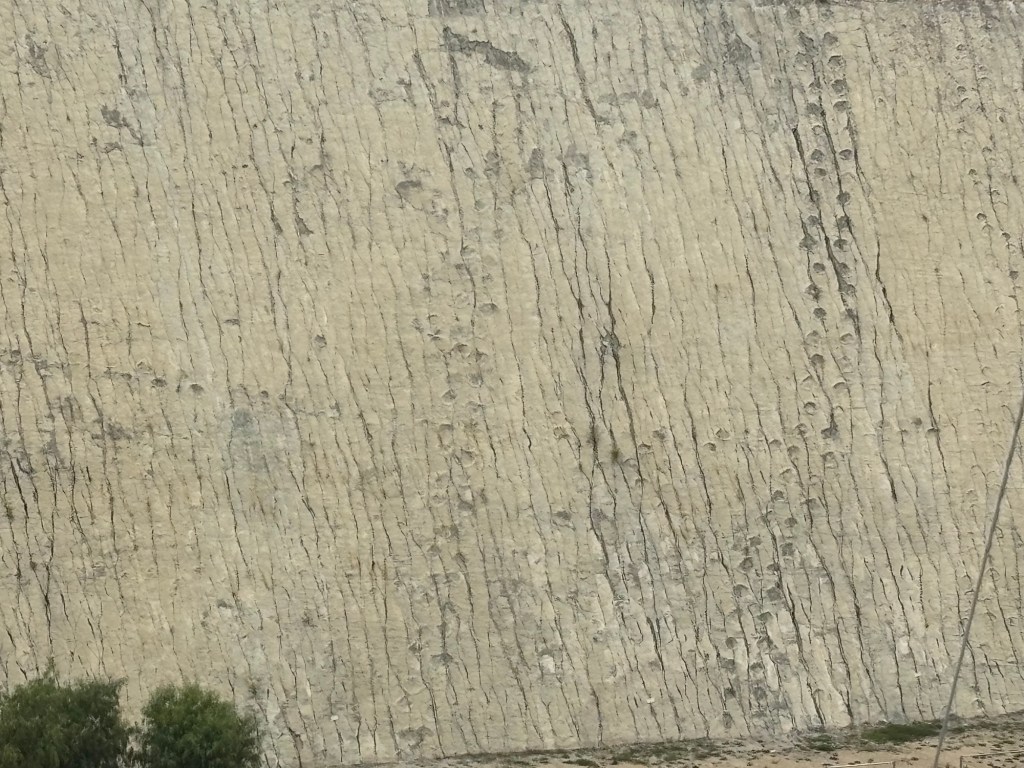
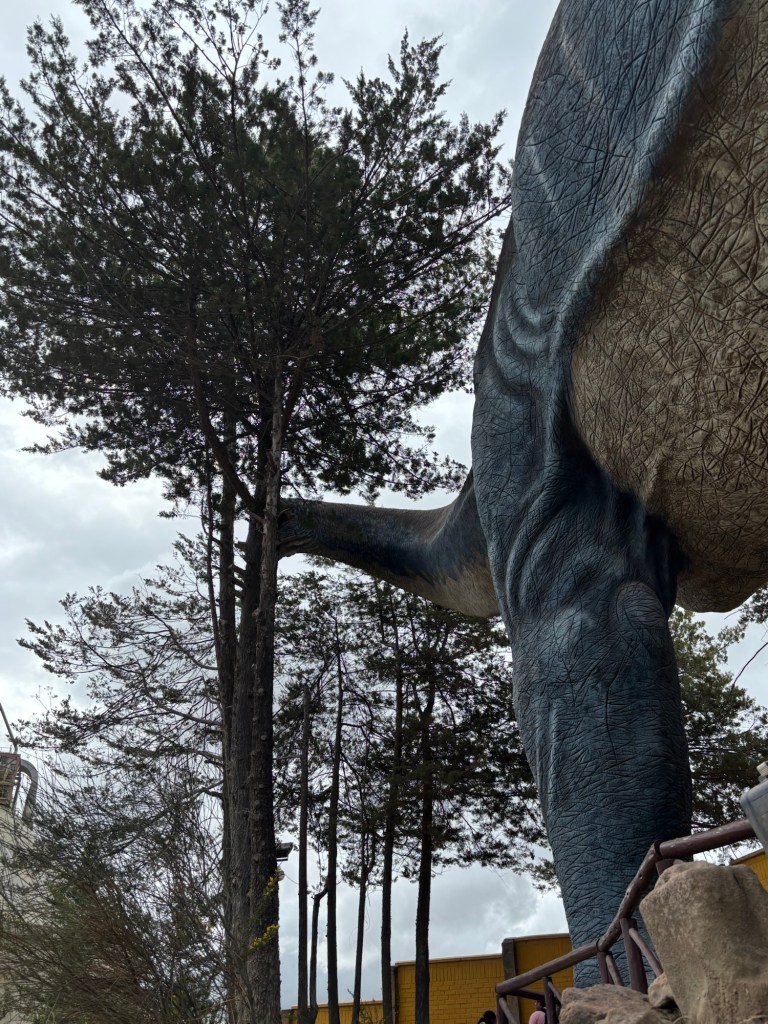
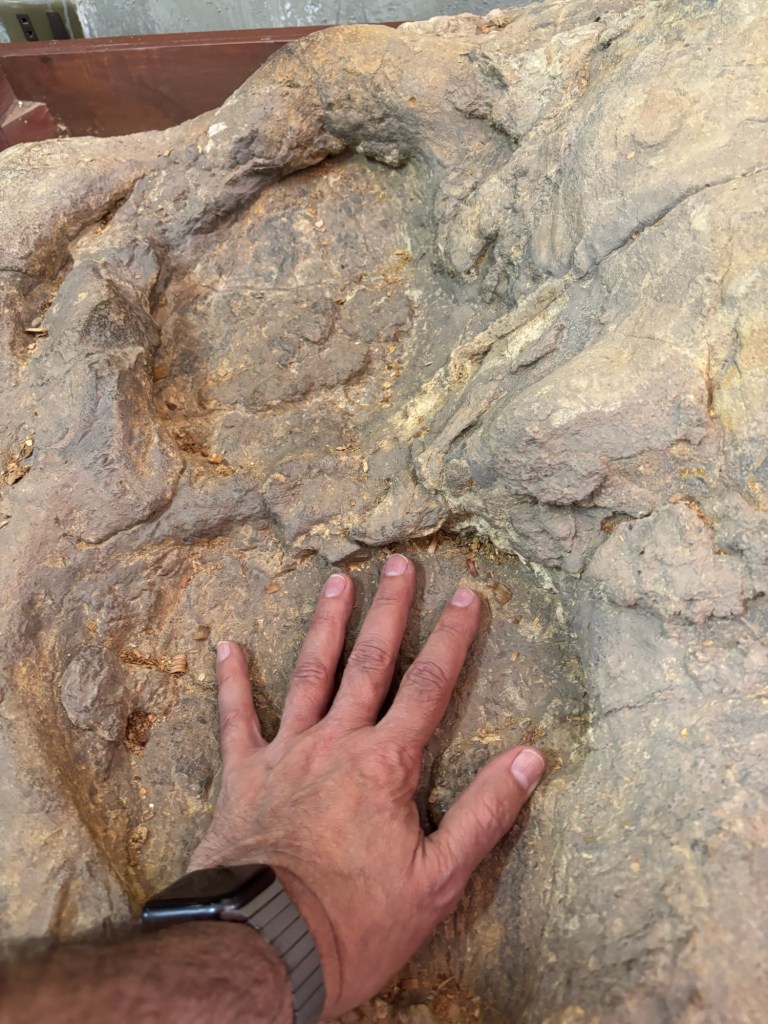
After wondering around the city a few of us went to see the Dinosaur footprint fossils. It’s right next door to a huge cement works that “discovered” them in the 90’s. It’s now been turned into a park. Quite well done I thought , but the guides are quite put off by the fact that you don’t get really close up after a bit of a major landslide a few years ago. Goodness knows how this will be appropriately preserved, but for now I got to see them.

They they are!
Remarkably still can touch this one!

Back at the charming hotel we bumped into two of the crew from our last tour so we had a bit of a reunion moment which was fun. And then it was a very early night to catch up on some sleep.

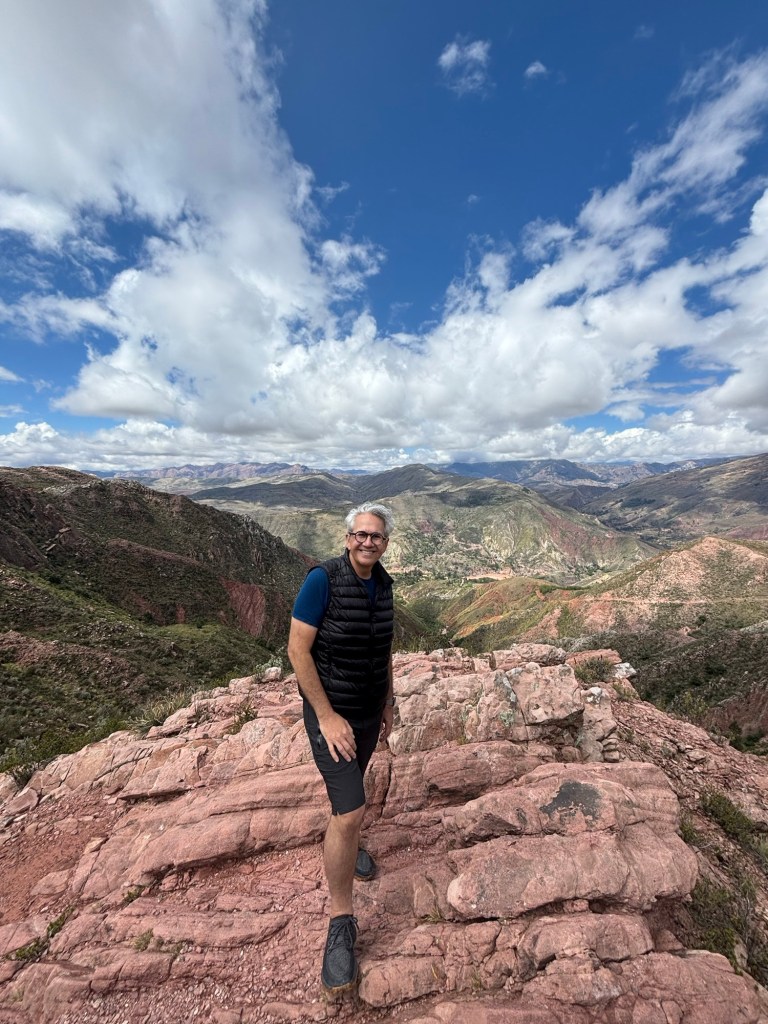
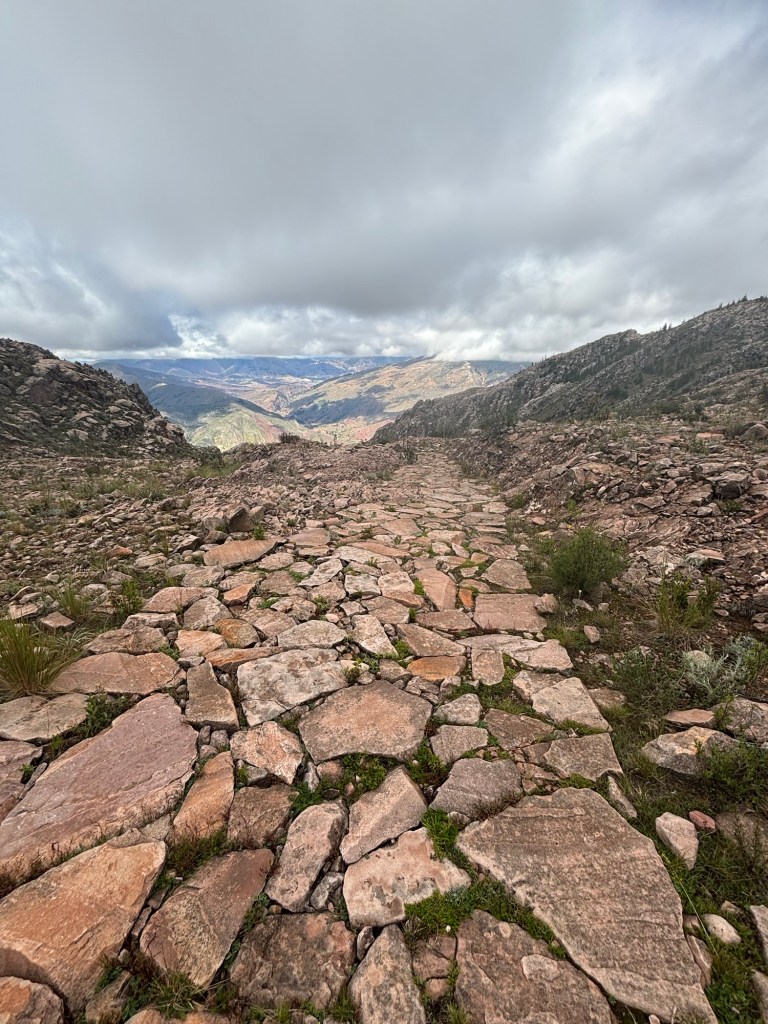
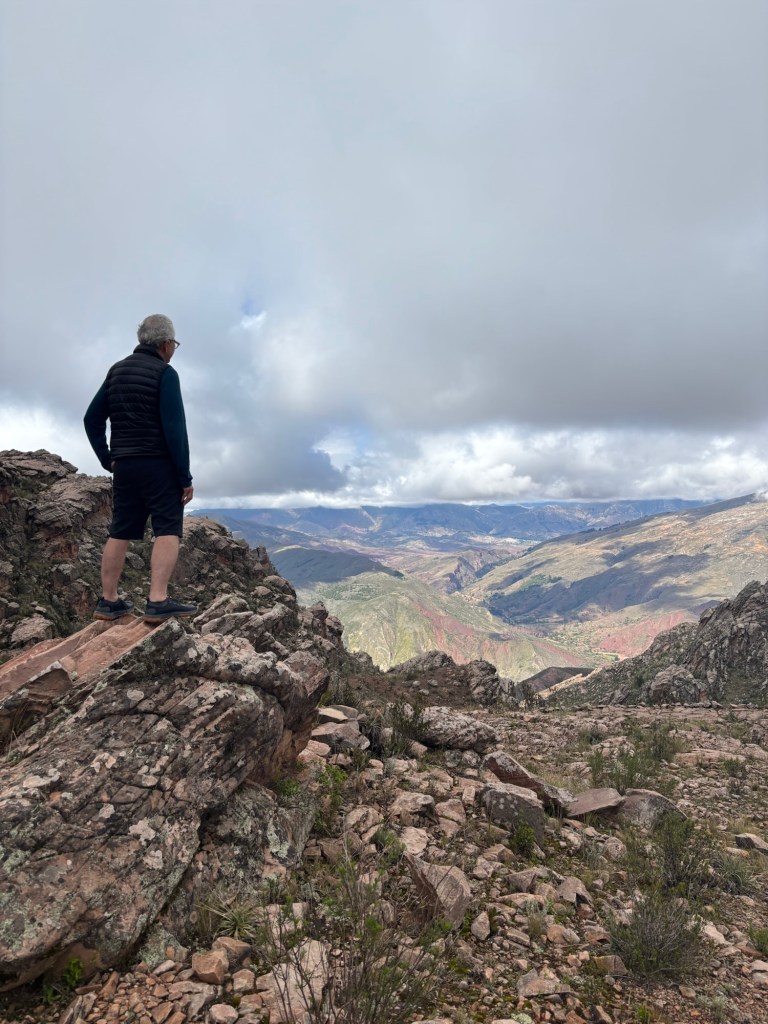
Next day it was up early for another drive up and walk down an old Inca trail. So nice being outdoors and the weather was fantastic. These trails are centuries old , some pre Inca , rather pleased we were going down and not up!

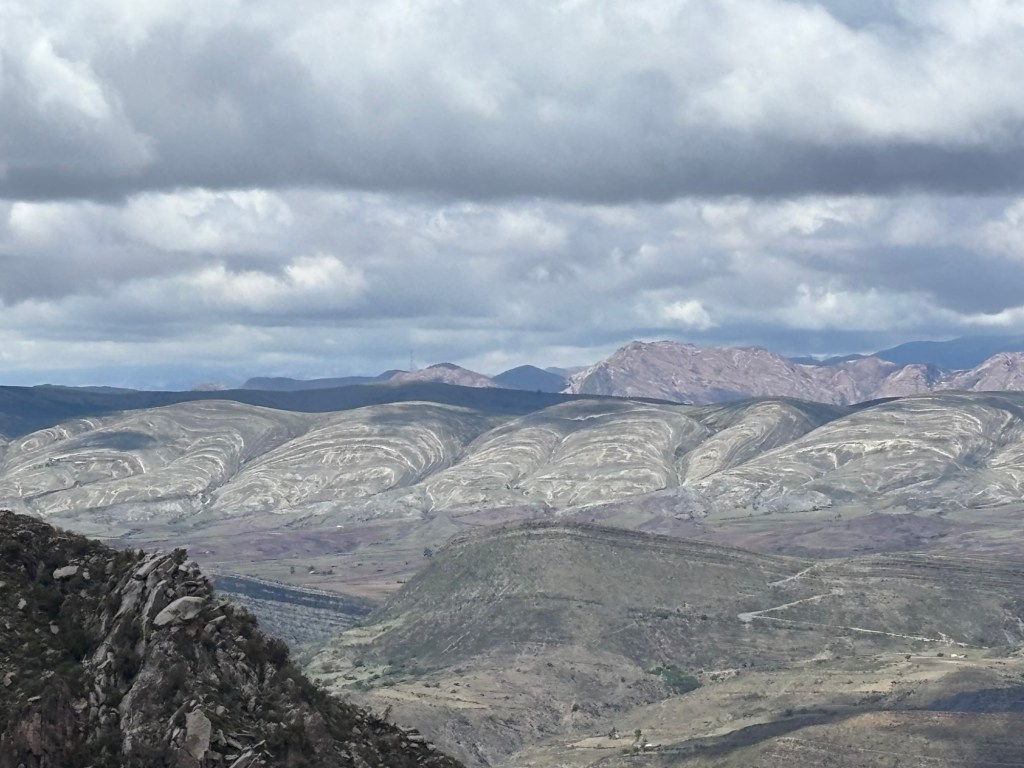
Also got to view this incredible crater that looks , the swirly stratification is incredible!

So after a long walk it was back into town for some lunch , a wonder around where I was hit by my first bout of oh-oh where’s the loo NOW! So that first aid kit Imodium got brought out , hope it clears up before the bus ride tomorrow! Back up into altitude again which is tough for David and we are getting closer to the famous salt flats.

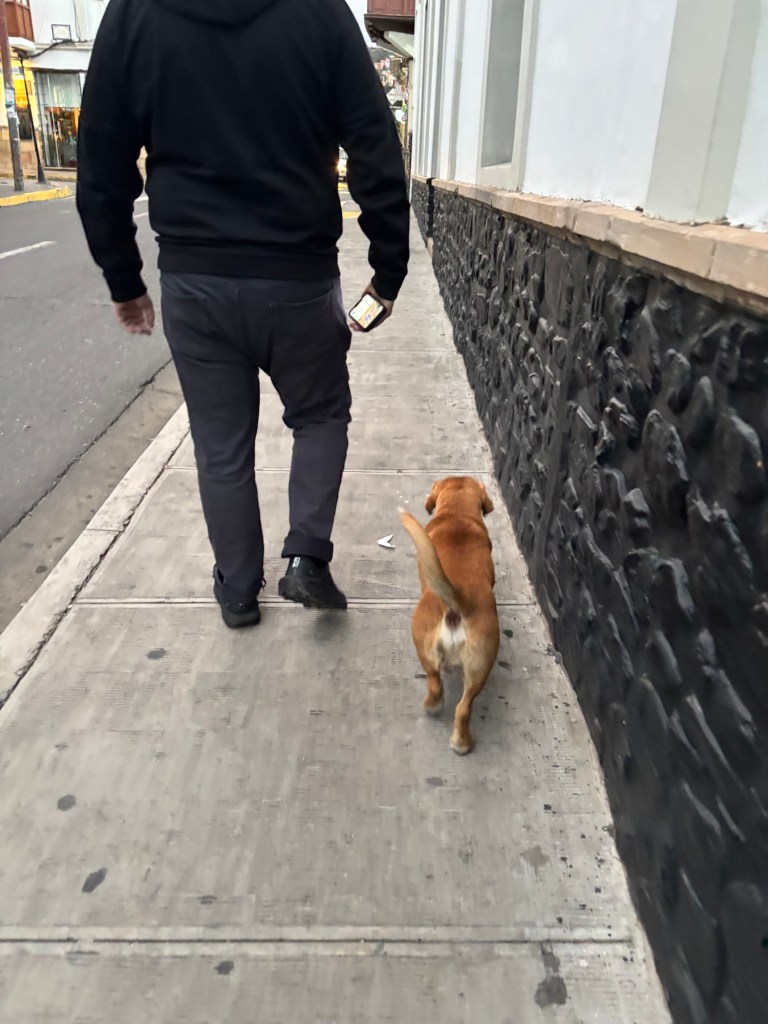
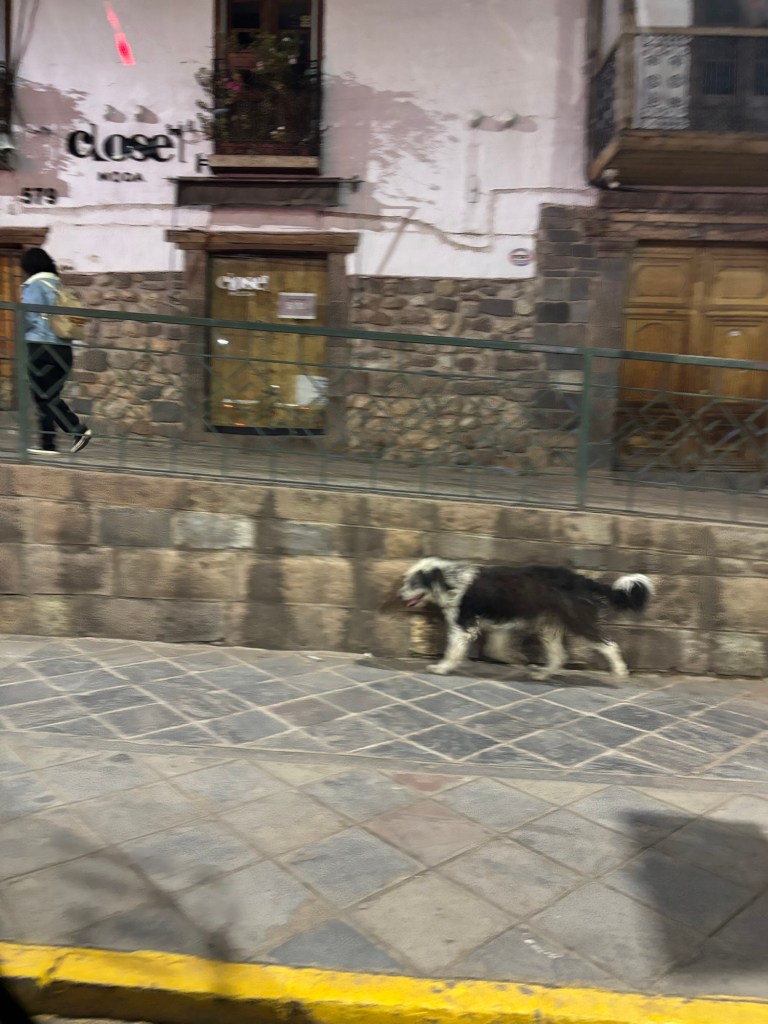
The dogs here are incredibly friendly and seem to latch onto to tourists, this guy ( we called him Pedro) has been following us everywhere, on walks, waiting outside restaurants, bars and just sits outside the hotel for us. It’s incredibly endearing and I want to bring him home.

Pedro following us around
Wanting to get into the hotel.

He’s so cute and seems to be in really good condition. At the end of the day I relented and did feed him. I know, big mistake!

Farewell La Paz

It’s been a restful few days in La Paz. A chance to get some laundry done, sleep in and look at attractions at a much more leisurely pace. Important before we head into the next Intrepid trip which stats today.

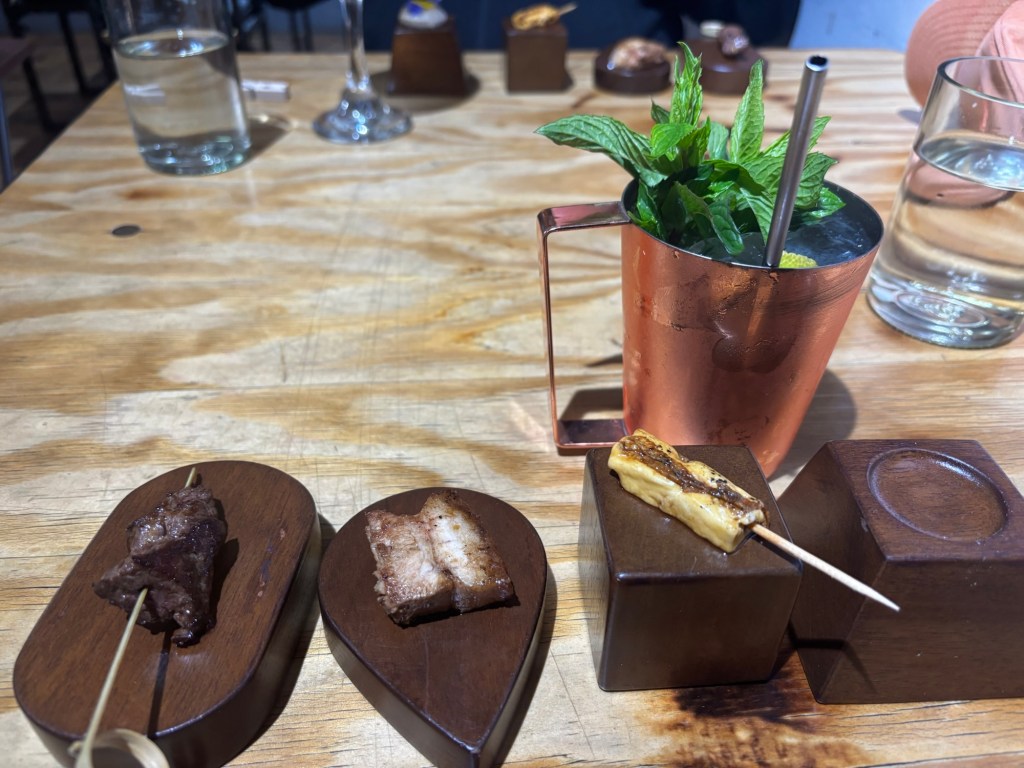
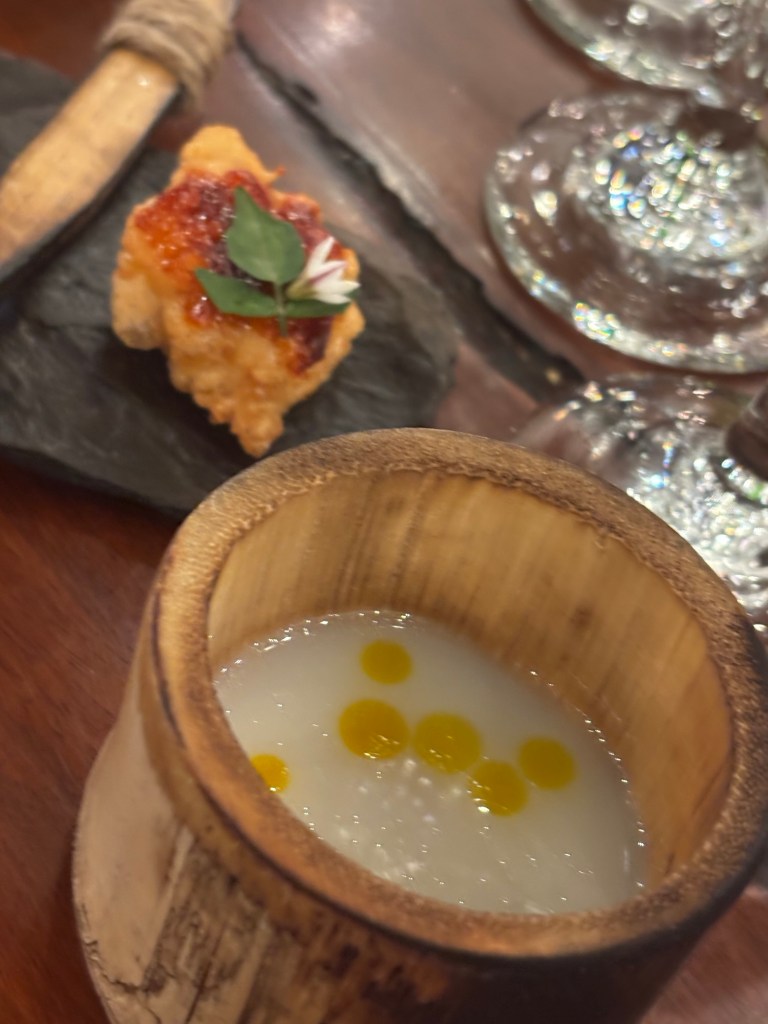
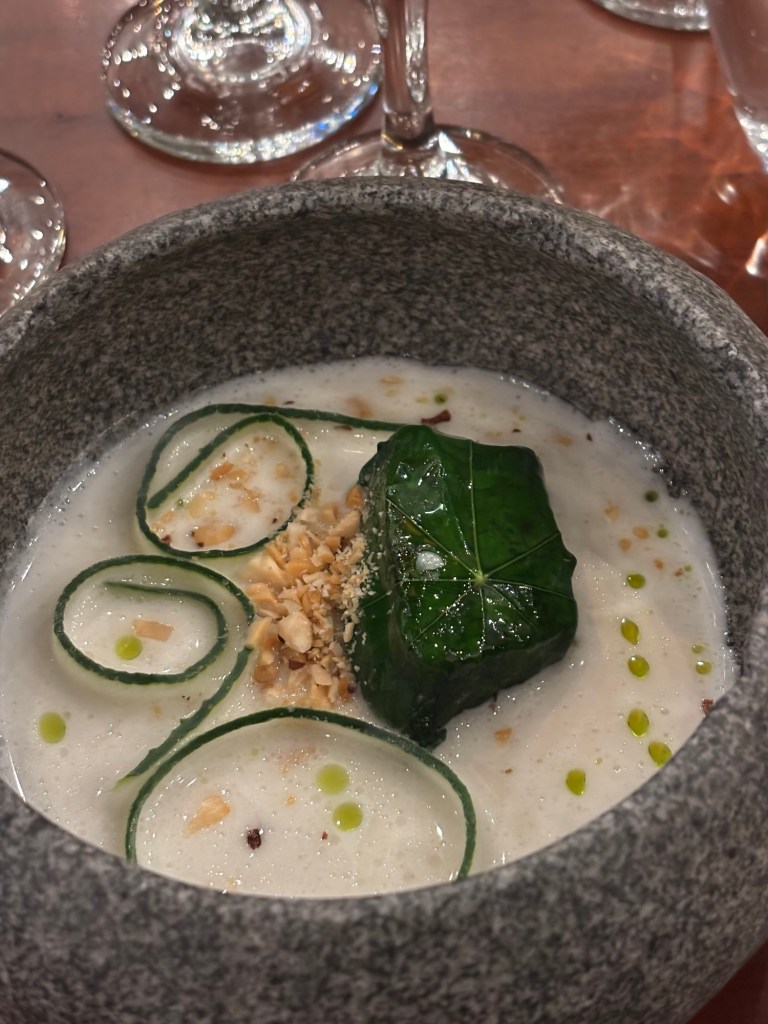
There have been some outstanding food treats in the vicinity of our Airbnb , a social enterprise restaurant rated one of the top 50 in Latin America and a small dégustation menu ( 9 or 14 courses) we went for the 9 course and it was stunning Menu cost $40us each. Bolivia is definitely cheaper than Peru , apparently one of the cheapest in South America. You can tell in a lot of ways.

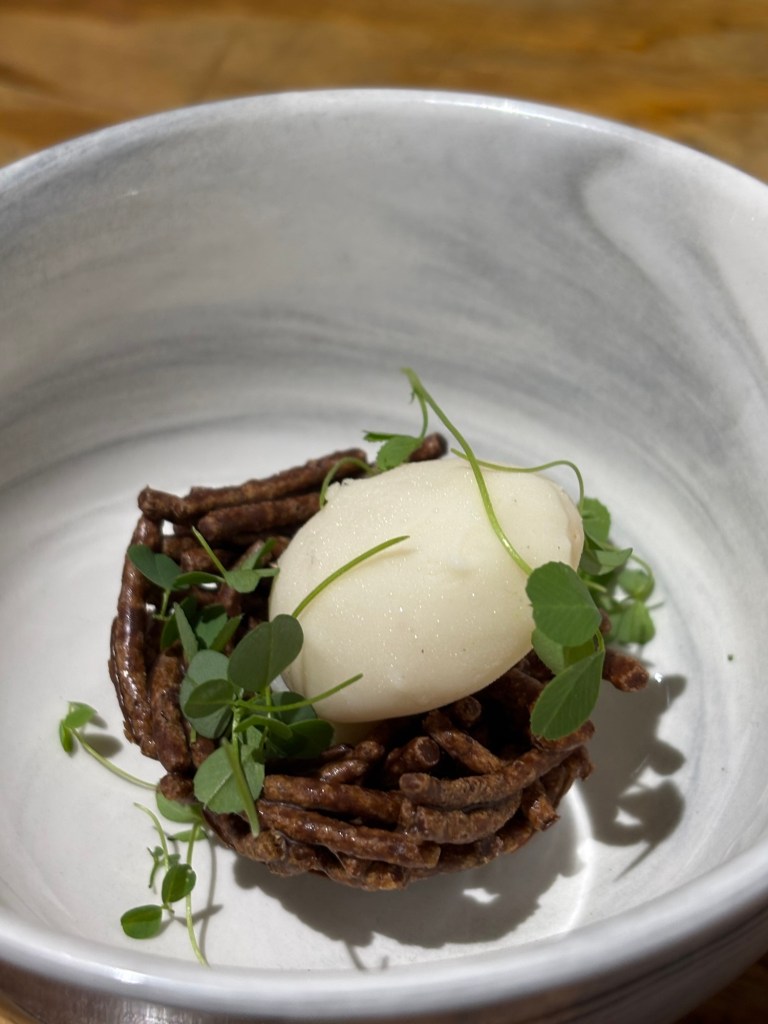
This little quinoa nest. Yum
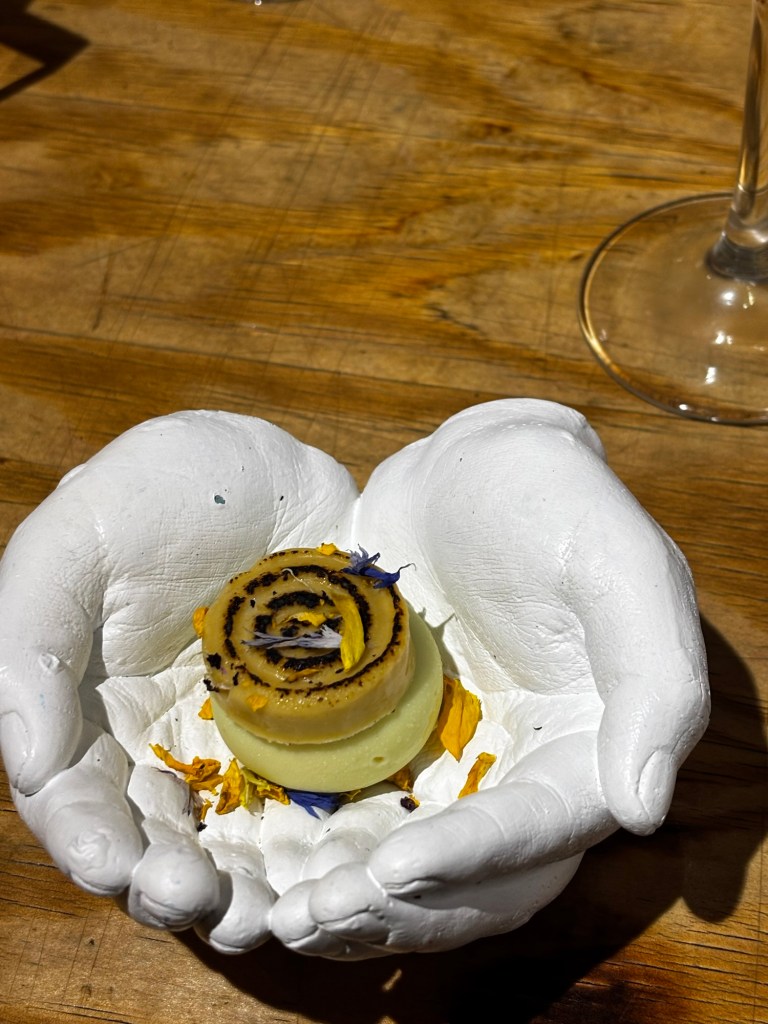
Unfortunately we didn’t get a menu , but that doesn’t stop this looking appetising!
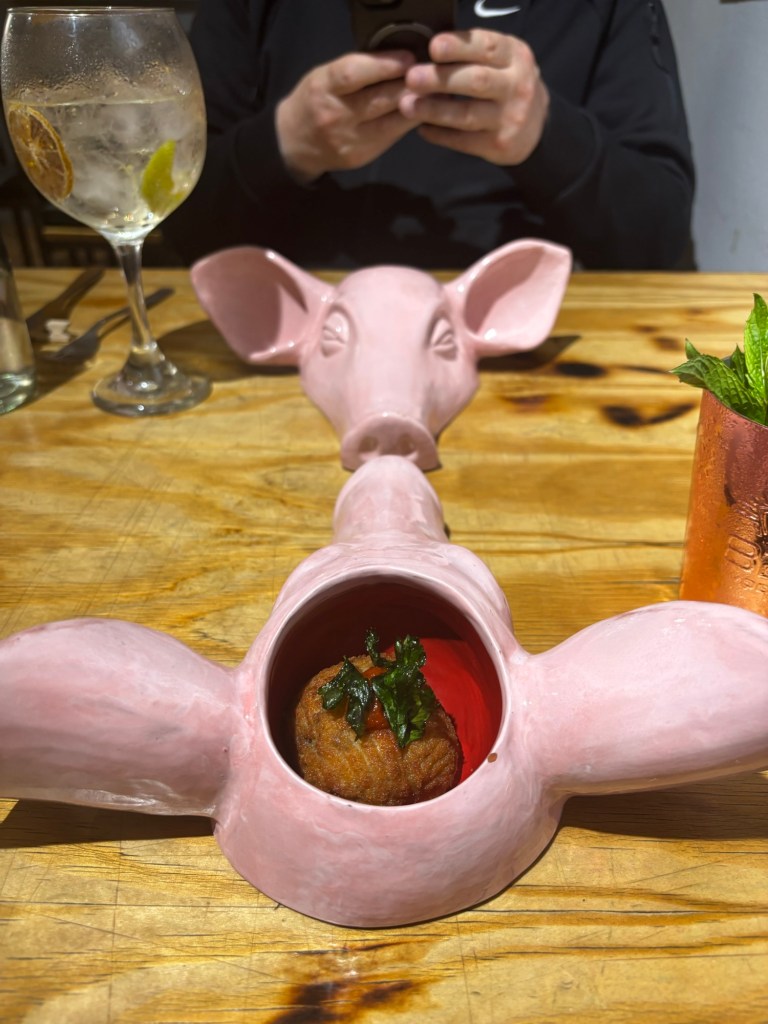
Pretty sure this was brawn. Not sure what gave it away?

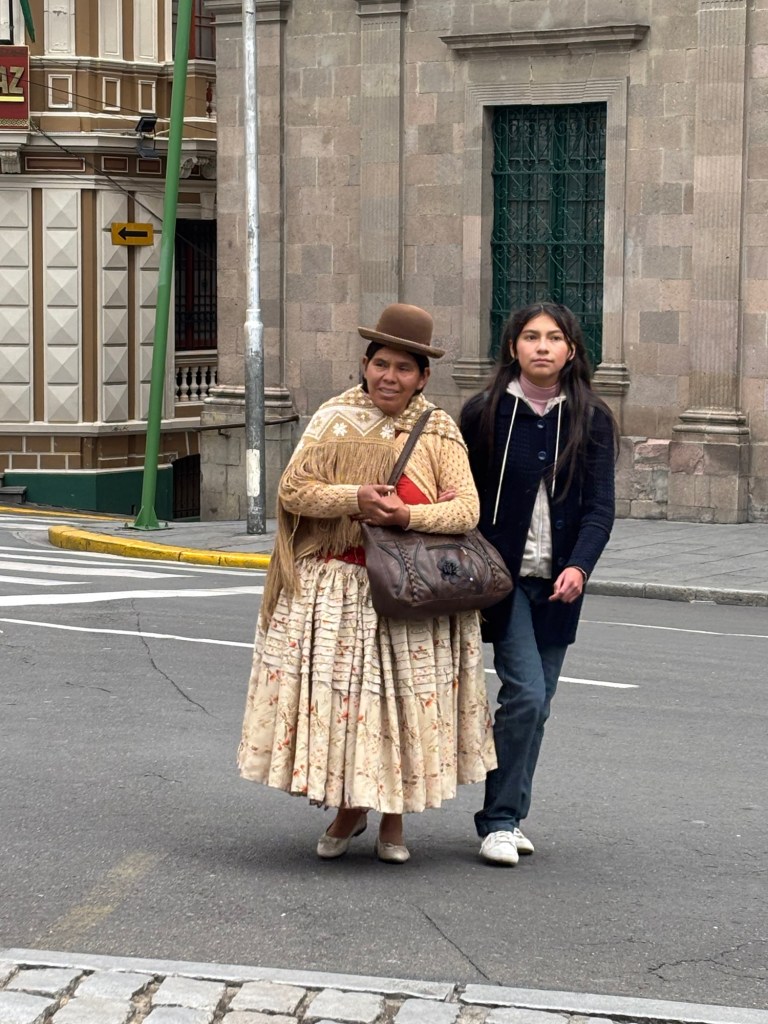
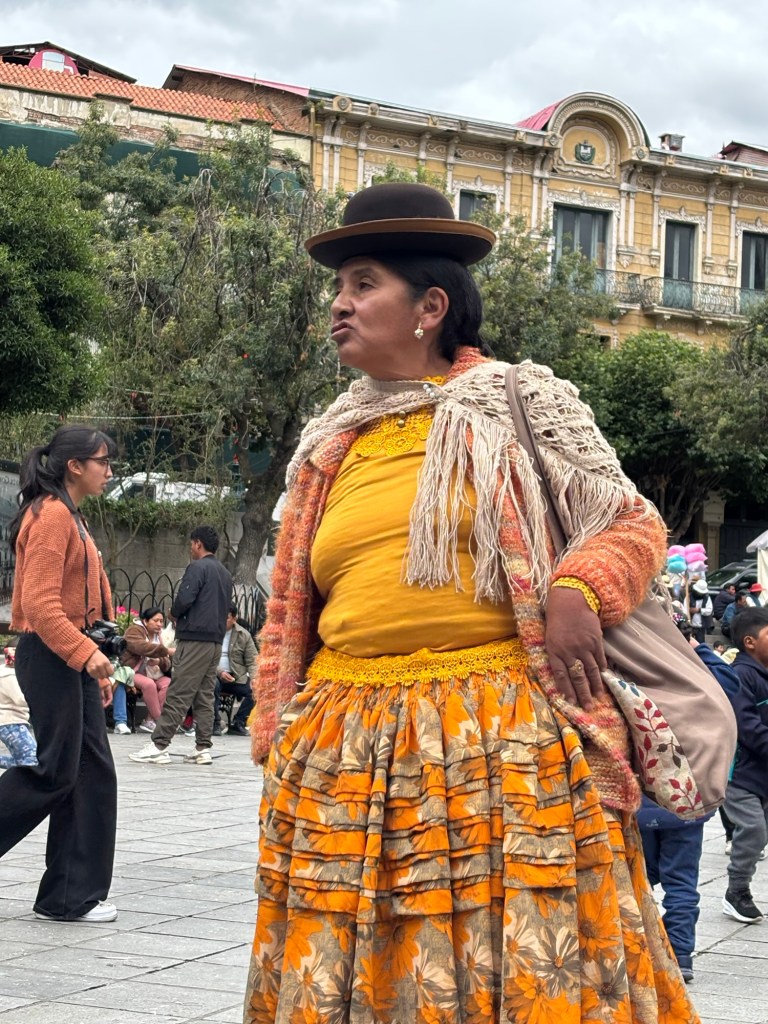
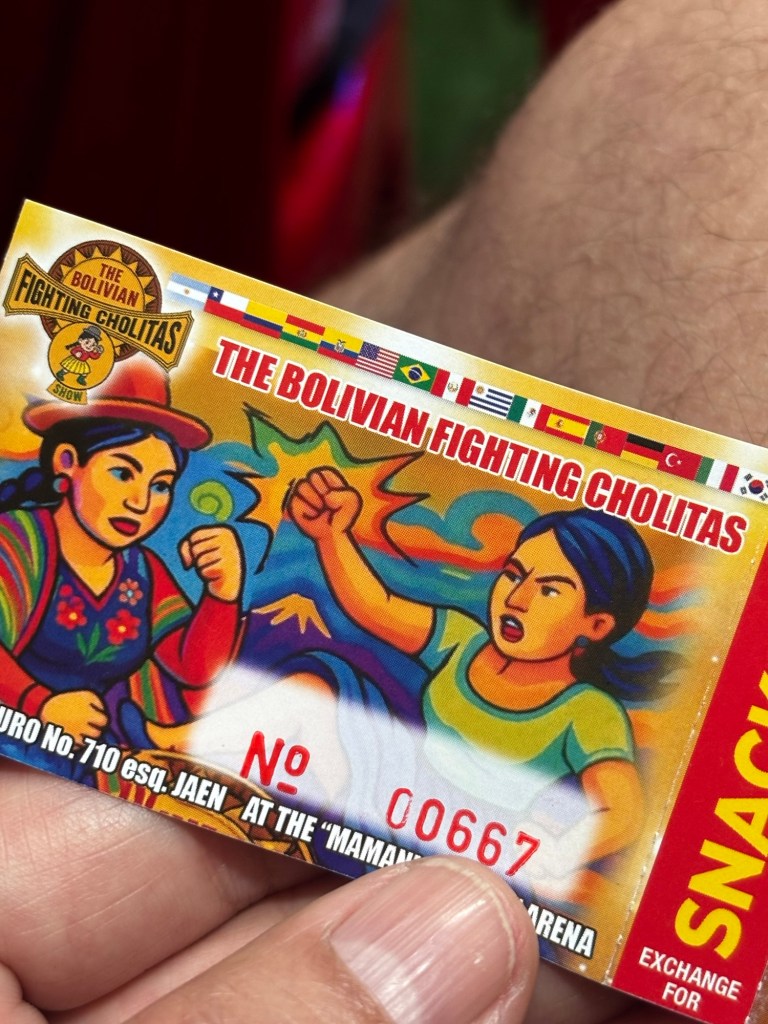
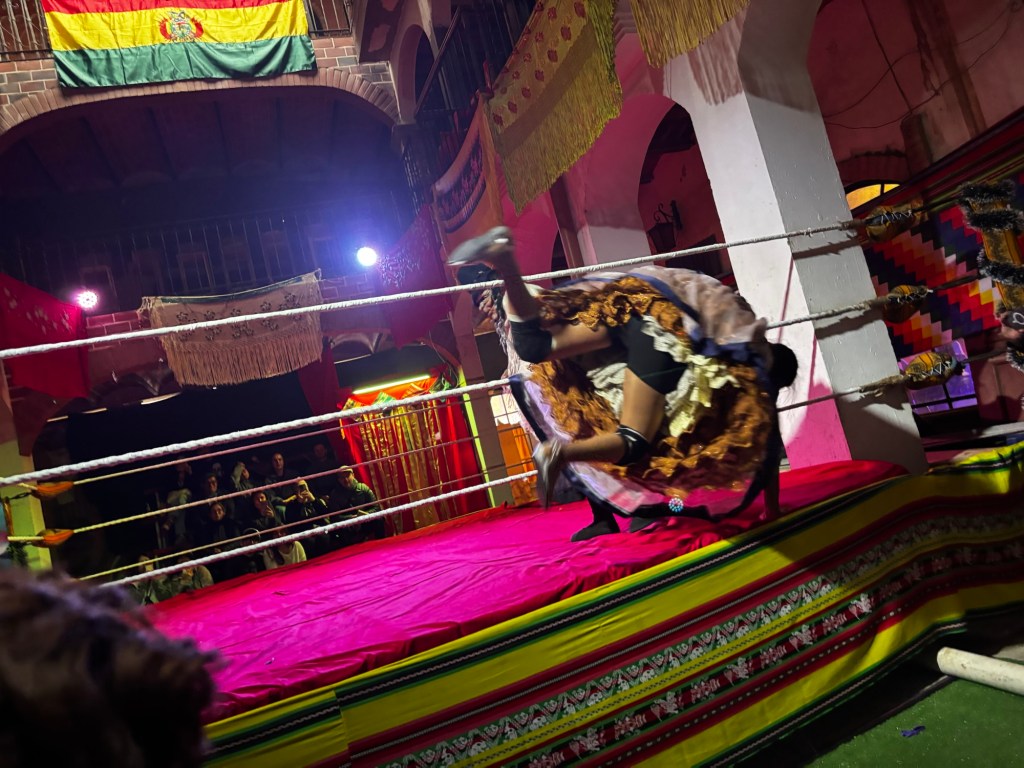
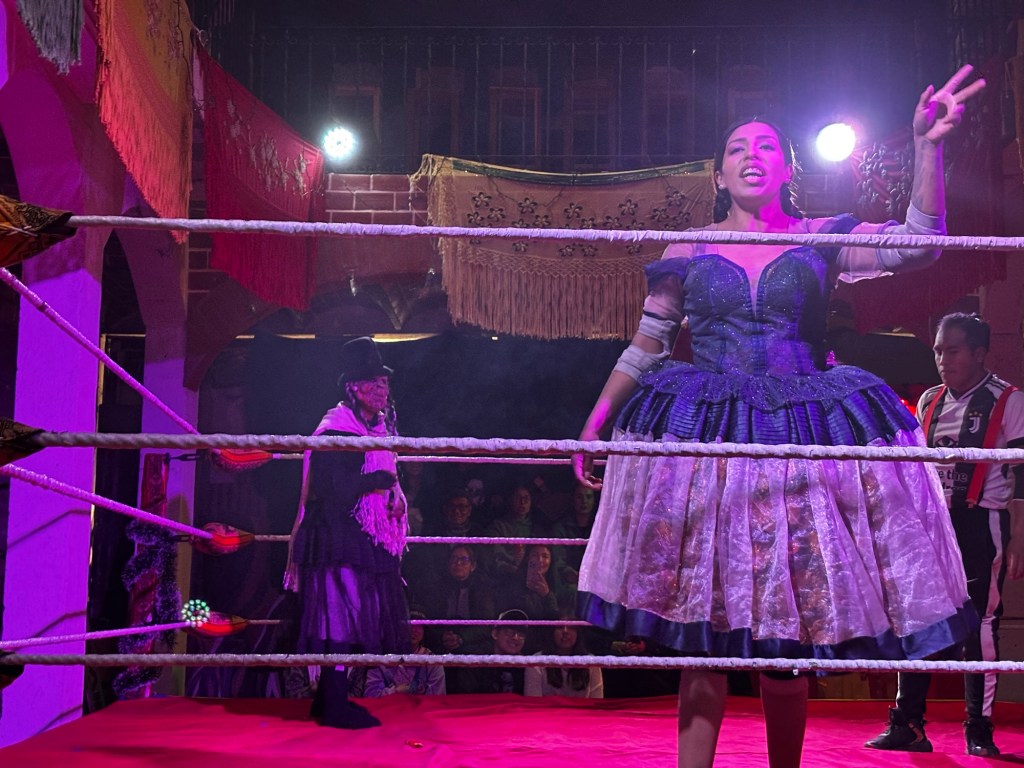
We also went to the Cholita’s wrestling show. Definitely gimmicky and touristy, but still a bit of fun once you let yourself get into it. cholitas are a distinct, proud indigenous group recognisable by their distinct dress code . Colourful and the obligatory hat which seems to be perched on their heads. ( must be pinned as I can’t work out how they stay on?)

Back to the wrestling, it was amusing. But also a wee bit cringe for me. But here are a few pics , you had to not take it too seriously.

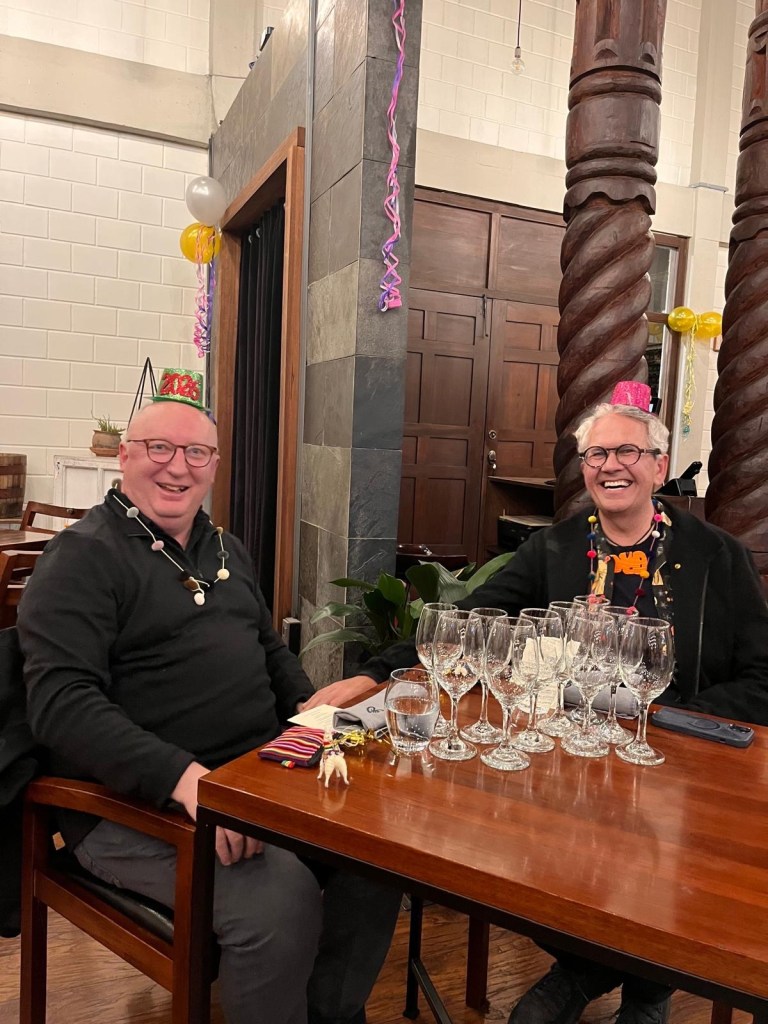
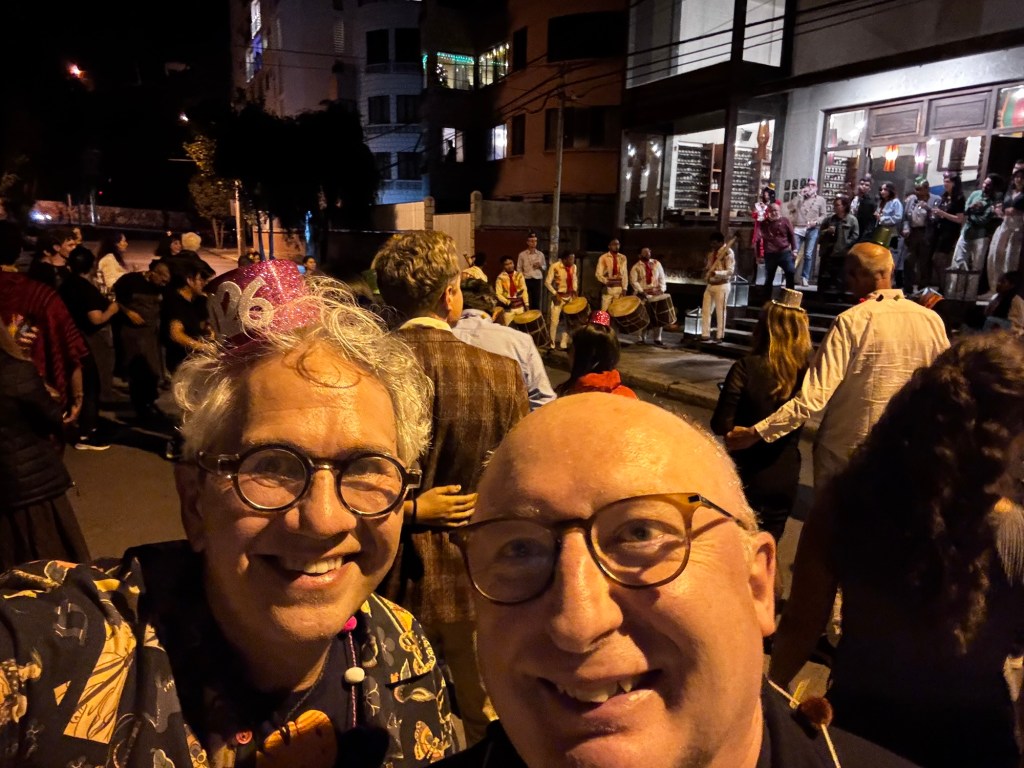
New Year’s Eve was a blast. We went to Gustu in the leafy well to do suburbs of La Paz. Gustu was founded by one of the Chefs from the famous restaurant Nobu. It was pretty fancy and included another plethora of gorgeous treats. Followed by in house entertainment that spilled out into the streets at midnight. Pretty much had no idea what was going on but we went with the flow – as you do in these situations.

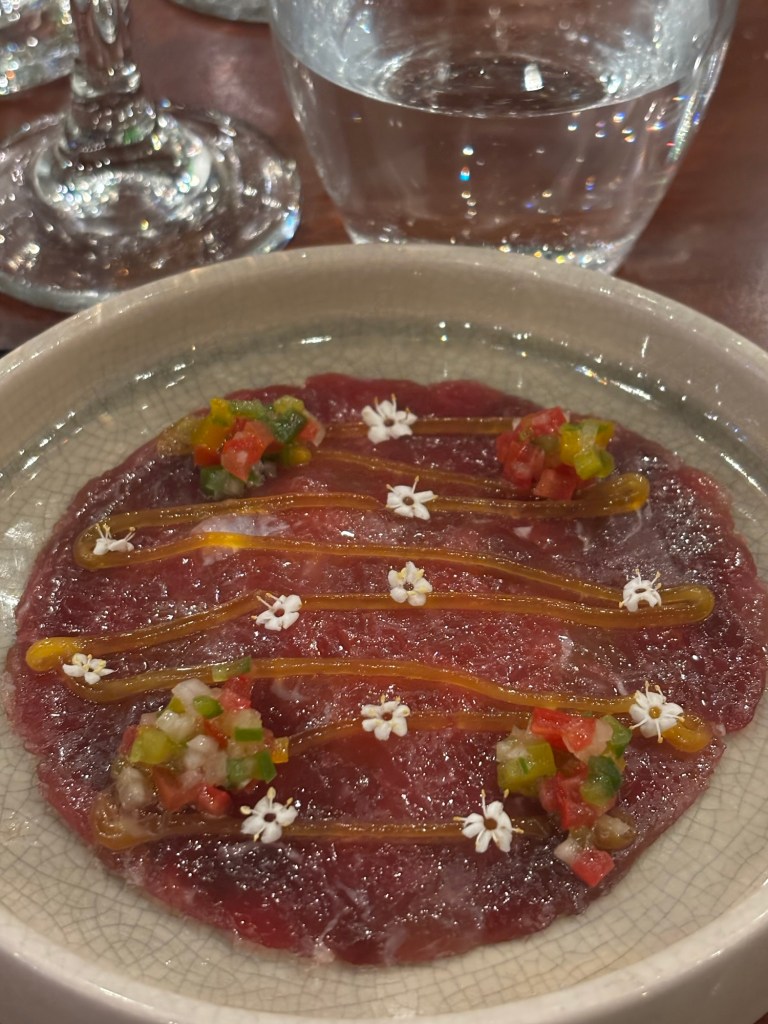
Lama Carpachio
Piraña
Think this was alligator?

Yes, it felt like we munched our way through the Amazon… I know, I know. But I didn’t really think of no “ indigenous species” as a food preference when booking.

We had our obligatory 12 grapes at midnight, a Spanish tradition that endures.

The entertainment!

And then out onto the streets went the whole restaurant, everyone, chefs, service staff , guests. Everyone outside to dance

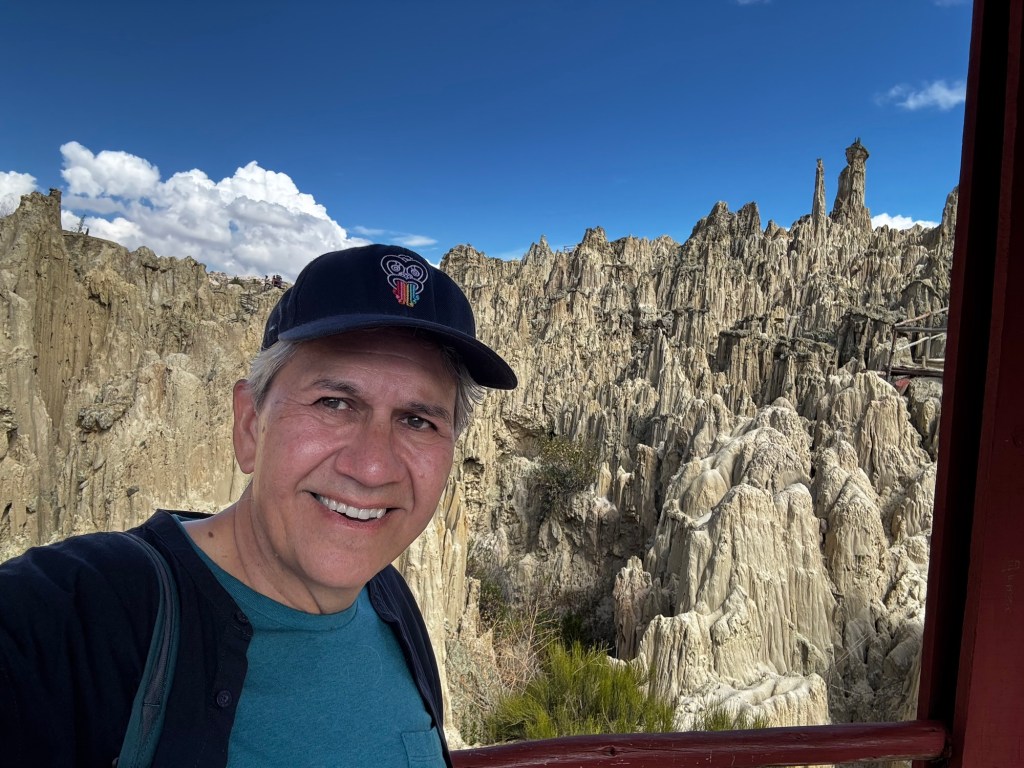
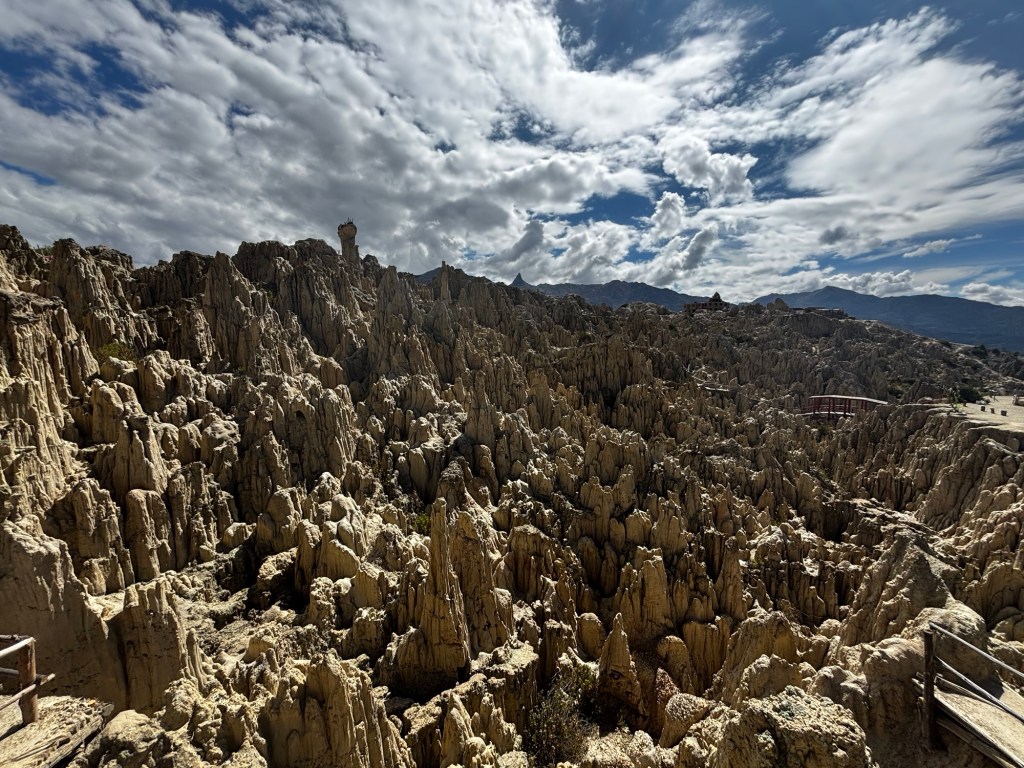
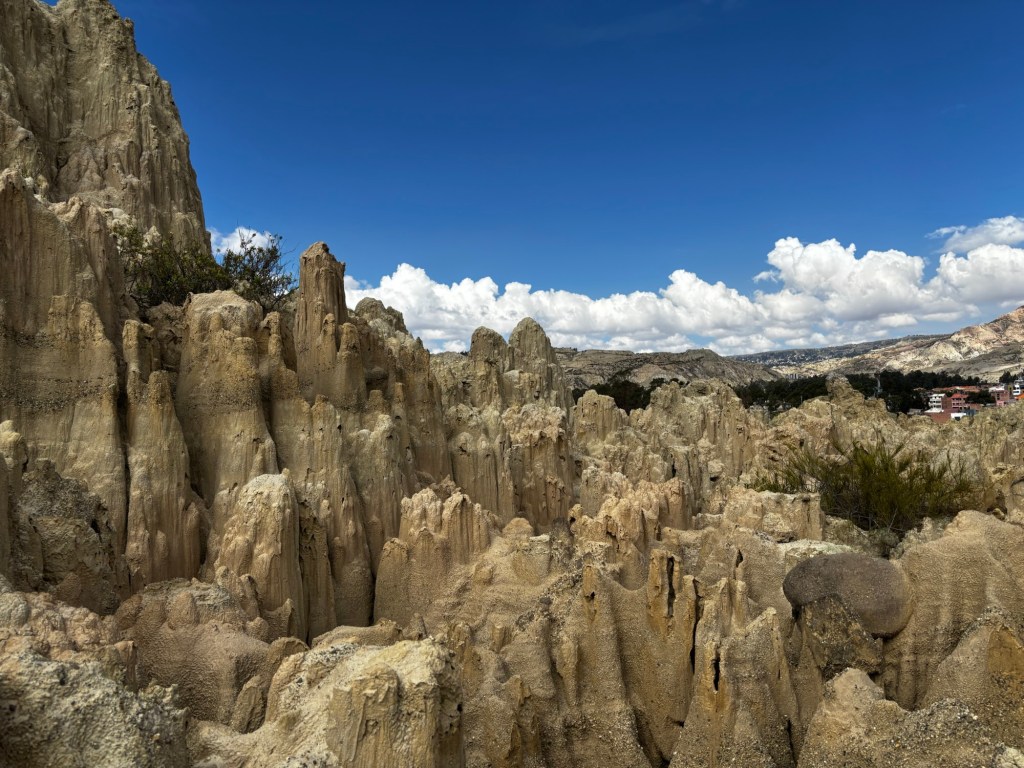
There have been other adventures to , I went to the Valley of the moon one morning, a chance to look at the stunning features caused by erosion.

It was interesting, but a bit one note for me, it was far more interesting trying to find my own way back to where we were staying . Managed to hail a taxi and get driven to the nearest cable car.

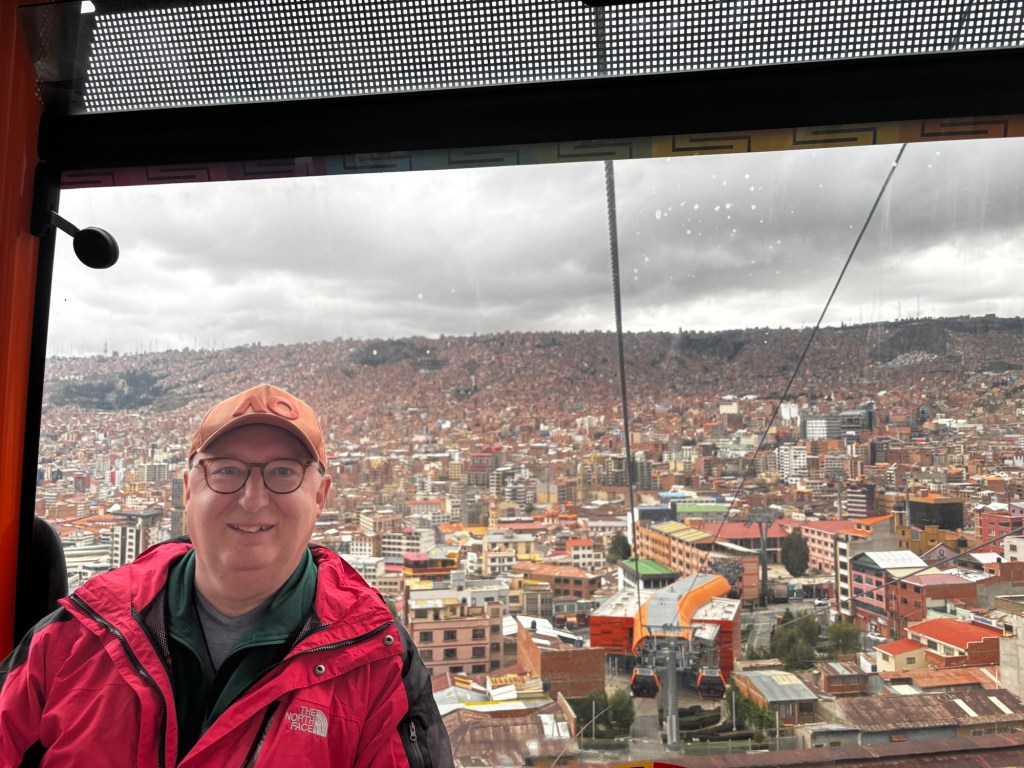
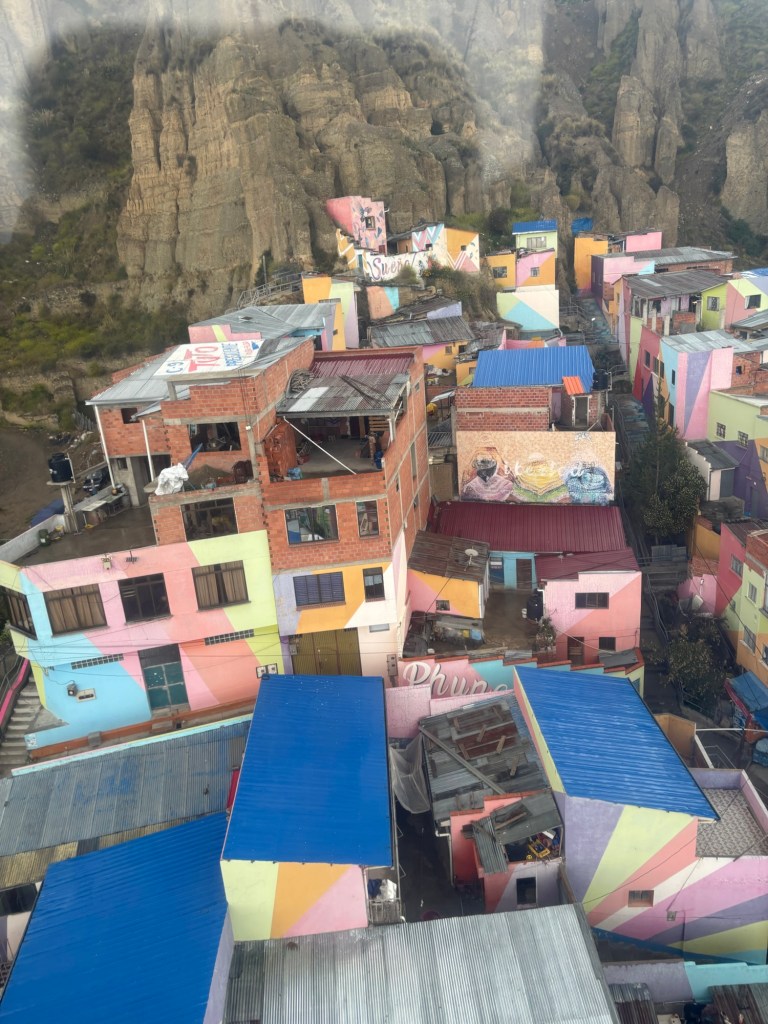
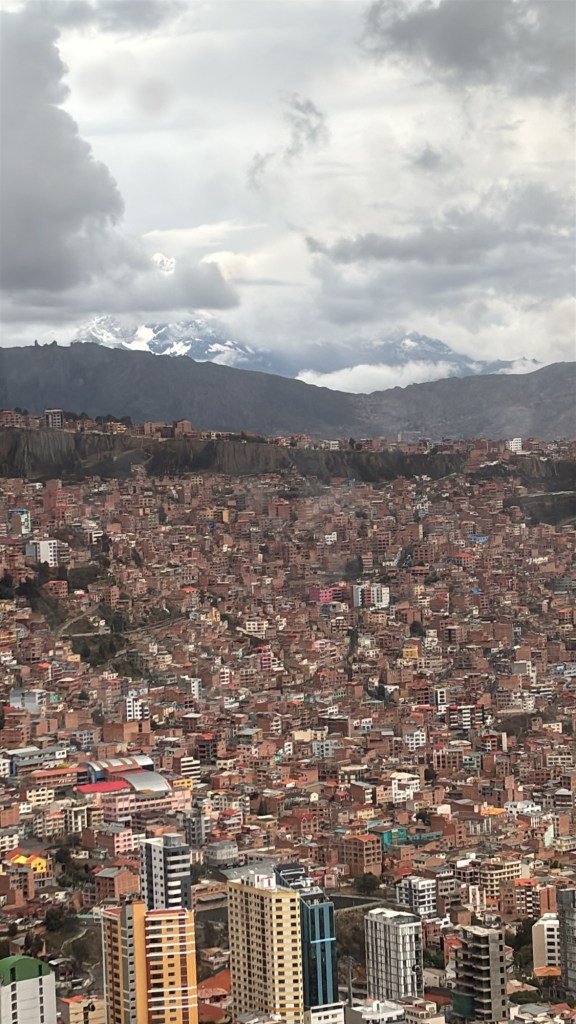
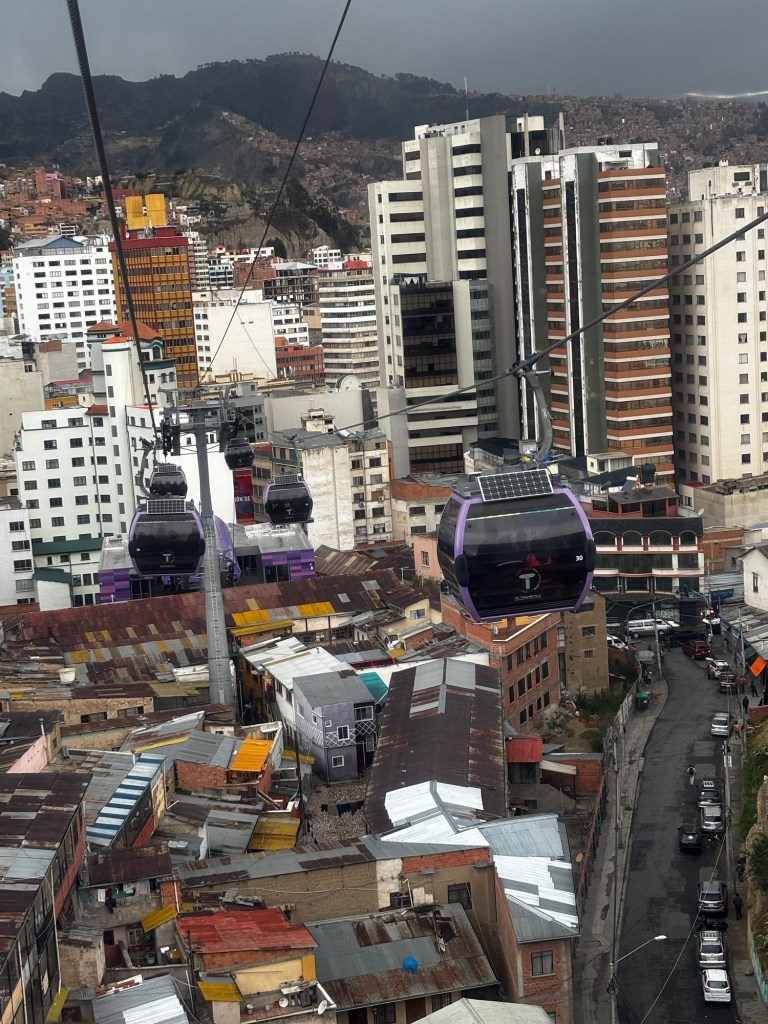
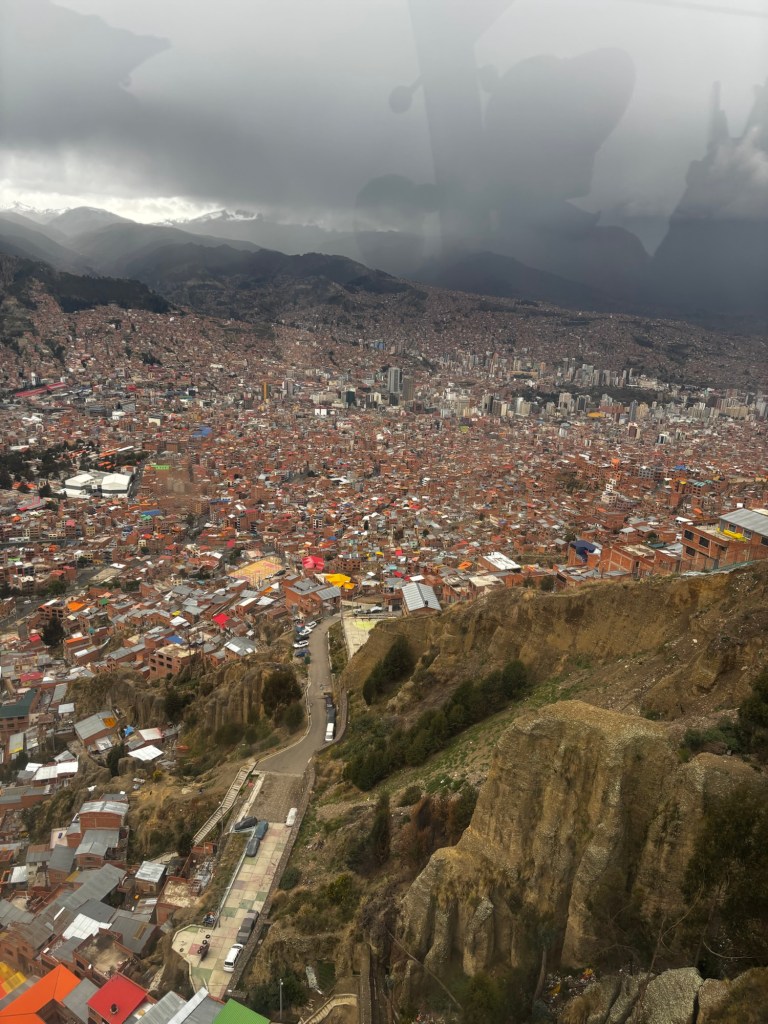
Which brings me onto the next thing. The cable cars. I know I have mentioned these before but they are truely amazing. Such an engineering feat and provide for a pretty under developed city a 21st century attraction, and example of cheap , clean public transport. I want it for Wellington! And of course the views make an hour just going from cable car to cable car flying over suburbs. Watching sorts being played, dogs being walked , people going about their daily lives absolutely fascinating. You can do the whole city circuit for about $1.50. Definitely for me the highlight of La Paz.

Timelapse of one route
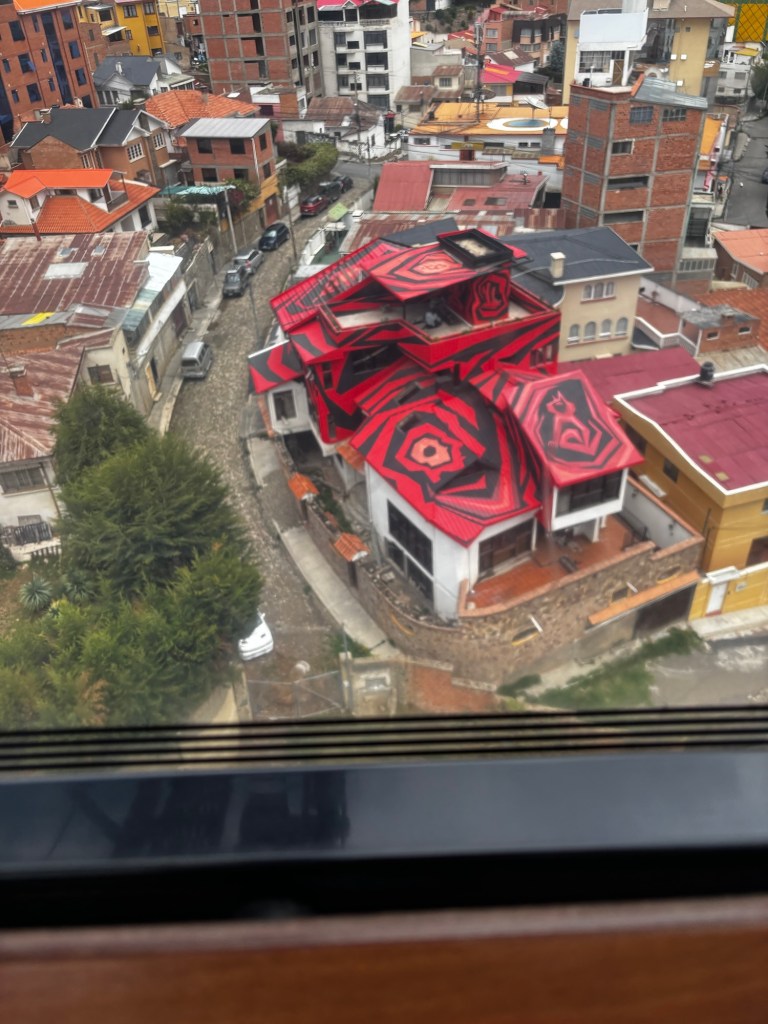
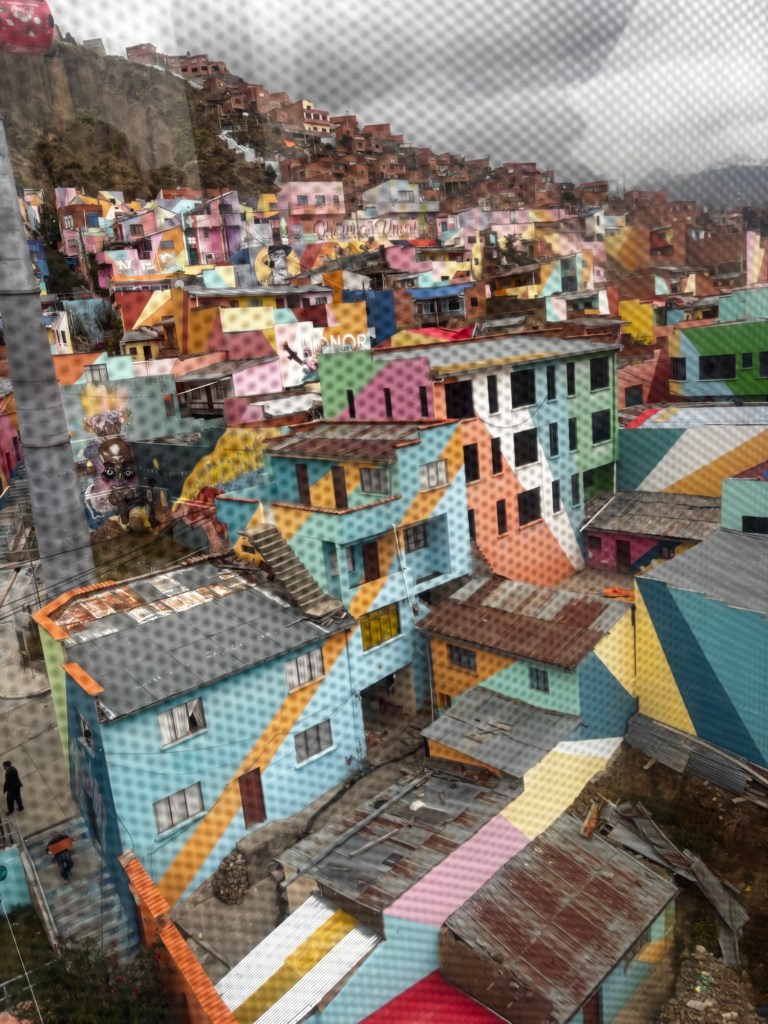
Some homes are decorated to create a view
This poor wee thing was clinging on for dear life.
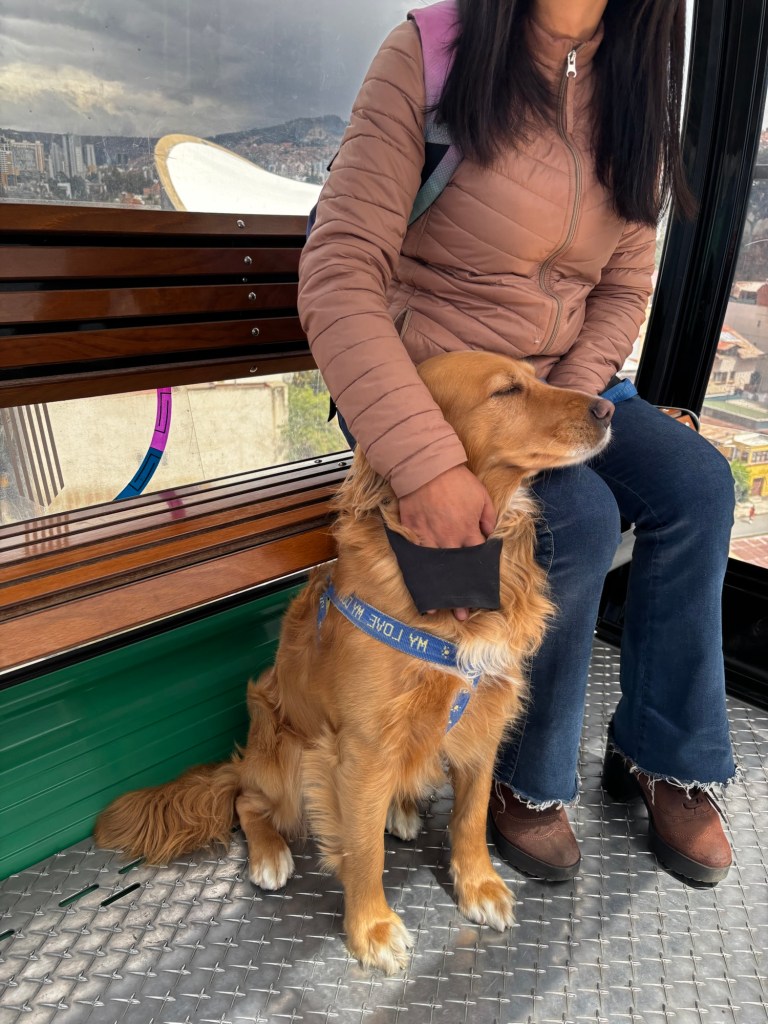
Yes, doggo friendly!

There were some other activities we could have done, the death road bike ride ( although my intrepid guide was not keen due to dodgy safety) an old road that you çan now cycle done from 4500 to 1100m with sheer cliff drops.

Some pre Incan archaeological ruins, but I’m a bit “ ruined” out for the moment.

And a couple of mountain hikes above snow lines to see lakes … but I wasn’t really in the space nor did I feel I had the right equipment so we rested instead.

Tonight we get a bus to Sucre , the official capital of Bolivia. ( in name only it would seem) 11 hours on a sleeper bus. Couple of days there, and then onto the salt flats.

We met our new group last night. Only six of us plus the guide so should be quite a different experience….

Oh fun fact. On one of the cable car rides we went over a navy facility. A navy ? Bolivia is completely land locked and then we realised, Lake Titicaca , the “navy” patrols lake Titicaca.

La Paz Bolivia part one

First impressions count, and for me the huge differences between Peru and Bolivia were almost instantaneous.

We arrived on a Sunday in pouring rain, through the crowded streets of El Alto. Horns going, stop, starts then down the hill to the bus station at La Paz. Unlike Peru baggage collection was a free for all. And with the damp of the rain came a mix of pungent odours, not all pleasant leaving an impression of WTF have I got myself into here.

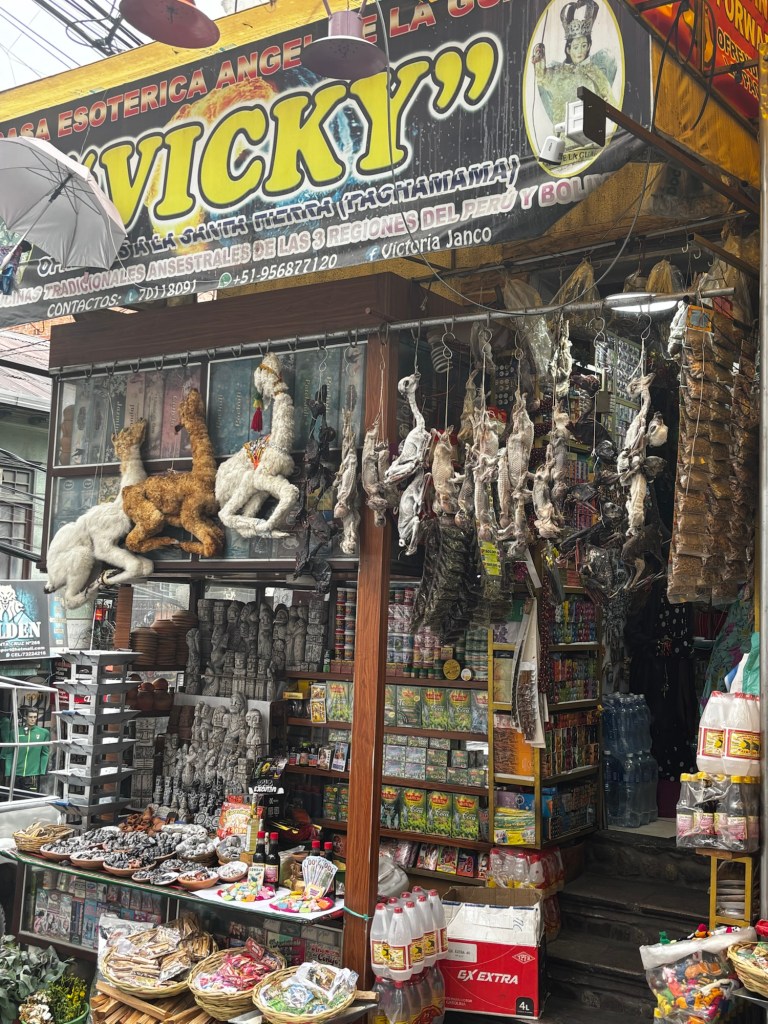
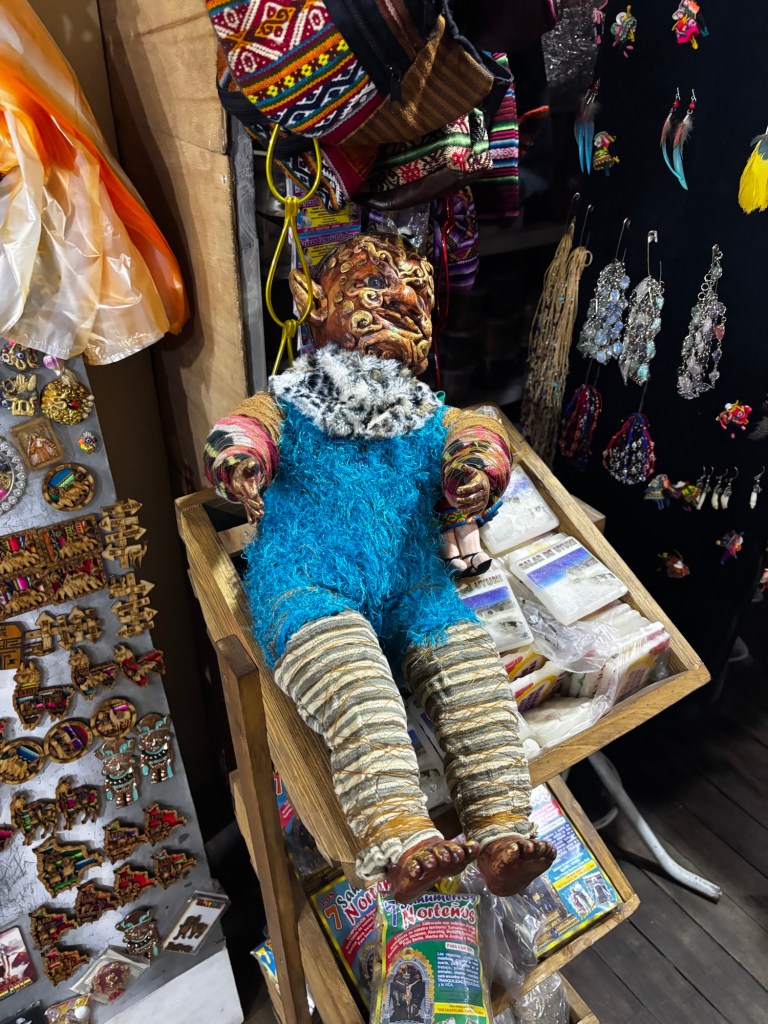
It had been a very early start up at 4am, arriving 11 hours later we were given 30 minutes to drop our bags to attend the final planned inclusion of the tour , a walking tour of La Paz. Just around the corner from the hotel is the witches market , witchcraft is practiced , although I’m not sure that is really the right word for it. But it’s a definite tourist oddity. We entered the shop and again the smell hit me.. I wasn’t alone and across the lane a couple of the crew had spied an Irish bar called the lucky lama , ( luckier it would seem than the many dead and preserved lamas in the witches shop) and peeled away from the group.

Ten minutes later we joined them too for a beer. We stayed for one, went and had a nap had some dinner and joined the rest of the crew for a farewell drink. Things were catching up with us after an action packed few weeks.

So rounds of goodbyes and trading contact details, we’ve been really lucky I hope the Bolivia group is as good as this one and we were off.

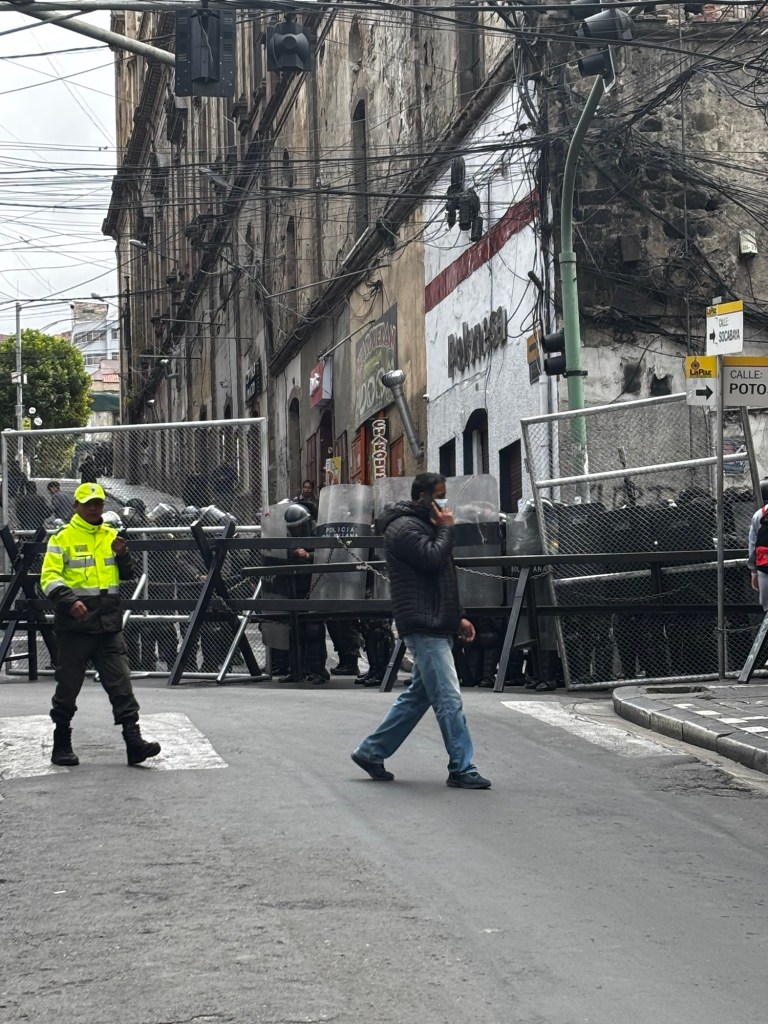
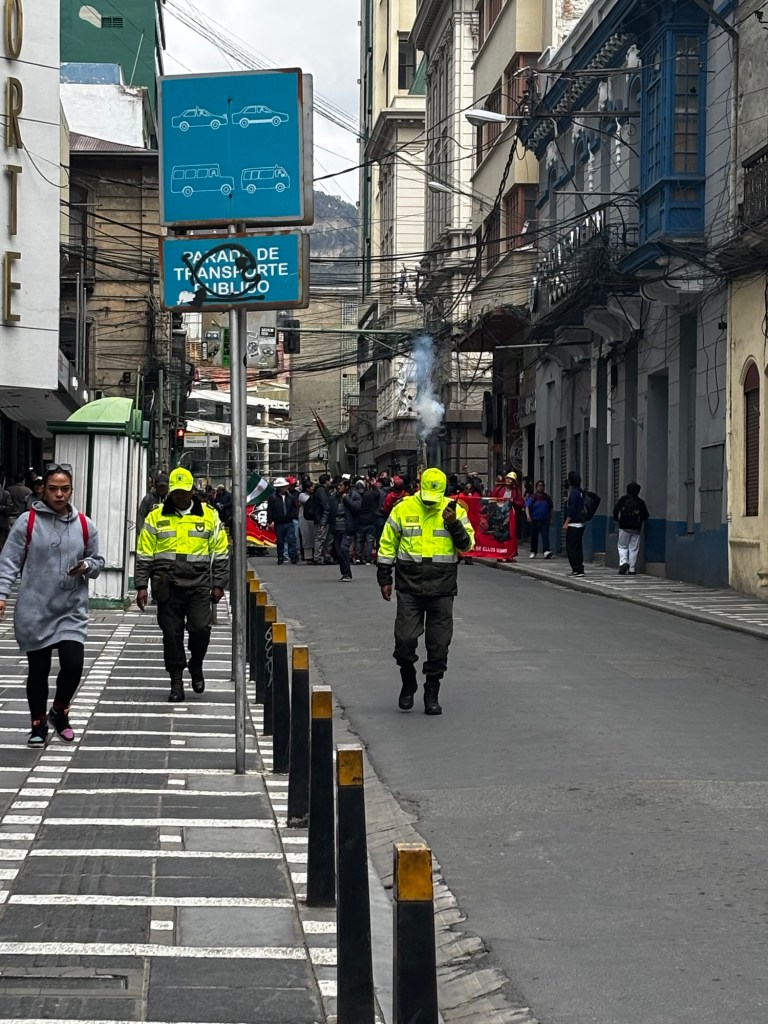
We booked a tour to catch up on what we missed the day before. Before it started we decided to have a look at the central square. As we approached we could see a police cordon. So we went had a coffee. Then we started to hear popping noises, which increased in intensity. No one else around us seemed bothered, but when I had a look out the coffee shop door I could see a noisy protest approaching the armed Police cordon and we were right in the middle. Time to get out. Quickly.

The miners are protesting the removal of a fuel subsidy, but it turns out there was some seriously shady deals going on with the subsidised fuel being onsold by the miners union at a large markup outside Bolivia. All very shady. Anyway, the popping sounds was fireworks, but that soon escalated into dynamite being let off. Basically full scale explosion sounds which put our nerves on edge but did not seem to have the slightest effect on everyone else as they got on with their day.

The police cordon in the central square, these dudes were armed!
And here come the protesters.

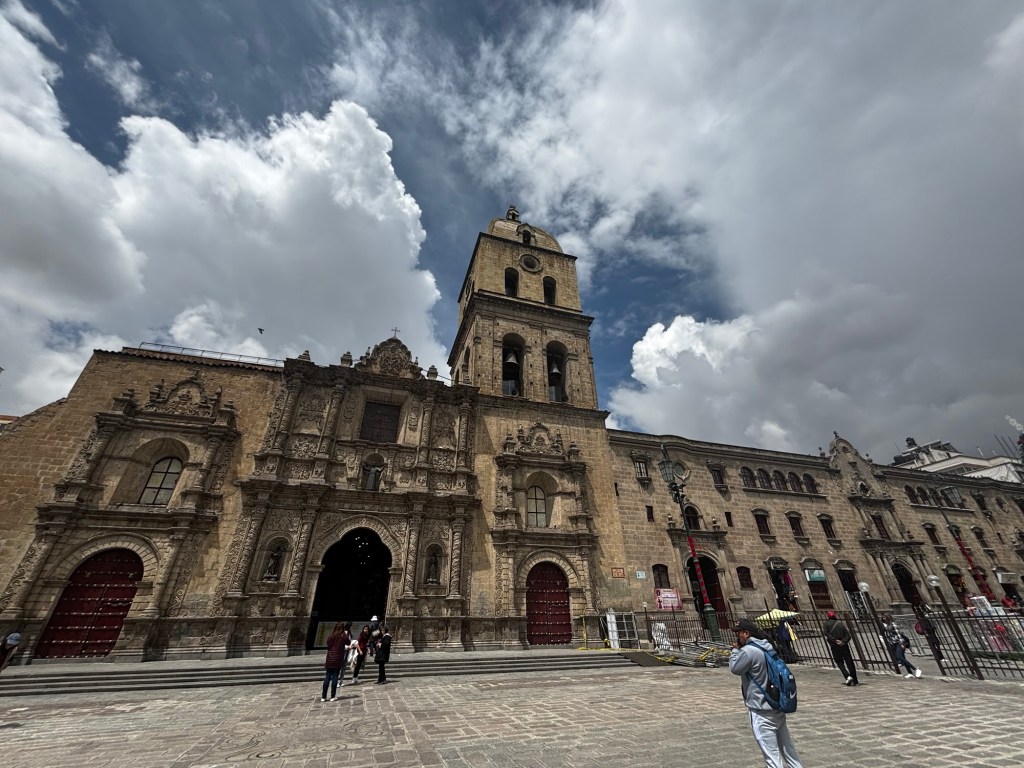
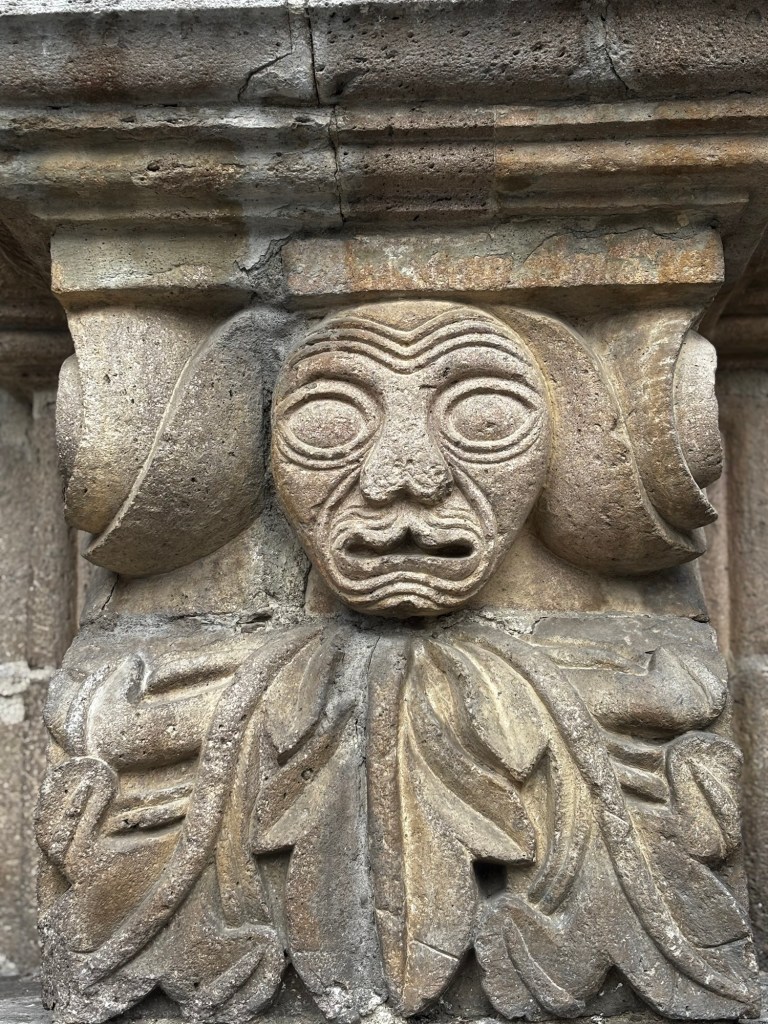
The tour itself was amazing, for $10us for 3 hours. We started nervously ( with the bloody dynamite sounds going off ) at the central Cathedral first built in 1540, a walk up a few hills ( still tough at this altitude) and then onto the cable cars. Which were so next century. They criss cross the difficult terrain, cost about 50c Nz a ride and seem almost other worldly. Wellington could do with these.

Indigenous art incorporated into the facade of the Cathedral!
And are off!
You get seriously high in these things
Looping back some areas

It’s an incredible piece of public engineering like nothing I have experienced before. And sits in such contrast to other parts of public infrastructure that appear to be under invested in.

Sound seems to be different at Altitude? Crisper and clearer like you have super hearing. In the cable car you could hear a bird singing, a dog barking from a long way away and it seemed like it was nearby. Quite bizarre.

We then headed to our Airbnb and what a relief it is to actually unpack for a bit. To put the suitcase away, have access to a kitchen and washing machine. Very modern place, awesome views and quite cheap at only $75nz a night. Score!

We are deliberately having a complete day off. Nothing. nada. A big sleep in, long shower and a coffee down the road. Back into the adventures tomorrow….and another special dinner planned for New Year’s Eve. It’s going to mean more food pics!

Random observations of Peru.

As we leave Peru I have noted a few observations.

Take all of these with a bucket of salt! Do not take them seriously at all.

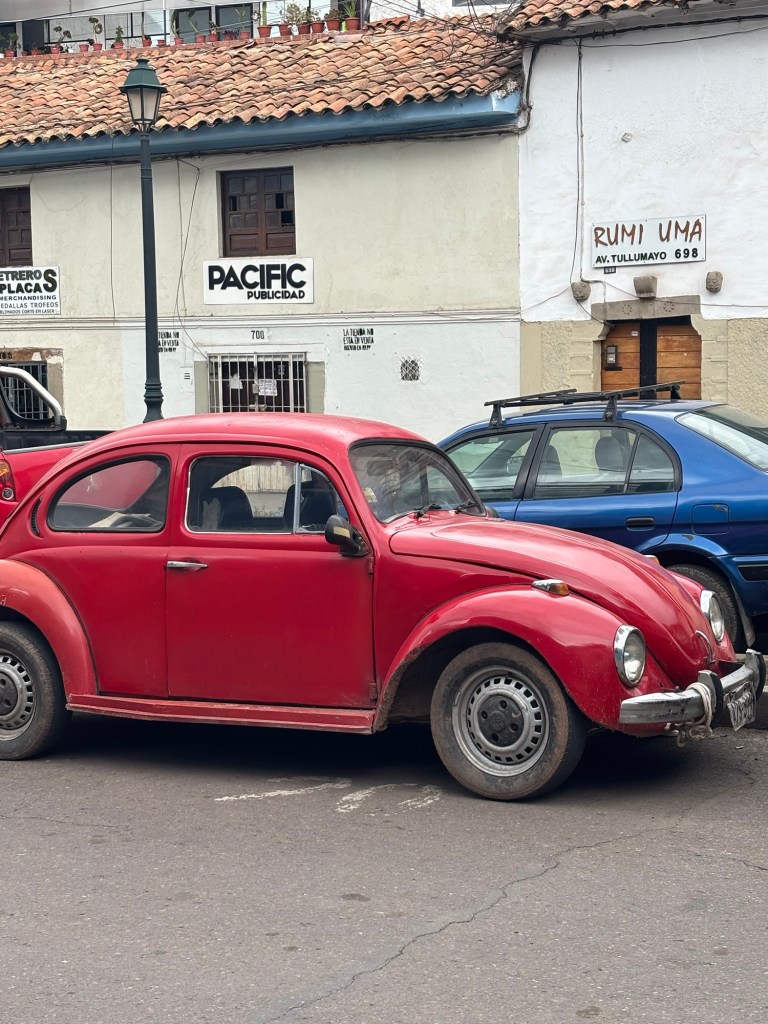
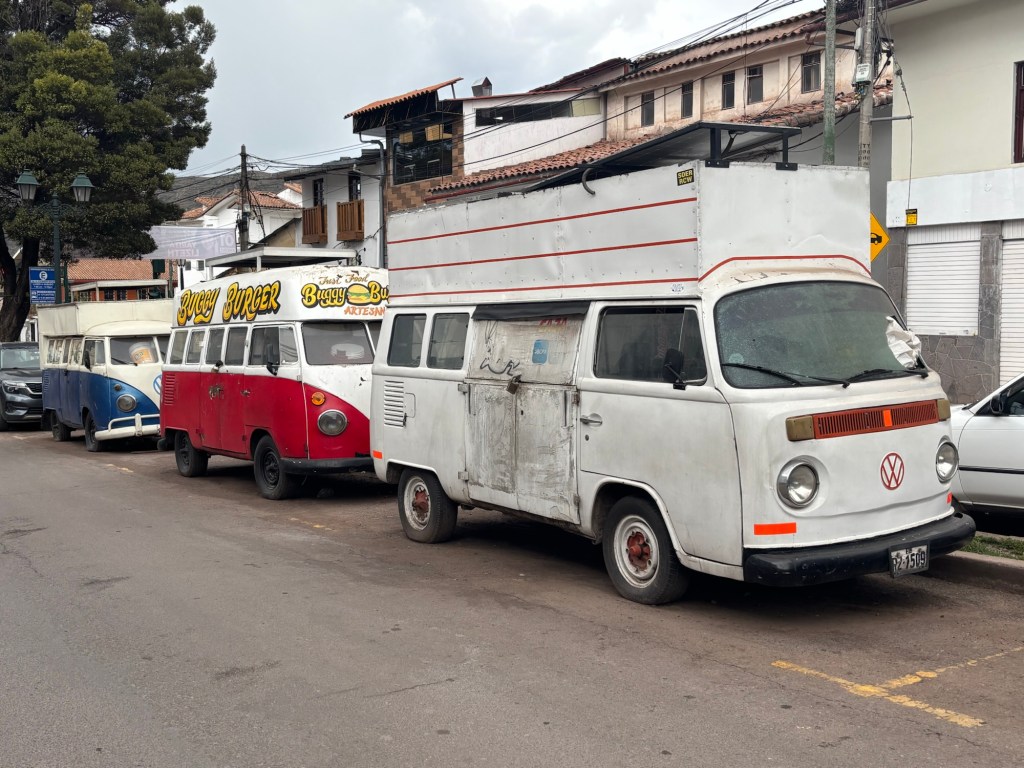
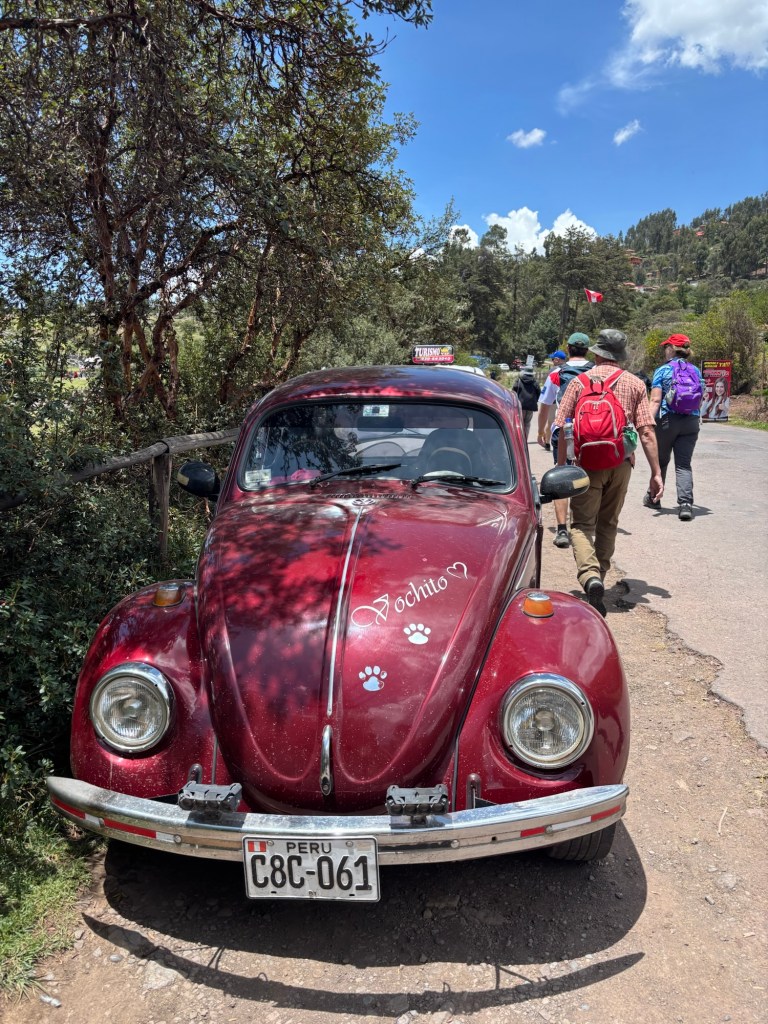
Volkswagon beetles are everywhere!

It’s amazing and must be the climate, but they seem to be everywhere. I love it

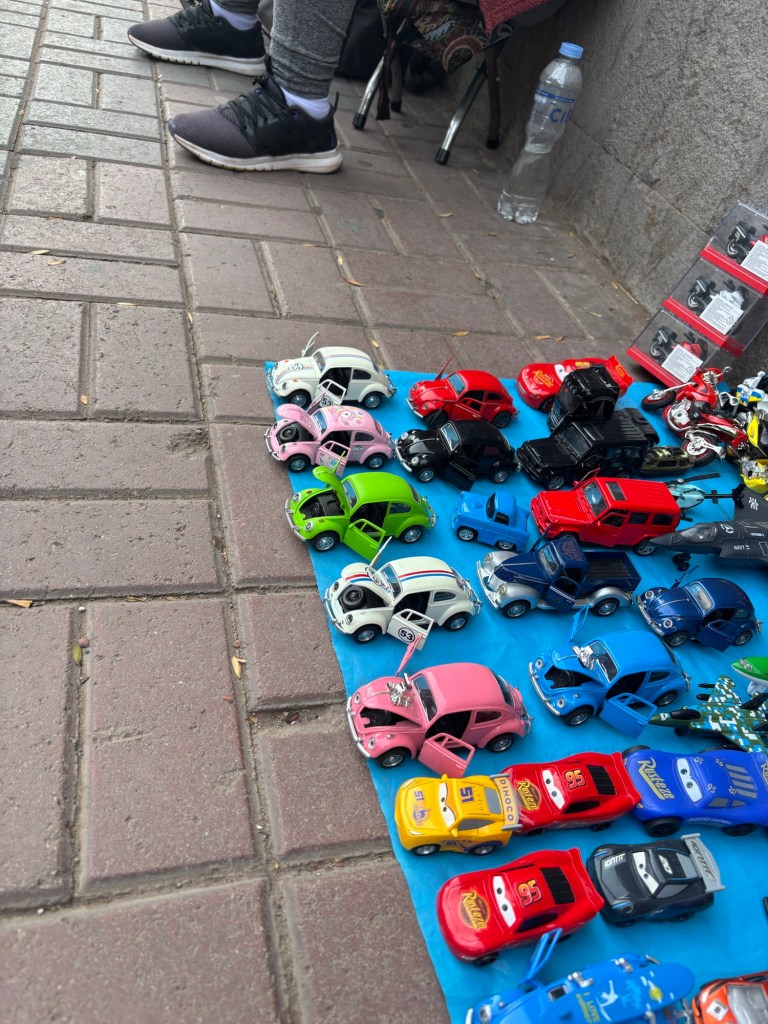
Even the toy cars

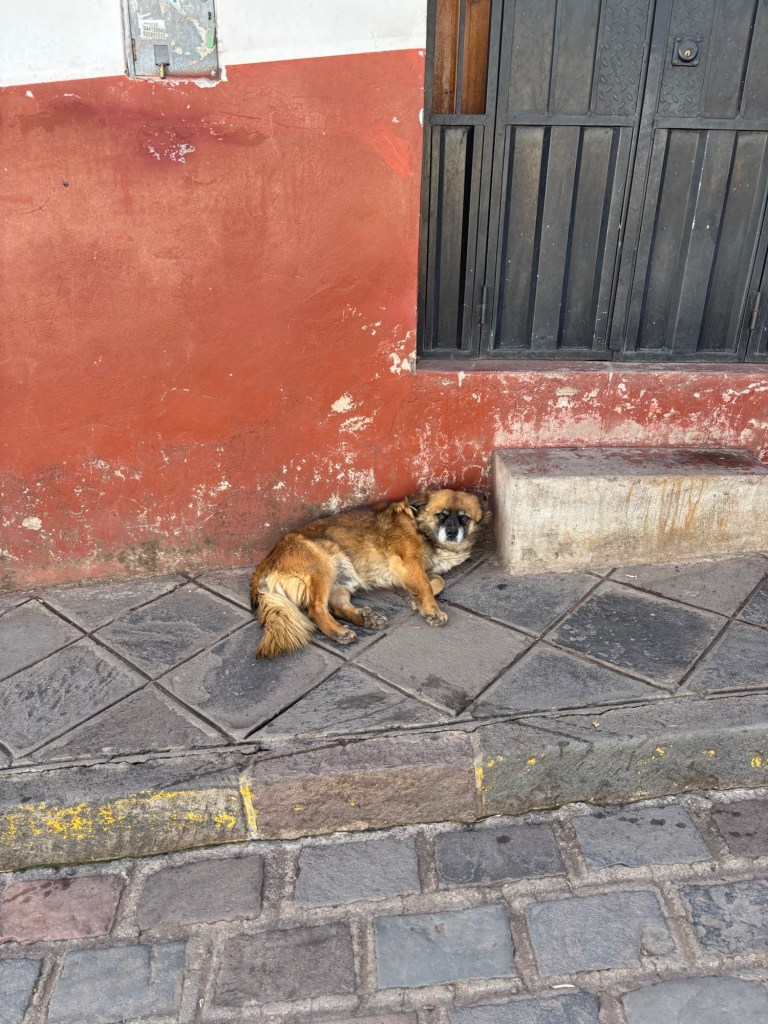
Peruvian dogs

of those that I have seen they seem really happy, confident, tails up. Even the strays seem to be happy looking,, well fed! One highlight, unfortunately I did not get a picture we saw a mother dog with two puppies in the countryside walking along , while the pups played and tackled each other. Then a 4th larger dog joined them , I’m probably romanticising the image, but I reckon it was the dad.

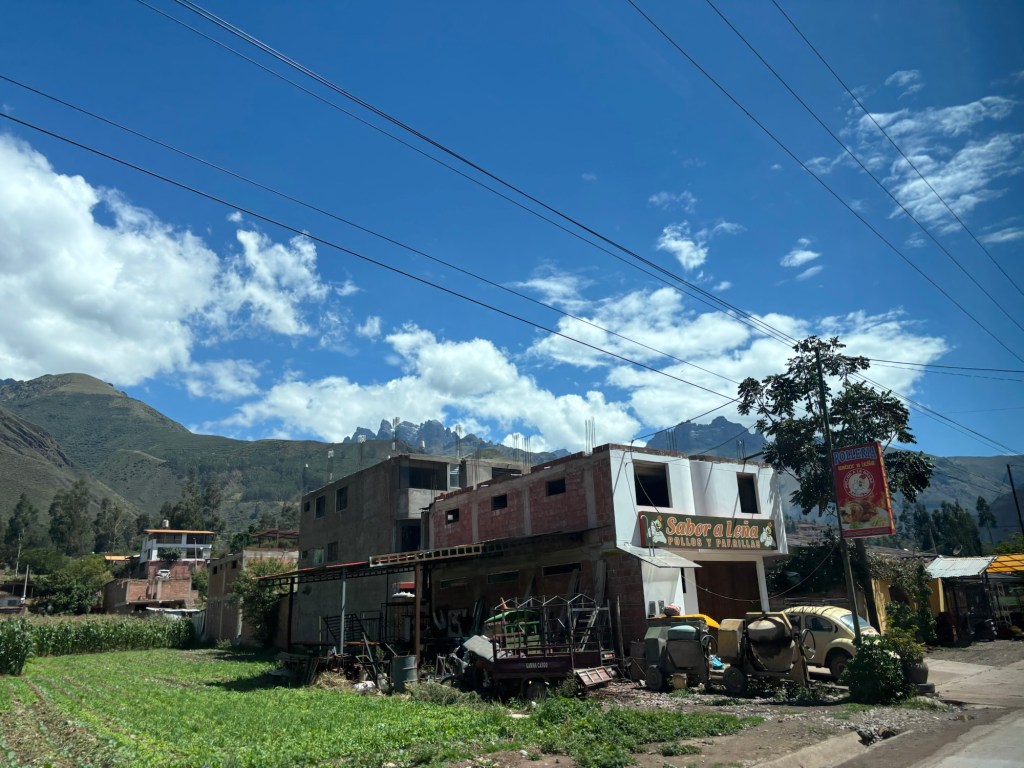
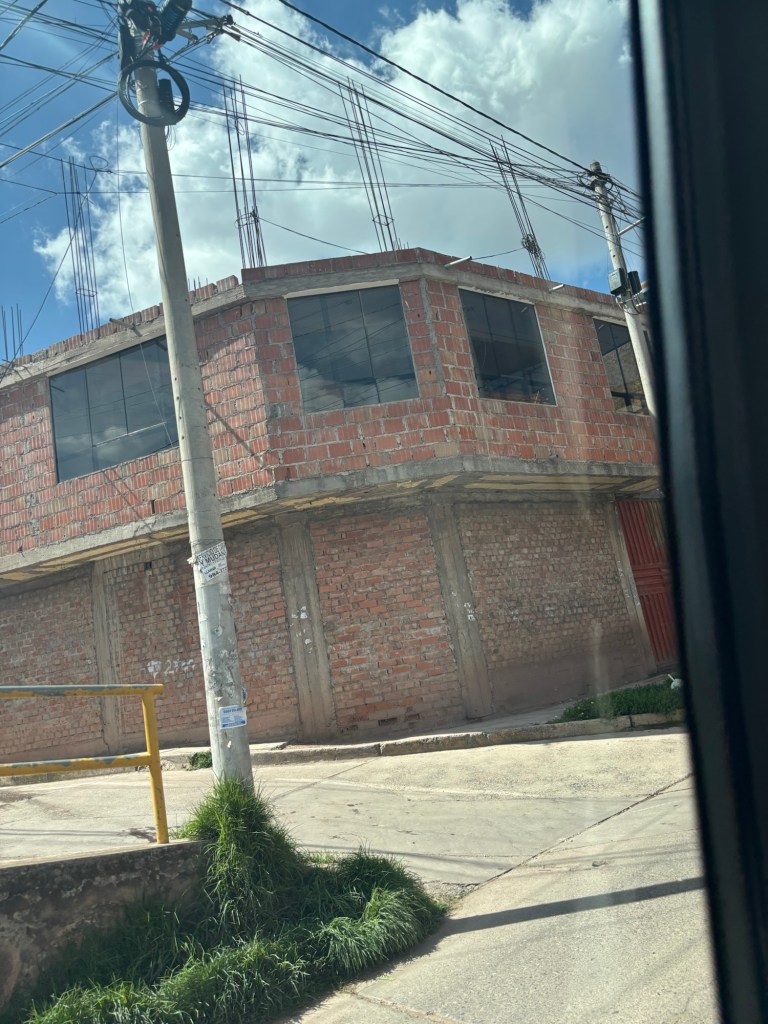
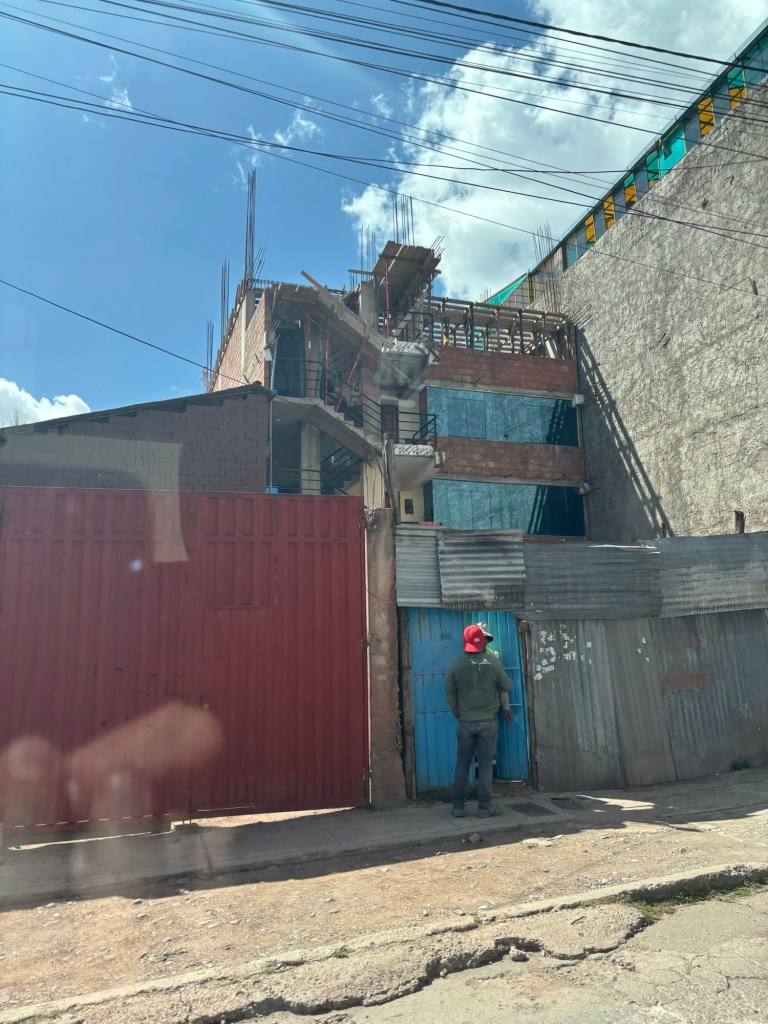
Houses always look unfinished.

The houses always look unfinished and unkempt. Our guide suggested that this is because finished homes are then subject to tax. Consequently they are never really finished!

There is no vaping!

Nada, nothing , not seen one person vaping and the only people smoking seem to be foreigners. It’s great! Good thing we gave up before we came.

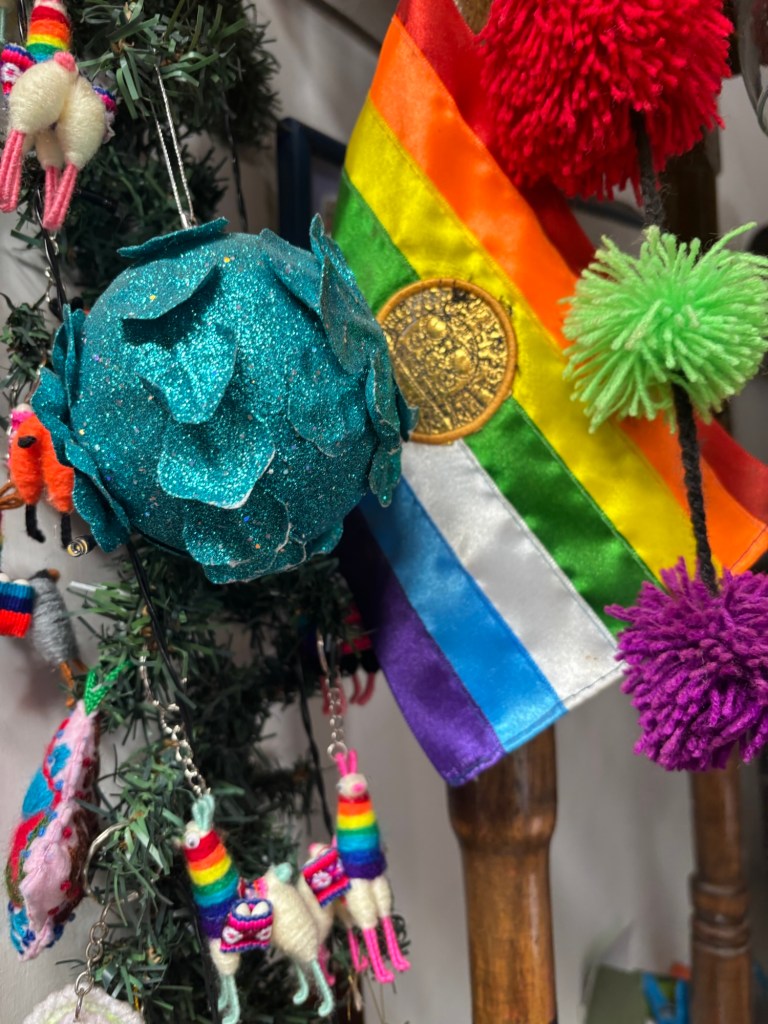
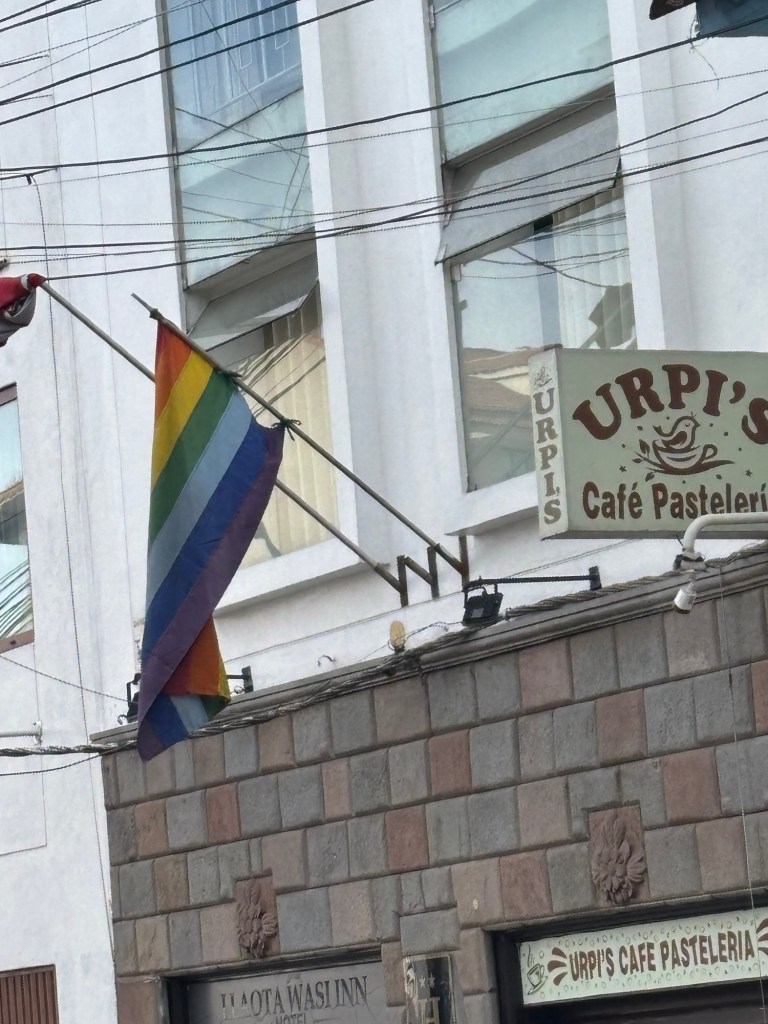
A Rainbow but not as you know it

Rainbow flags are everywhere, but it doesn’t mean they are a super gay city. It’s the flag for Cusco!!

Where are the fences?

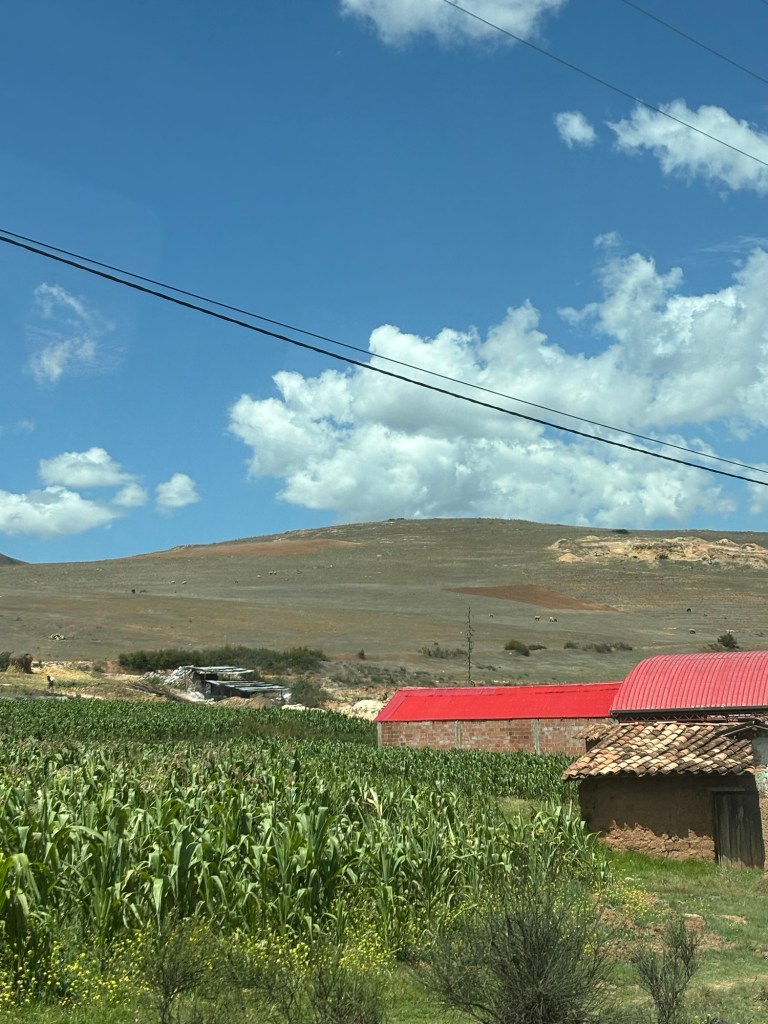
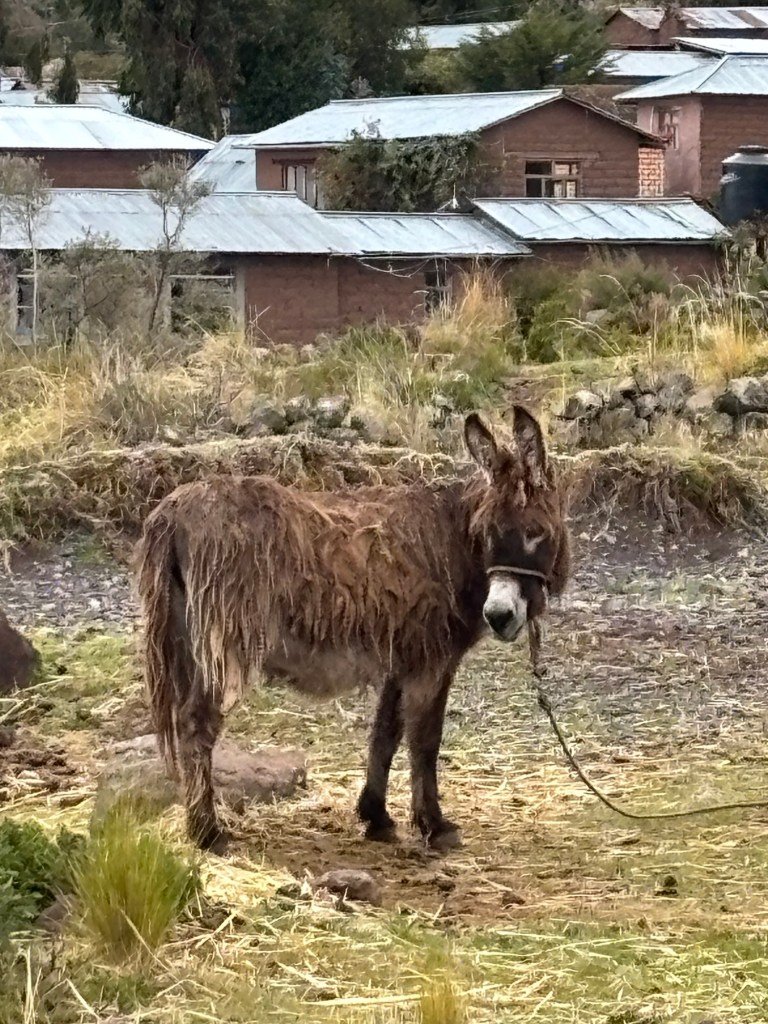
The countryside is bizarrely bereft of fencing, certainly in the areas we have driven through, have not seen “herds” of livestock but animals tethered to ropes. The visual effect is one that creates a sense of vastness on a grand scale.

Australian invaders

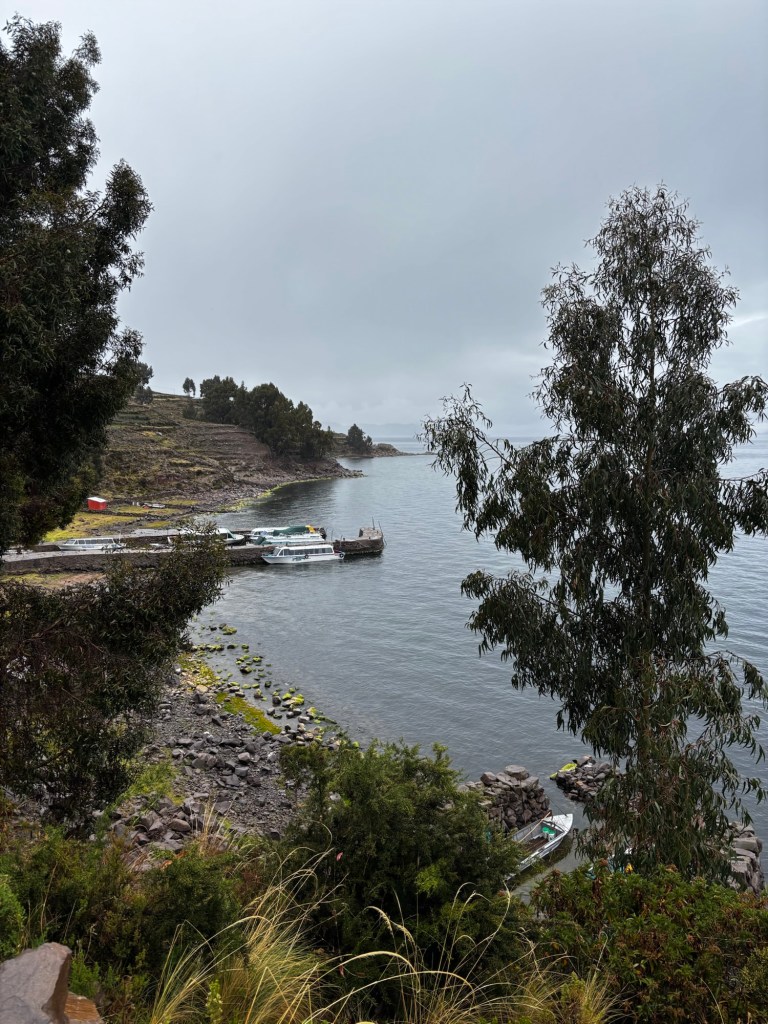
There are eucalyptus trees absolutely everywhere! It’s a full on invasion. And yes they are Australian origin eucalyptus trees , when and how did this happen I need to know.

Apparently they thrive in the relatively dry environment, grow fast and are a source of construction material, but those things have definitely gone rogue.

This one on a remote island on Lake Titicaca.

Peruvian Food

The food is very carb heavy and protein low, potatoes, potatoes, sometimes with rice.

It’s really not fair for me to comment too much, I get that on these types of tours you have to try and direct groups to reasonably priced, variety typed foods that you know are safely prepared ! You don’t want gastro on a bus. But it does mean you end up with pretty bland middle of the road fare at tourist prices. Add in the odd alpaca steak and Guinea pig everywhere.

I was reading a WHO study that was done between 2019-2022 and malnutrition affected 19.5% of the population. For children that can mean permanent growth stunting which may explain the anecdotal observation that as a whole they appear to be shorter in stature.

Covid

Horrible stat, Peru suffered more deaths per head of population than any other nation in the world. 6600 deaths per million , compared to the 490 in New Zealand.

Pictures of hundreds of doctors who succumbed to COVID some say due to a lack of PPE

Politics

The common refrain is that corruption is an ongoing issue . You see political party slogans on walls everywhere ! Our guide mentioned to us that there are 20 parties standing in the 2026 elections.

It’s a poor nation the average salary is about 2500 soles or $1250 Nz a month.

From the little I have seen , the Peruvian people are industrious, hard working , smart people. They have a nation of incredible resources and diversity. The foundations for greatness are there , I hope they find them.

Lake Titicaca

Christmas Day for us was an extremely quiet affair. We were leaving Cusco to get a 7 hour bus south to Puno. On the shores of Lake Titicaca.

Initially there had been plans to make our Christmas Day celebrations on the bus, wine was purchased, cakes, treats but that was all blown out of the water when yours truly decided on Christmas Eve we should go to a gay bar. I had some crappy family news and I was drowning my sorrows a bit. So off we went to Chango , and I danced and danced and drank too much with a lot of the group. David wisely stepped out. So I arrived back at the hotel very late, very drunk and very wet as it was pouring! While I may have took the lead, I was definitely not the only one. So by the time we hit the bus station dishevelled and with sore heads at 7:15am, the Christmas spirit had waned. It was fun, managed to do 30,000 steps that day so the dance floor got a pounding.

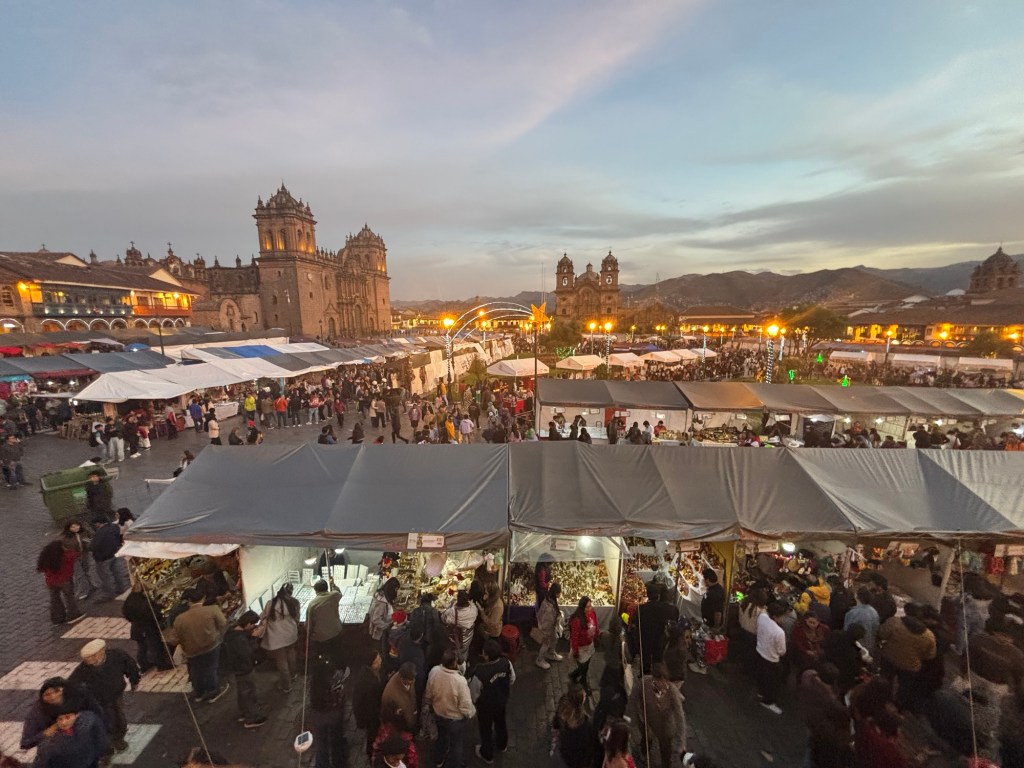
Christmas markets in Cusco. Very big deal.

Many of you will probably know this, but South American long haul buses are simple next level. Practically lie flat beds, air conditioned, charging ports and phone stands. They are great. So we spent the time driving through some spectacular scenery , nursing my sore head and arrived in Puno 7 hours later. Still I do get to say I was at lake Titicaca on Christmas Day!
Doesn’t even scratch the surface, roads were great!

We are stayed in an old school hotel in Puno. Expecting chemist as day to be quiet the streets were packed with families walking, we had a quick dinner, some more panadol for me and off for an early night.

Pun’s tree
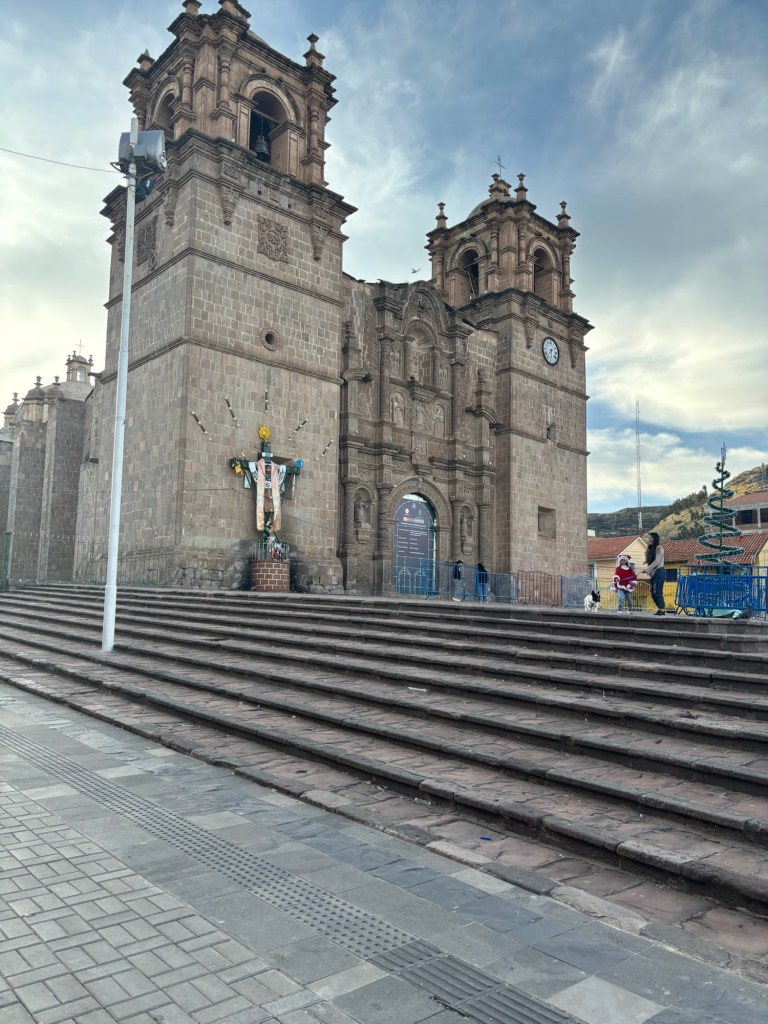
Getting so used to seeing these churches everywhere!

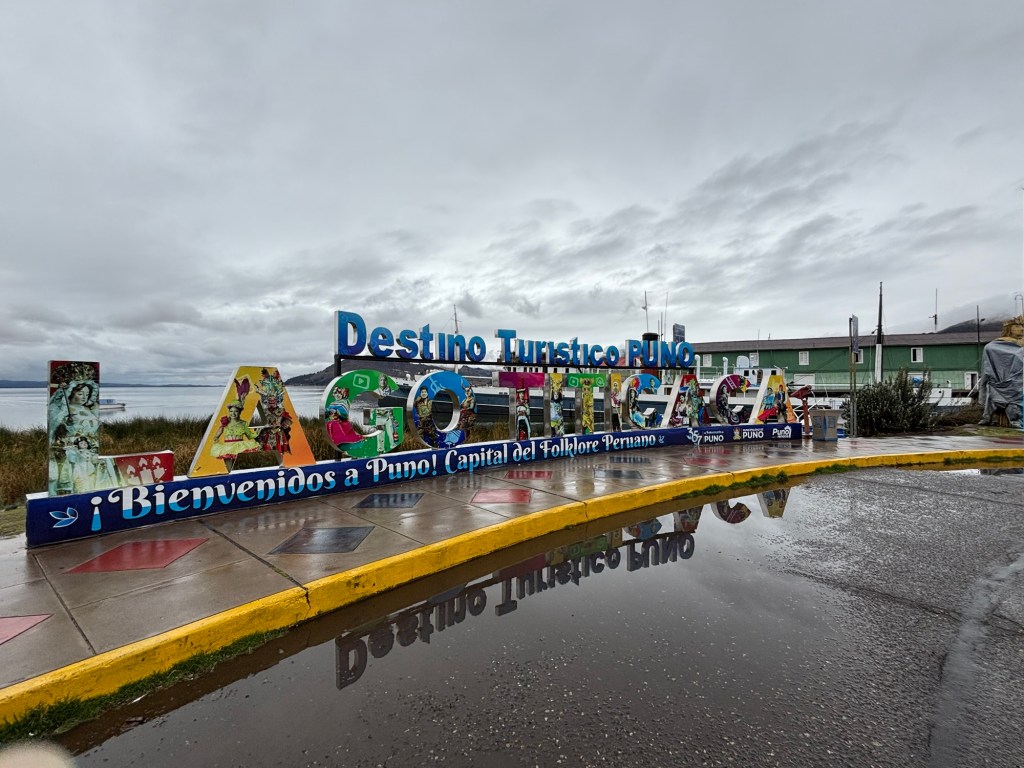
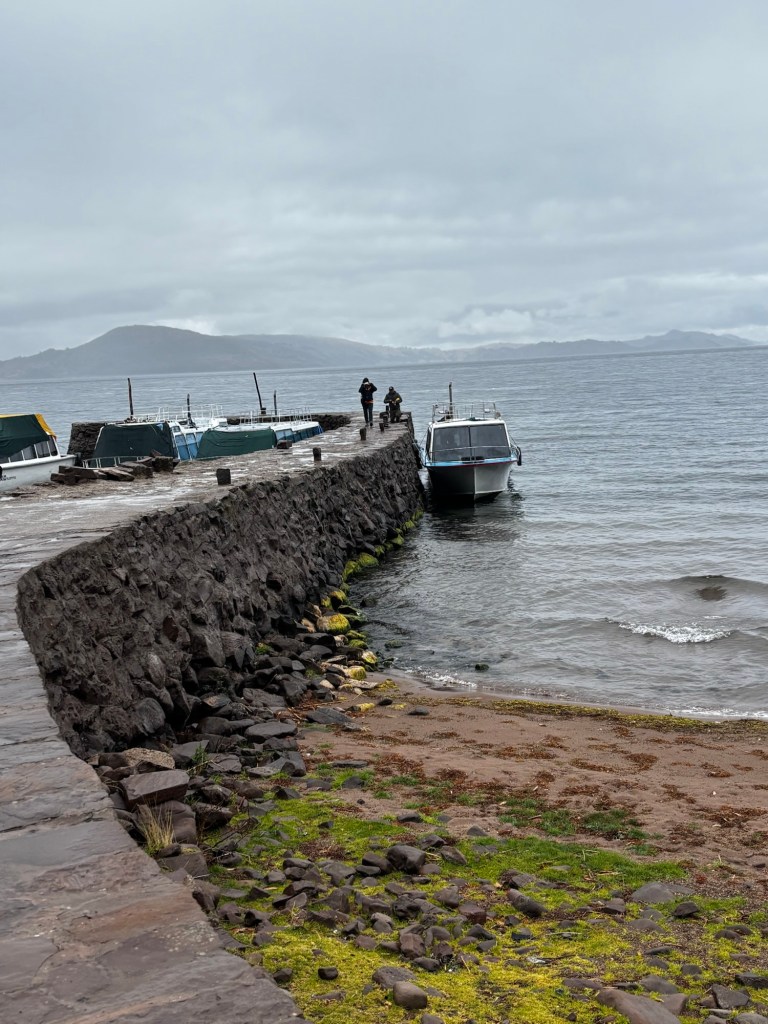
So next day it was onto a boat to have a look around Lake Titicaca. The lake is the highest navigable lake in the world at 3800m, and even though it’s the middle of summer the altitude makes it cold. We woke to 3c. Brrrr..

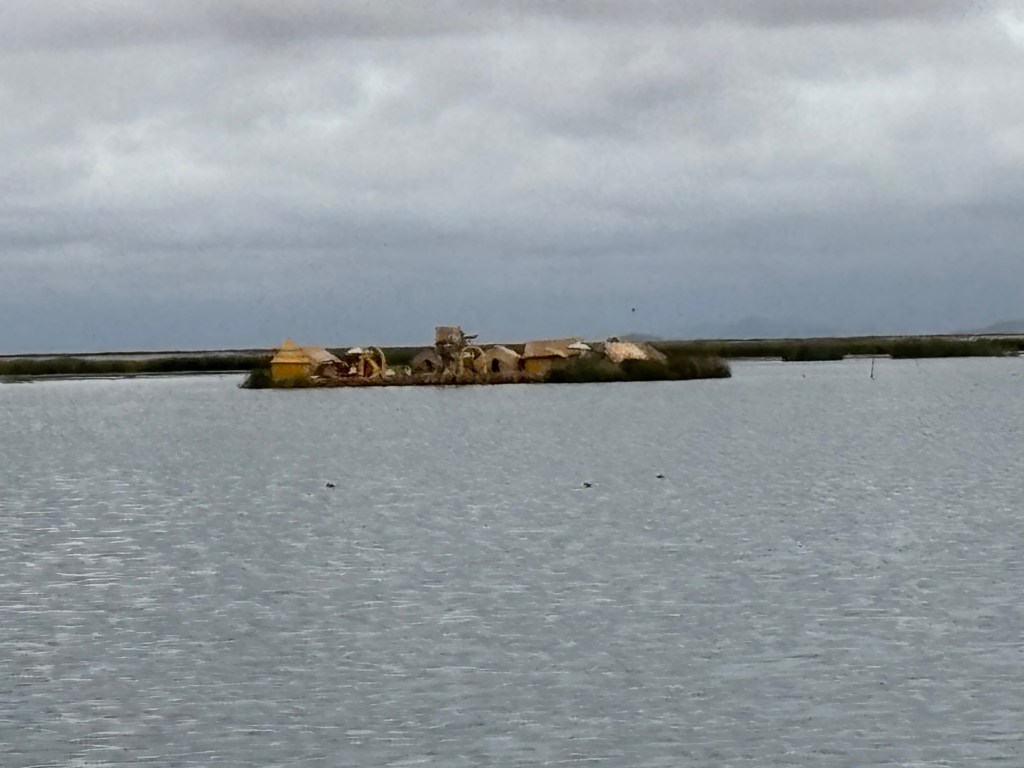
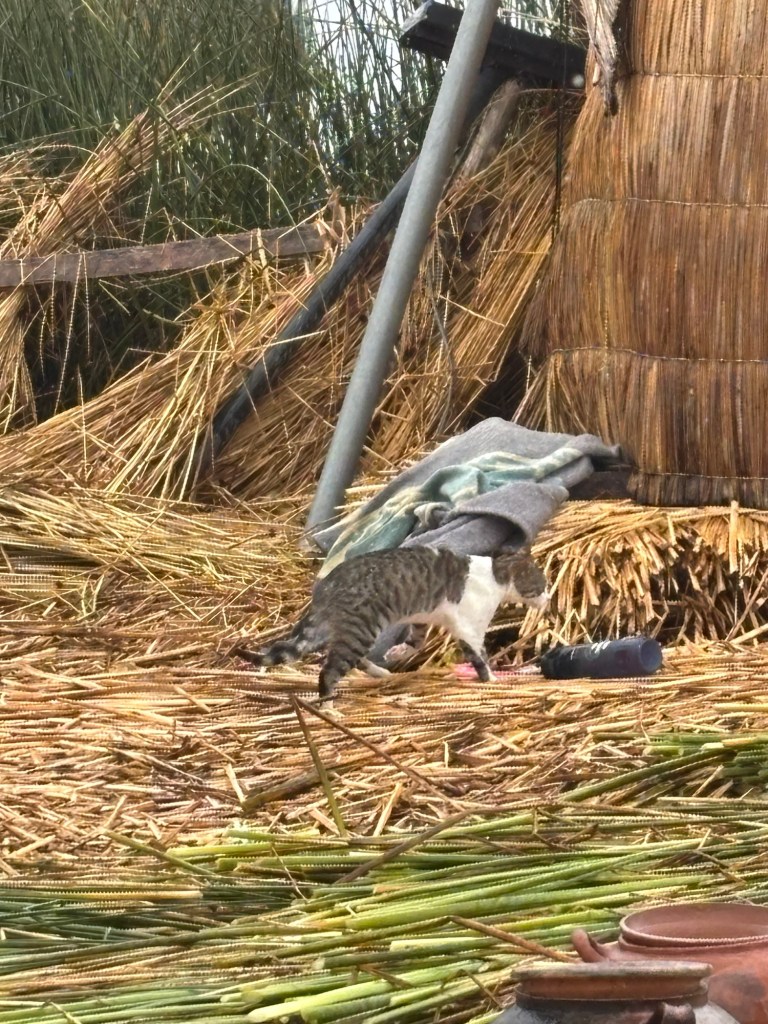
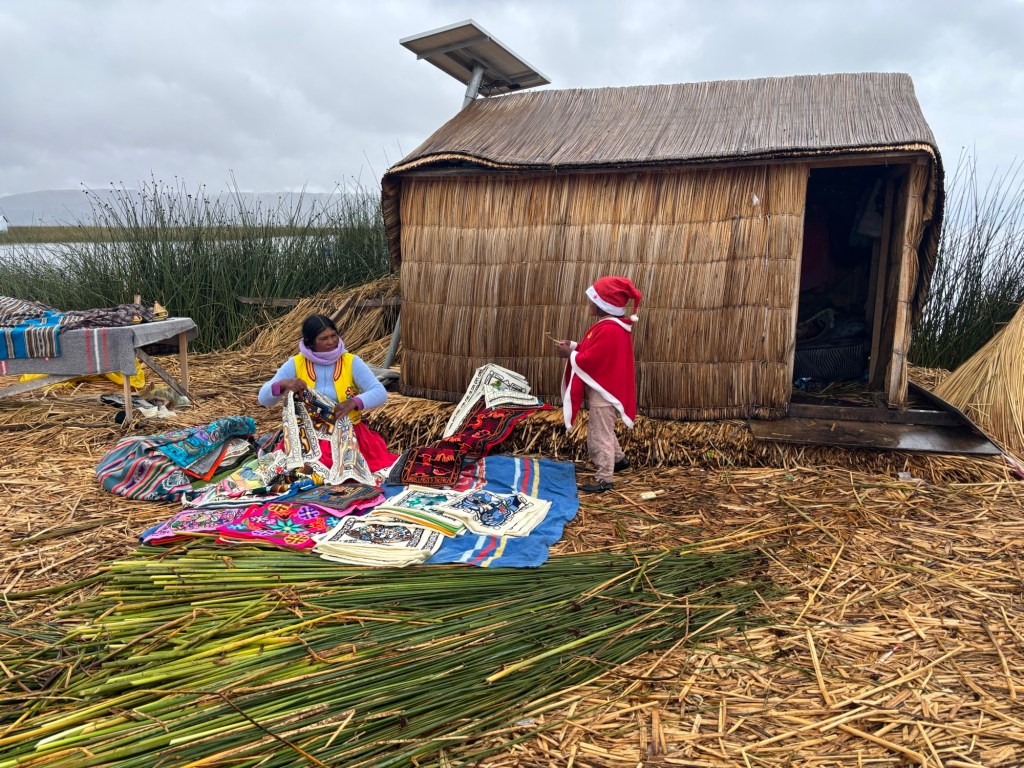
So off we went in our little boat and about an hour and half later we hit our first destination one of the 150 Reed islands that families have been living in for centuries!

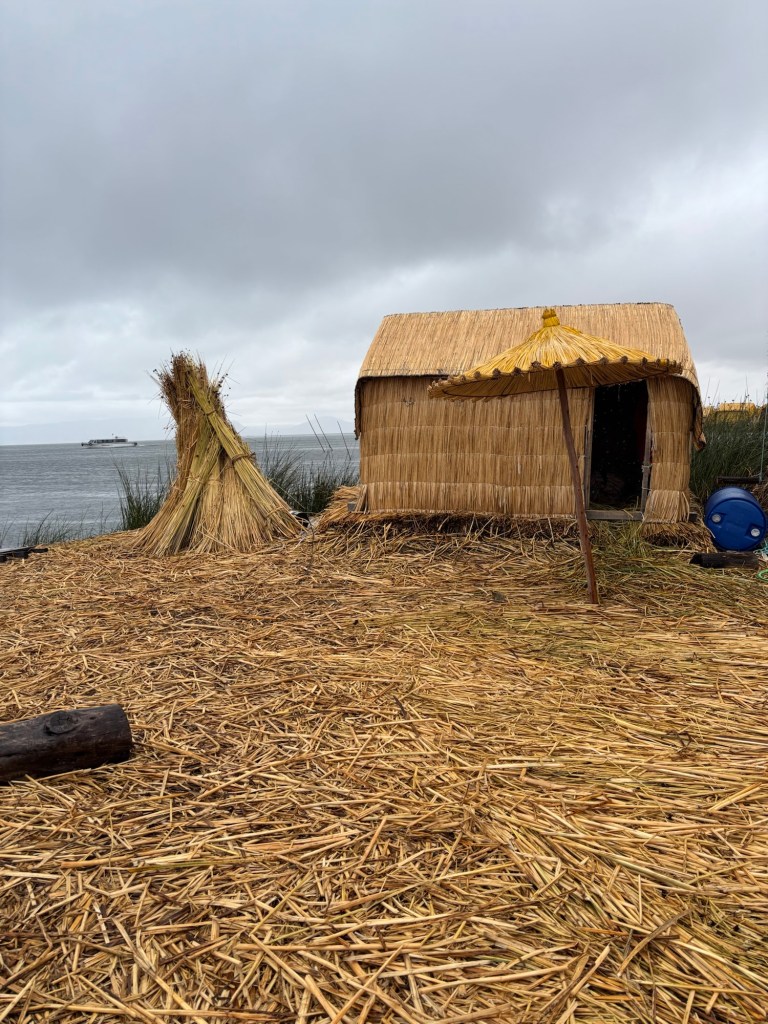
It’s was raining and cold so we felt a bit miserable, as we hopped onto the spongy squelchy raft. We had a bit of presentation and then when the rain stopped we could have a look around.

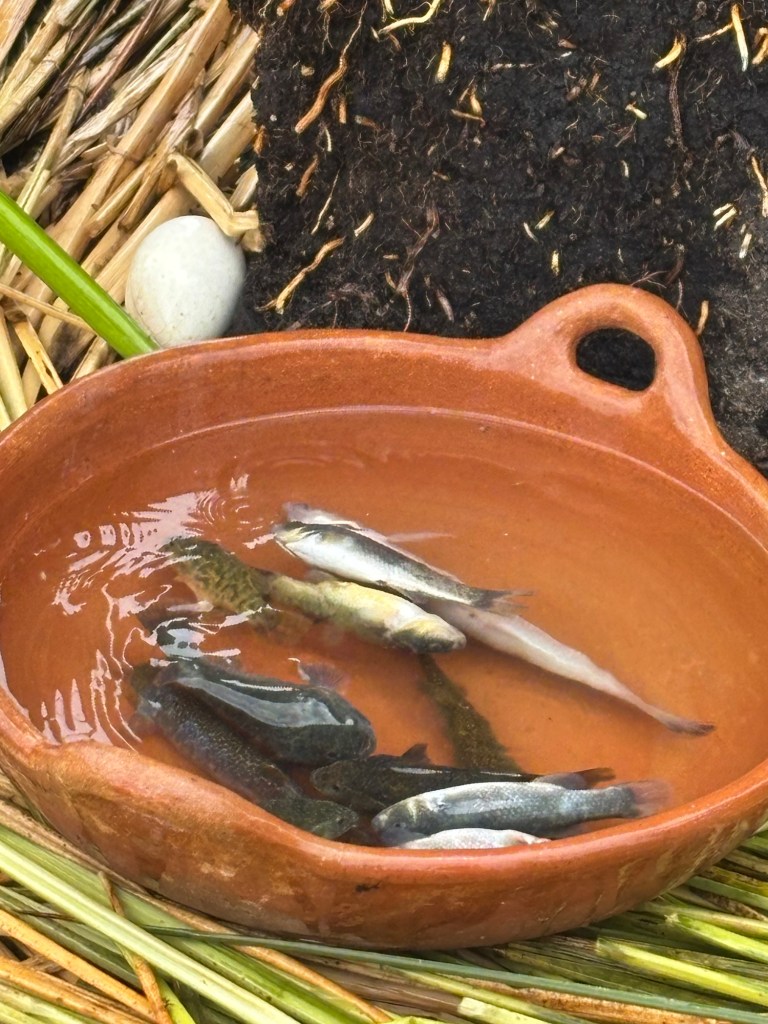
The tiny native fish species
A pusso on a raft

The island is bloody tiny. 5-6 dwellings with a family of 11 , traditionally they would have lived off fishing and trading. But in recent years tourism is creating a new economy for these families.

Demonstration on the reed rafts they cut and tie together to form rafts that are covered in reeds.
You’ll probably see this at our home when you next visit
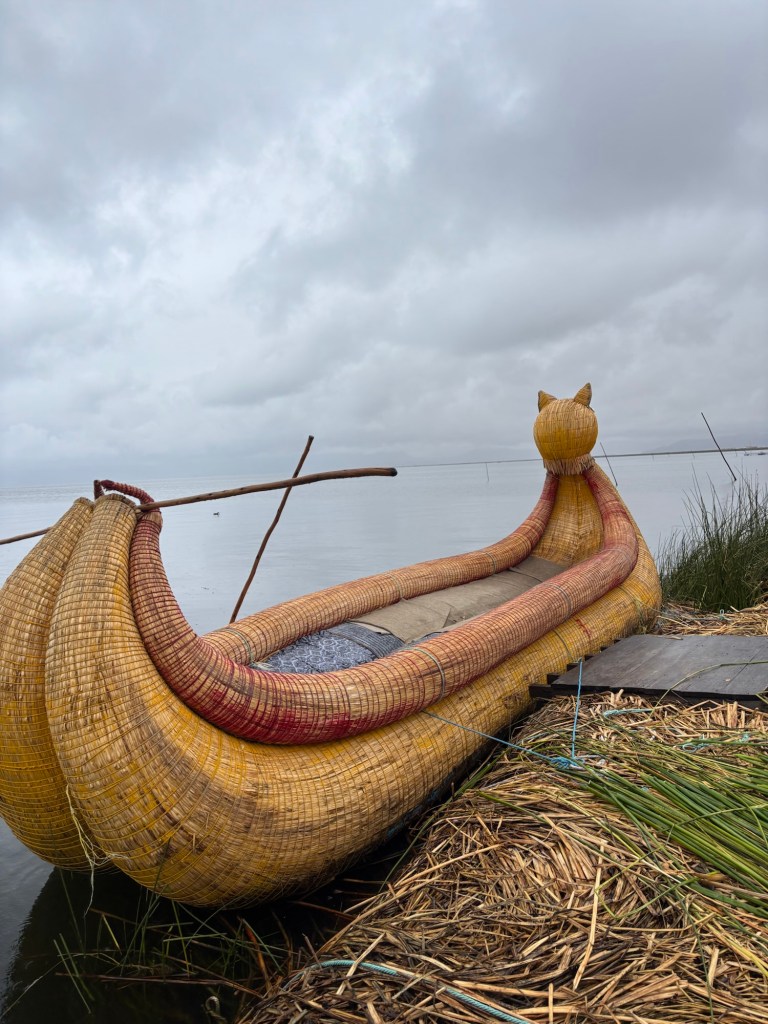
The reed boats they’ve traditionally got around on

It looked like such a hard life. Despite the new income from tourism.

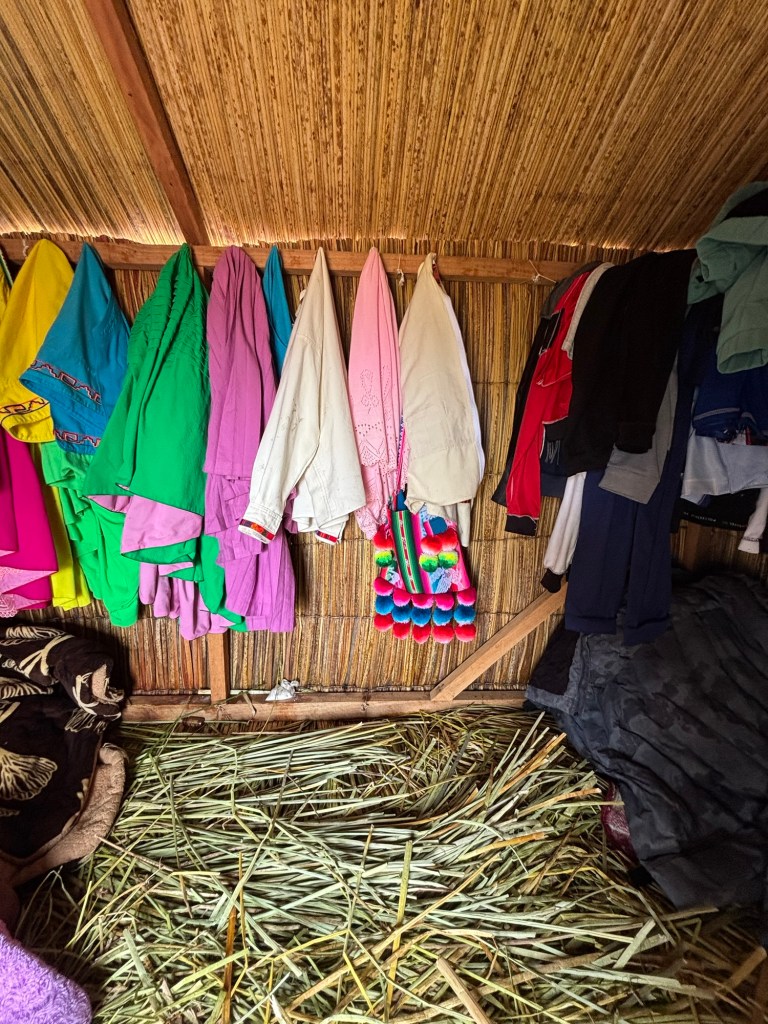
Inside one of the huts

So back on the boat to head to our next destination which was for a homestay.

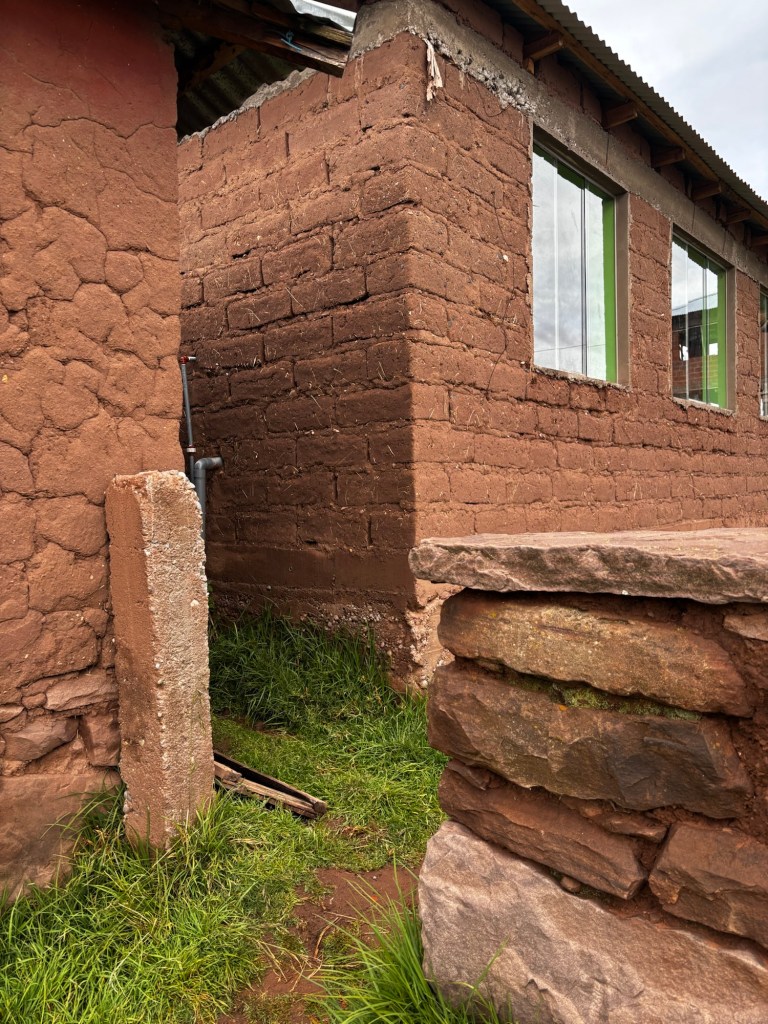
Fair to say there was a fair amont of trepidation about the honestly, the Intrepid description had said it was basic accommodation in mud brick homes and that there were no showers , language is also a barrier and with it being cold and wet we didn’t know what we were getting into.

I expect for our hosts it would have been equally as nerve wracking, they have no idea who they are going to end up with either, right?

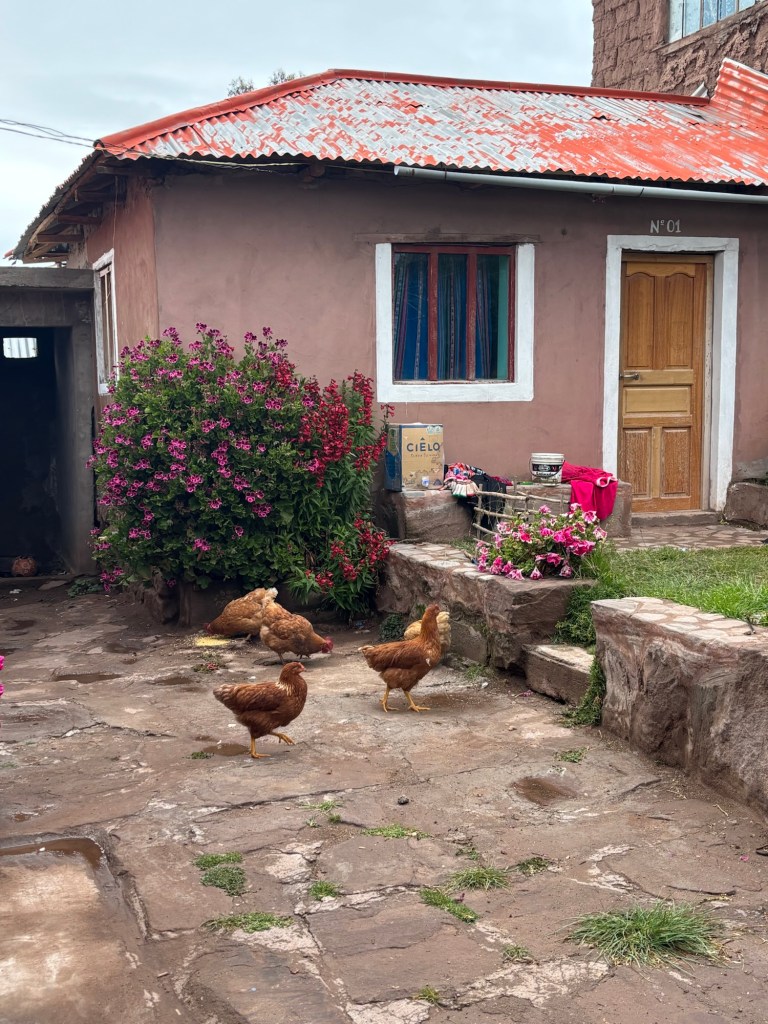
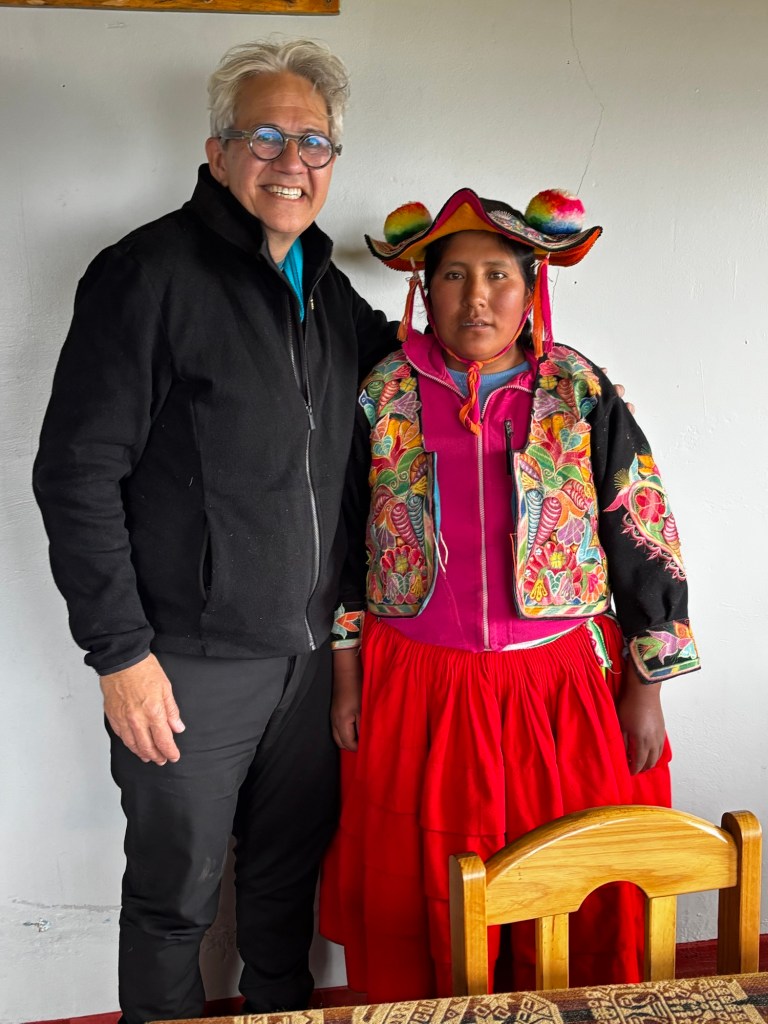
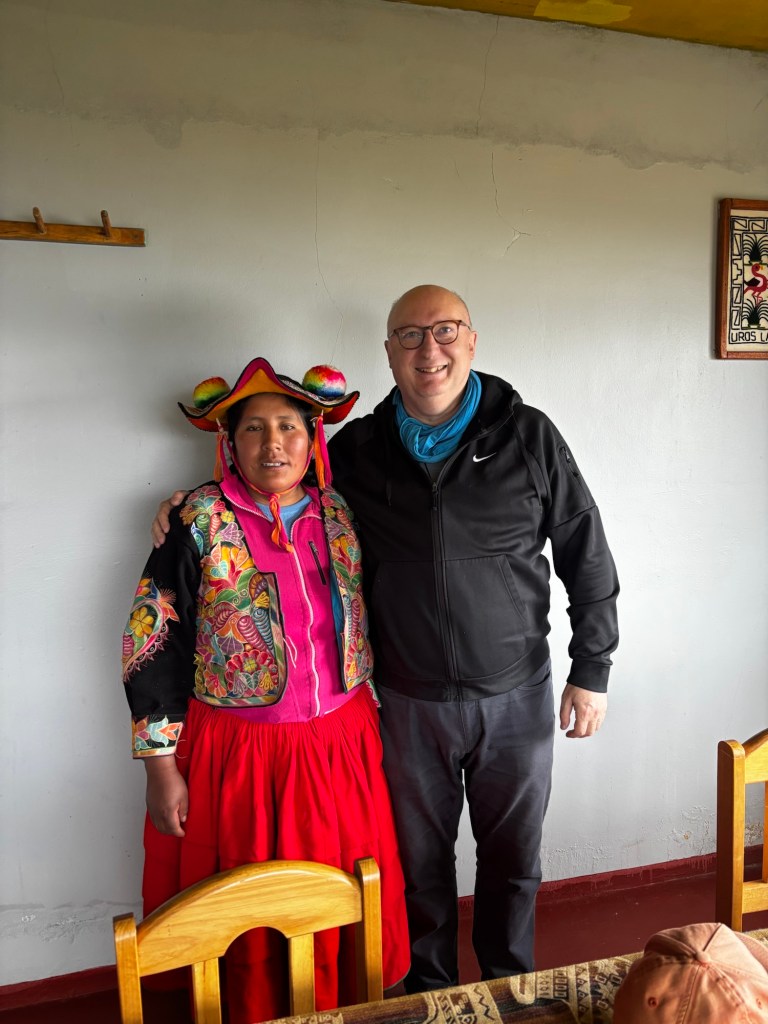
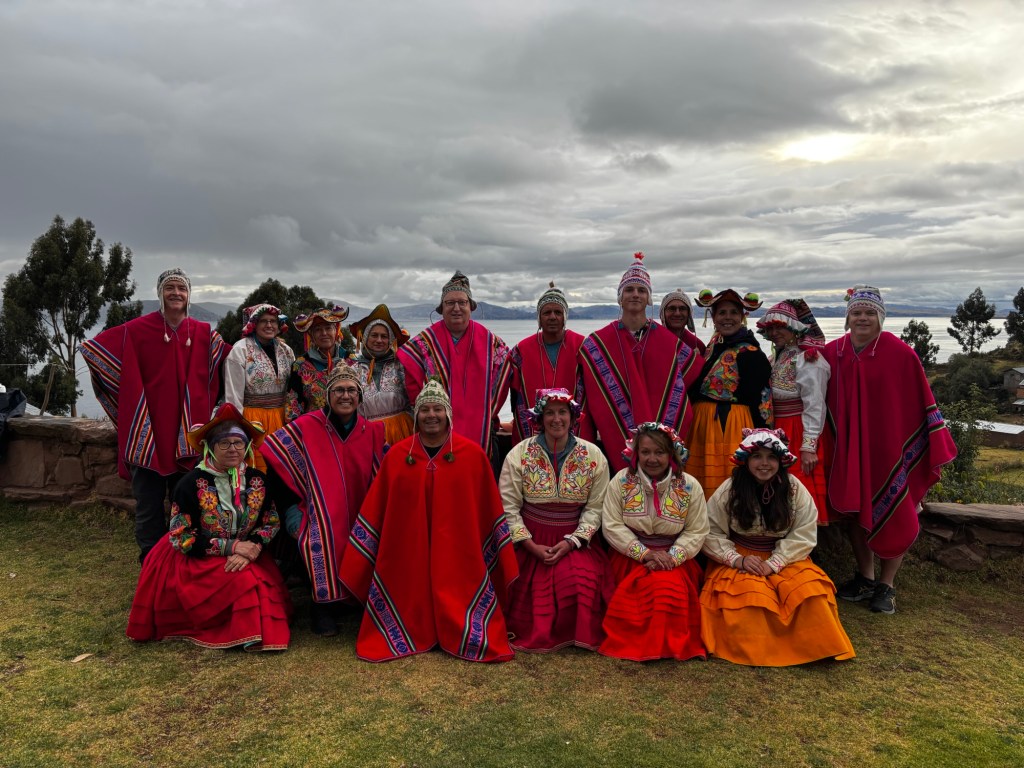
So we arrived. We were greeted by two women in vibrant traditional dress and taken to our respective rooms. Ours was super cute and way exceeded expectations.

We even had electricity, a flush loo and a shower!

We then sat down for lunch with our host and tried as best we could to get to know each other. Our host Yula was 33, married, two kids Sébastien and Natalie. Her parents in law lived next door.

Cooking us lunch
Lovely dining room ( installed specifically to host tourists(
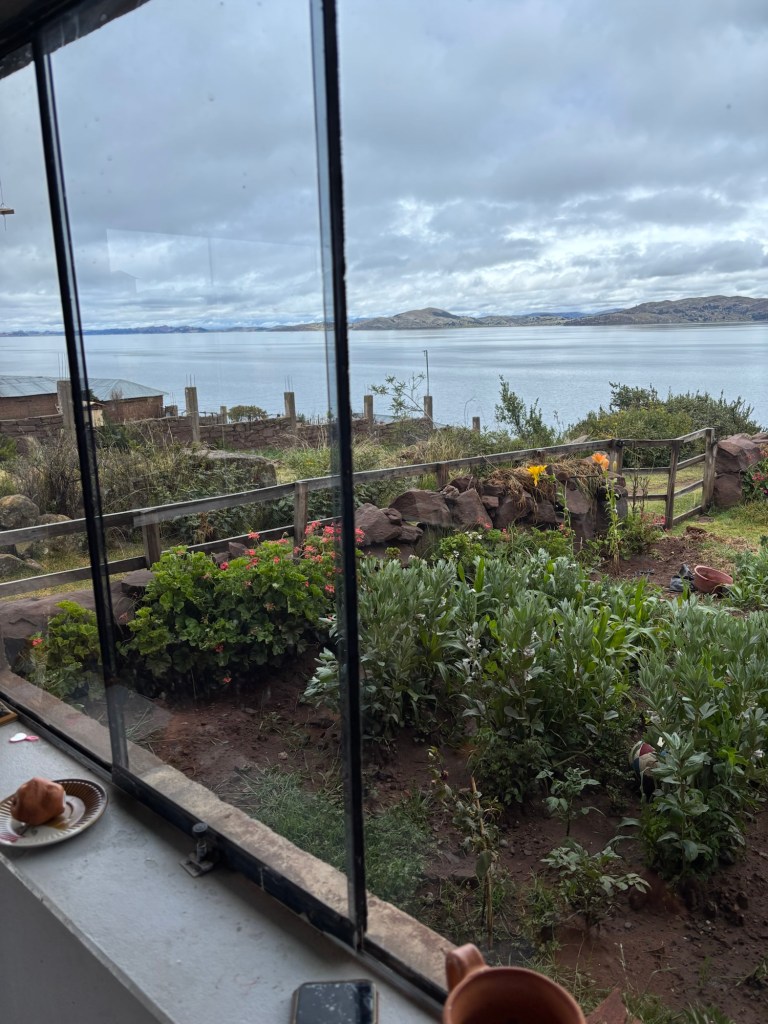
La Bella vista

It’s never easy communicating when you don’t share a language, but it’s amazing what a big smile, an open attitude and some sign language could achieve we felt very welcome immediately.

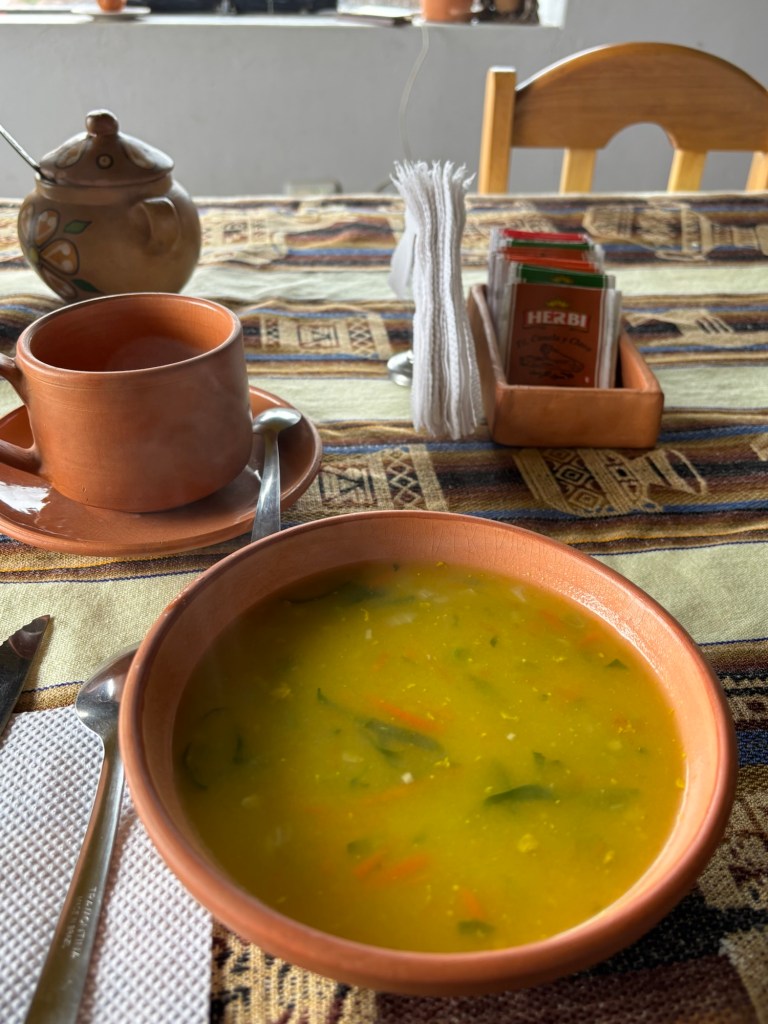
Quinoa soup
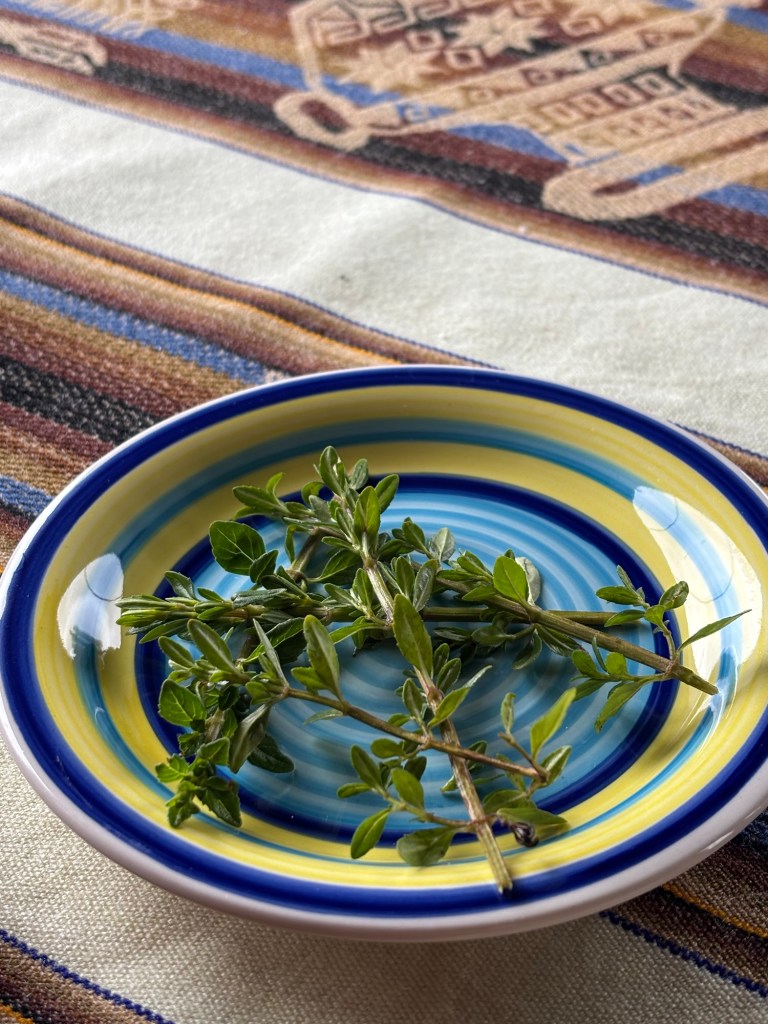
Gorgeous herb we had infused in tea. I thought a mix of mint and oregano!

We had a wee bit of free time before we had to do some “chores” so wandered up to the plaza. This is a remote area with a tiny population the inhabitants spoke Spanish, Quechuan , and Aymara. All completely different languages.

Town square
Yula our host

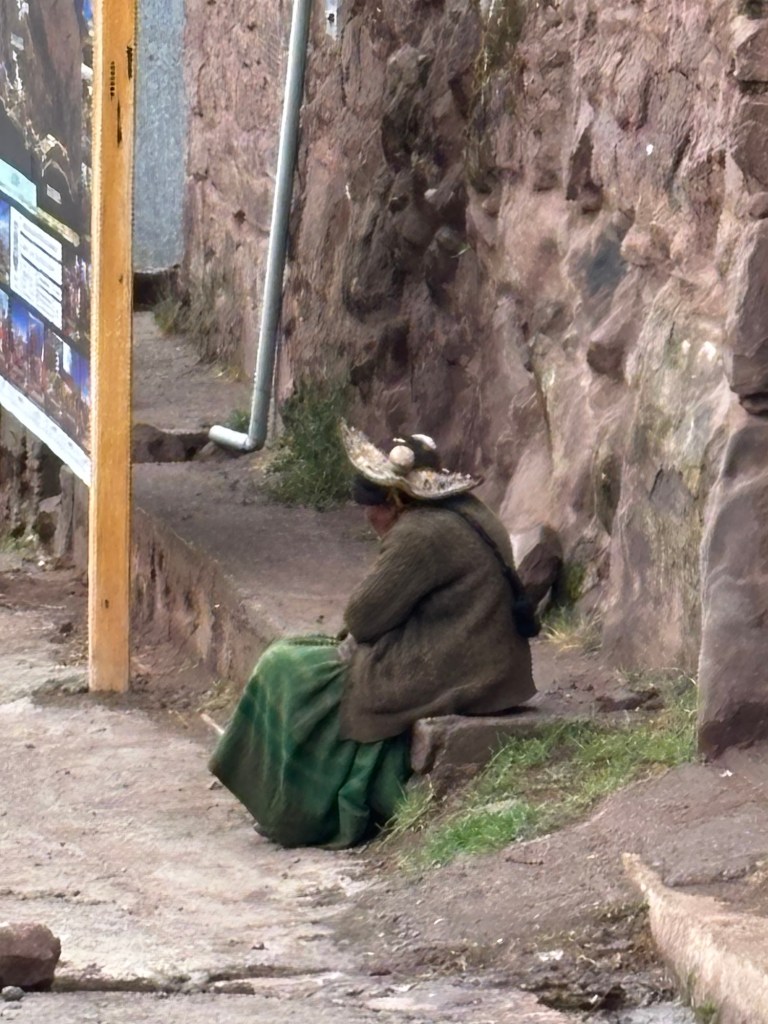
The hat with the two baubles indicates she is married , while there is a different hat for those who are not married- more on that later..

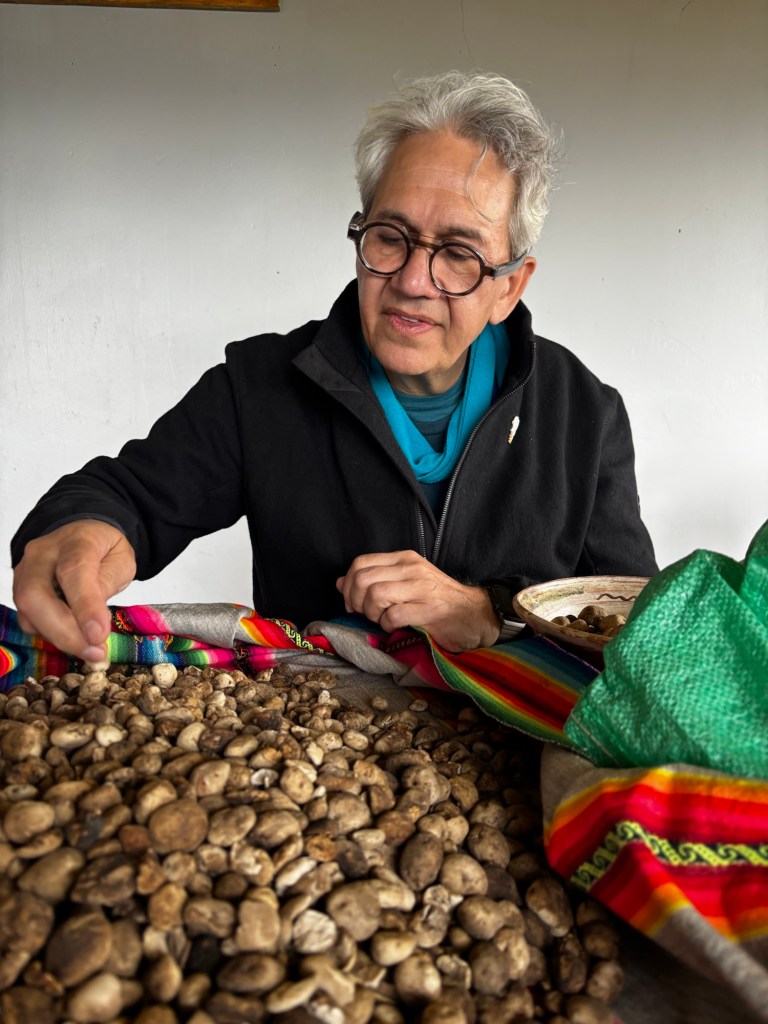
We made it back to the house where we were assigned jobs to assist the household, we got to sort dried potatoes, from those that were whole to those that were broken!

Some of other mates sorting
Others got to take skeins of yarn and roll them into balks

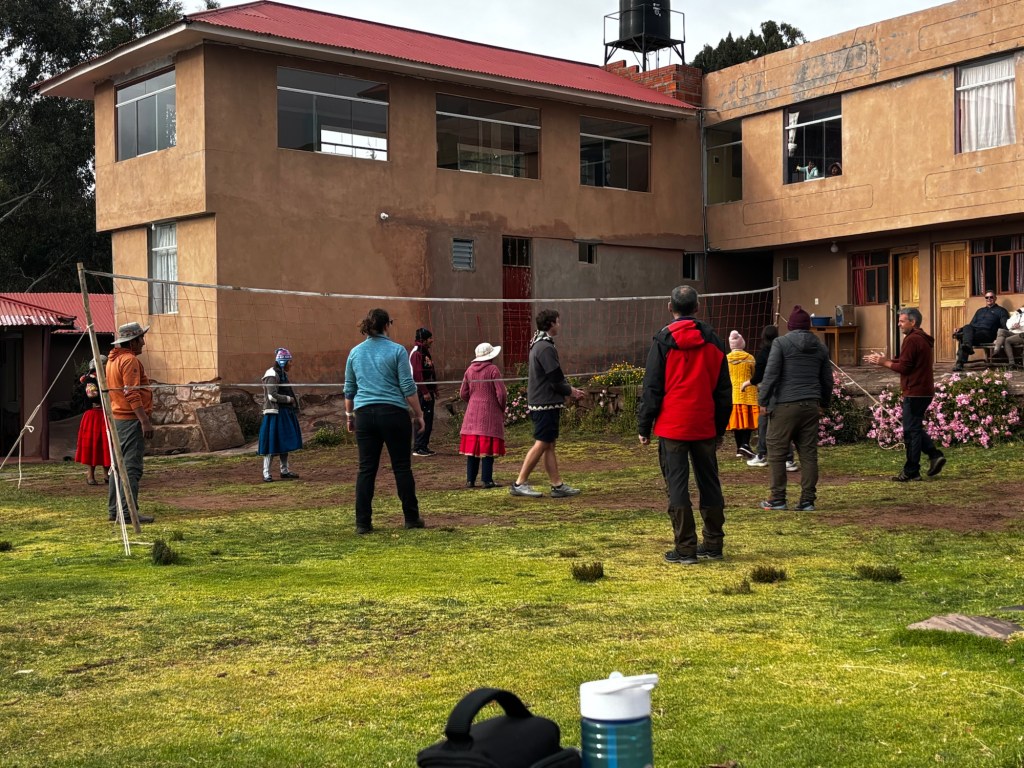
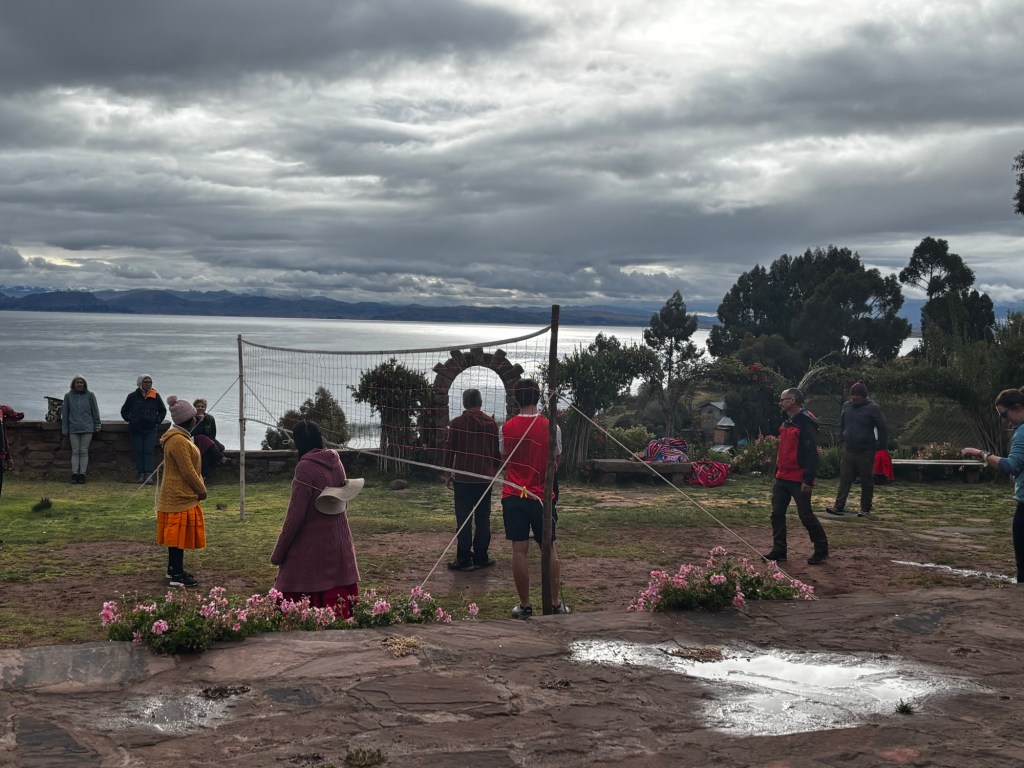
After our jobs we got together to play volleyball, locals versus visitors and talk about an ice breaker – it was so much fun and really brought everyone together!

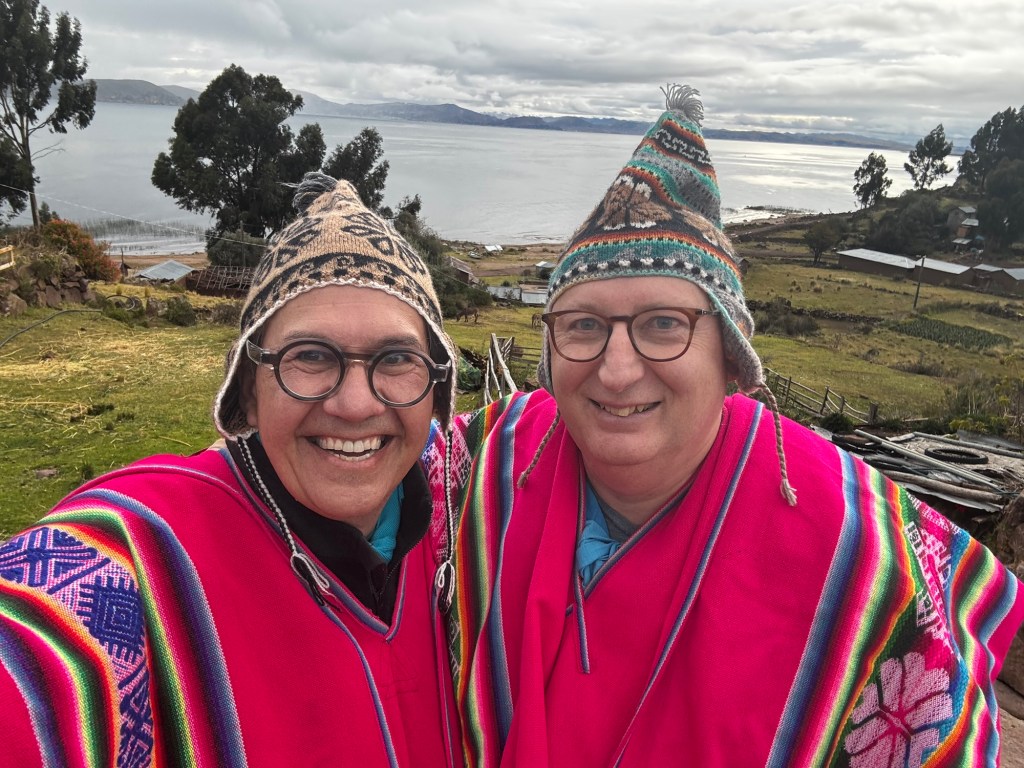
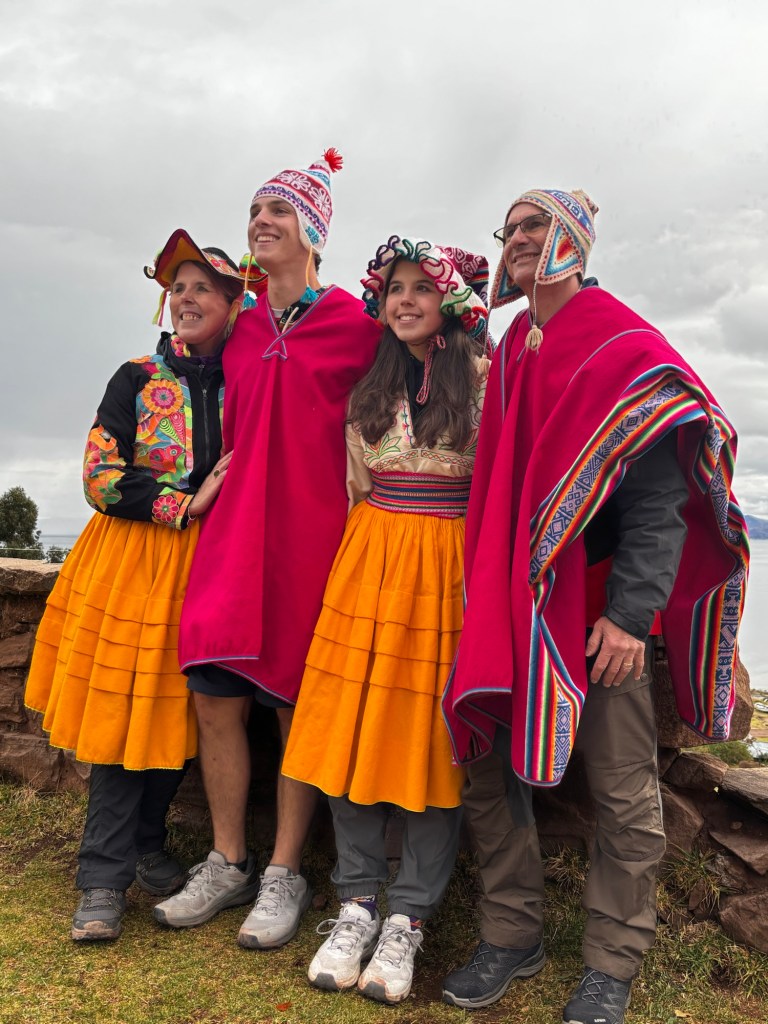
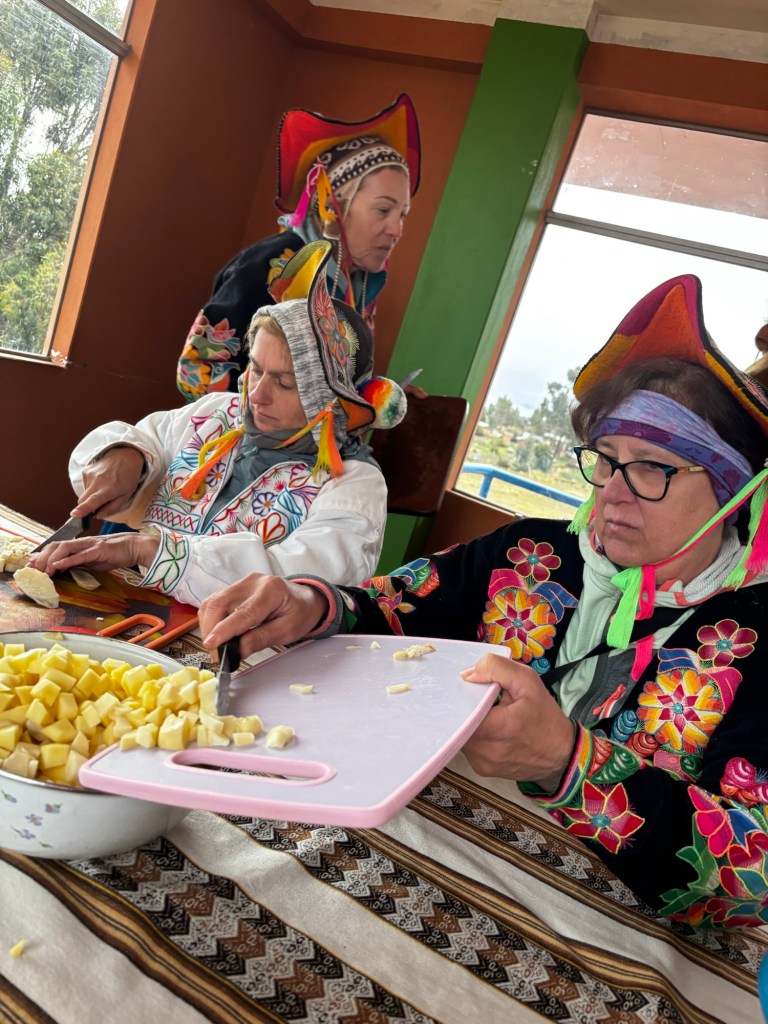
They then gave us the option of dressing up in traditional clothes , ordinarily I may have resisted but it’s incredible what a few hours of camaraderie, laughter and good will we do. Before we knew it we were all in our outfits.

From there, while in attire we all had to go upstairs and help cook dinner , chopping, peeling vegetables,

We then ate together, laughed some more and were all back on our rooms by 8pm.

It was a wonderful experience, and so wholesome!

This has been an intrepid initiative, they have supported the set up , and done so in a respectful way, using local resources, and local guides. It doesn’t feel contrived, and the response from those we are engaging with feels genuine.

They structure thing’s themselves, so at this time of the year when it’s low season, there’s only one group a week coming through, so each community group gets rotated through so the whole community benefits. It’s been rough since Covid and with the ongoing political instability, but things will hopefully continue to recover and more people get to engage with these wonderful communities.

It was then time for dinner, which we had to help prepare.

It was a nice touch, and once we had eaten , we all had an early night. No TV , no WIFI so no choice but to sleep. Bliss.

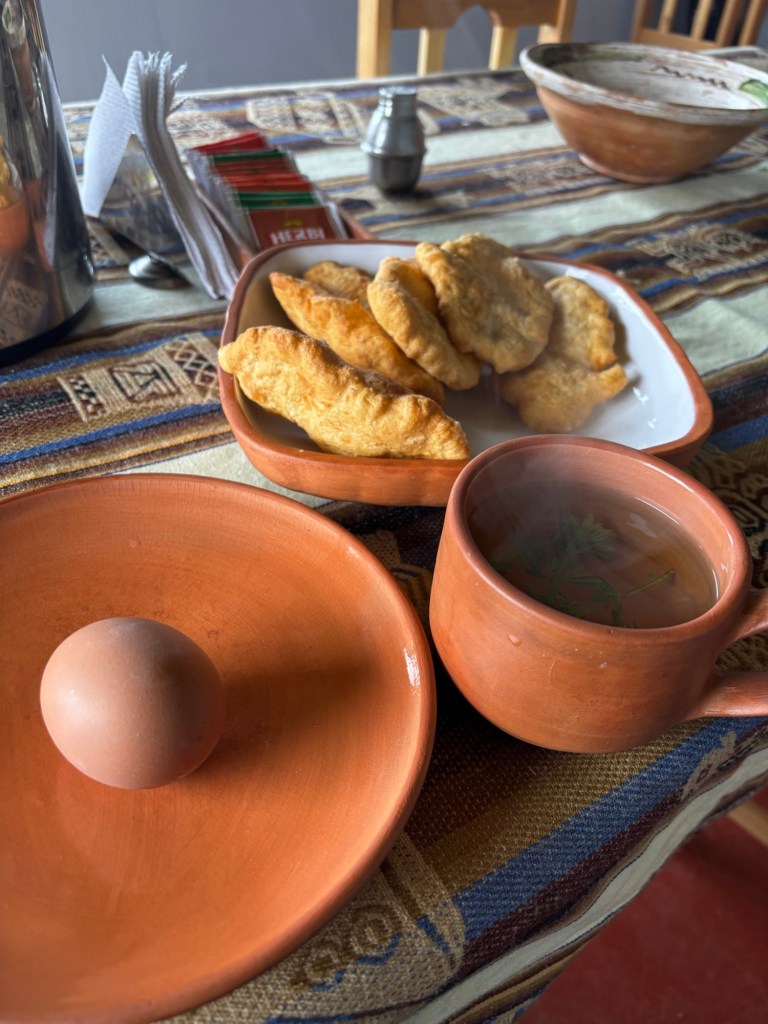
Next morning breakfast was fried bread, herbal tea and an egg.

So simple yet so delicious!

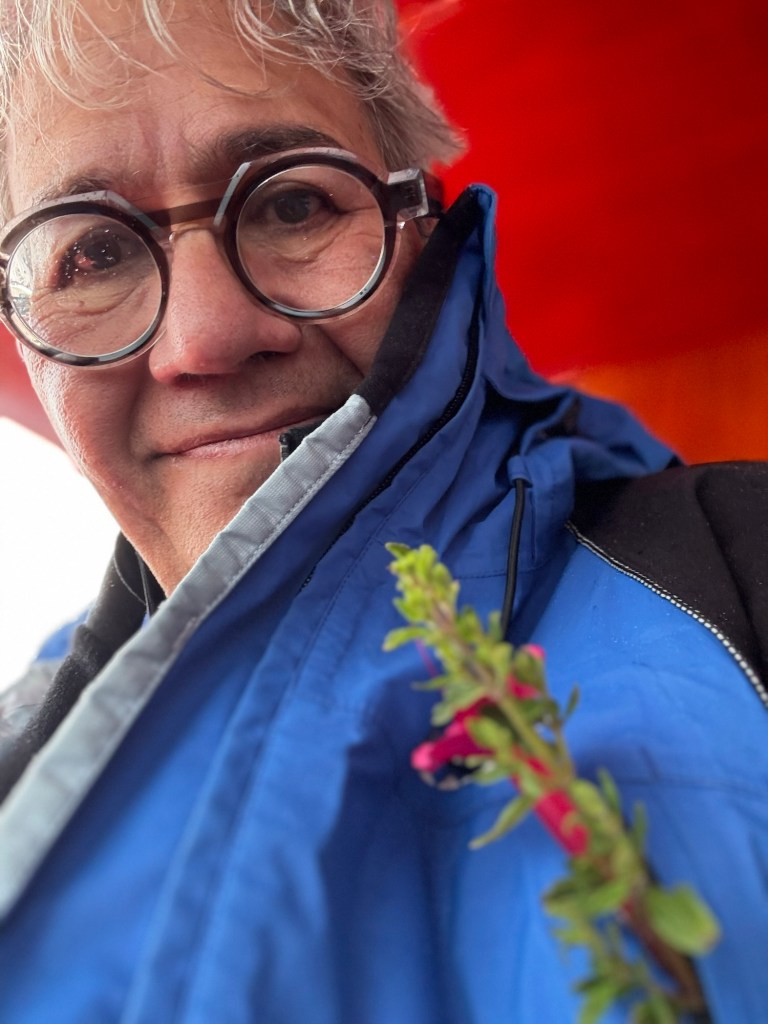
And then our host walked us back to the boat. but before she left she presented us both with a wee flower and it was hugs all round

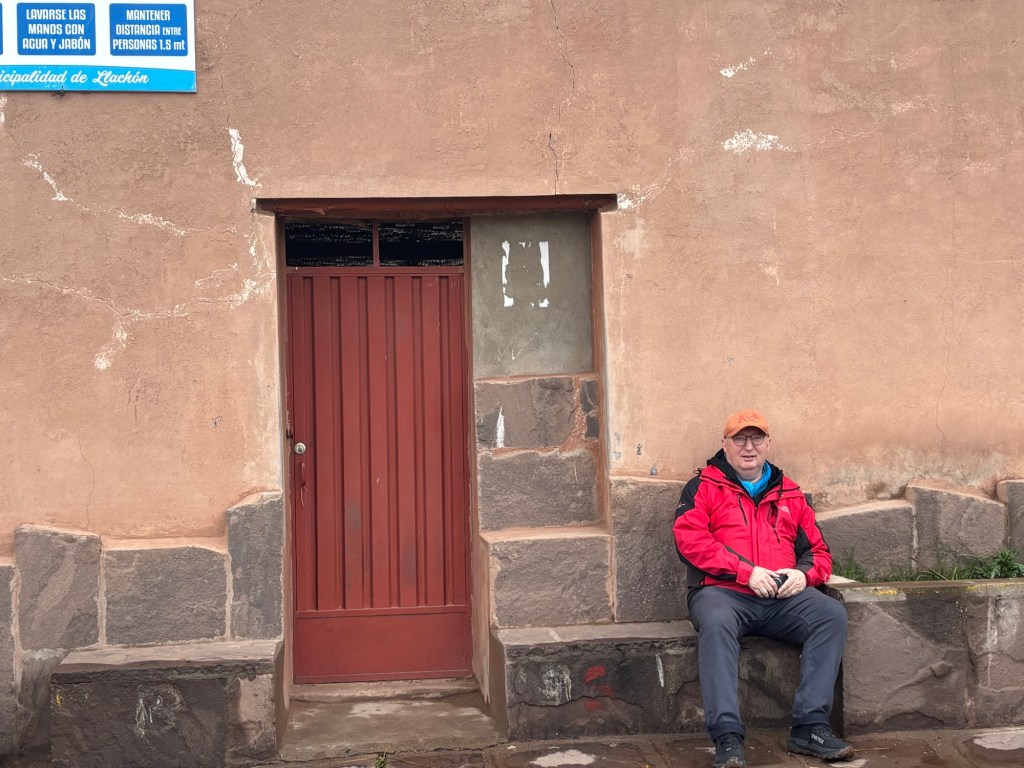
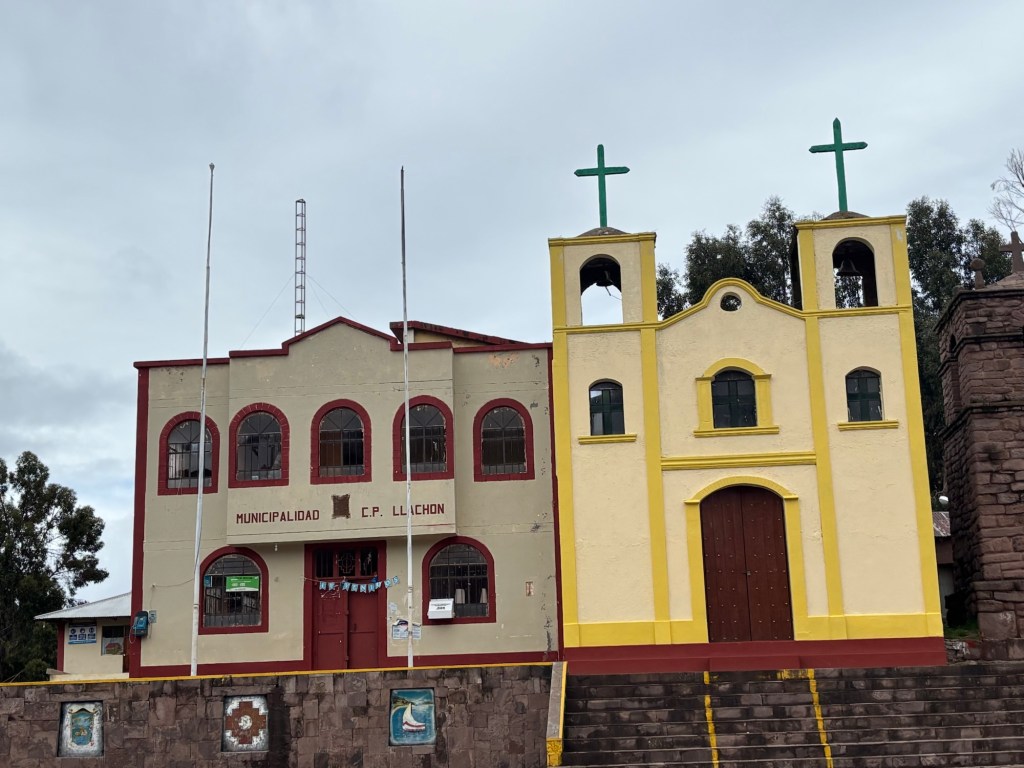
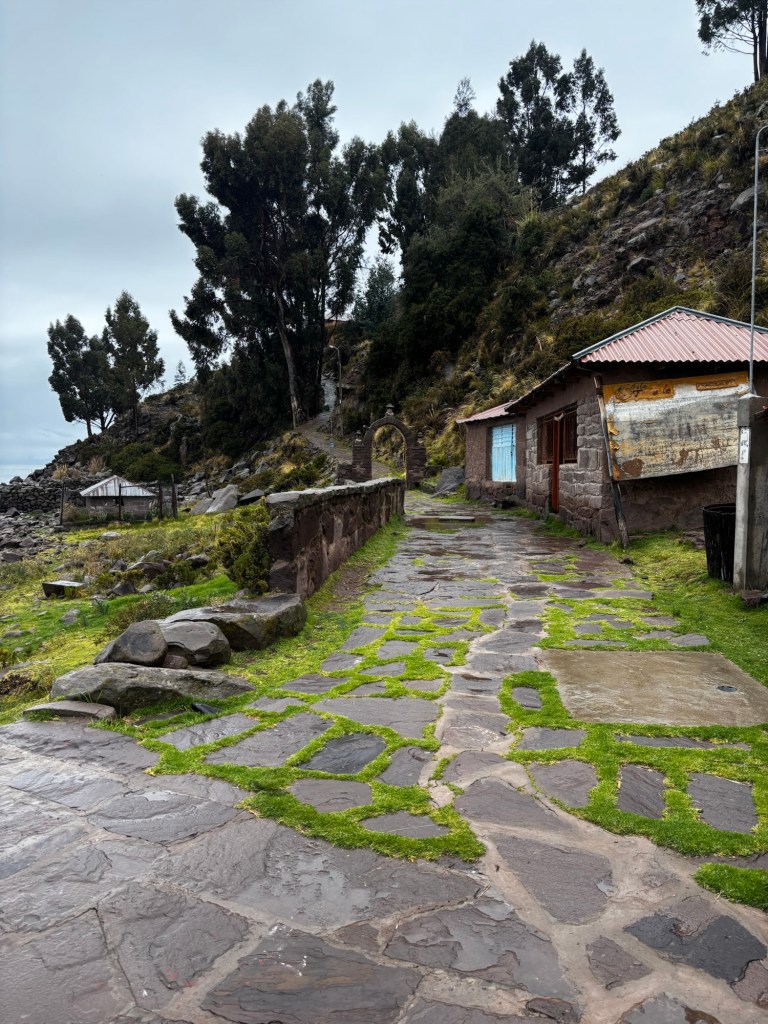
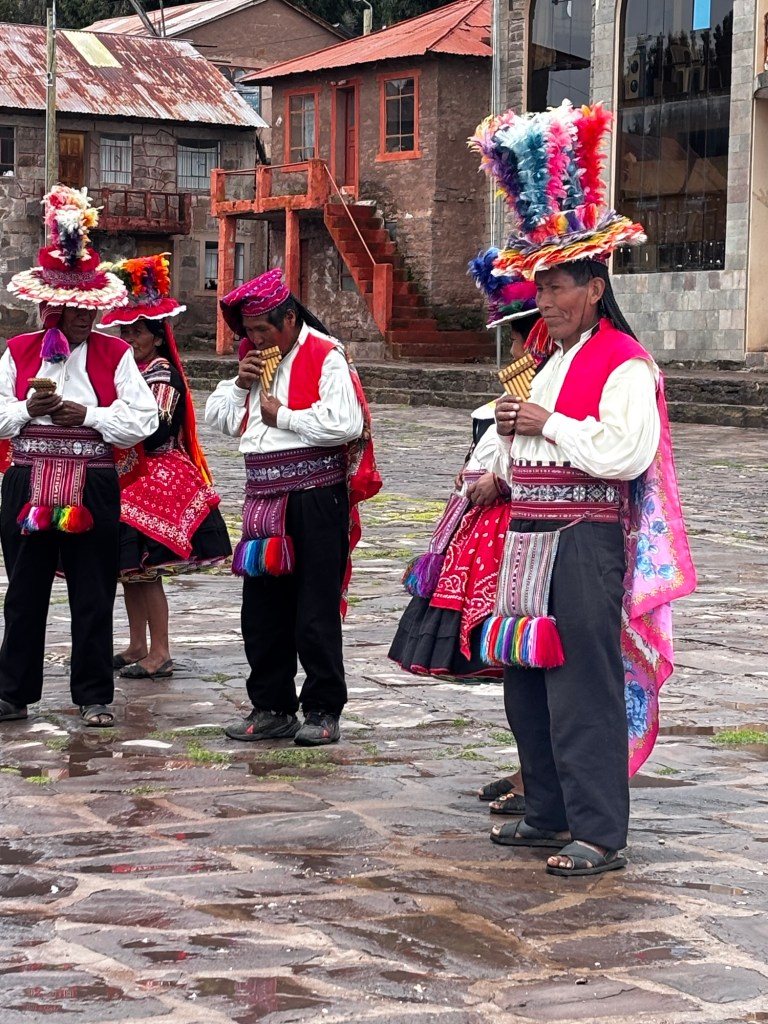
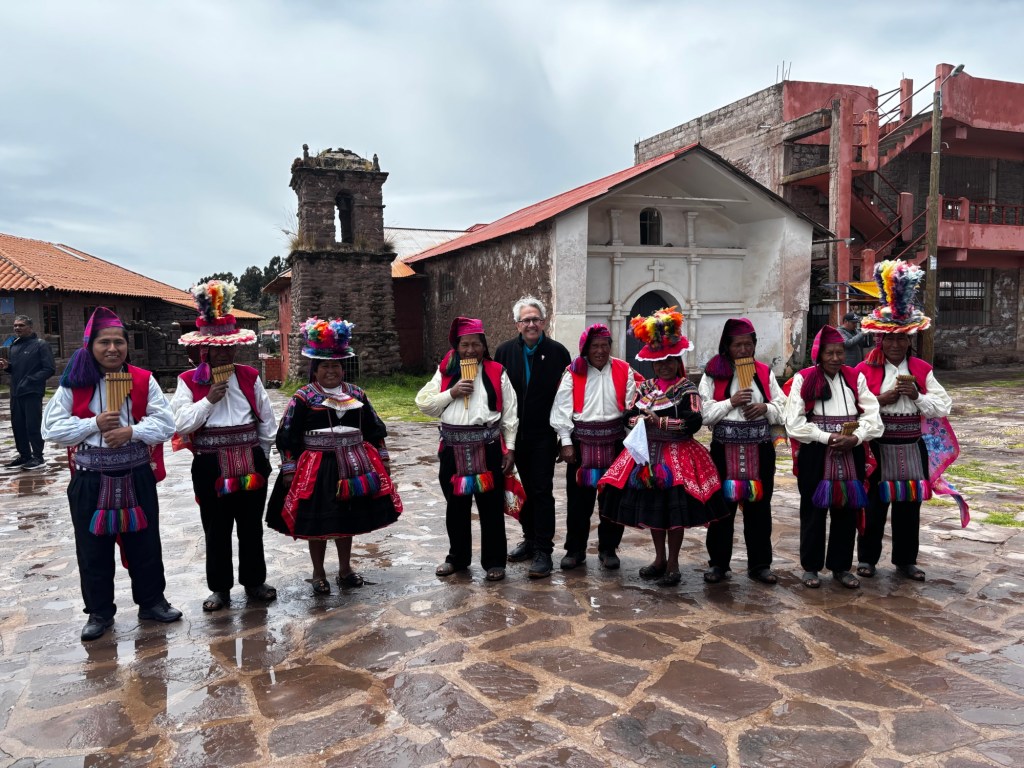
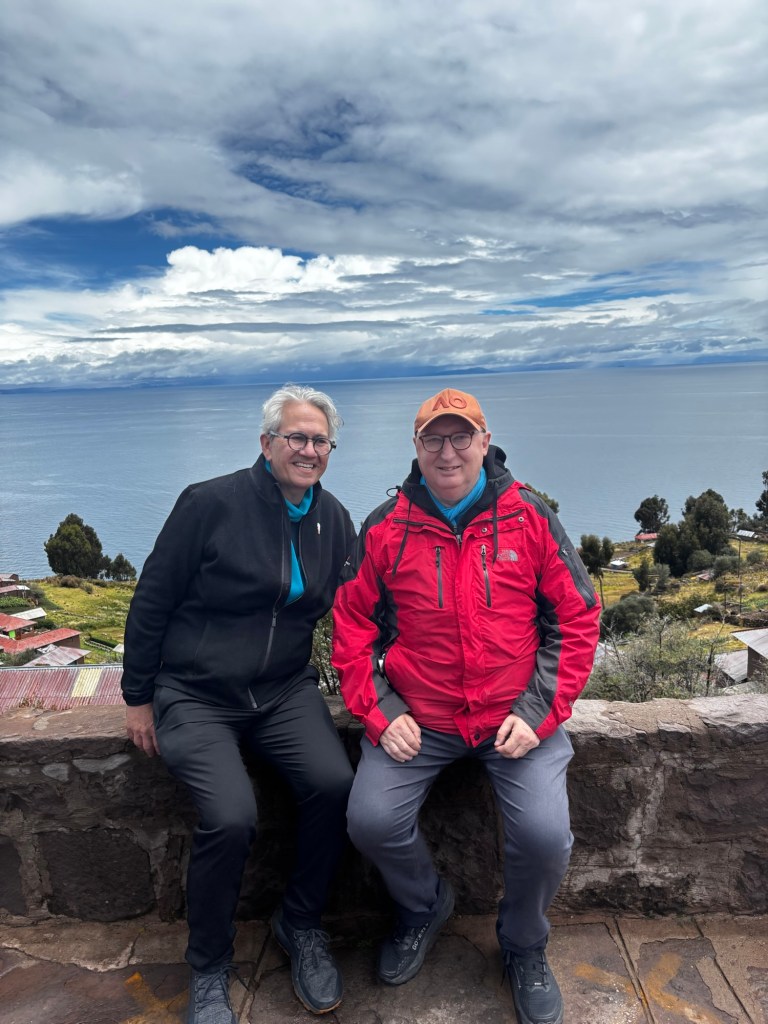
Next stop was a trip to tequil island, population 2000 about an hour away and with completely different cultural identities… extraordinary! A hike for an hour up over the hill to the main plaza. This was the hometown of our guide so he had a few things lined up.

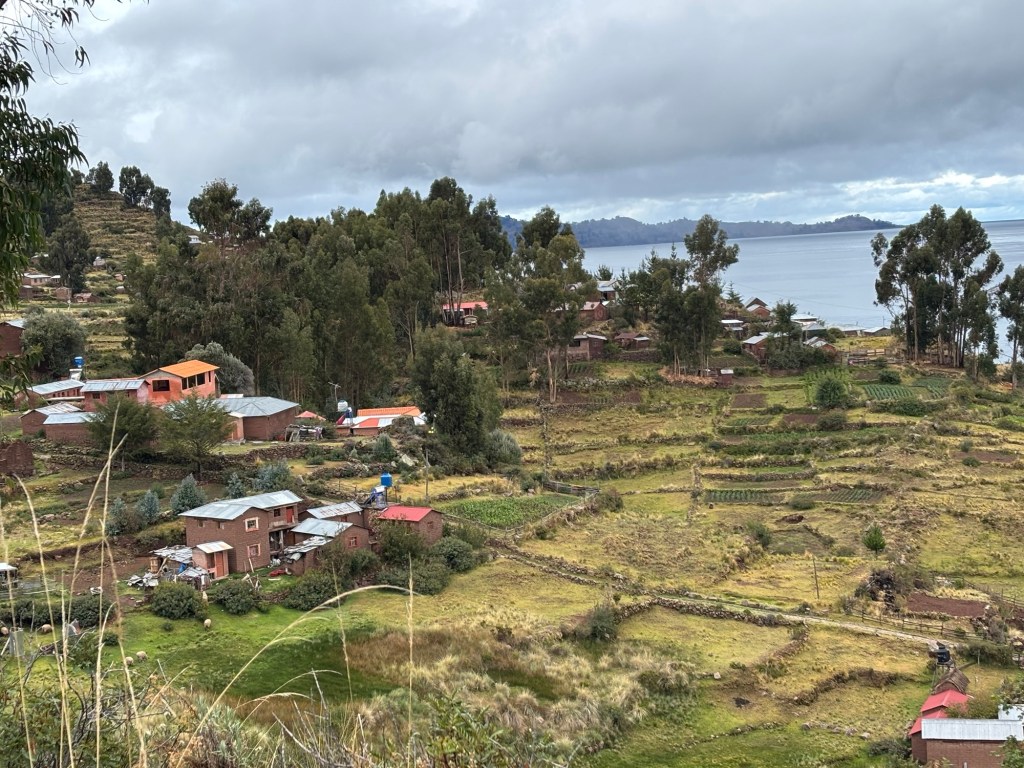
The walk is tough at altitude, at almost 4000m, slow and steady. Views were great but as it was raining it felt a wee but miserable. While I haven’t been the landscape, stone walls and clear blue water made me think this is what Greece must look like.

When we arrived at the plaza we inundated the tiny local cafe, especially when it was here , for the first time in weeks we heard the whir of freshly ground coffee beans. Yum!

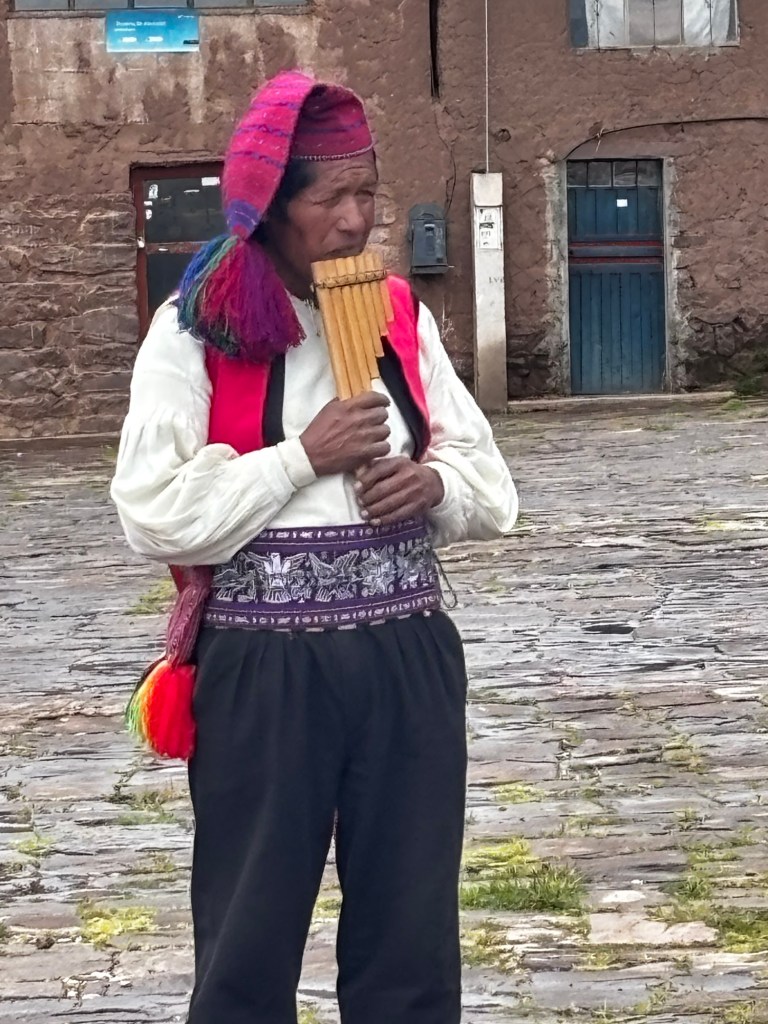
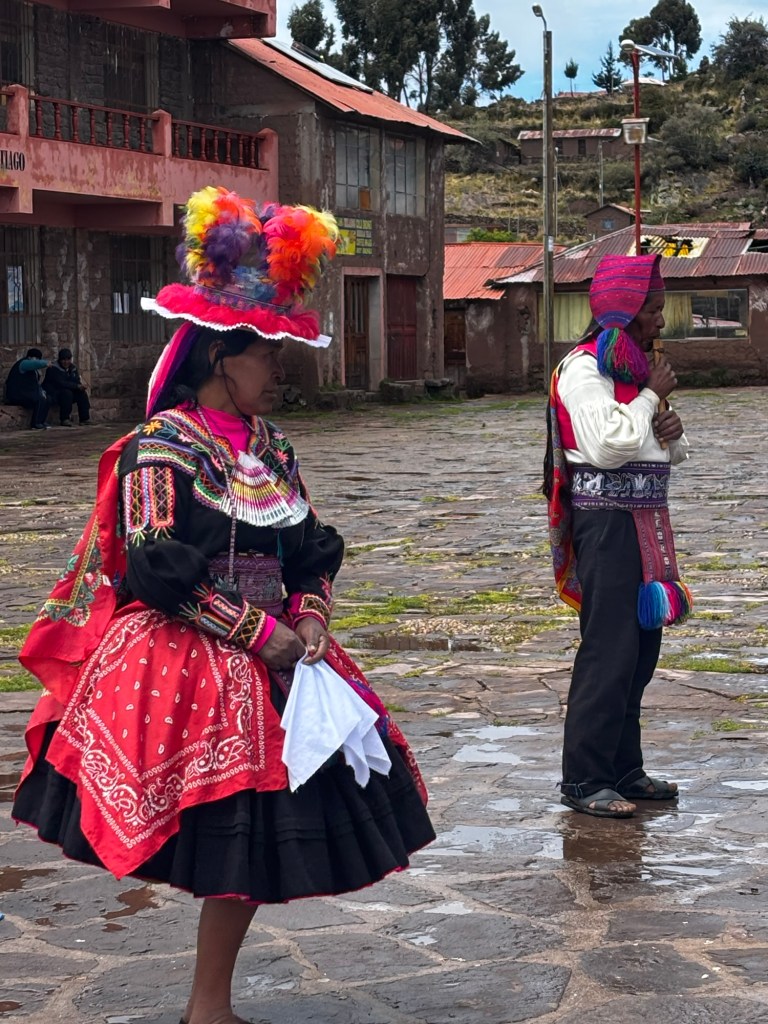
Then the locals came out to perform. Which was fun. There were school mates and family members of the guide. The change in local dress remarkable!

In amongst it

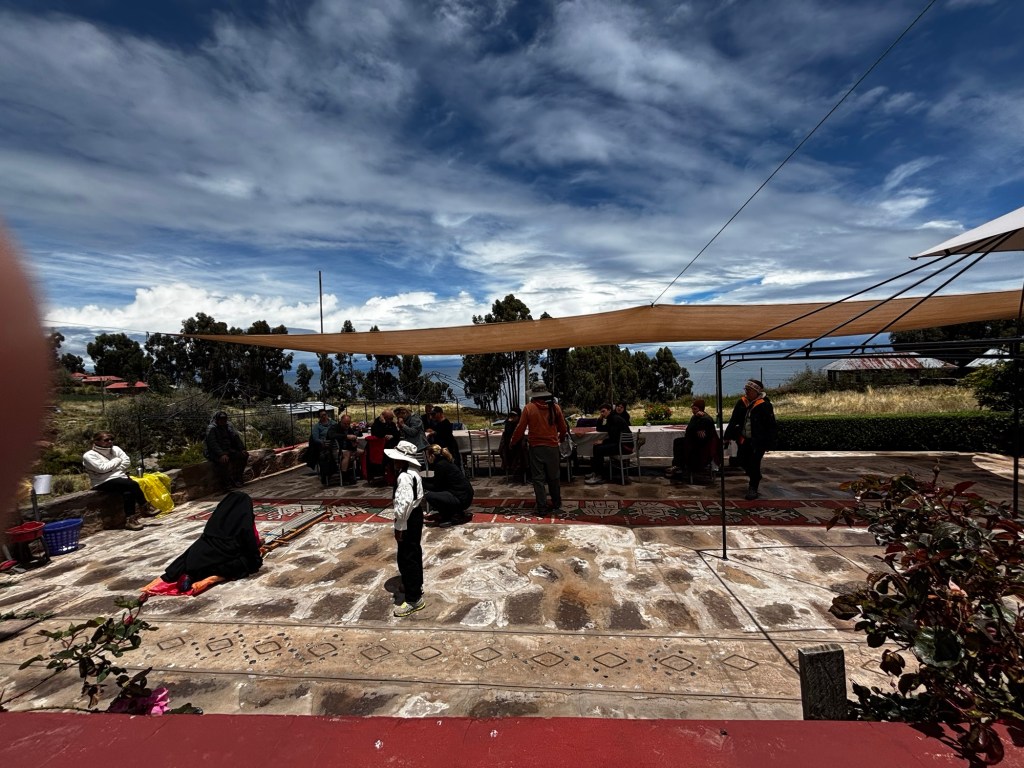
We then had some lunch and then it was back on the boat to Puno for a free afternoon, catch up some packing. Package up the latest fabric purchases and then try to find a post office to send them home.

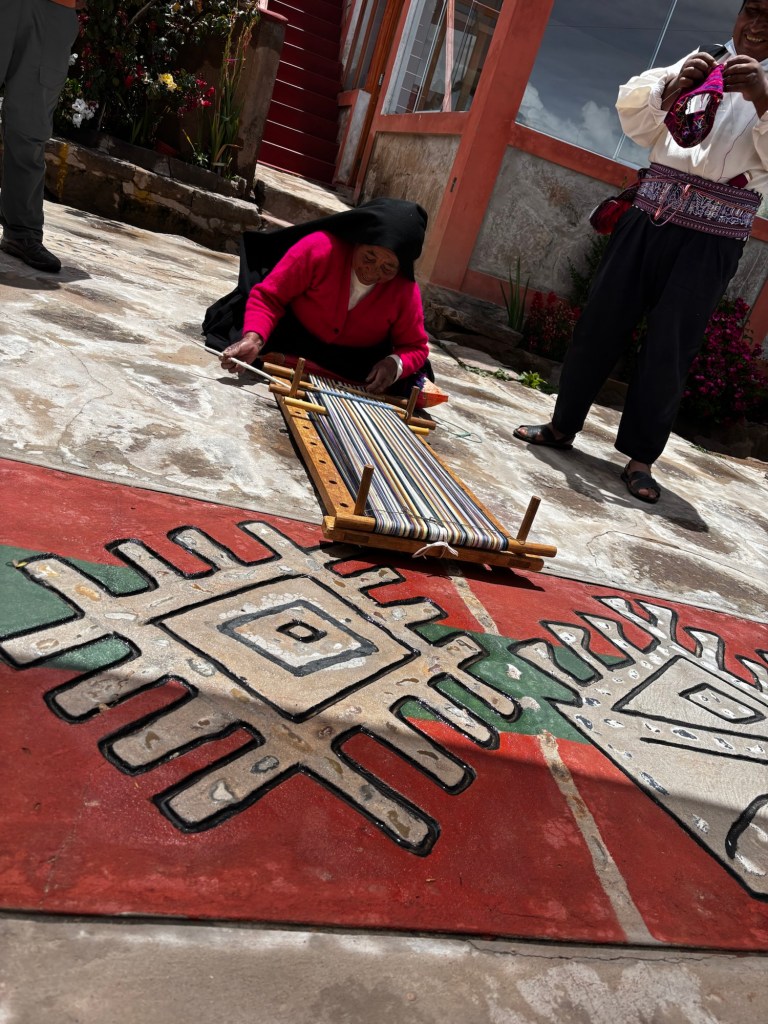
A weaving demonstration at lunch
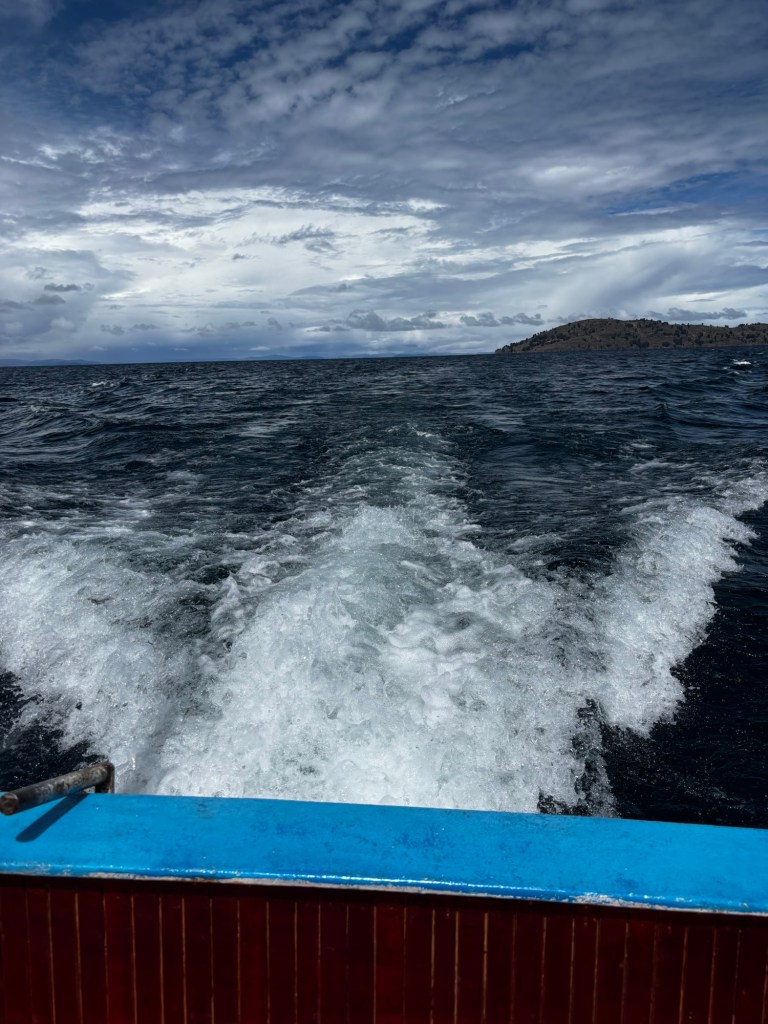
Weather clearing on way back to Puno

Lake Titicaca is friggin huge. 8500sqkm and shared by two nations Peru and Bolivia.

Three native fish, all very small and two introduced species , trout from Canada and kingfish from Argentina.

The lake is in serious decline, pollution is an issue from the 5 rivers that flow into her, mercury from gold mining as well as sewerage discharges. Local species are under threat. Add to that the changes from global warming where the essential rains each year are getting less and less and the largest fresh water catchment in South America is in trouble. Interestingly it’s not purely fresh water , with 1% salt it makes the water unsuitable for irrigation! It’s am amazing piece of water and we only got a glimpse. It is absolutely well worth a visit if you get the chance, Lima and Cusco get the lions share of tourist visitors.

So that’s about it for Peru. Tomorrow we are back on a luxury bus and head to the Bolivian border. It’s been an absolute blast. Can’t believe we have such a long way to go on this trip. We have 4 nights in an Airbnb before we start this all again with another Intrepid trip for 13 days.

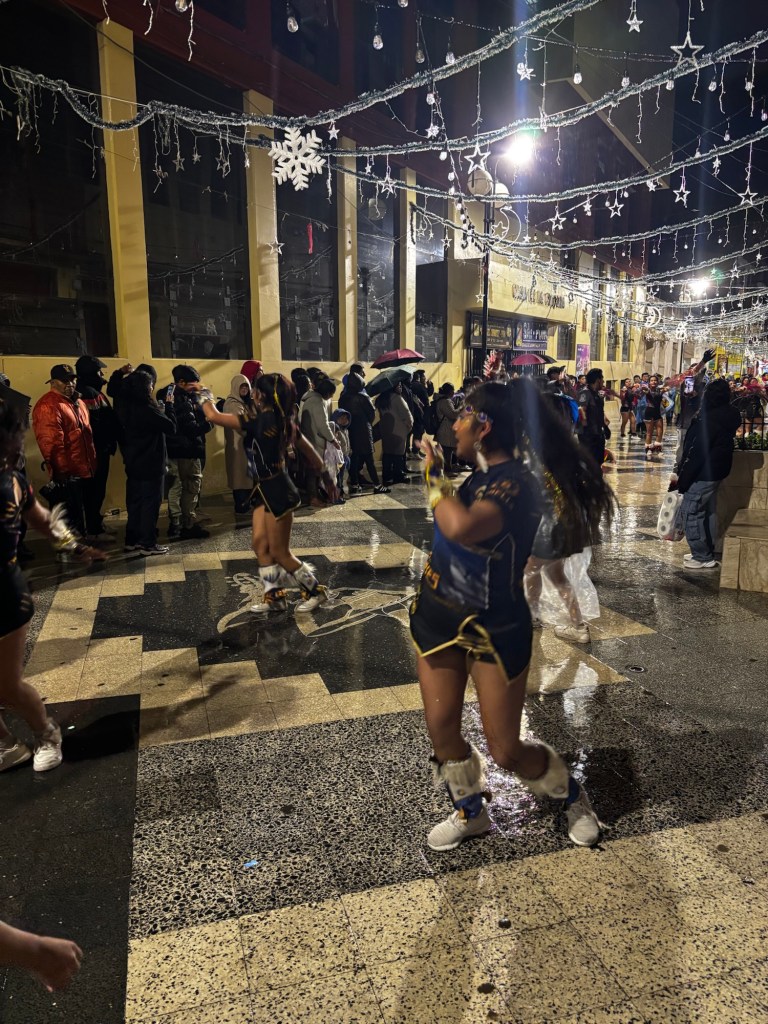
A surprise celebratory parade in Puno after dinner.

Rainbow mountain – Palcoyo

Peru so far has been about under promising and over delivering.

Christmas Eve here is a free day, so can rest from the full on pace or do your own thing.

I had heard about Rainbow mountain and spoken to Marco our guide about it. He was nonchalant, you know a lot of those pics are with filters, it’s rainy season there may be cloud, it’s 4 hours there and 4 hours back- and then there’s the altitude it’s over 5000m, let’s just check the weather closer to the time and see..

Well we are closer, and the weather looks good , so Marco how about it?

Four of us were interested in going, so with a quick word and $109us we were booked and told to be ready for a pick up at 5am for a 4 hour drive to cover the aprox 200km.

I had heard about rainbow mountain, seen teams of two puff their way up on Amazing race , seen various versions of pictures from relatively bland to over the top technicolour. They are a new attraction, first “discovered” in 2016, the result of snow melt from climate change. Yeah, I know that does put a lense on things.

But undeterred I confirmed and was ready for the pick up at 5am and the long drive with our guide and a huge mini bus.

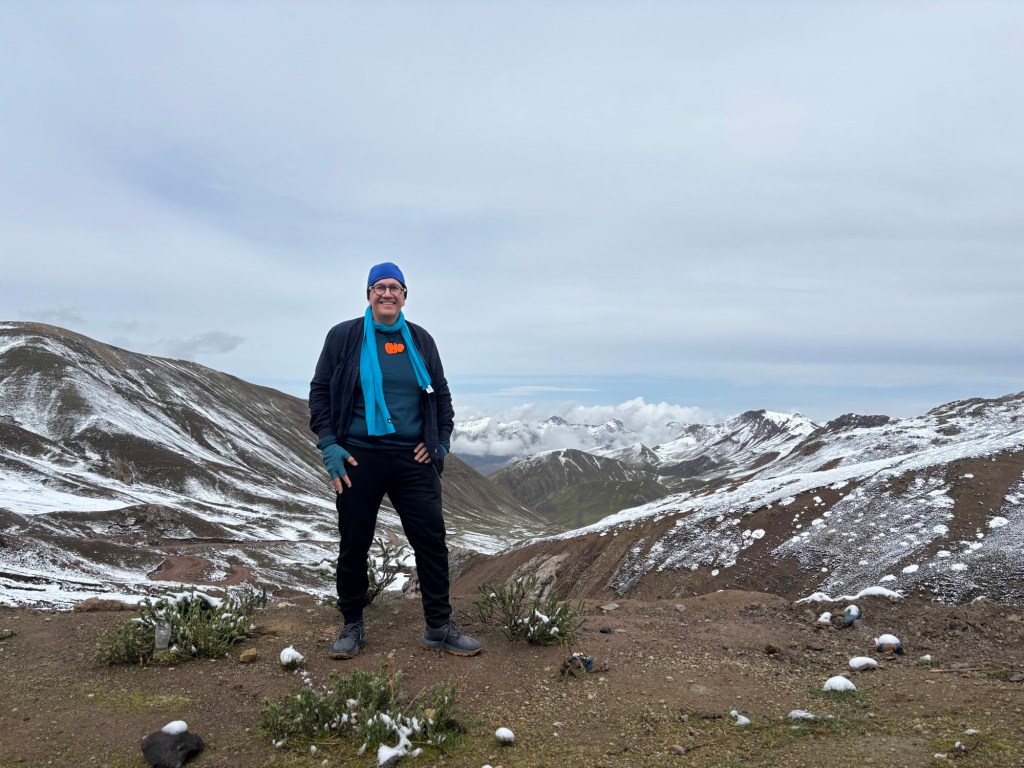
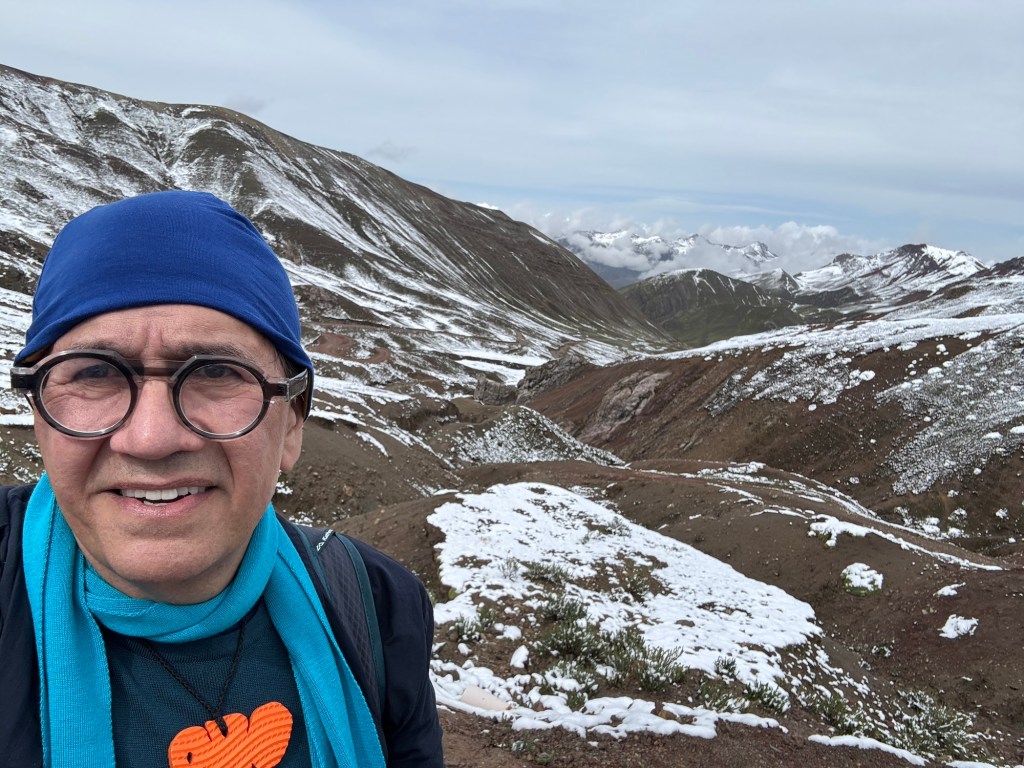
Breakfast was arranged and included ( thanks intrepid) and then we turned off the main road where we started going up, and the roads got narrower and windier, up and up we went. Ears started to pop, the landscape thinned out and we saw less and less vegetation. The housing we passed was becoming more and more basic, lamas started appearing, then we were above the snow line and still we kept ascending, to 4700m. Looks like I was going to get a white Christmas after all.

As we arrived!
Chilly but not too cold.
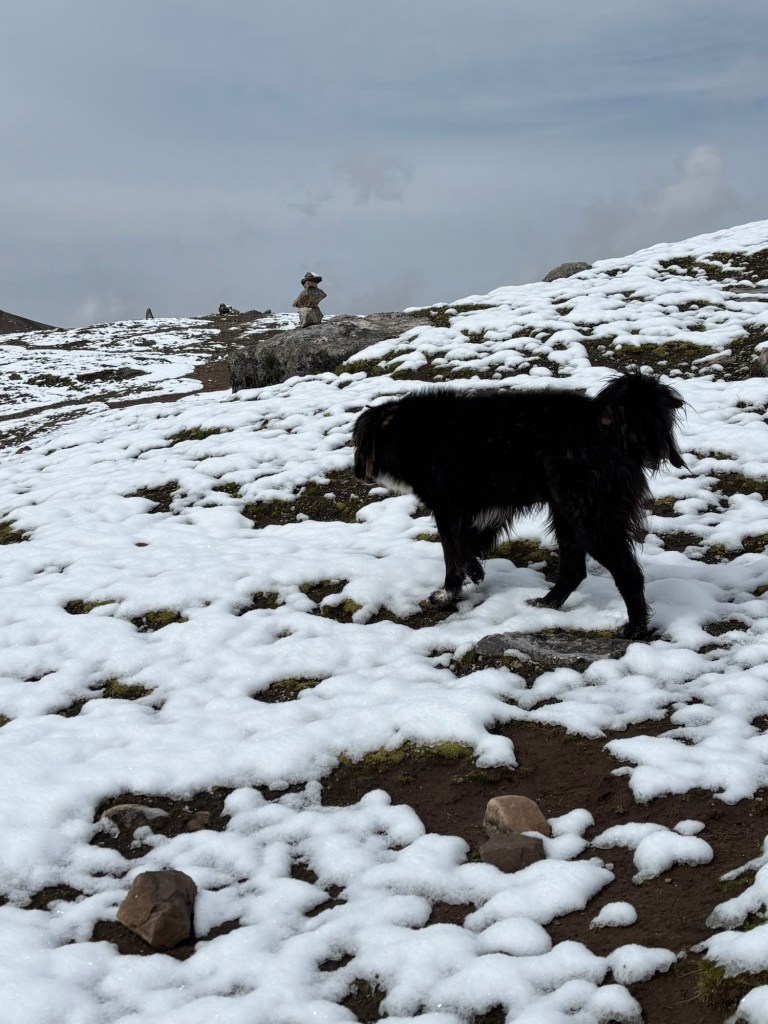
What are you doing up here?

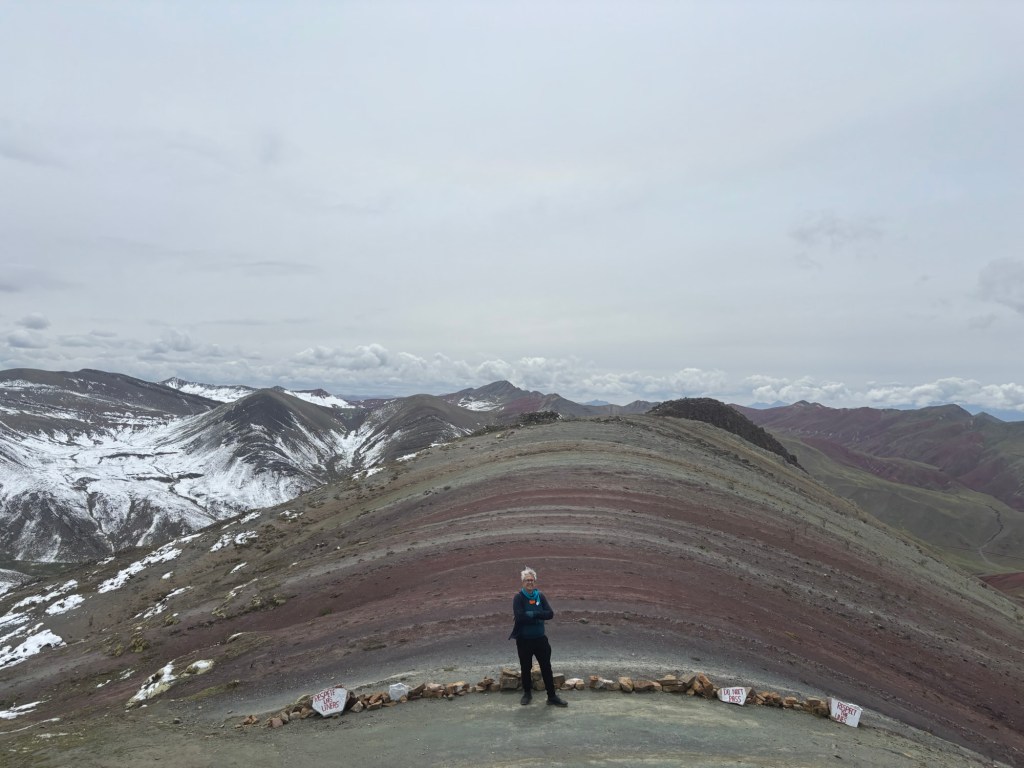
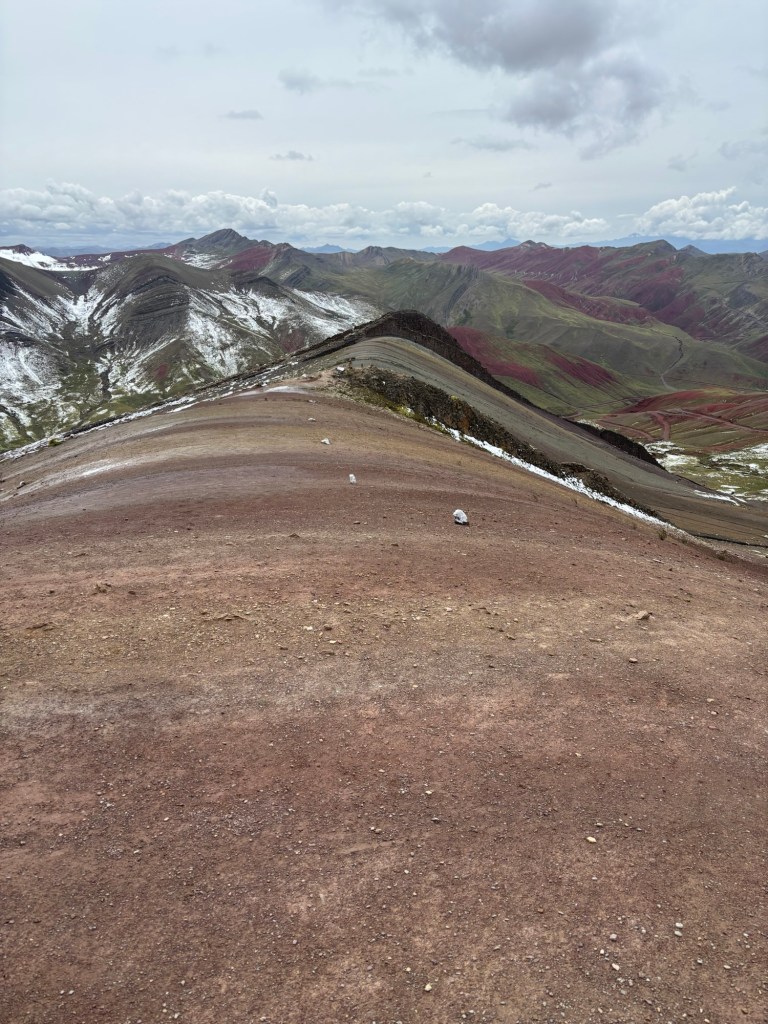
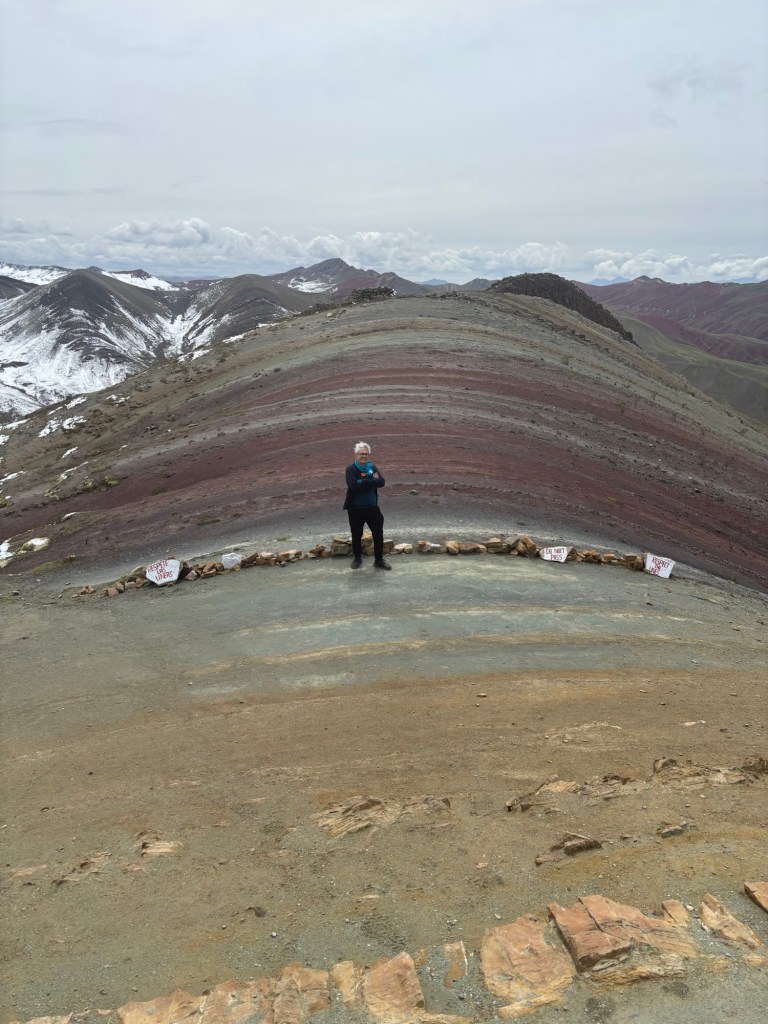
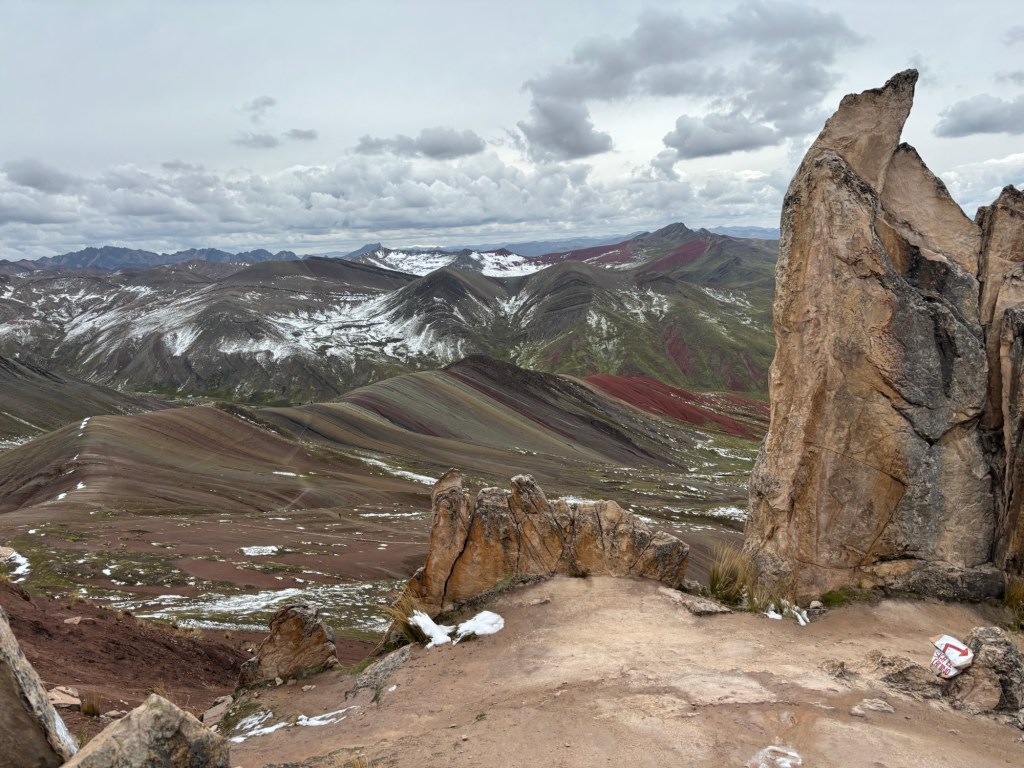
Our intrepid guide had decided we would go to Palcoyo , a new site only open in the past year. Less tourists , less of a big incline hike, and the chance to see multiple rainbow sites. Folks this is a brand new site the roads have only just been graded to allow tourist vehicles, and currently they are averaging 20 visitors a day. That is about to change. Once the IG crowd get hold of this it won’t be that way for long. I’ve got mixed feelings about the whole thing but I’ll talk about that in a bit. The scenery was unlike anything I have seen before. Trust me , these pictures do not give it justice. The scale, the colours even. Just incredible!

You immediately felt the altitude, but that shouldn’t be a surprise Everest base camp sits at 5200m and we would peak at 5000m, for me it starts with a headache, breathlessness and then my eyes hurt, dizziness from the lack of oxygen, I had my blood oxygen reader with me and I hit a low of 74. I’ve been in the 90’s and at sea level below 90 is hospitalisation level , so that’s you’ll definitely notice it and that became evident as I ascended!

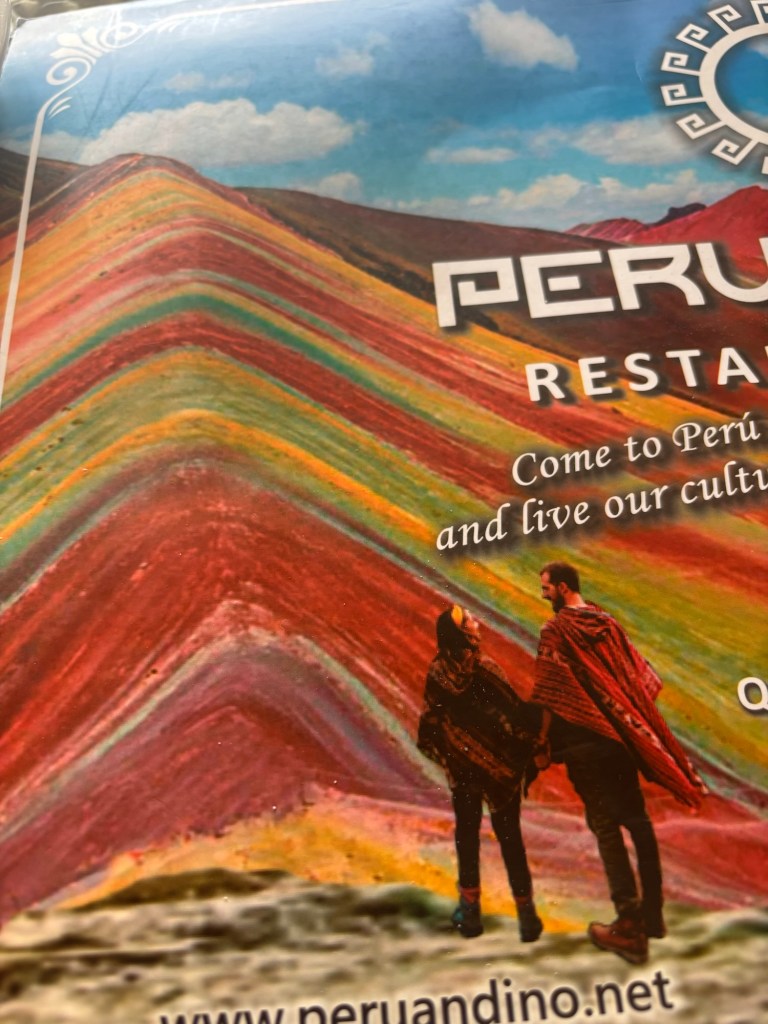
What the brochure said ( and this is clearly ridiculous)
What I ended up seeing. Am I disappointed, hell no.

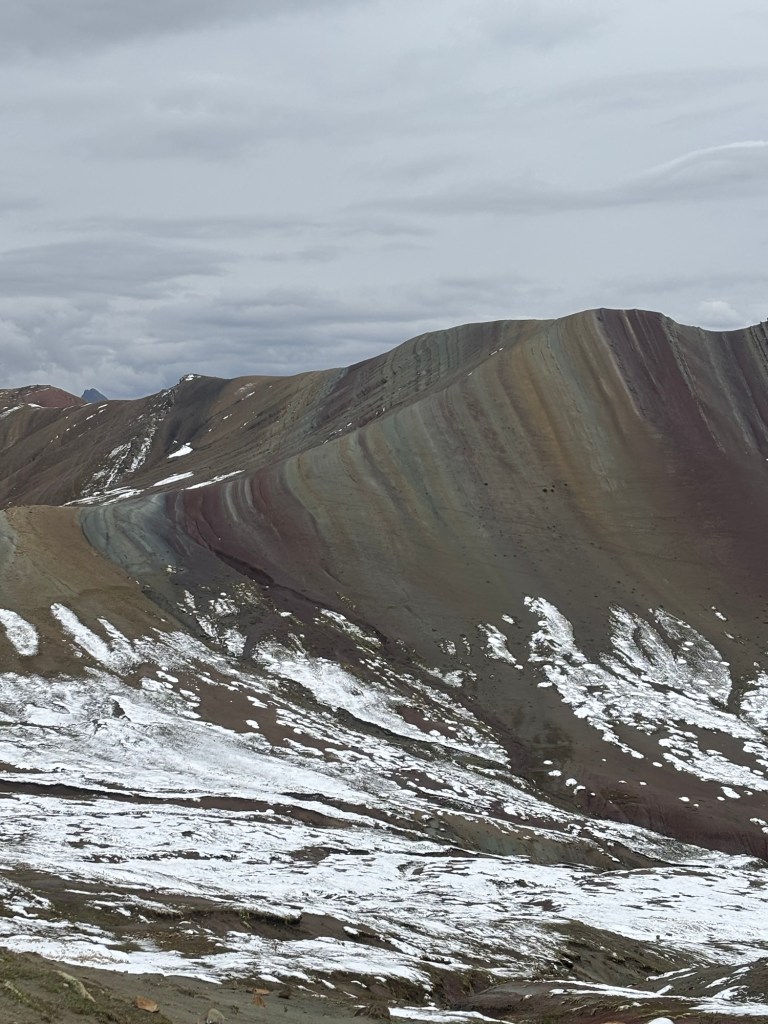
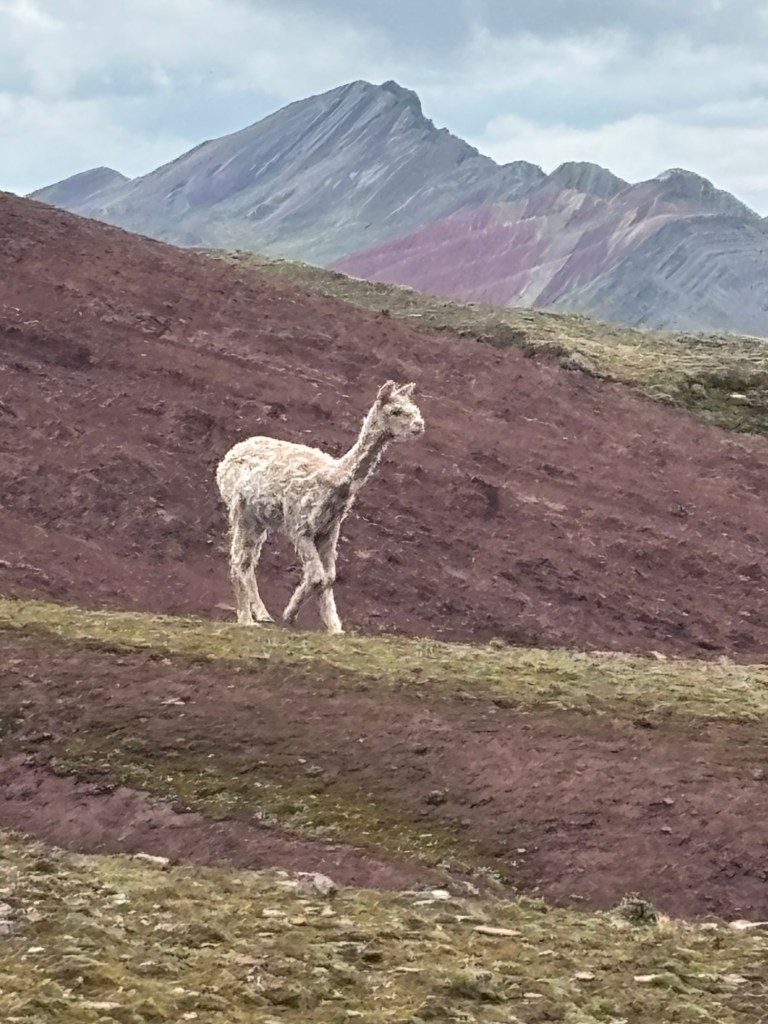
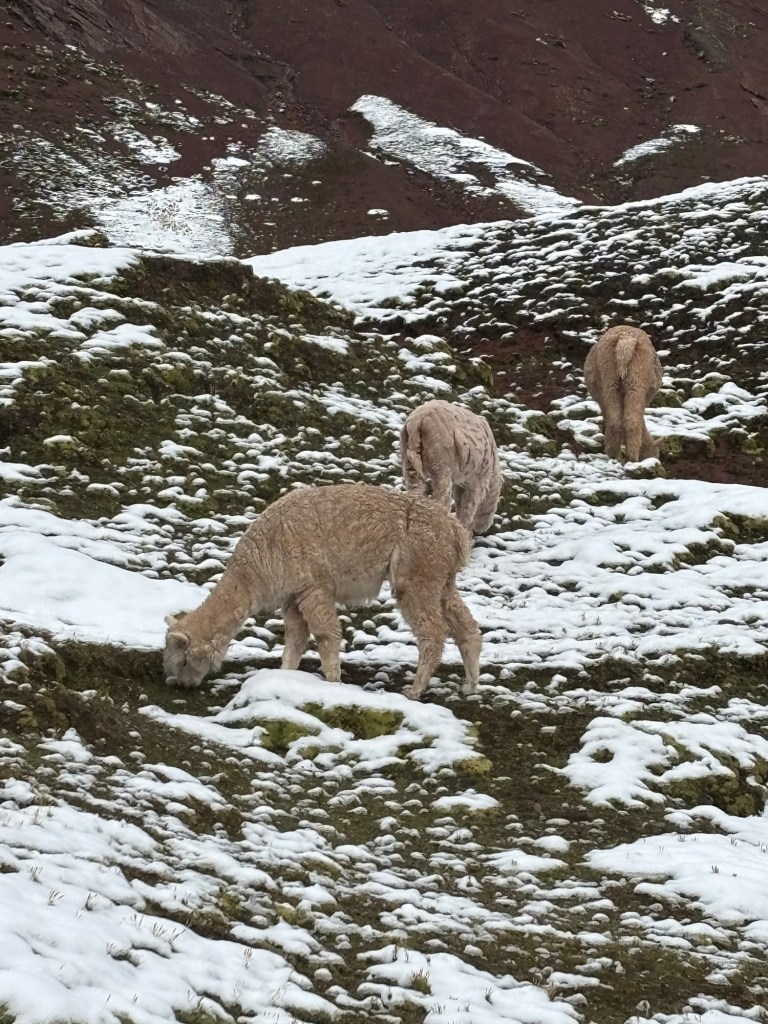
There was so much to see up there, glaciers, Lamas, mountain ranges incredible rock formations, people and these pictures do not give justice to the colours we could see. Partly it was overcast so that dulled things , but on the ground, there were blues, green, yellows, reds…just incredible!

We also got to see some glaciers these are particularly important as they were where their mummified ancestors were kept. They are, like everywhere in retreat.

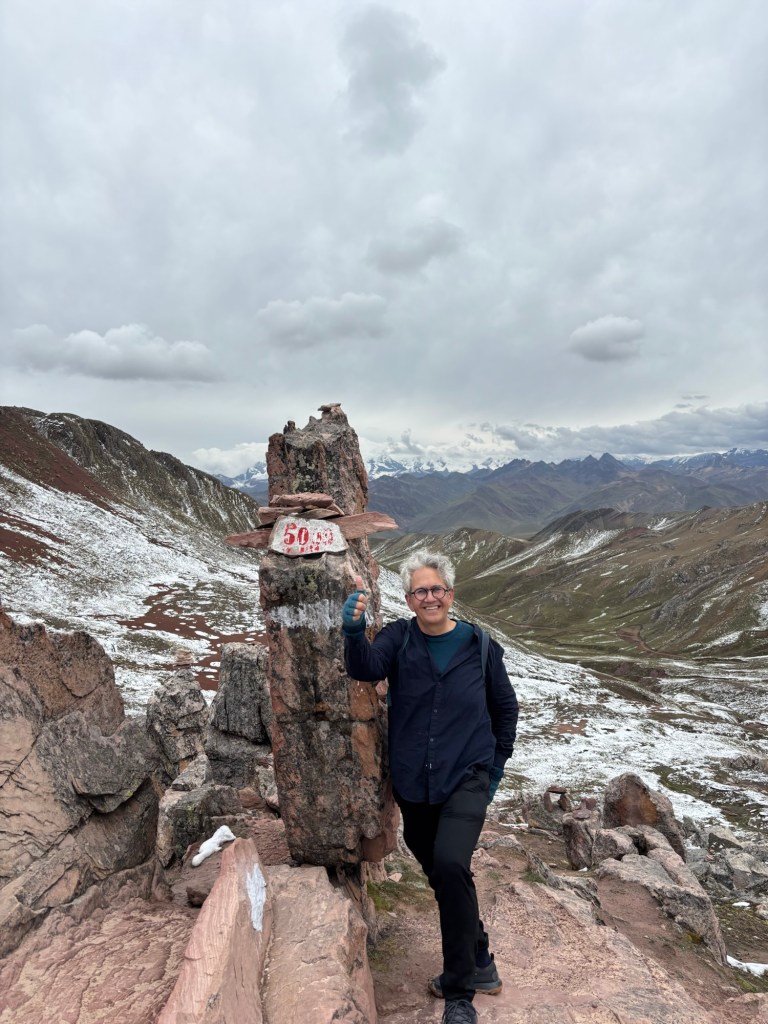
Me at 5000m and the main glacier in the background!

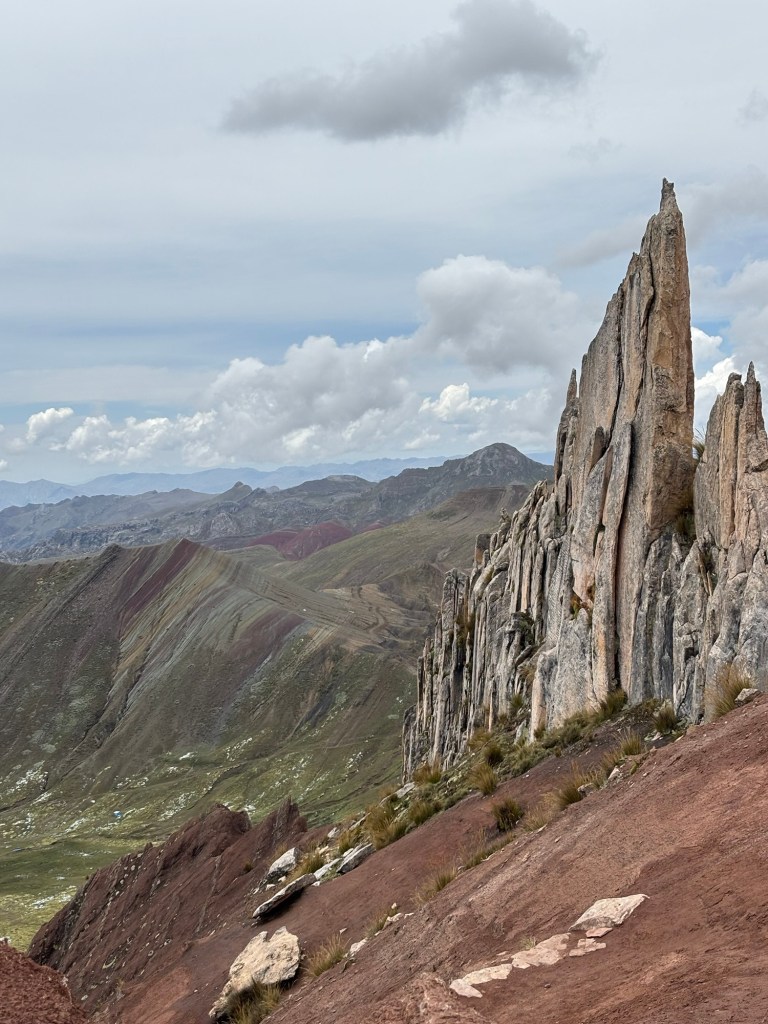
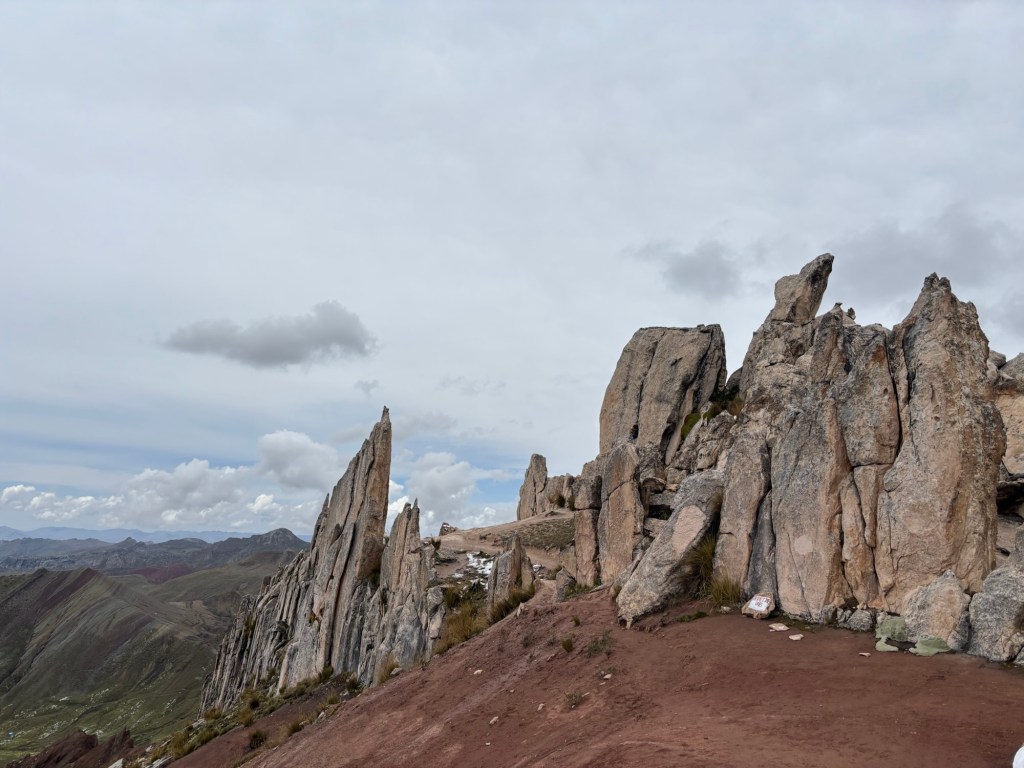
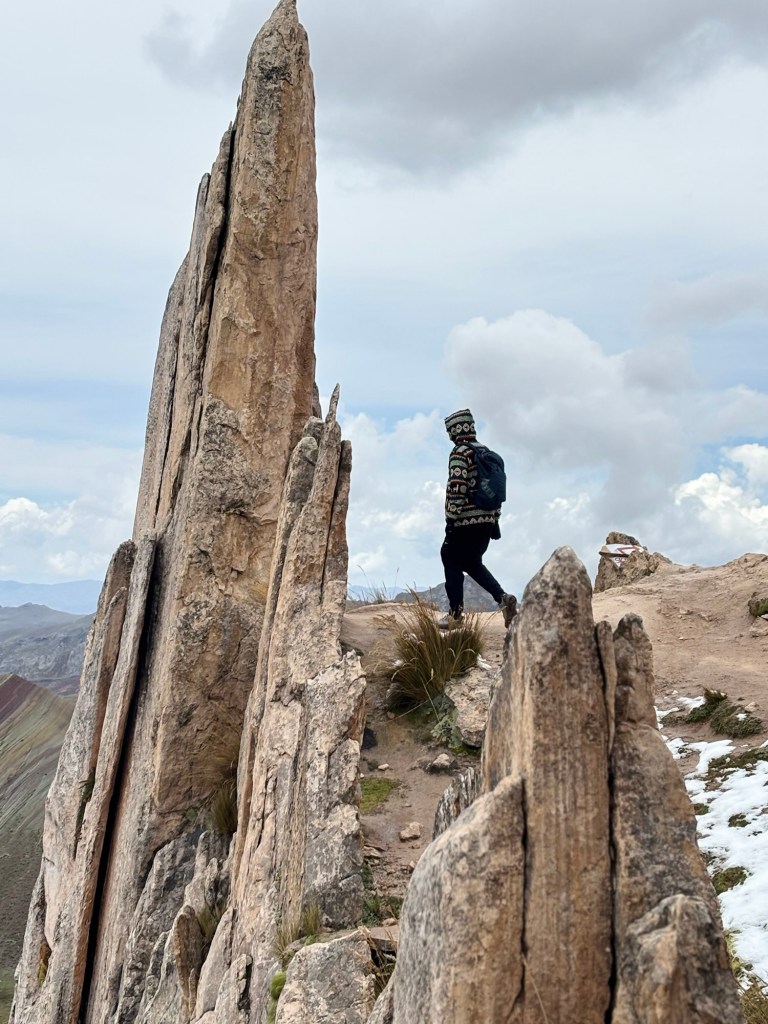
And then there were the rock formations, just incredible.

The scale and grandeur of these is hard to capture

With more rainbow on the background.

The others I was travelling with. Great crew!

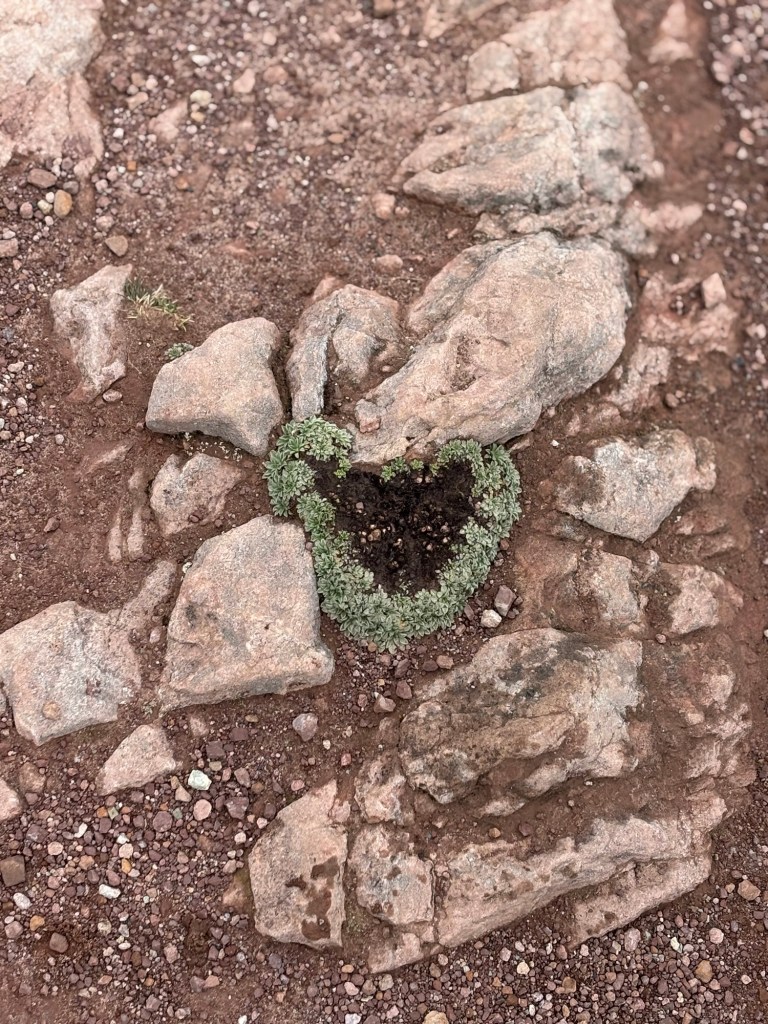
Then there is the flora and fauna , delicate and unique,

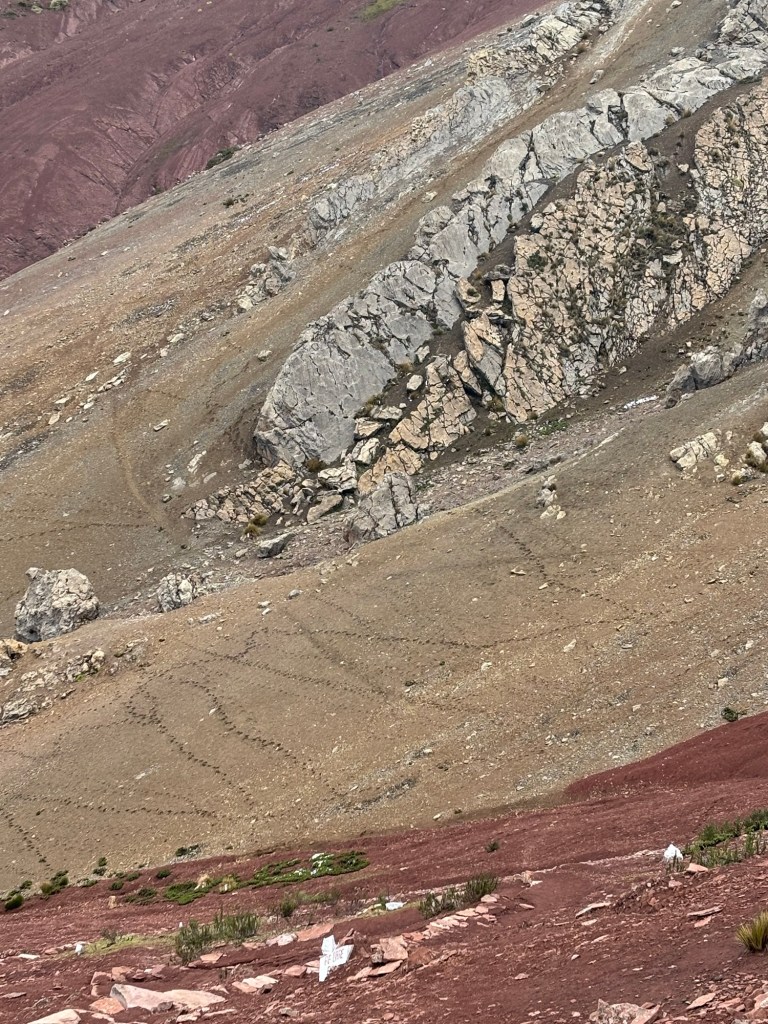
Look at the lama trails as they crisscross their way up!
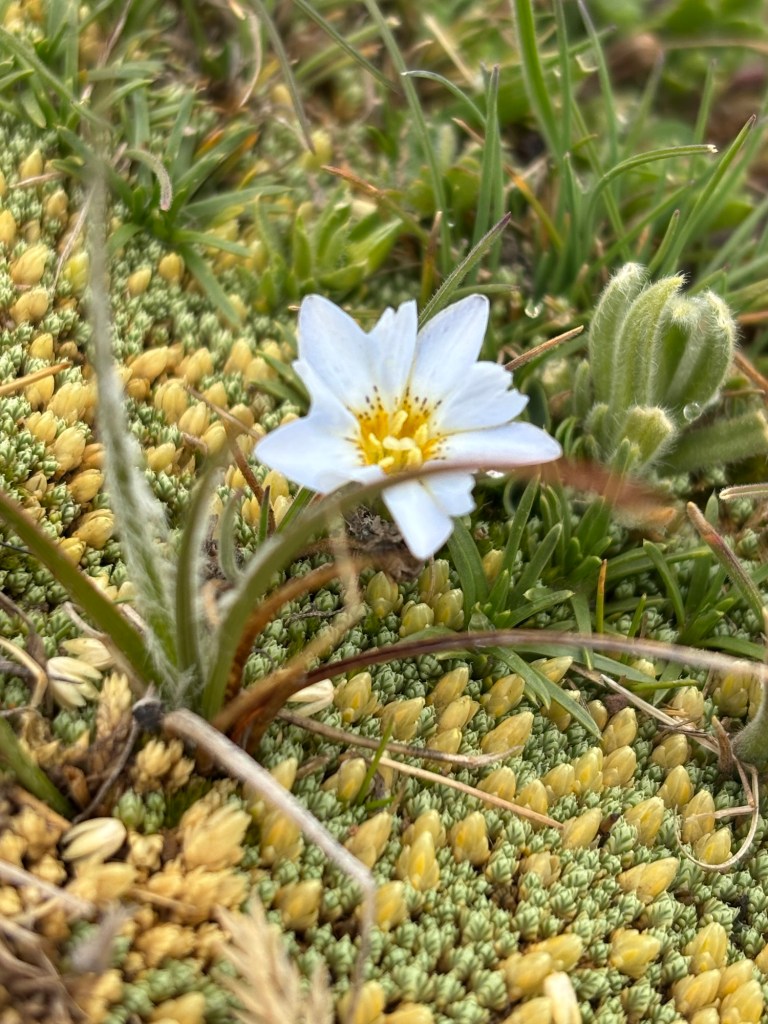
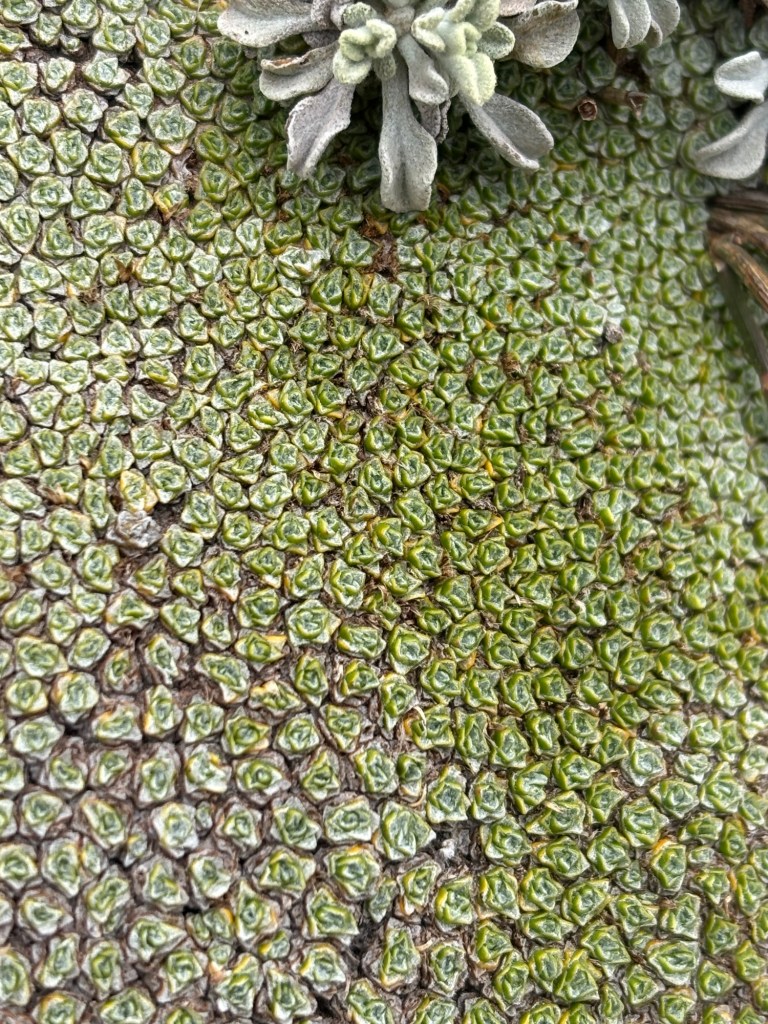
A delicate mountain daisy
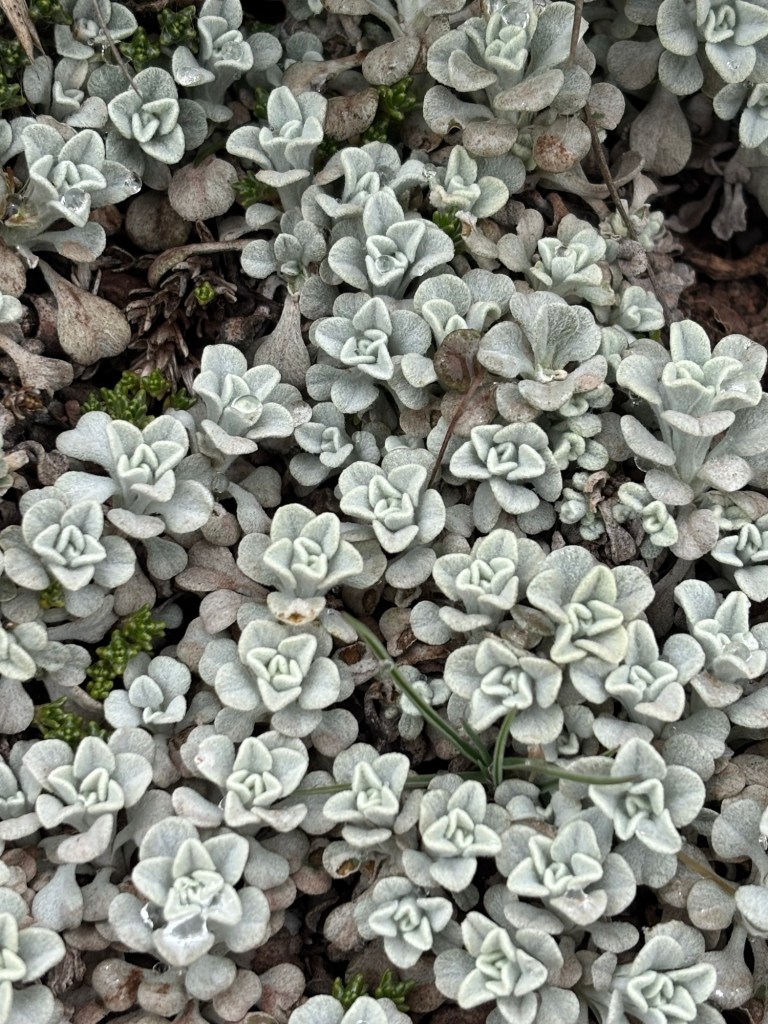
Tiny tiny leaves or flowers
In rainy season this contributes to the lush almost lime green hills.

So why uncomfortable, well, a few things. Firstly , we were, as you can see from the pictures, trampling all over these sites. We were within the rules , and they did have guidelines, but still, once numbers increase, I hate to think what will happen.

The local people are it seems desperately poor, no services, subsistance living on potatoes and lamas and it feels like they’re about to be exposed to the world of mass tourism. I have no idea how this is being managed, if at all for their benefit , but you had grandmothers posing with their lamas for a few soles and children selling bits and pieces to the passing tourists.

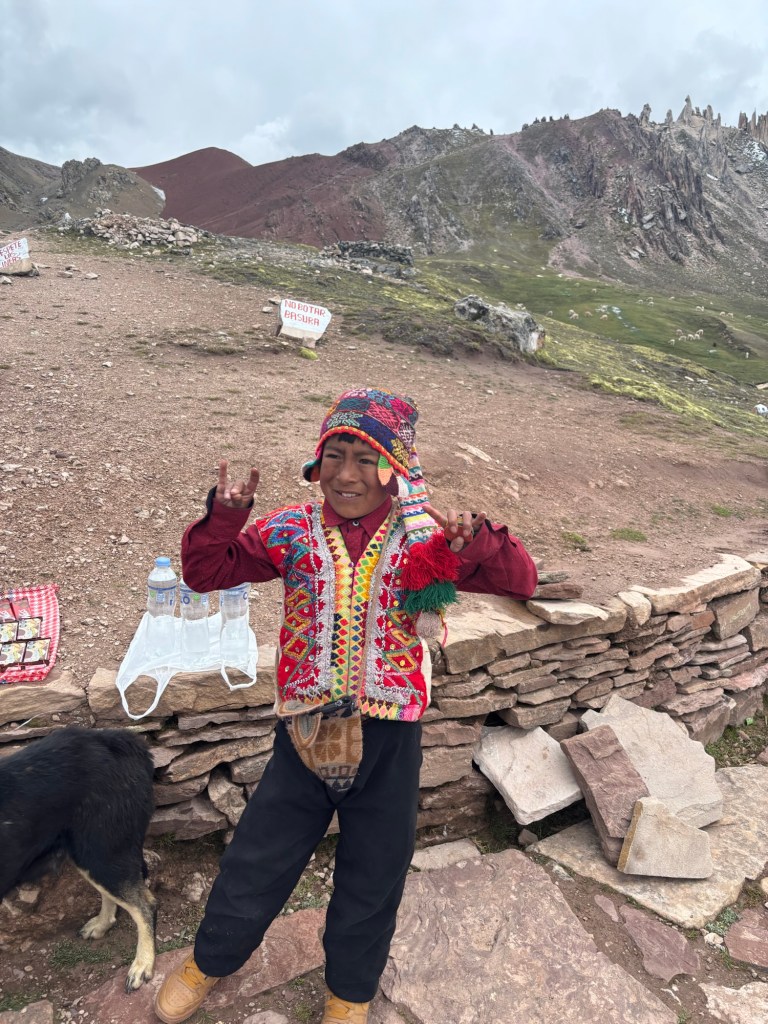
Turns out he was 5 years old !

What this means for them, I have no idea, we bought a couple of key rings from the boy. We told him to keep the change ( probably $2.50) he looked at us and said. Thank you for your gift, now I must give you something and gave us both a chocolate bar. I fear how that type of innocence will be exploited but in the moment it was so lovely!

Am I participating in this? Probably, even writing this with good intention is not necessarily helpful, and I strongly suspect that is why this was not a formal part of the intrepid trip , I don’t think this would meet their community standards. Which is great.
As a tourist, it was an incredible experience, and I was very fortunate to get in when I did, I do hope that this is being done in conjunction with the local people.

Could this trip be any more diverse ?

Machu Picchu

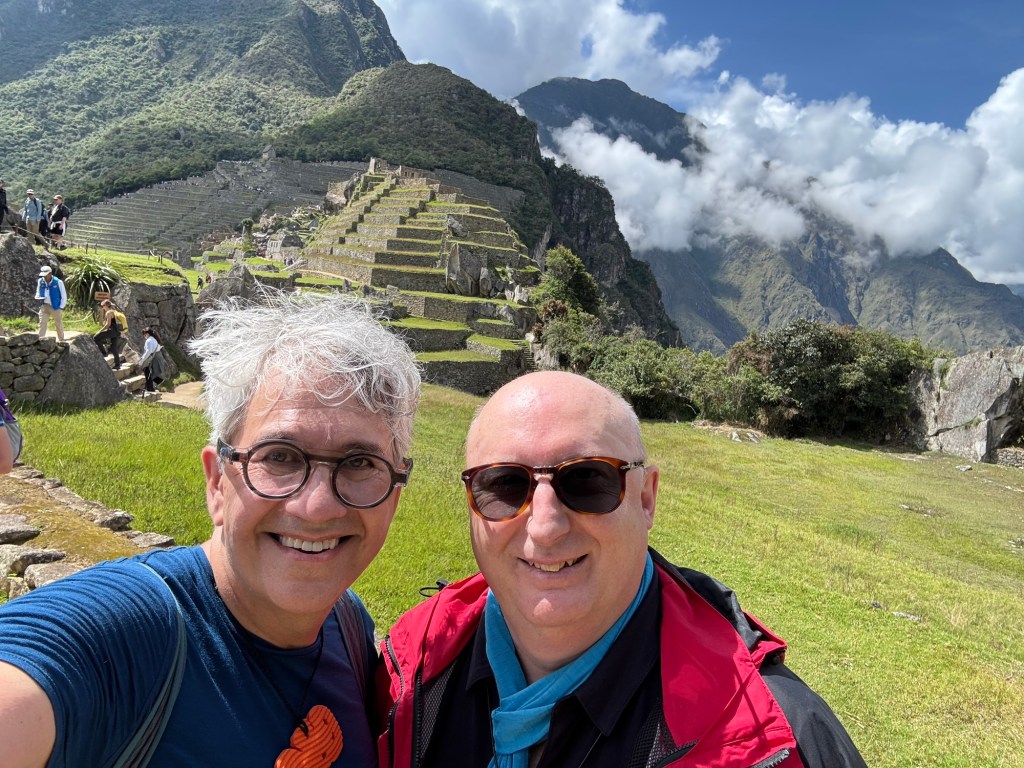
It’s hard to put in words experiencing something that you’ve read about and seen in pictures, but then you’re in that pinch yourself moment where you’re there. I’ll try, but I’m still processing the magnitude of being there, seeing and experiencing what we did today.

It was an early start. And from what I had previously read and seen in videos can be an absolute nightmare, but Intrepid took care of all that, leave your bags they’ll be at the station later , 5 minutes later and we were on a bus.
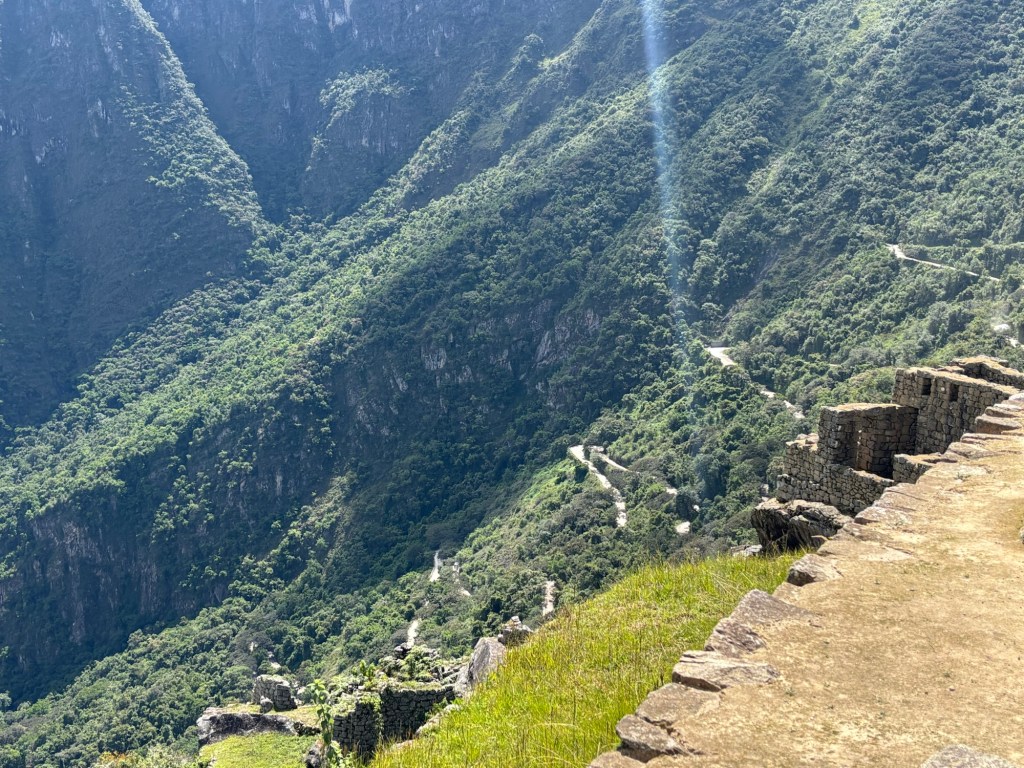
But what a hair raising ride, narrow steep incline up a series of hairpin turns where it constantly felt like you were going to go off the edge, huge drops, and yet somehow or another it was two way and buses would pass each other. serously look at that road!
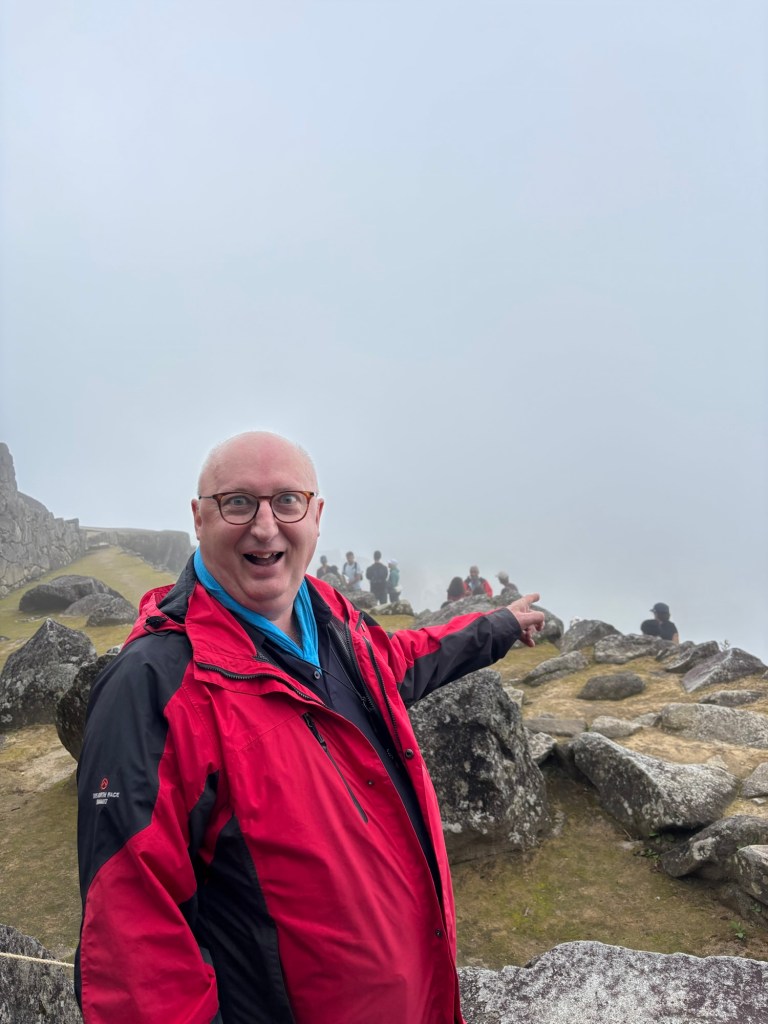
It was very cloudy and moody when we arrived, we disembarked and started the trek up to the viewing platform in what seemed like a relatively thick fog. Were we going to see anything at all? even the sun was straining to be seen

So we waited , and waited. and we wondered if we would see anything at all,

But slowly it started to turn, but it needed to hurry up as the next allocated group were hot on our heels.

A timelapse giving an idea of what we were dealing with.

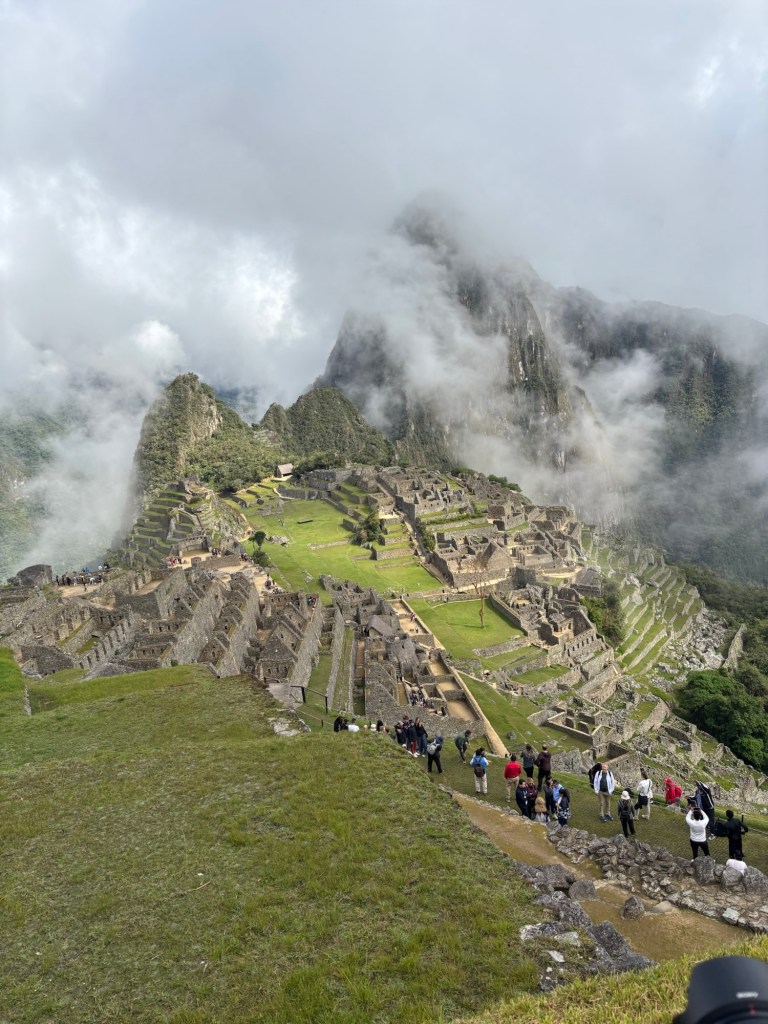
And then the clouds started to part and the cameras came out as we all hustled to find our spots, friggin hilarious. Our guide warning us not to give up our “territory” hotly guarded territory at that

Shame about those mats!

I should probably about now give a little Incan history, our guide had time to fill and I took notes so here it goes.

By the 15th century the Incan empire covered area in what we now know as Ecuador, Colombia, Bolivia and Chile. A vast population of 10 million people. Cusco was the capital , designed specifically to have paths in each direction of the empire. However, the ruler had a brother who had a falling out with his brother , who had set up a secondary capital in the north in what we now know as Ecuador. The Spanish arrived in 1532 , with their religion, in search of gold and silver and Malaria and other diseases. There were only an initial 152 Spaniards , they sought to exploit the brotherly feud and got lots of details on who was who and what the politics were in Cusco and used that information to assassinate the leaders in Cusco, and for his efforts , they murdered the brother too. I suppose that dealt with that feud. Colonisers, they’re special aren’t they?

By 1536 the invaders had got into sacred valley and word spread to Machu Picchu who at that time decided to abandon and retreat to another site.

And so it lay abandoned for centuries, slowly being consumed by the surrounding landscape. And given how remote it is , it could have stayed that way.

It was rediscovered by a local farmer in 1902, but he was not believed. And it wasn’t until 1911 when an American archaeologist from Yale university on the request of the Peruvian government came to start looking for a lost city. He offered a reward that was picked up by a young boy and in 1911 he was taken to the overgrown site.,,

It wasn’t long before his discovery was being published and Machu Picchu was back in the eyes of the world, opened up to tourism in the 70’s and named a unesco heritage site in 2007.

History lesson over. Back to the blog.

There is so much to see and do, I still csnt get my head around why there , it’s so remote , so inhospitable. But they had their restons.

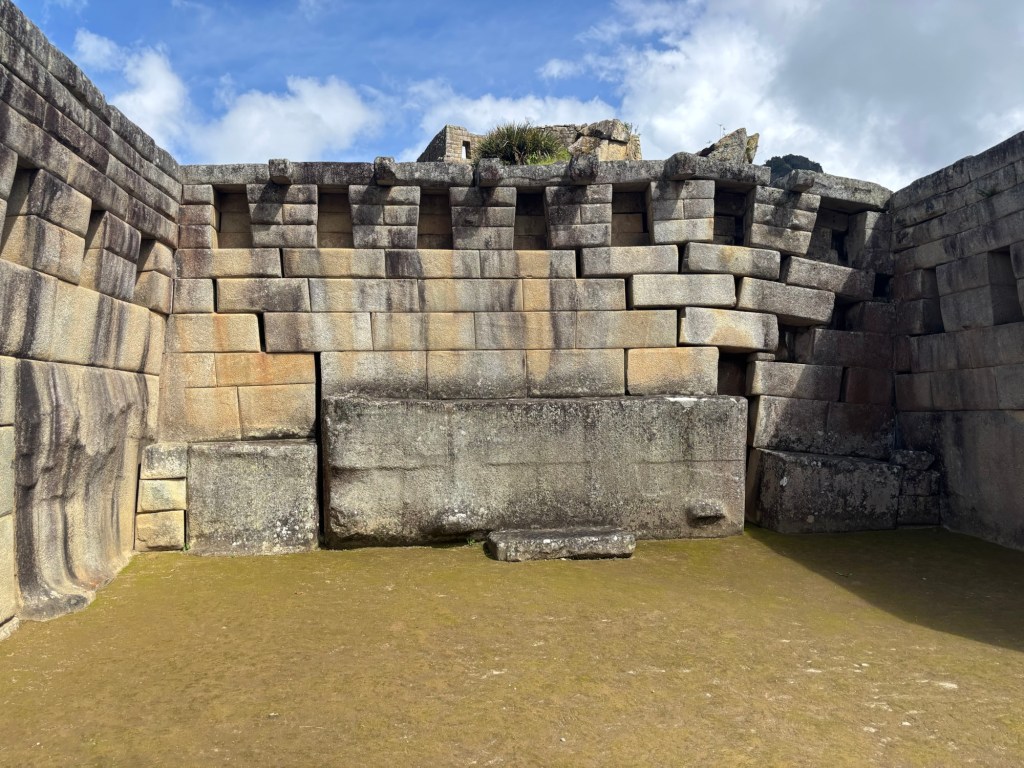
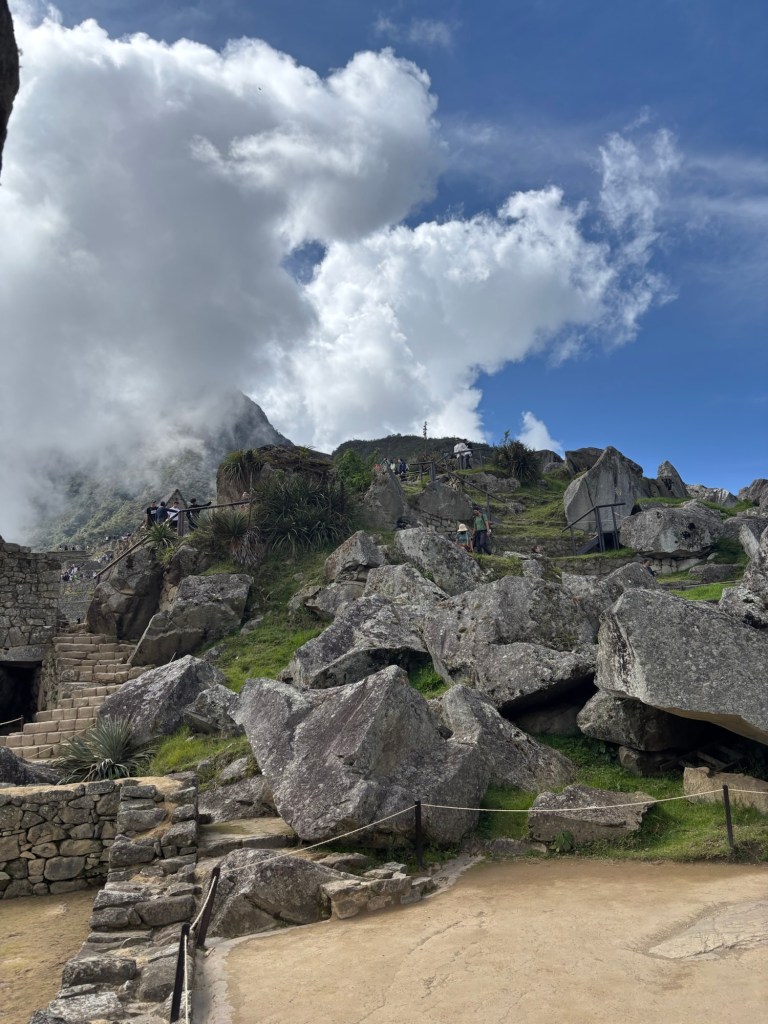
The altar where sacrifices were made , the subsidence on the left caused by trees growing between the rocks.
It had completely cleared up by 9!
The quarry where all the stone came from.
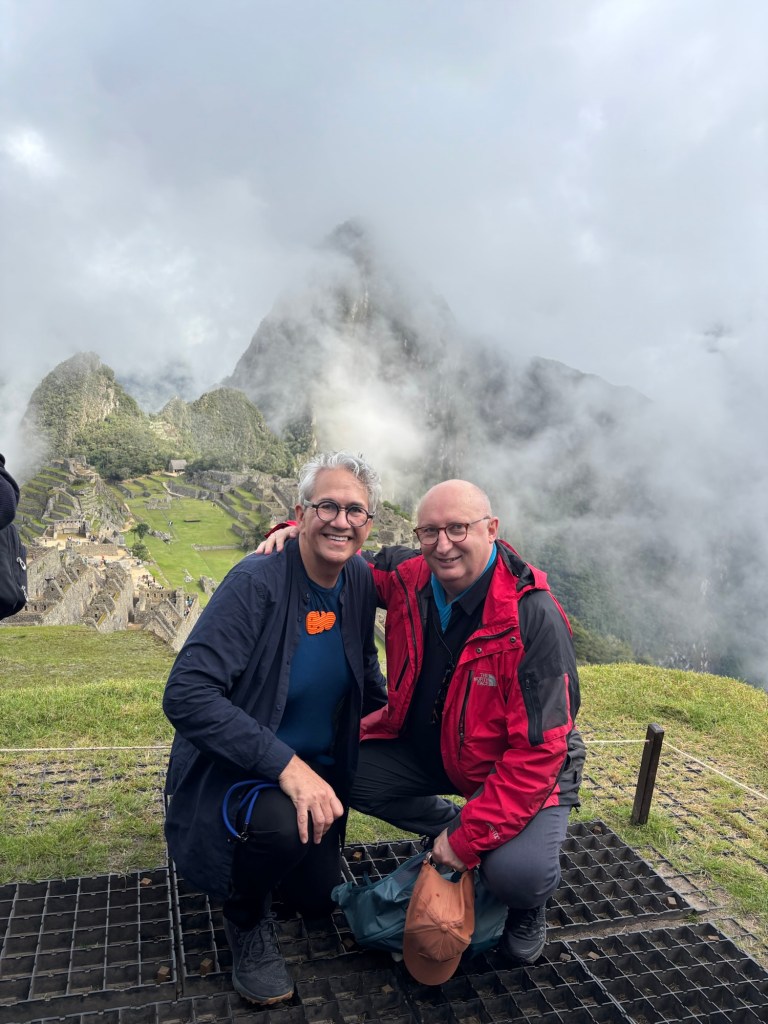
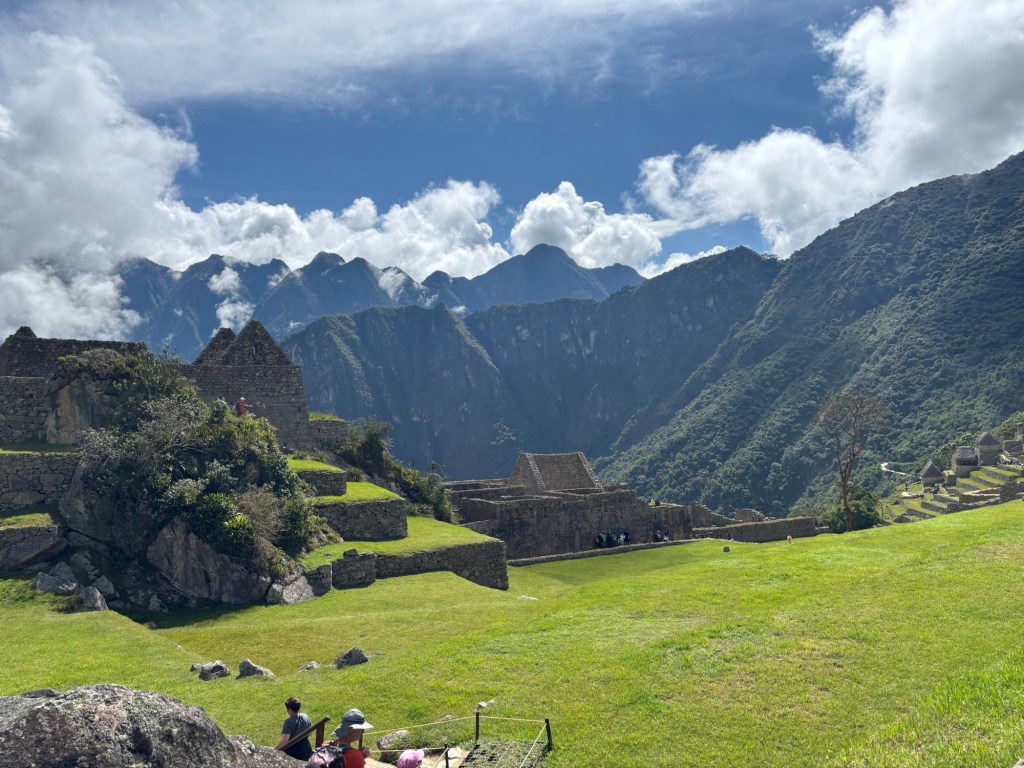
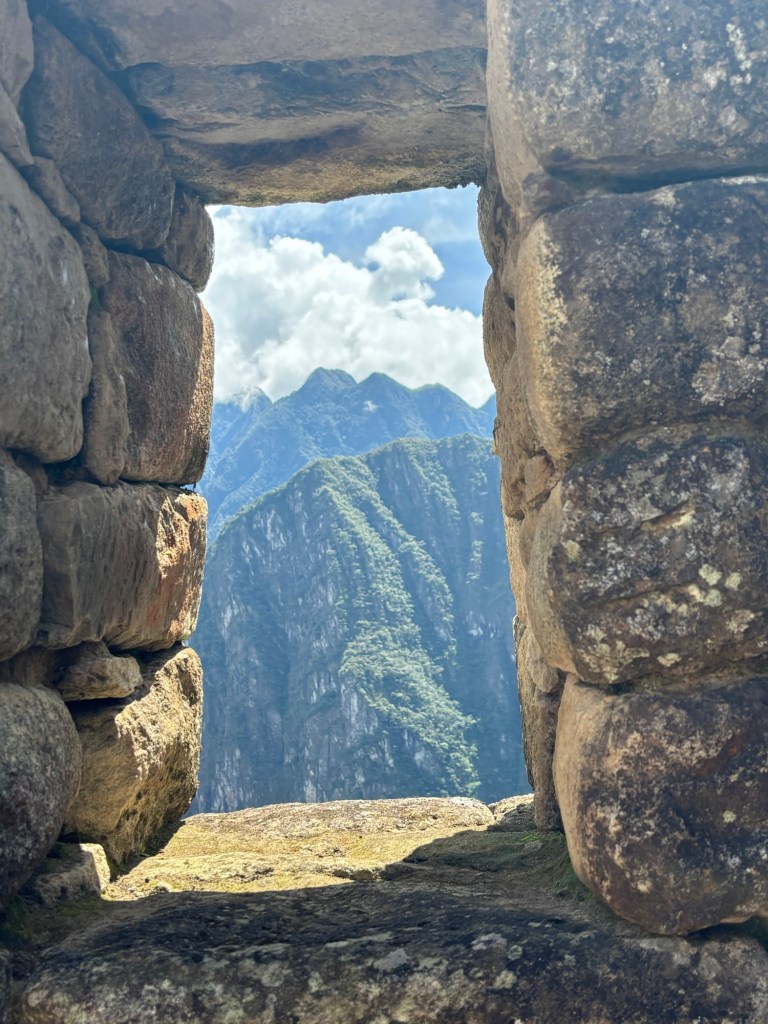
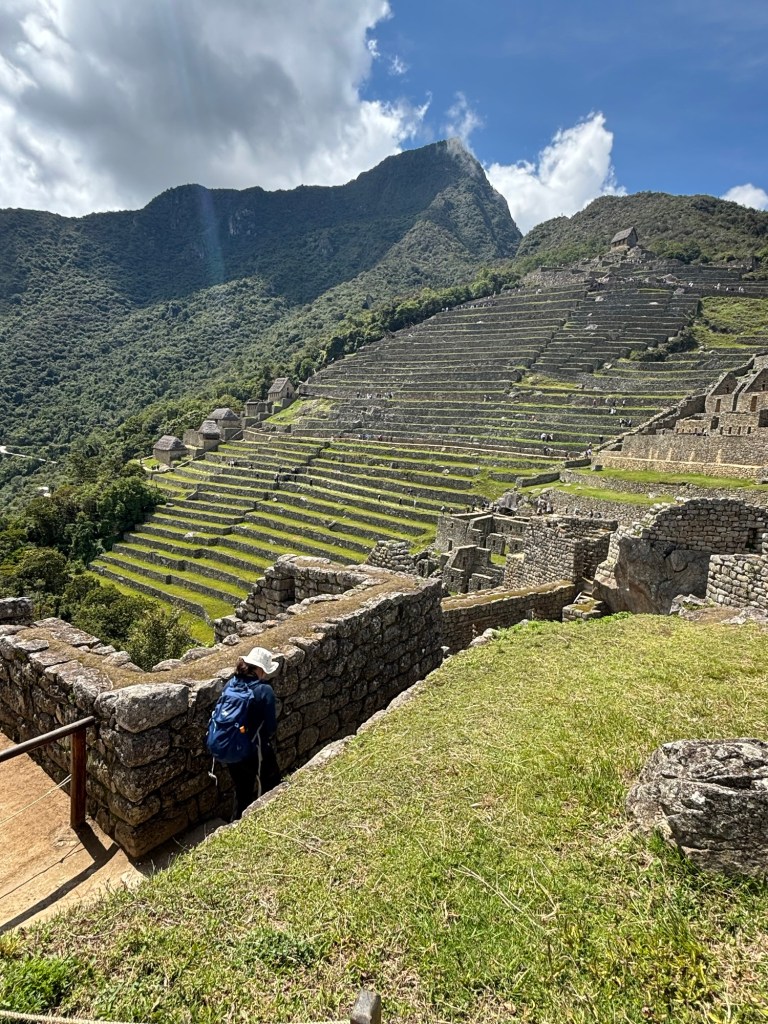
The stunning views
Being arty! Hehe
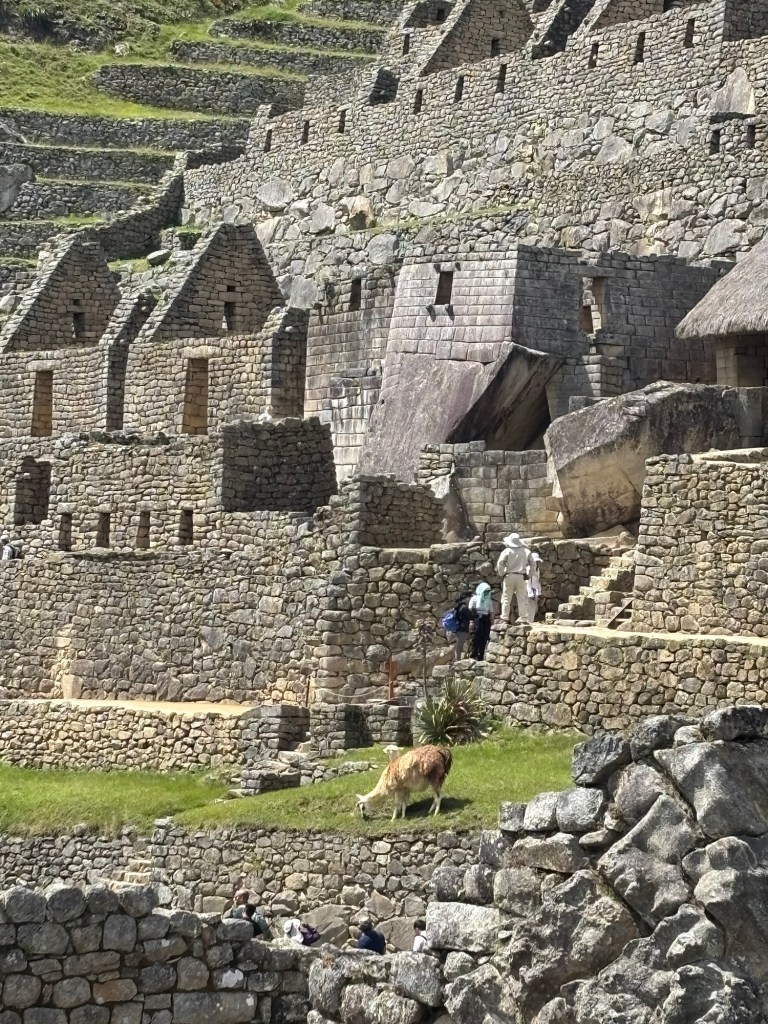
The obligatory Lama
The terraces gardens

The Incans like many indigenous societies were deeply connected to their environment, a deep sense of balance that they saw around them. Machu Picchu means old mountain. But it is balanced by new mountain , and either side of that are happy mountain and sad mountain.

Massive stone sculptures designed to only reveal their secrets st sunrise on Solstice.

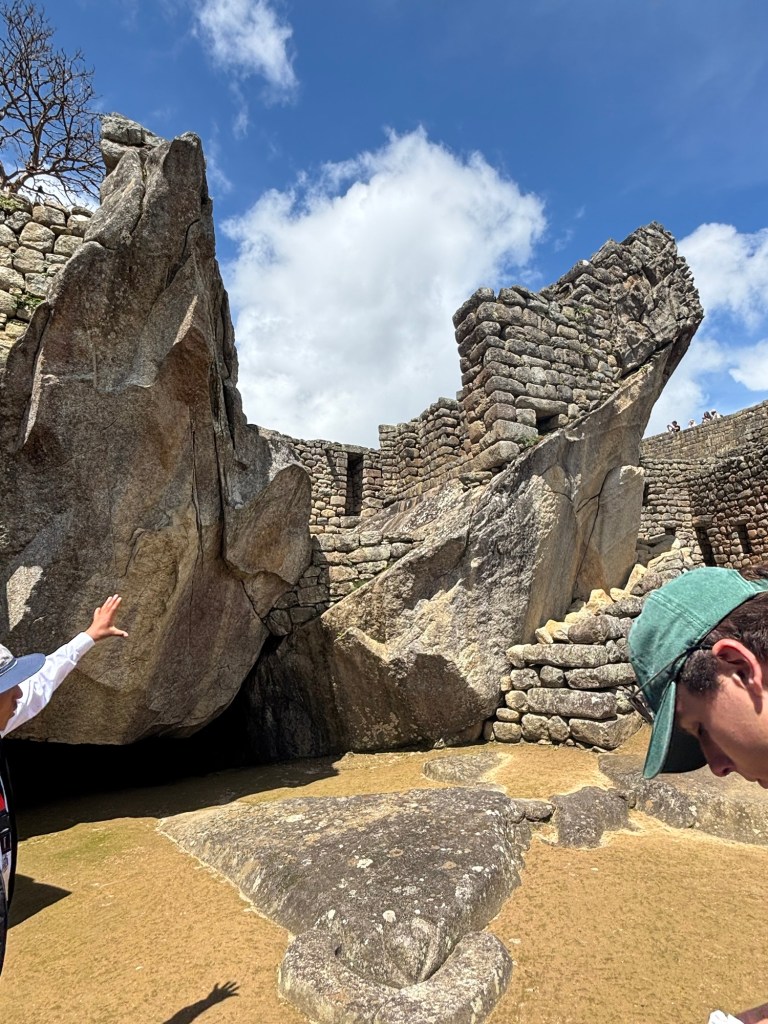
As well as a sun temple they had a moon temple and it is from there you can see that Machu Pichhu as a whole is designed in the shape of a soaring eagle. Representing the sky , where Cusco is in the shape of a Puma, ( the earth) and a neighbouring town is a snake representing the underworld.. it’s tingling the parallels to Te Ao Māori.

Soaring Condor?

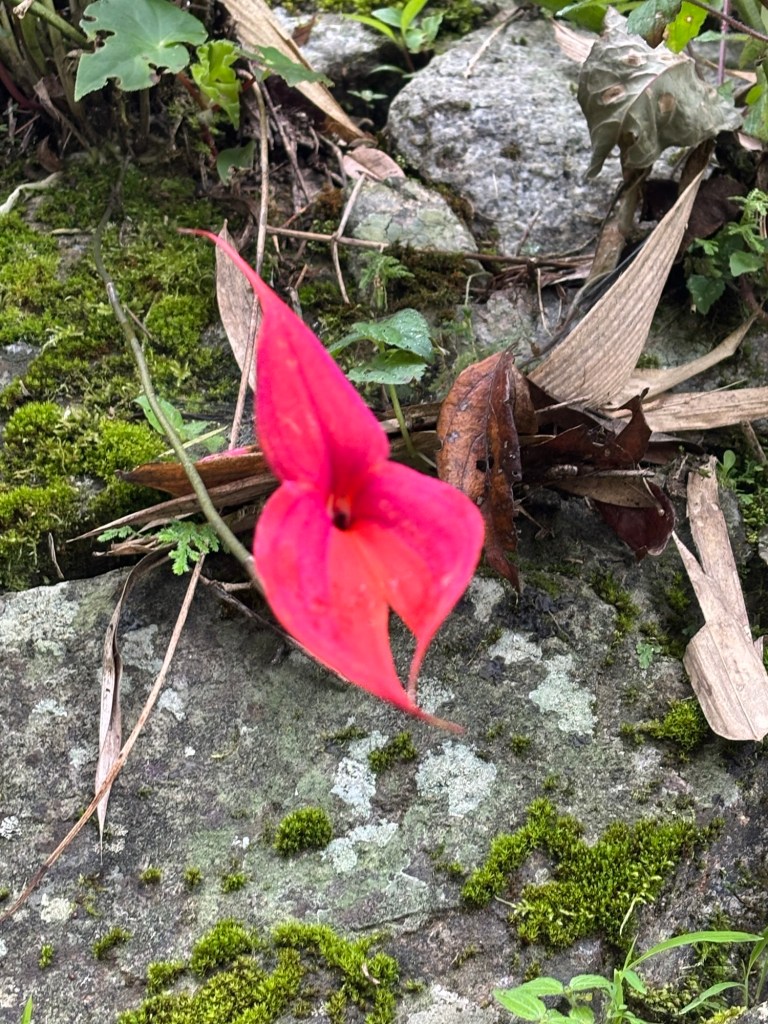
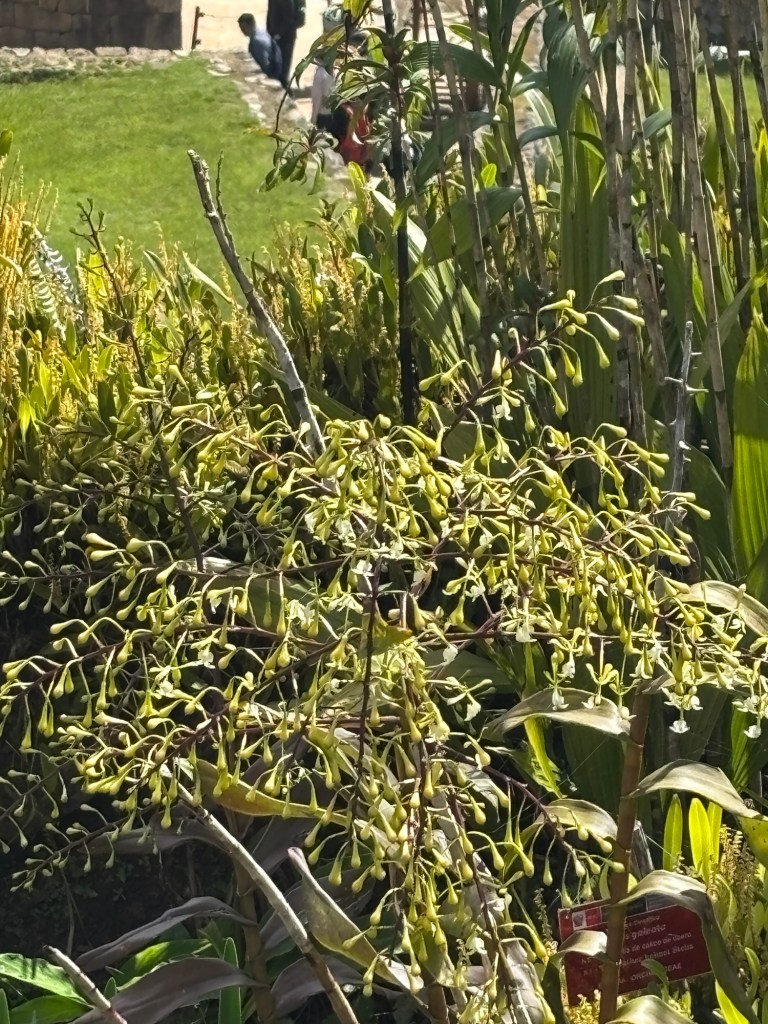
But that wasn’t all the flora was fascinating too, over a thousand types of orchids grow here too

These were blue!

What a treat we had. Truely incredible! And I’ve even managed to write this on the bus on the way back to the hotel. Tomorrow for us will be Christmas Eve and I’m heading up to Rainbow mountain, a 5am start , a hike up to 5200m. Yikes. Wish me luck.