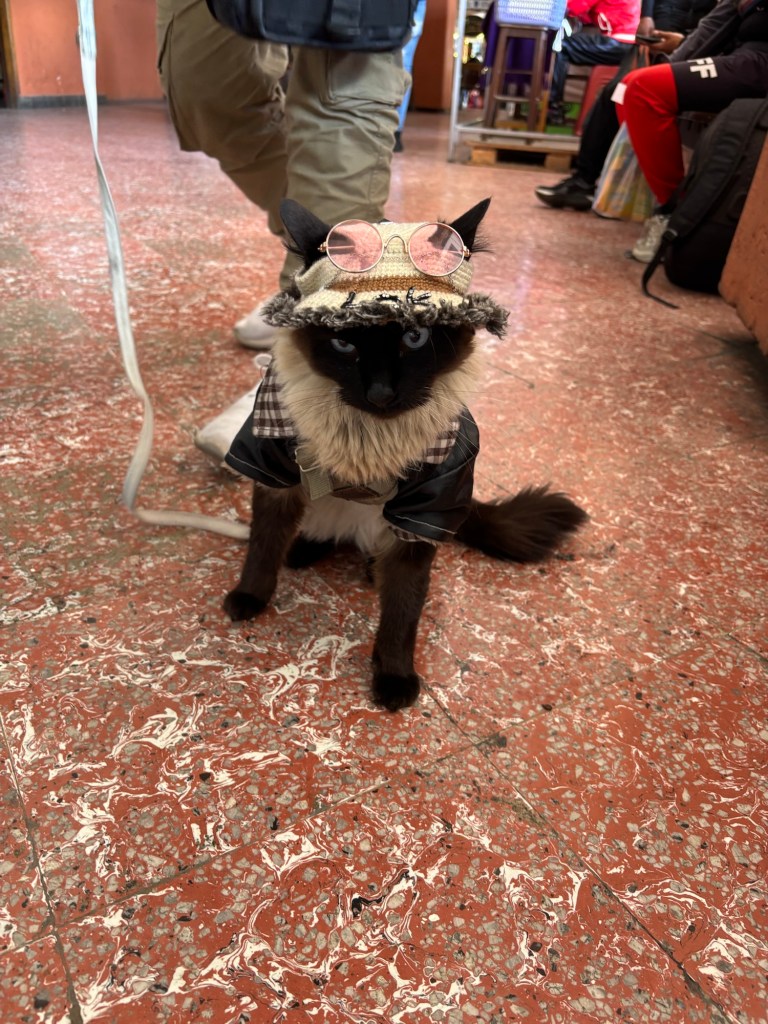
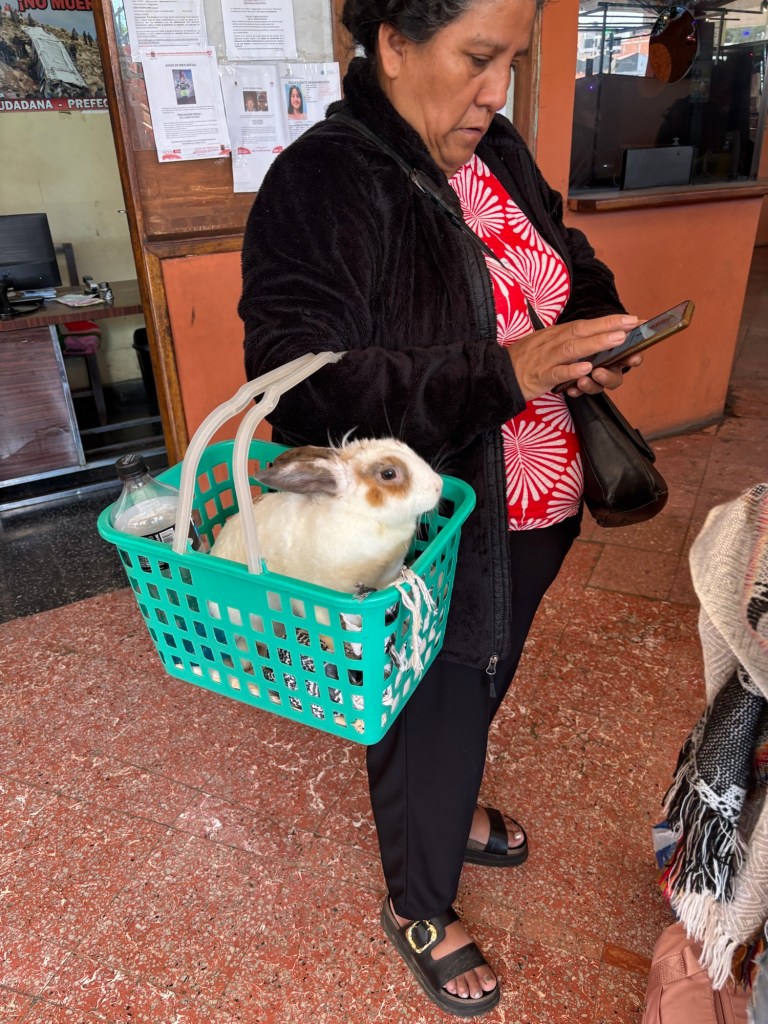
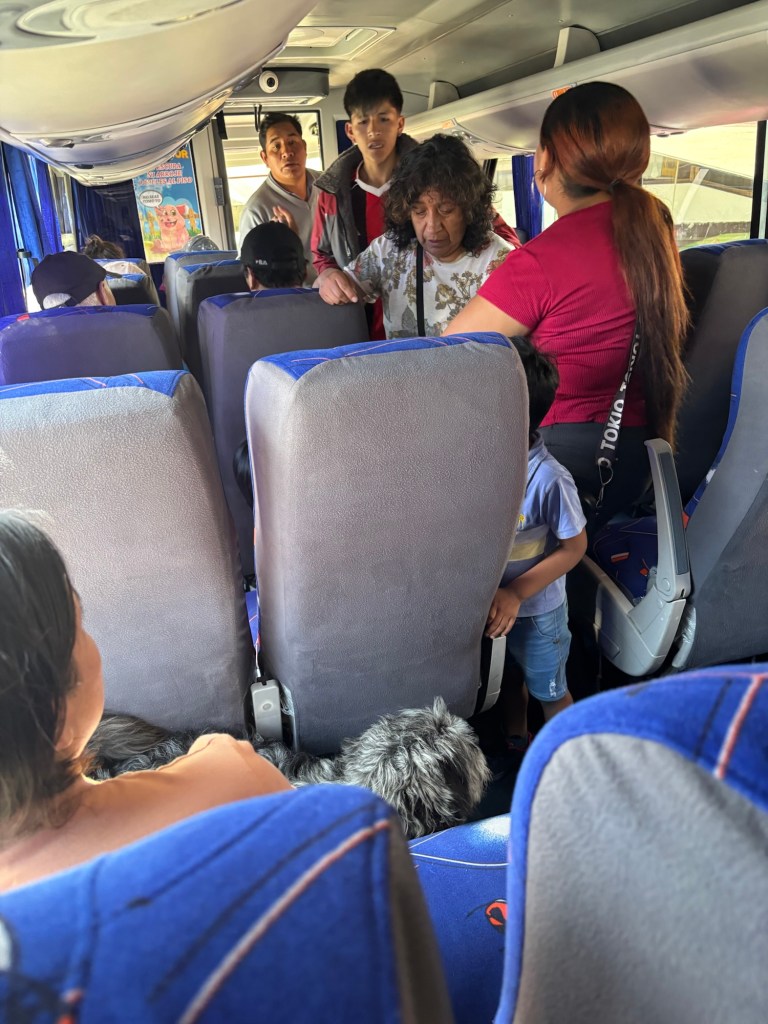
Yesterday ended up being a travel day, we were to be ready at 9 to get a 4 hour ten bus to Potosi our next destination. Departure time was 10. We got to the the station well in advance, tickets sorted , bus found we were ready to go. The station was a rainbow of characters, surprisingly the number of pets ready to board was interesting . A very cool Diane Keaton dressed cat, a rabbit in a basket looking like it was ready for Easter. And of course multiple dogs , usually in an outfit of some description.
So on we get, and we wait. It’s boiling hot and the windows don’t open and ten o’o’clock comes and goes. We then find out the departure time is now eleven o’oclock, why? No idea that then becomes 11:15 and ar 11:15 it becomes 11:25. It’s Bolivian time we are told. Given yesterday’s ongoing gut issues, not ideal but finally we are off. We arrive ready to eat, find a cafe , order and it takes almost an hour to arrive. Bolivian time the owner jokes. By now it’s 4:30 and we the museum and convent excursions were closed , but I’m kinda over the religious stuff.
It’s definitely been a feature that time is loose here, opening hours are a “guide” only and several times I have turned up to advertised opening times only to find things are closed. Bolivian time indeed.
Potosi
Potosi has a couple of claims to fame. It’s the highest altitude city in the world at 4090m. ( although that seems very close to El Alto so it may be in contention). It’s a Unesco heritage site. Sometimes known as the Imperisl city. And at one point was the most wealthy city in South America. Why? Mining. The mountain that dominates the city Cerro Richo or Rich mountain has been mined for almost 500 years.
At one point when the Spanish were in charge so much silver was being produced it flooded the Spanish economy, causing a massive inflationary effect. Half of the world’s silver in the second half of the 16th century came from Potosi.
Today it continues to be the main economic heart for the region. But its days of wealth are well behind it.
While the relics of its once famous wealth are evident in some of the architecture , to me there was an air of sadness and desperation.
As part of the tour Intrepid had given us the option to do a mine tour. The wording in the guide was rather circumspect, citing potential danger. Nevertheless we decided to go.
So off we went, picked up by a former miner who now runs tours. We were initially taken to a miners market where miners can pick up supplies. This included items like cocoa leaves ( for energy) alcohol and dynamite! I kid you not.
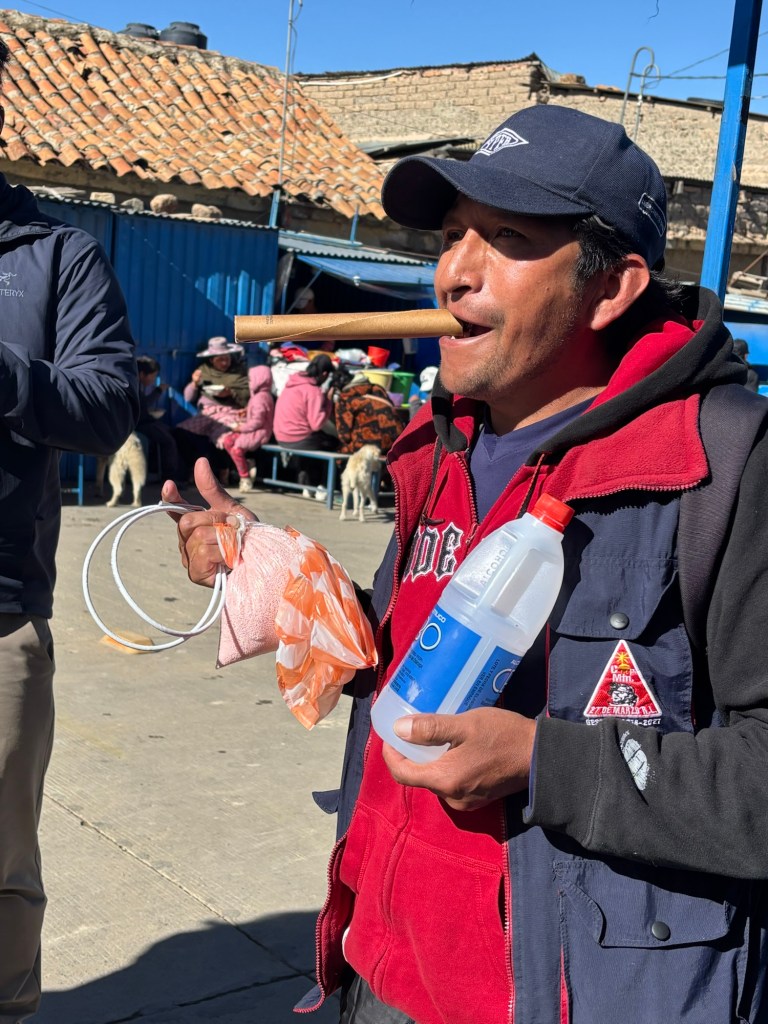
We were encouraged to buy “gifts” for miners we would see on the tour, cocoa leaves, gloves, drinks , one young Australian decided he wants to buy dynamite as a gift- as you do.
We were then taken to a central place , given a briefing and put into our mining gear. I sort of knew we were going to be near a mine , but by now it’s becoming clear we are going in.
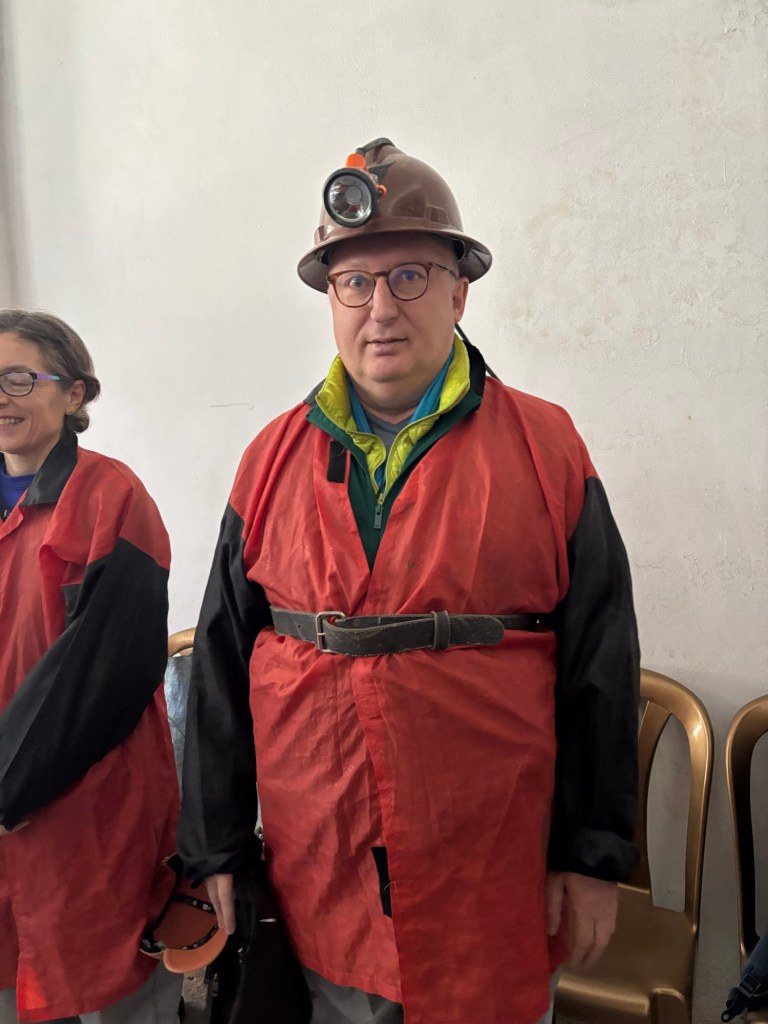
So off we go. But first a little more history.
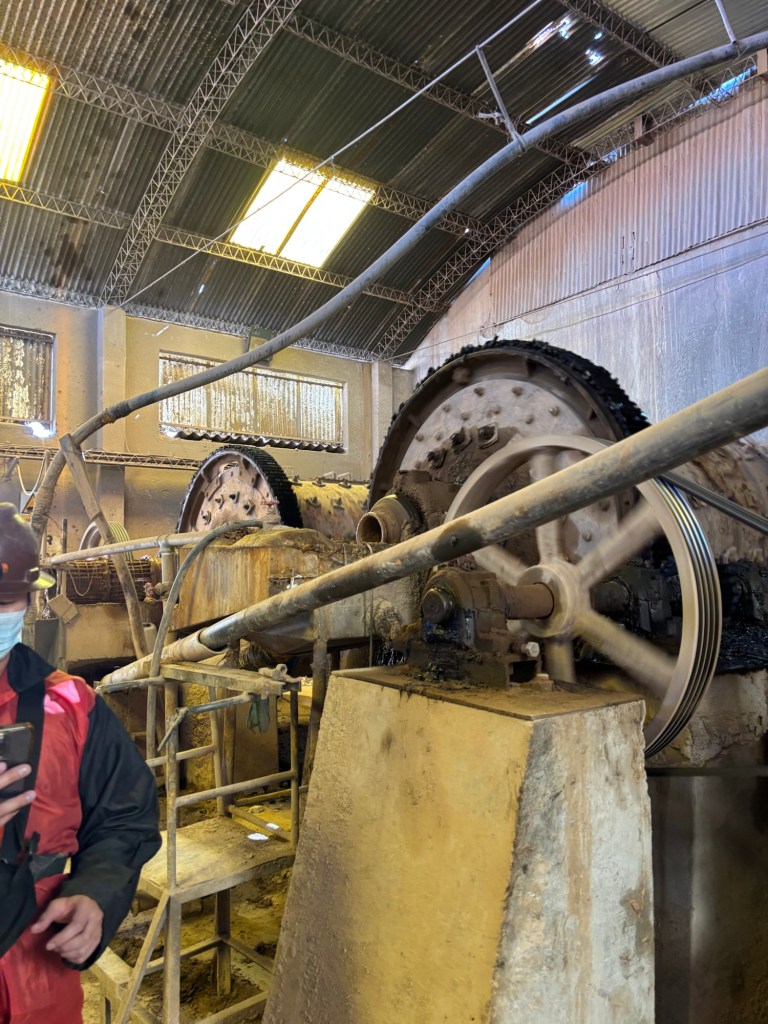
After passing through various foreign ownership the mines were nationalised in the 1950,s. But decades of failed investment saw the infrastructure gradually degrade and the huge refinery was closed. Today , it’s basically a system of thousands of independent contractors, some working under fairly loose cooperative structures, chancing their luck on striking it rich. Spoiler alert. Most don’t. It’s now pretty much completely unregulated, with absolutely appalling conditions and using techniques that seem to be from centuries gone by. Hand carts. Picks, axes, crushing stones by hand with mallets. Of course health and safety is almost non existent and the average life expectancy for men is in their 40’s. As someone whose profession has centred around dignity in the workplace, I found it very confronting. There is a whole secondary economy for the widows who, along with their children try to eke out a living in desperately difficult conditions for the tailings
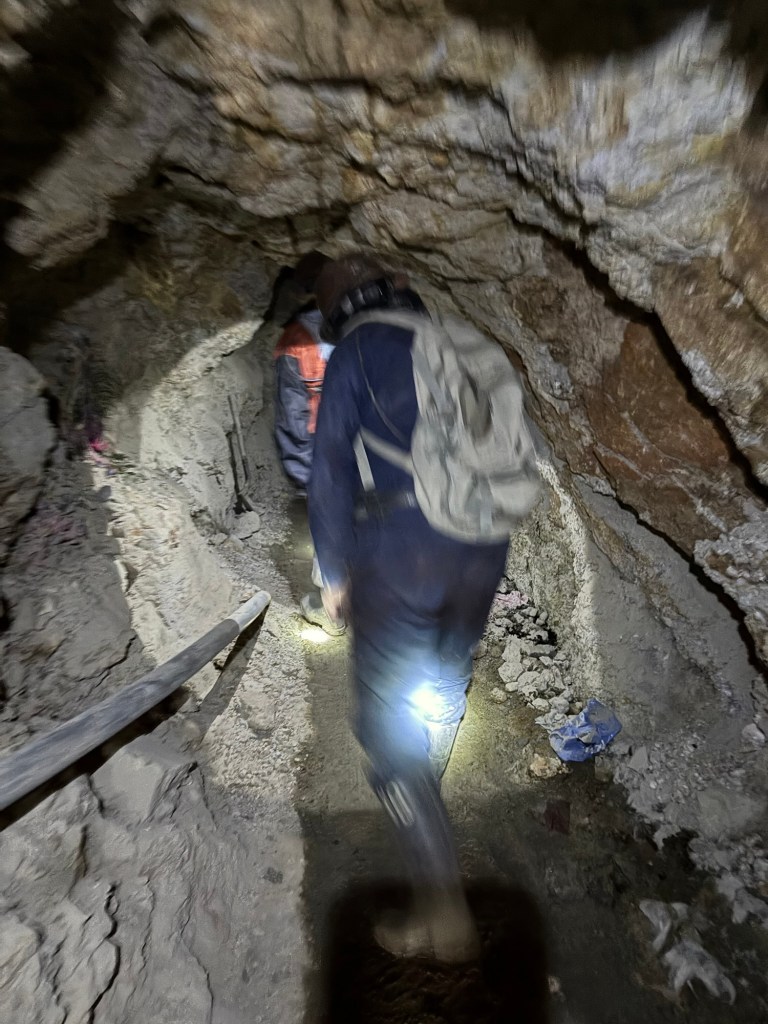
So we arrived and the entrance to the mine we were going into was barely a hole in the side of a hill. Jagged edges, no obvious support structures, and at times I felt like I should almost be crawling. I didn’t like it at all.
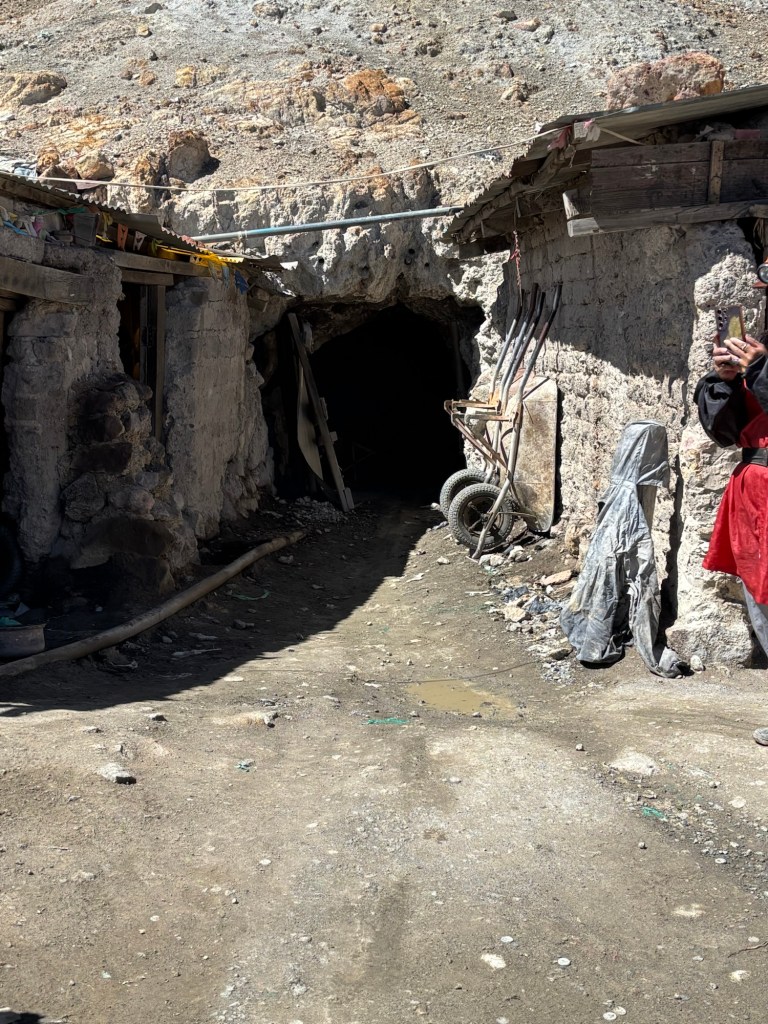
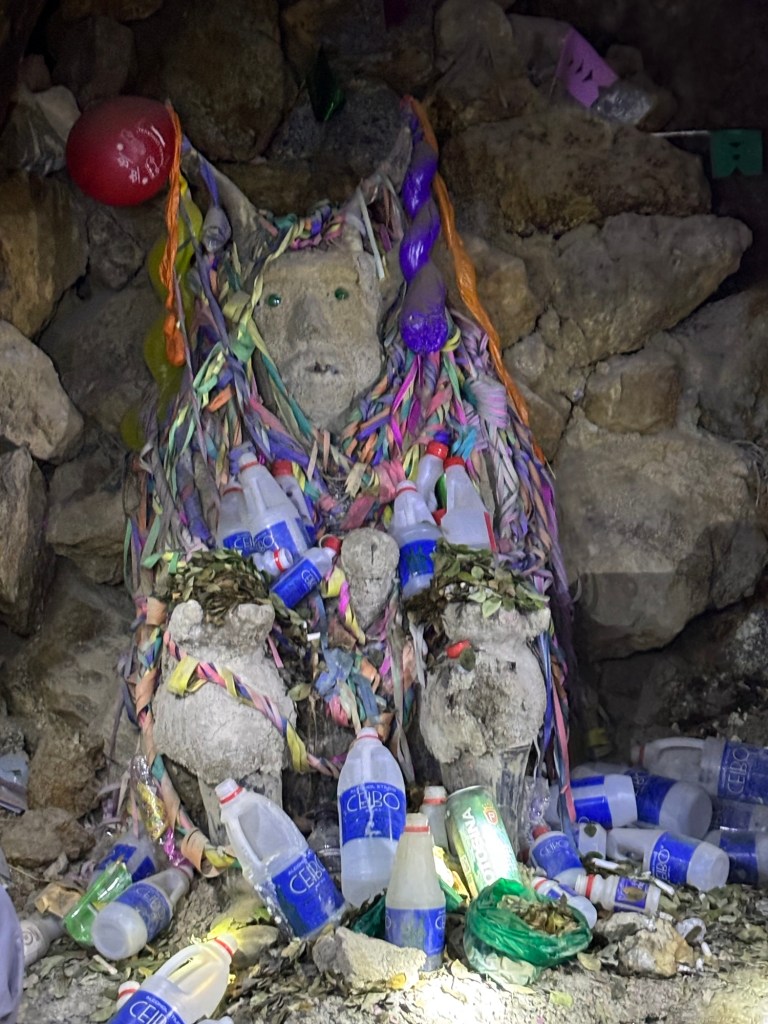
The smell of chemicals was in the air, the dust, the dryness it was all a bit overwhelming, of course no electrical lights and apparently no full maps exist and it’s no wonder there are many deaths. It was full on. We got to a point probably only 50m in where we stopped. Young men with wheel barrows of rocks were still running in and out and we stopped. There was an effigy of a quechen god that the miners pay respect to , mostly with cocoa leaves, cigarettes and the alcohol of choice. A 96% proof moonshine. ( if things were not already bad enough – let’s add alcohol).
By now David had exited and when it came time to go further in I decided to also turn back.
While we waited we watched the men carry on with their work. All by hand. Honestly it was like being back in the 19th century. While they worked a woman was doing some washing, one of the widows who along with her children, try’s to survive. They looked unwell. As did the skinny dogs. It was all very depressing. But they do it for the potential riches. As we were leaving we saw a canary yellow new Hummer , clearly that particular miner did well. But I wonder how long he will survive and what will happen to his family then? but hope is the currency they trade on here.
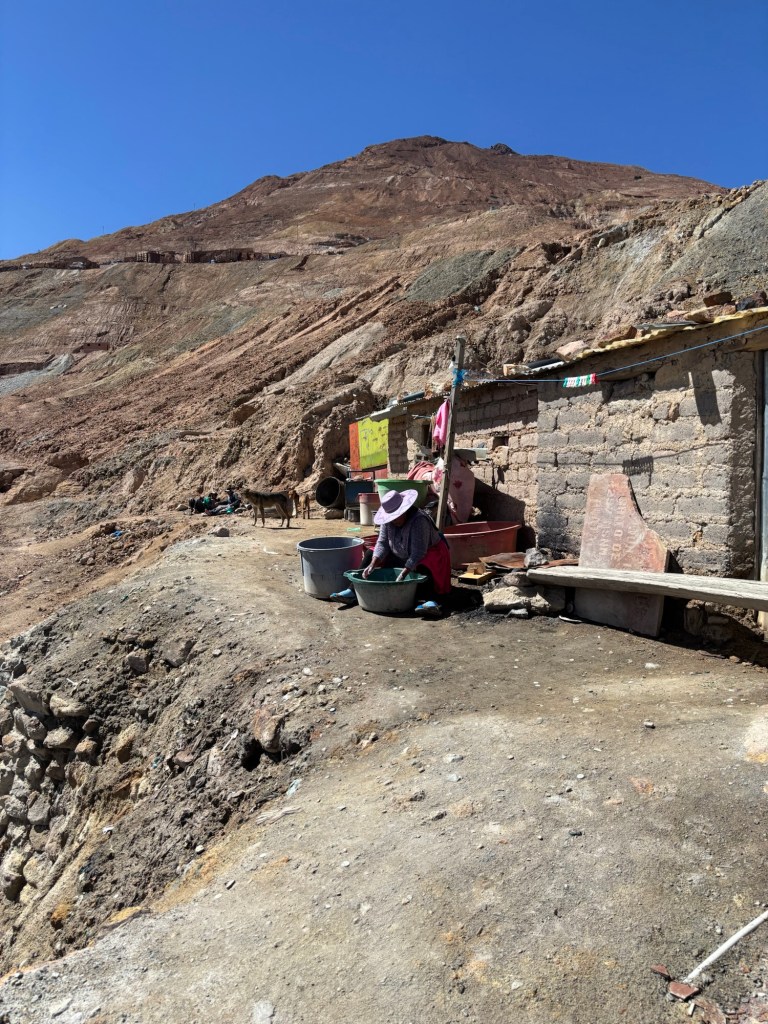
It’s such a massive failure on so many levels . The state who have failed these people , who see so little value in lives. No regulation, no safety- where is the public responsibility here? Or is this just a privilege concept of the west? I really didn’t enjoy this day at all.
 Hong Kong Hui