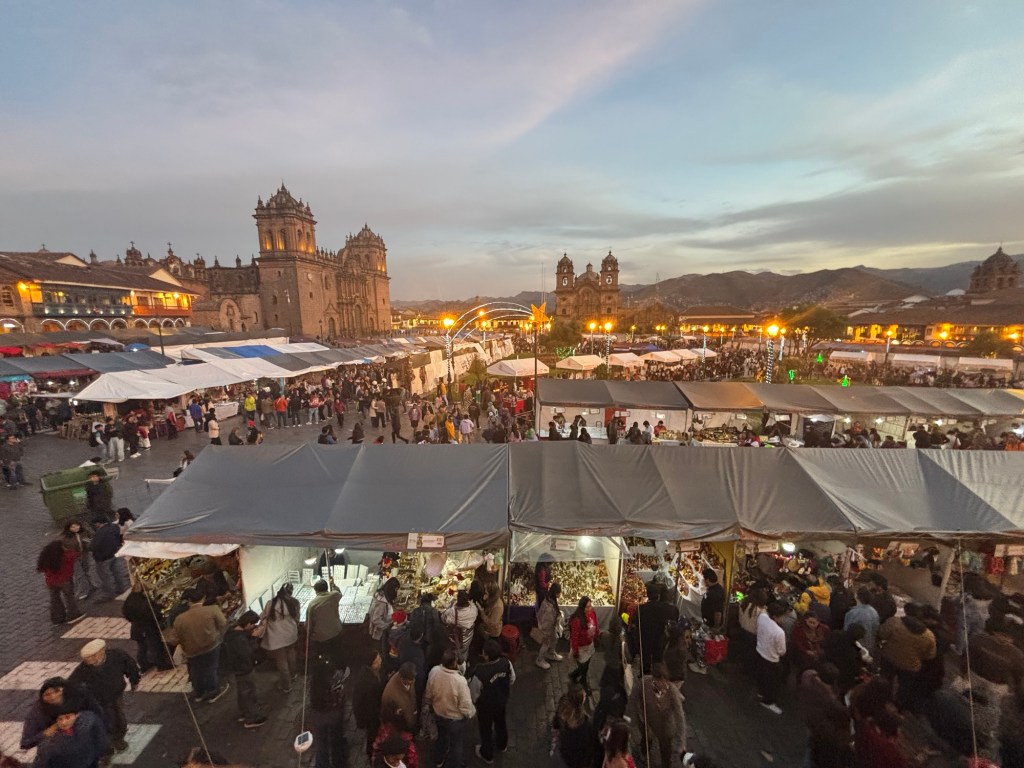
Christmas Day for us was an extremely quiet affair. We were leaving Cusco to get a 7 hour bus south to Puno. On the shores of Lake Titicaca.
Initially there had been plans to make our Christmas Day celebrations on the bus, wine was purchased, cakes, treats but that was all blown out of the water when yours truly decided on Christmas Eve we should go to a gay bar. I had some crappy family news and I was drowning my sorrows a bit. So off we went to Chango , and I danced and danced and drank too much with a lot of the group. David wisely stepped out. So I arrived back at the hotel very late, very drunk and very wet as it was pouring! While I may have took the lead, I was definitely not the only one. So by the time we hit the bus station dishevelled and with sore heads at 7:15am, the Christmas spirit had waned. It was fun, managed to do 30,000 steps that day so the dance floor got a pounding.
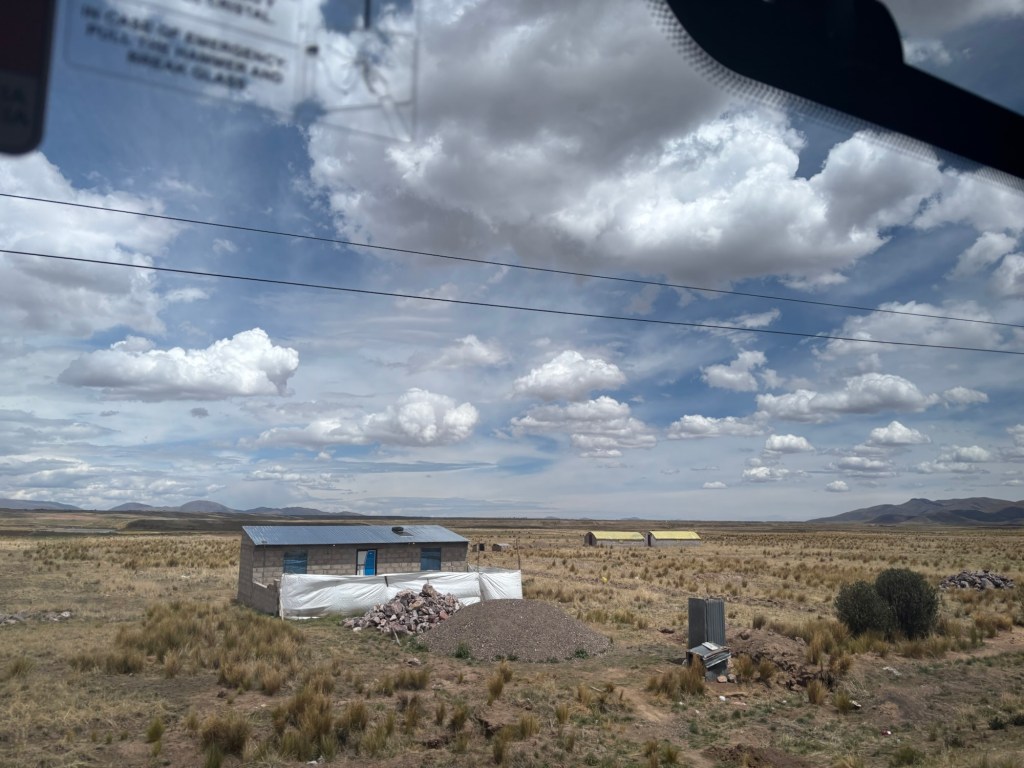
Many of you will probably know this, but South American long haul buses are simple next level. Practically lie flat beds, air conditioned, charging ports and phone stands. They are great. So we spent the time driving through some spectacular scenery , nursing my sore head and arrived in Puno 7 hours later. Still I do get to say I was at lake Titicaca on Christmas Day!
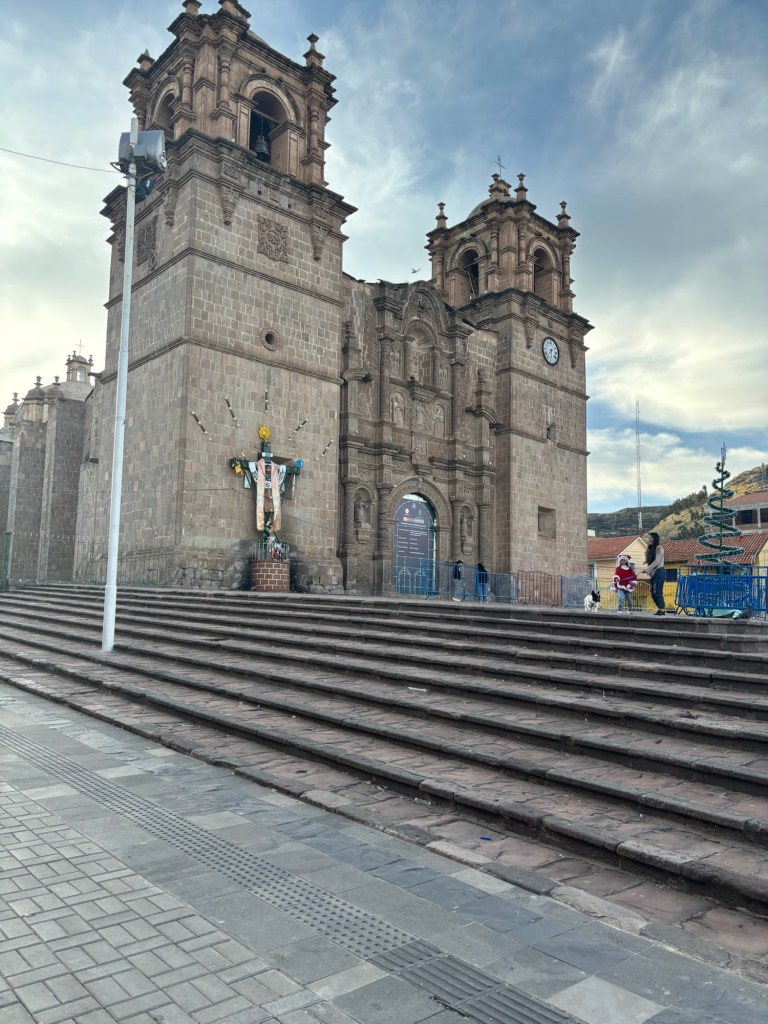
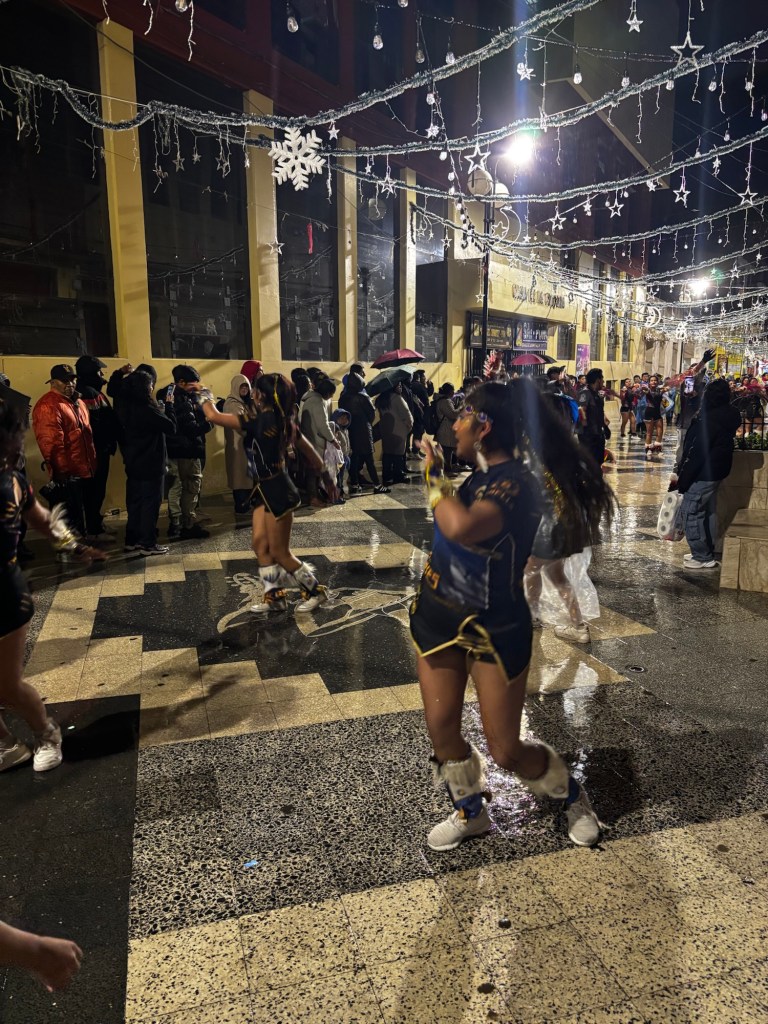
We are stayed in an old school hotel in Puno. Expecting chemist as day to be quiet the streets were packed with families walking, we had a quick dinner, some more panadol for me and off for an early night.

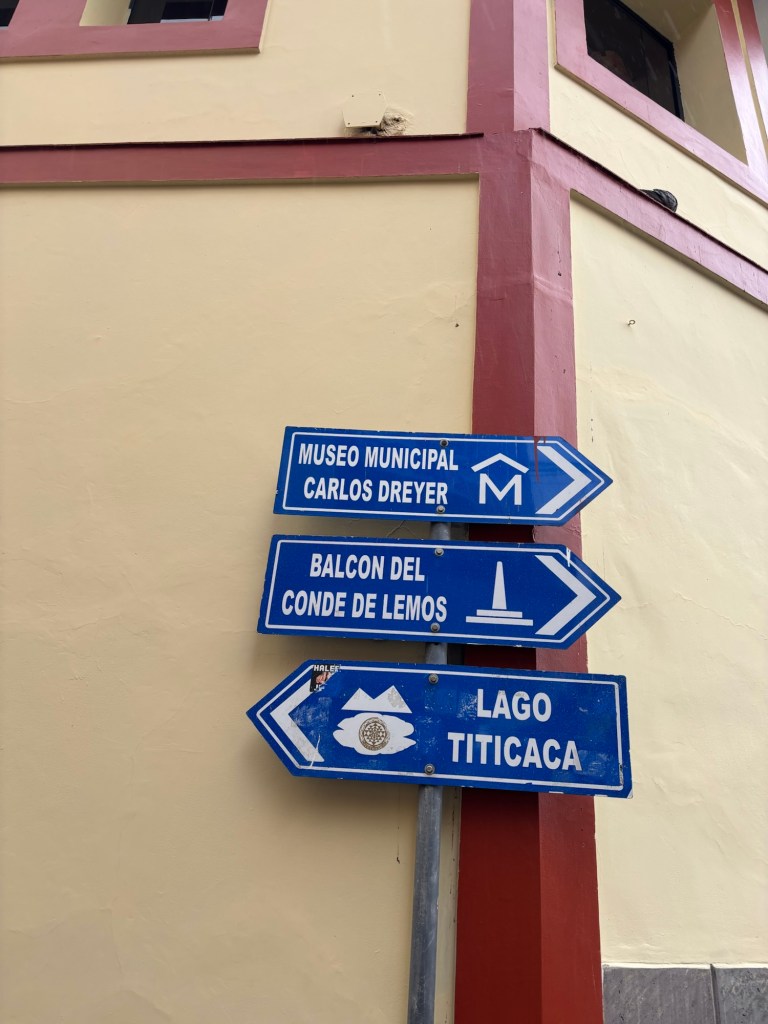
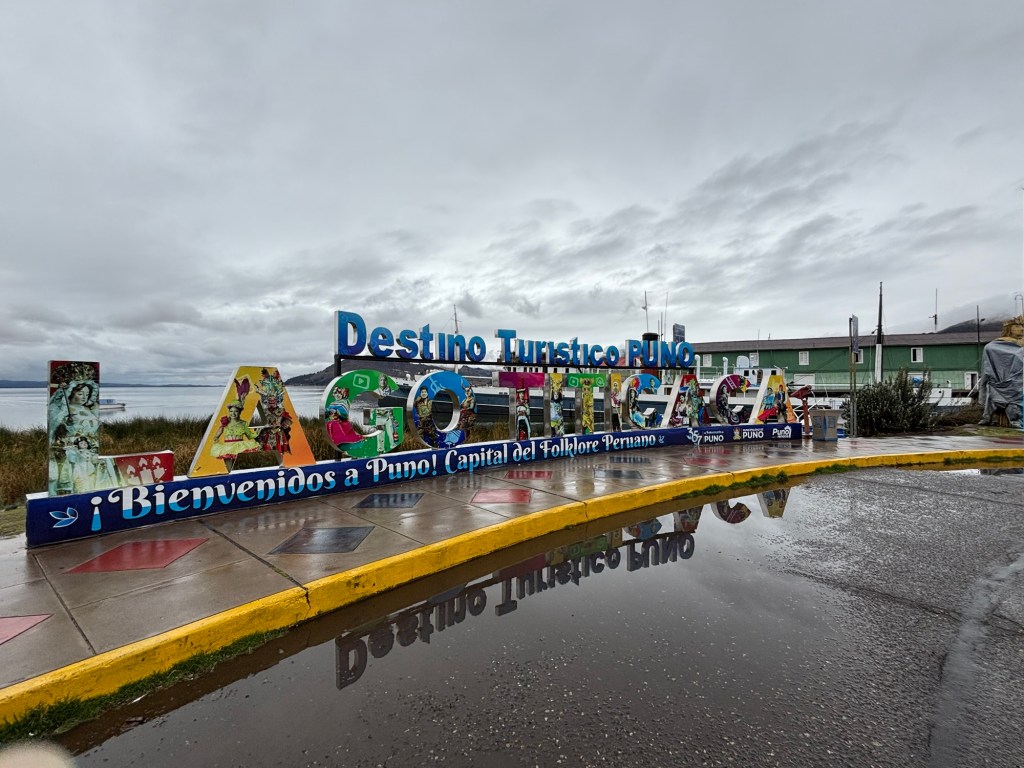
So next day it was onto a boat to have a look around Lake Titicaca. The lake is the highest navigable lake in the world at 3800m, and even though it’s the middle of summer the altitude makes it cold. We woke to 3c. Brrrr..
So off we went in our little boat and about an hour and half later we hit our first destination one of the 150 Reed islands that families have been living in for centuries!
It’s was raining and cold so we felt a bit miserable, as we hopped onto the spongy squelchy raft. We had a bit of presentation and then when the rain stopped we could have a look around.
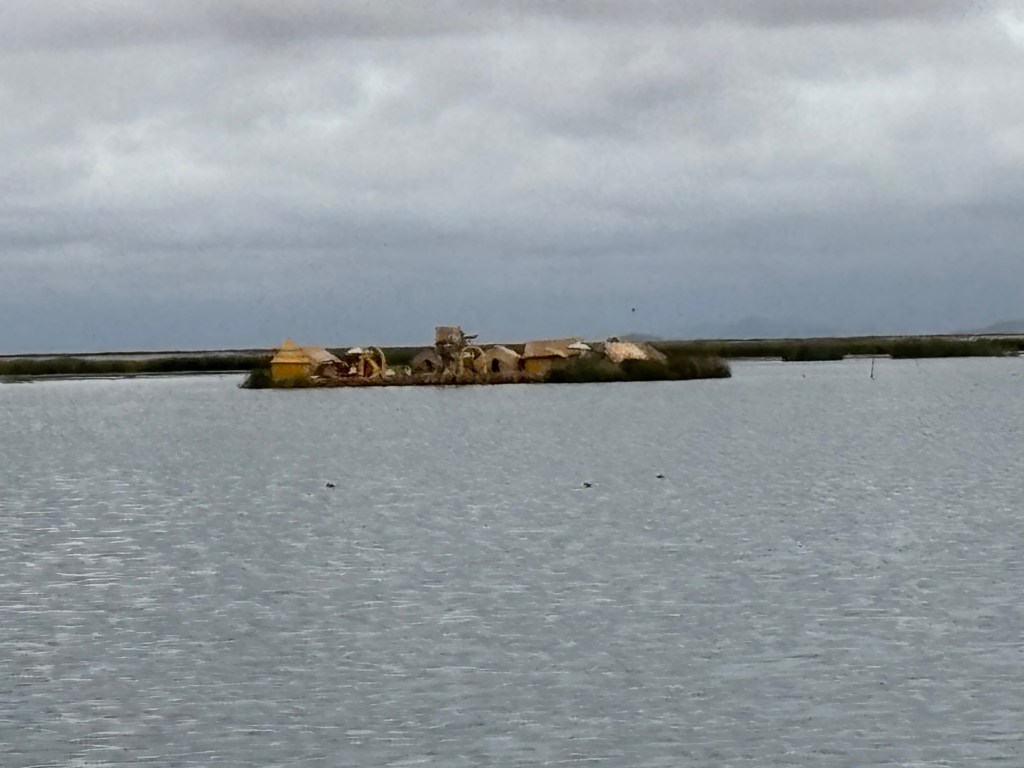
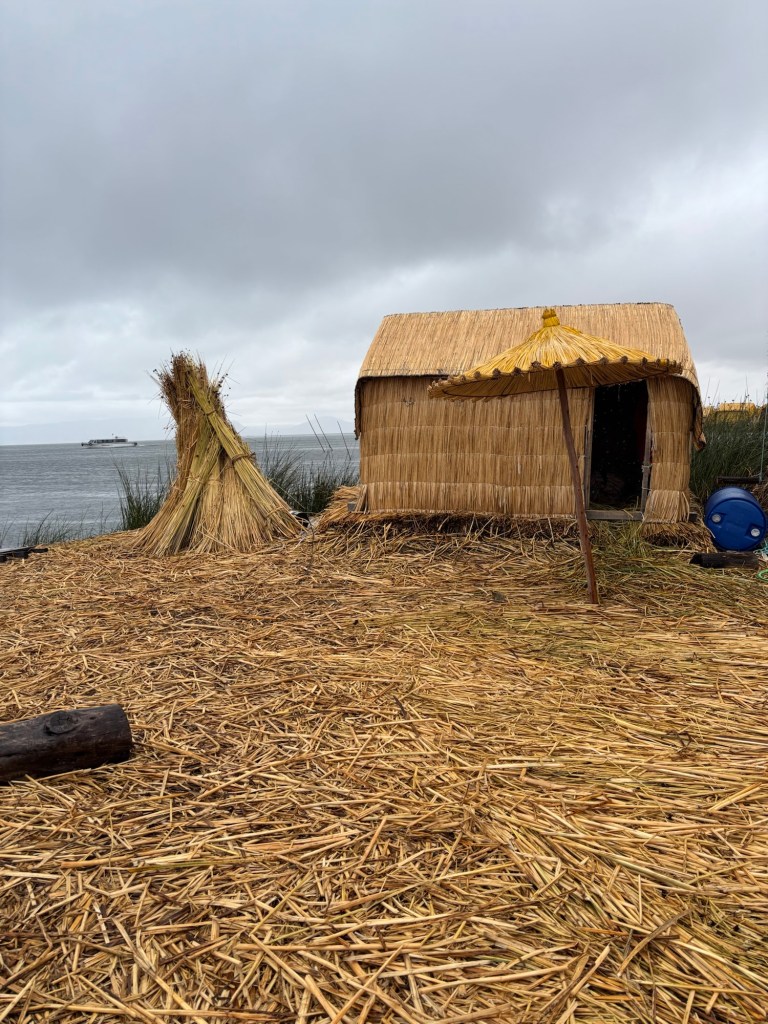
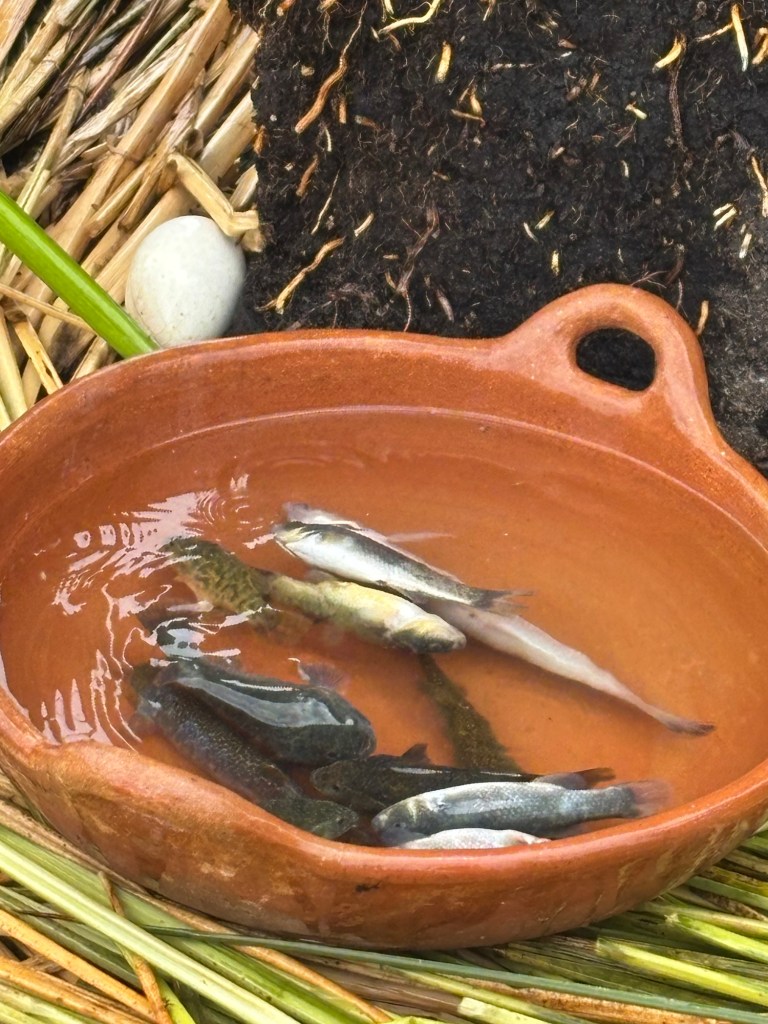
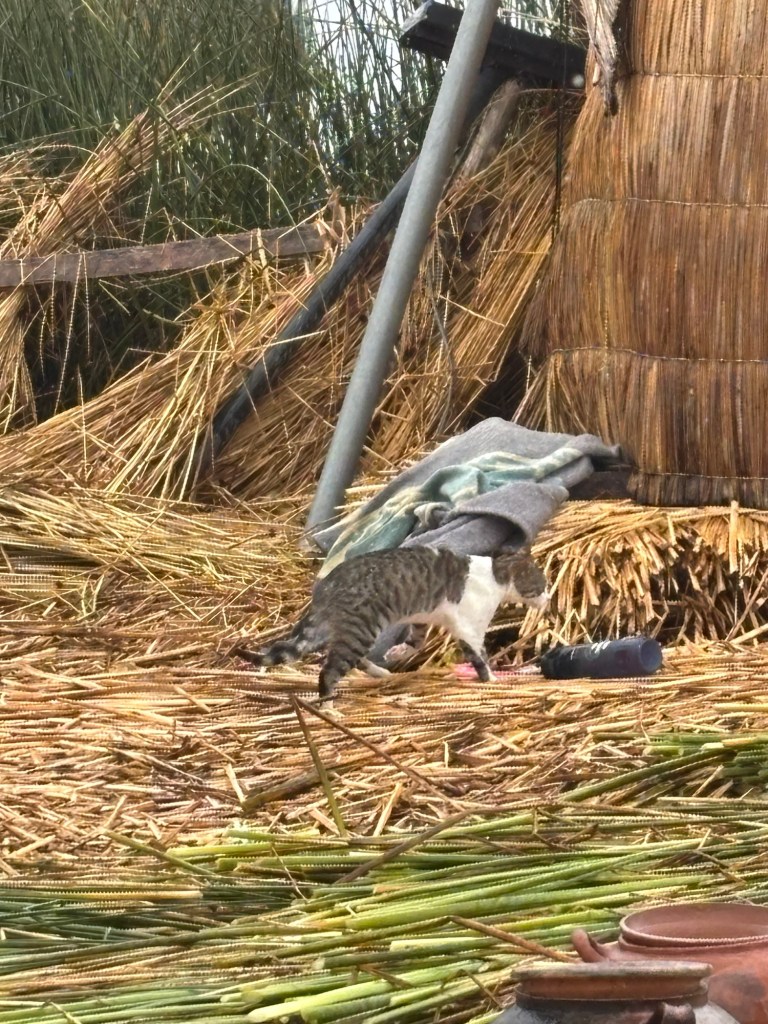
The island is bloody tiny. 5-6 dwellings with a family of 11 , traditionally they would have lived off fishing and trading. But in recent years tourism is creating a new economy for these families.


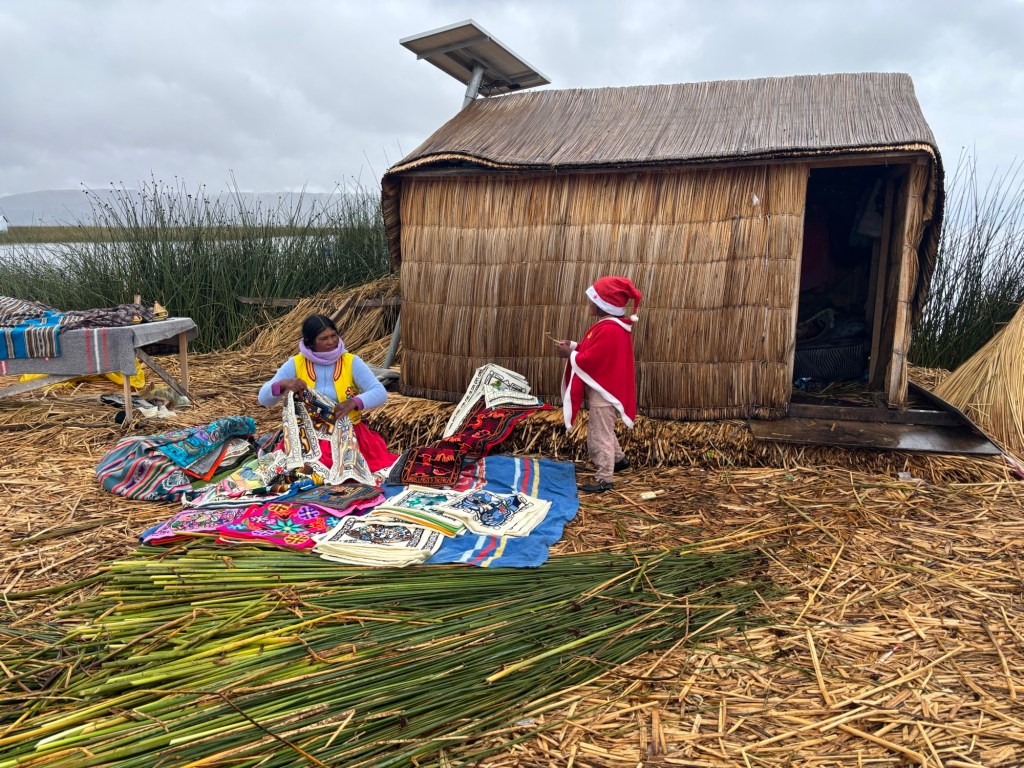

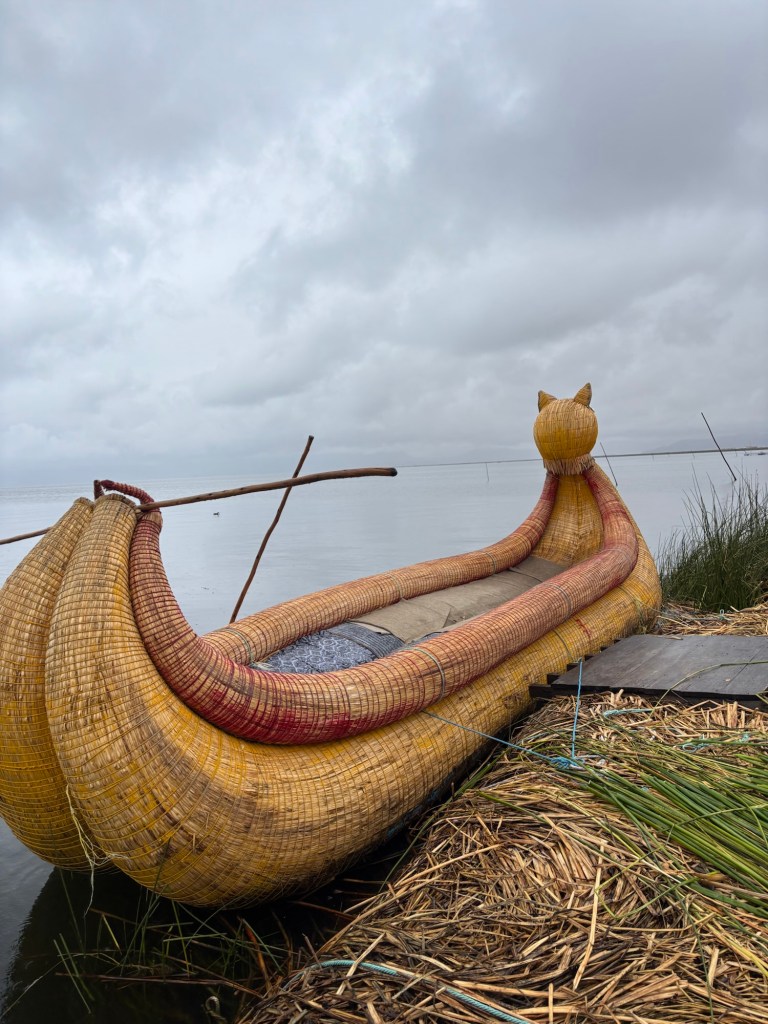
It looked like such a hard life. Despite the new income from tourism.
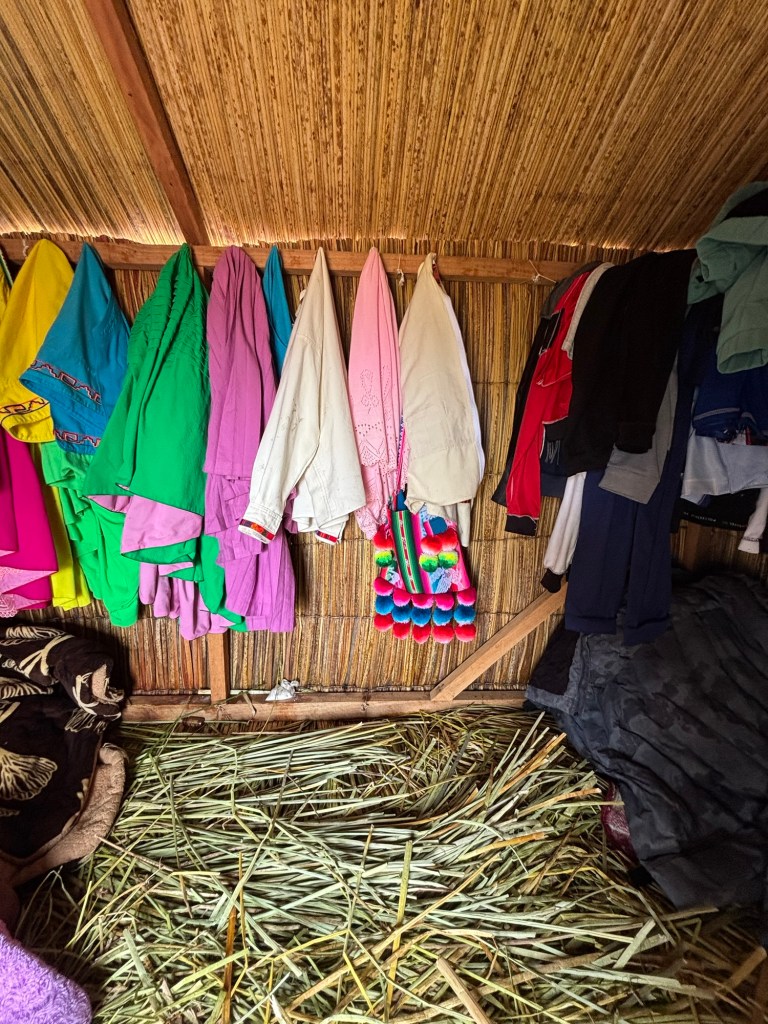
So back on the boat to head to our next destination which was for a homestay.
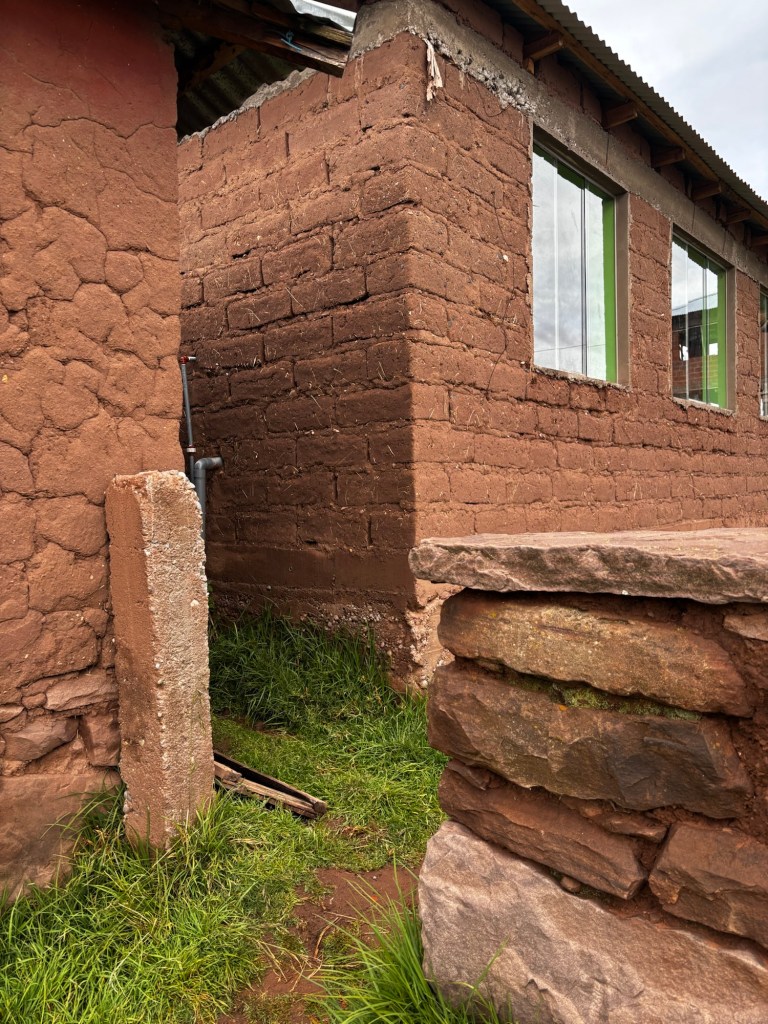
Fair to say there was a fair amont of trepidation about the honestly, the Intrepid description had said it was basic accommodation in mud brick homes and that there were no showers , language is also a barrier and with it being cold and wet we didn’t know what we were getting into.
I expect for our hosts it would have been equally as nerve wracking, they have no idea who they are going to end up with either, right?
So we arrived. We were greeted by two women in vibrant traditional dress and taken to our respective rooms. Ours was super cute and way exceeded expectations.


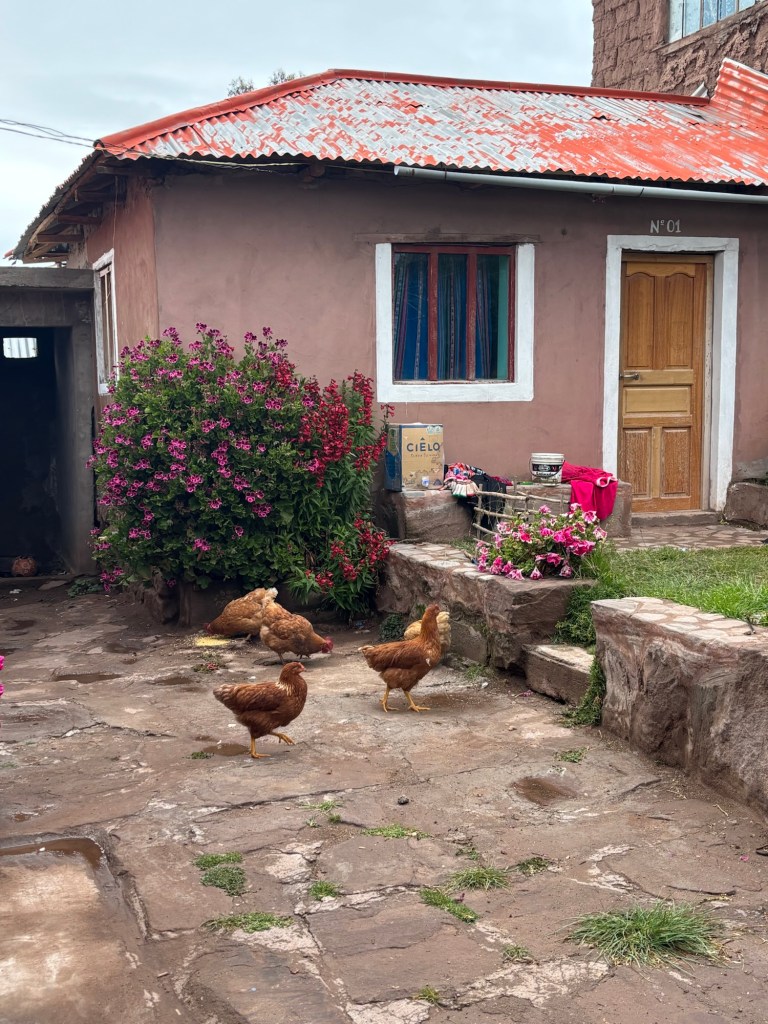
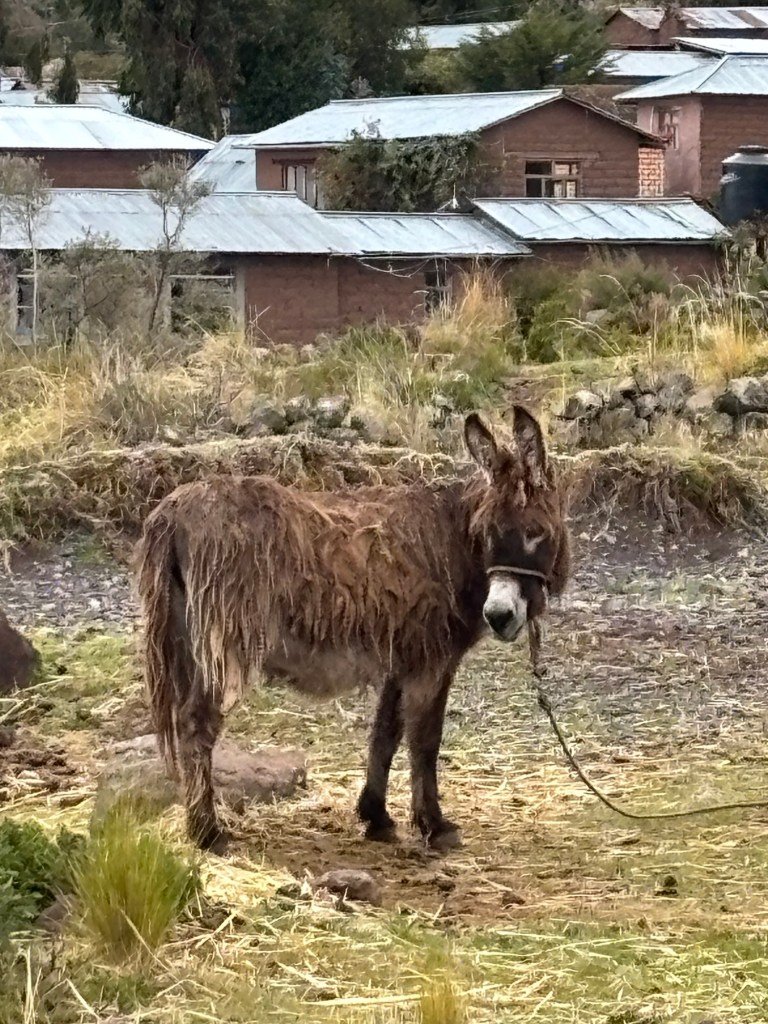
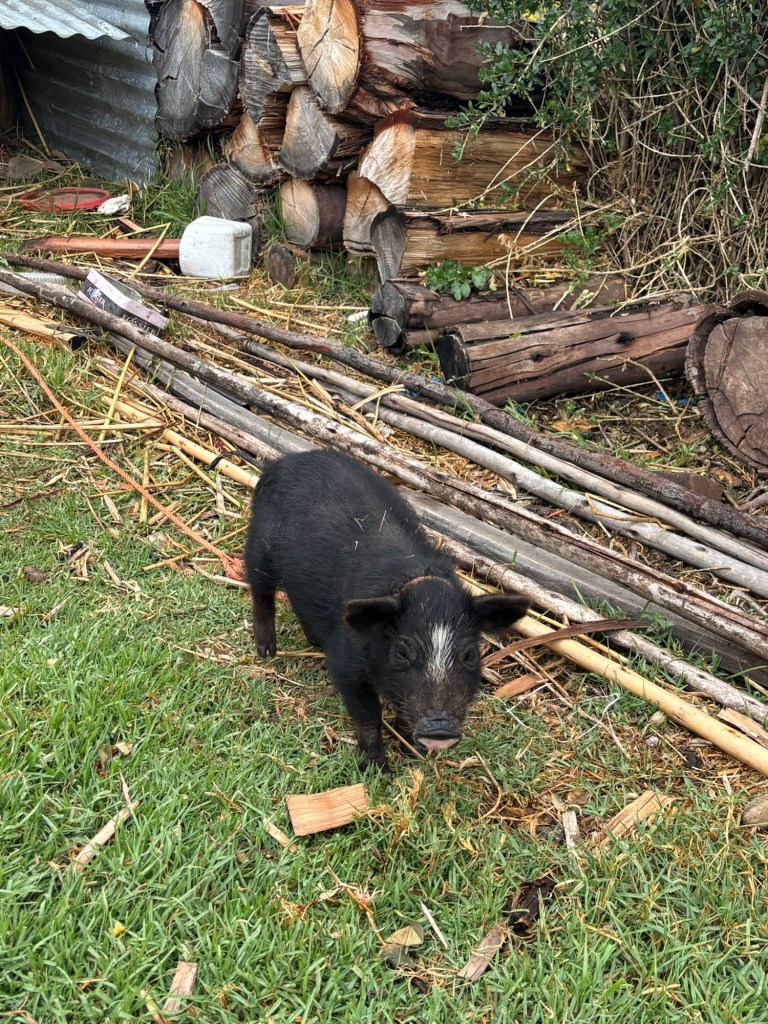
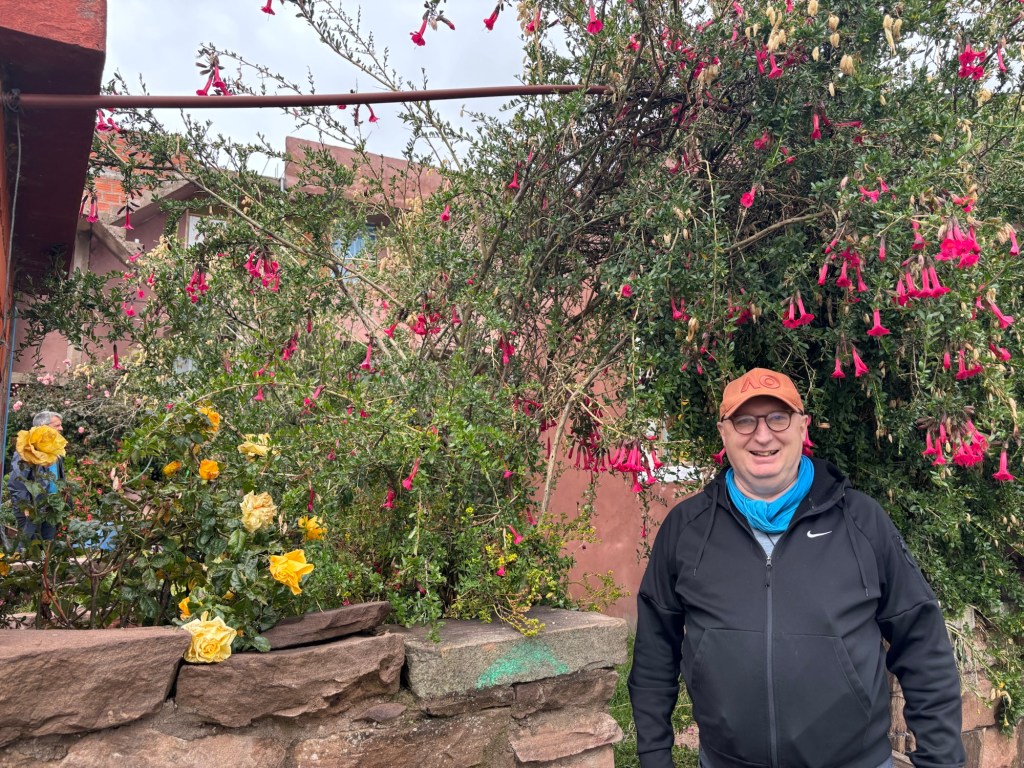
We then sat down for lunch with our host and tried as best we could to get to know each other. Our host Yula was 33, married, two kids Sébastien and Natalie. Her parents in law lived next door.


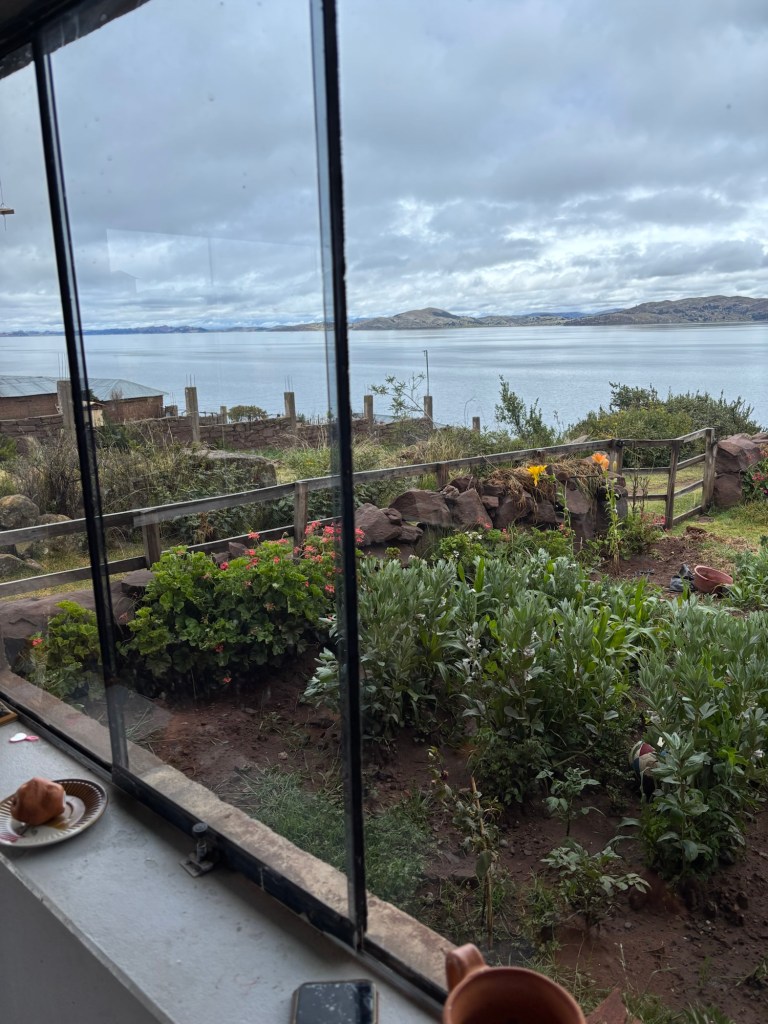
It’s never easy communicating when you don’t share a language, but it’s amazing what a big smile, an open attitude and some sign language could achieve we felt very welcome immediately.
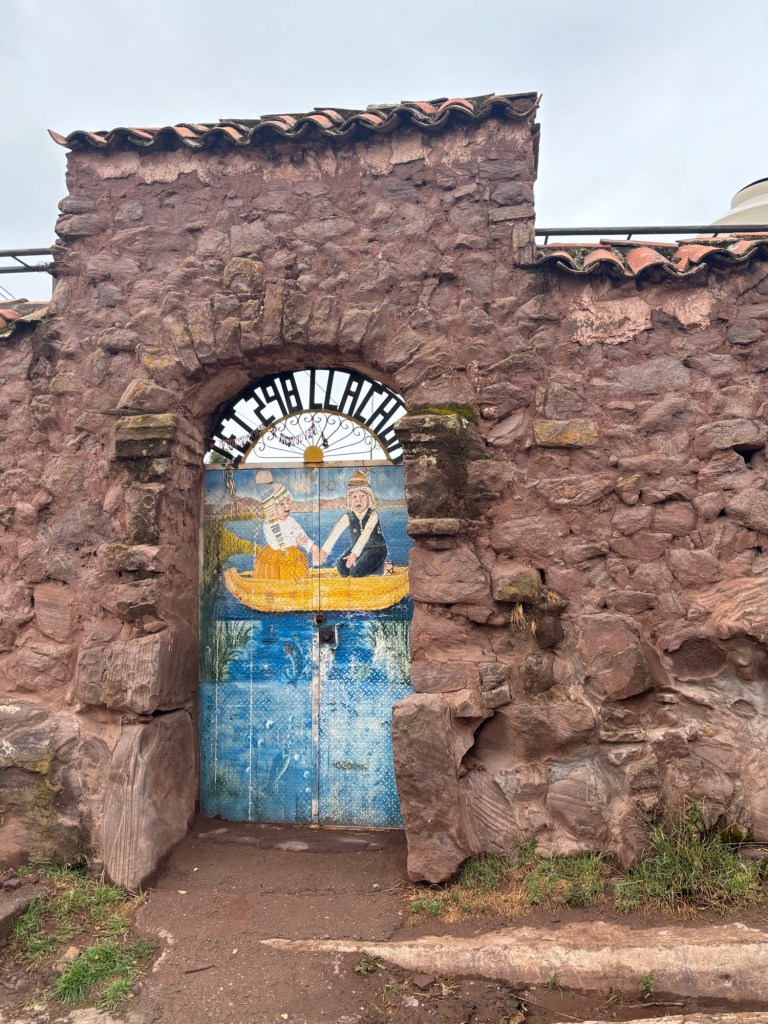
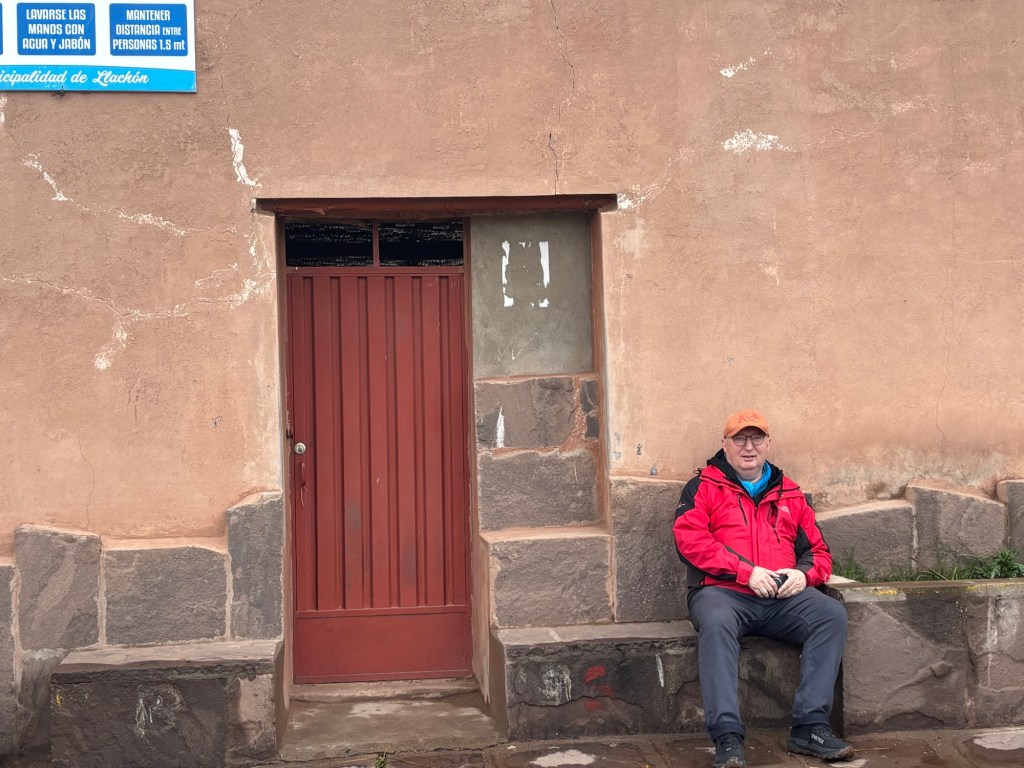
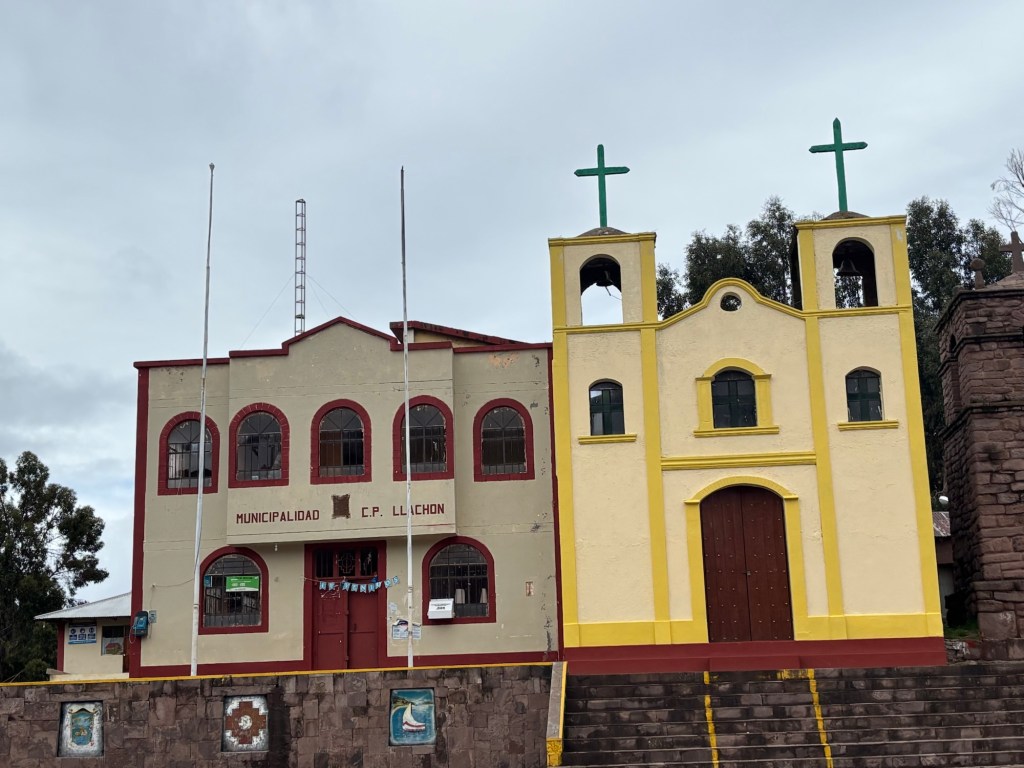
We had a wee bit of free time before we had to do some “chores” so wandered up to the plaza. This is a remote area with a tiny population the inhabitants spoke Spanish, Quechuan , and Aymara. All completely different languages.
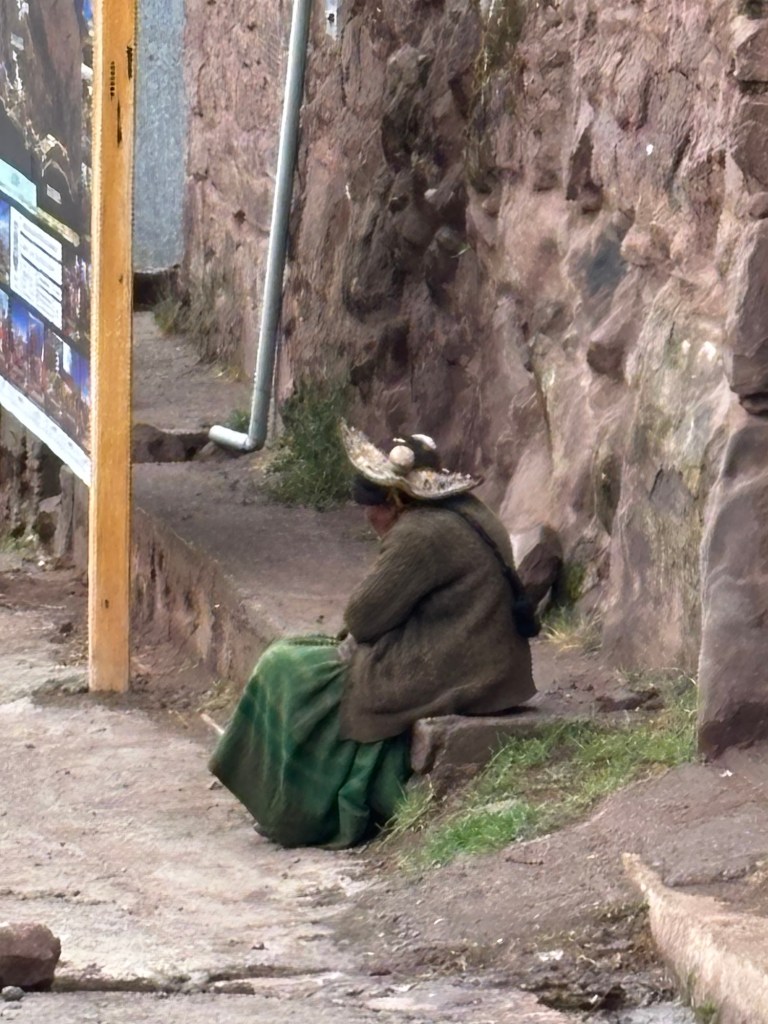

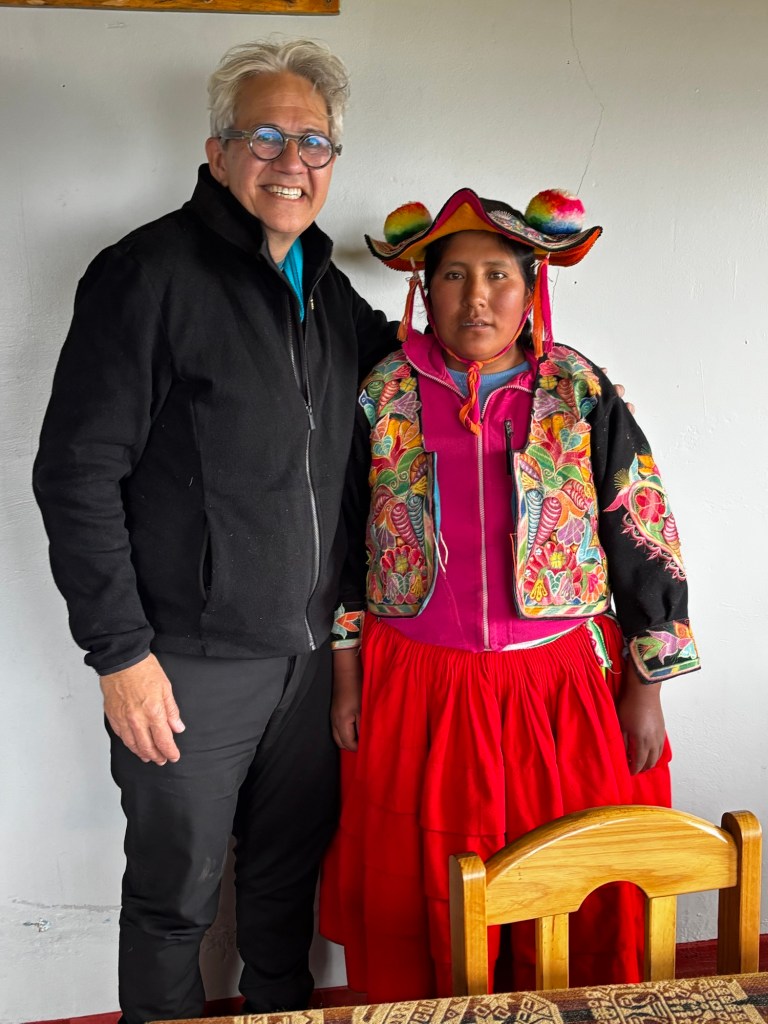
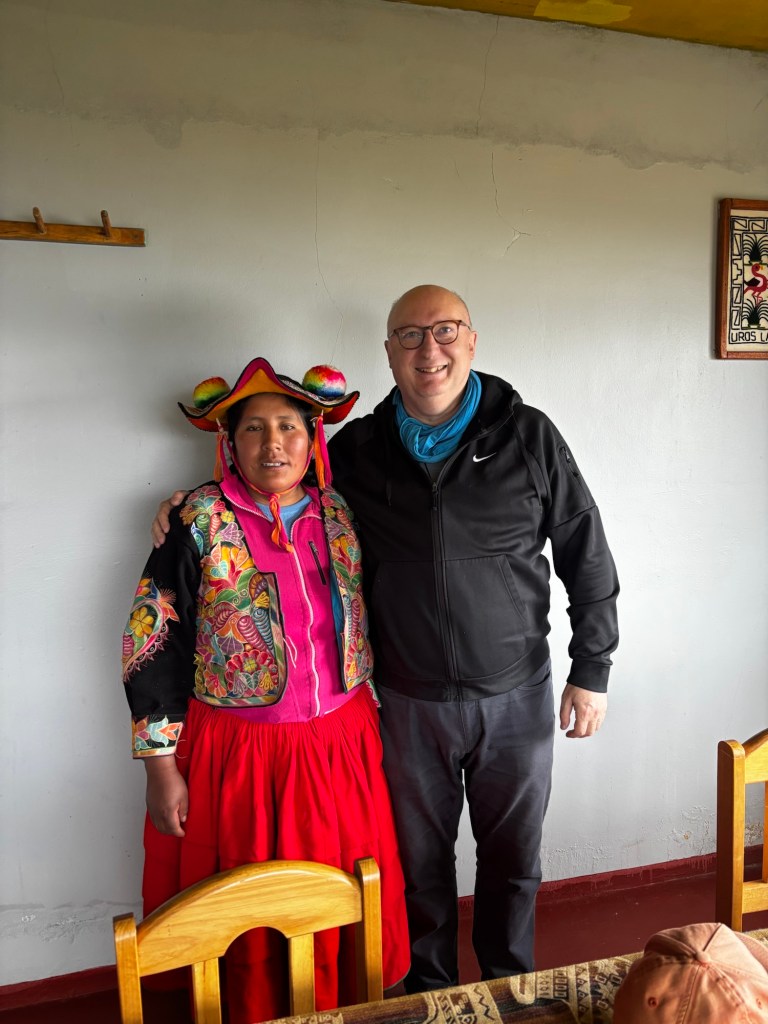
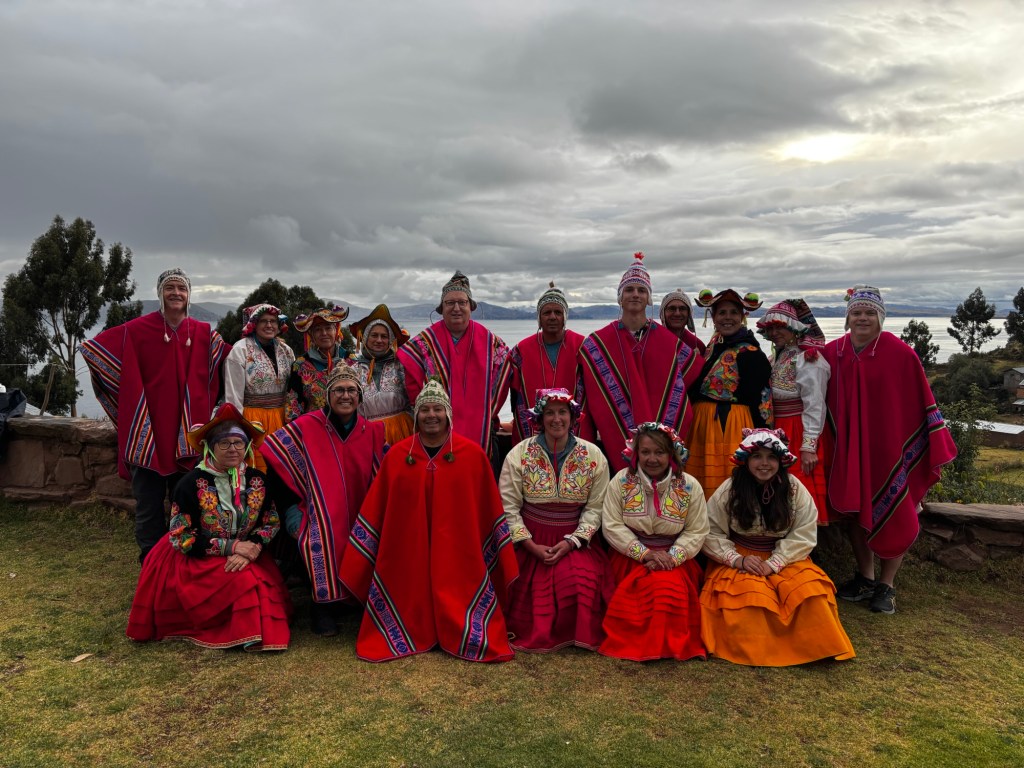
The hat with the two baubles indicates she is married , while there is a different hat for those who are not married- more on that later..
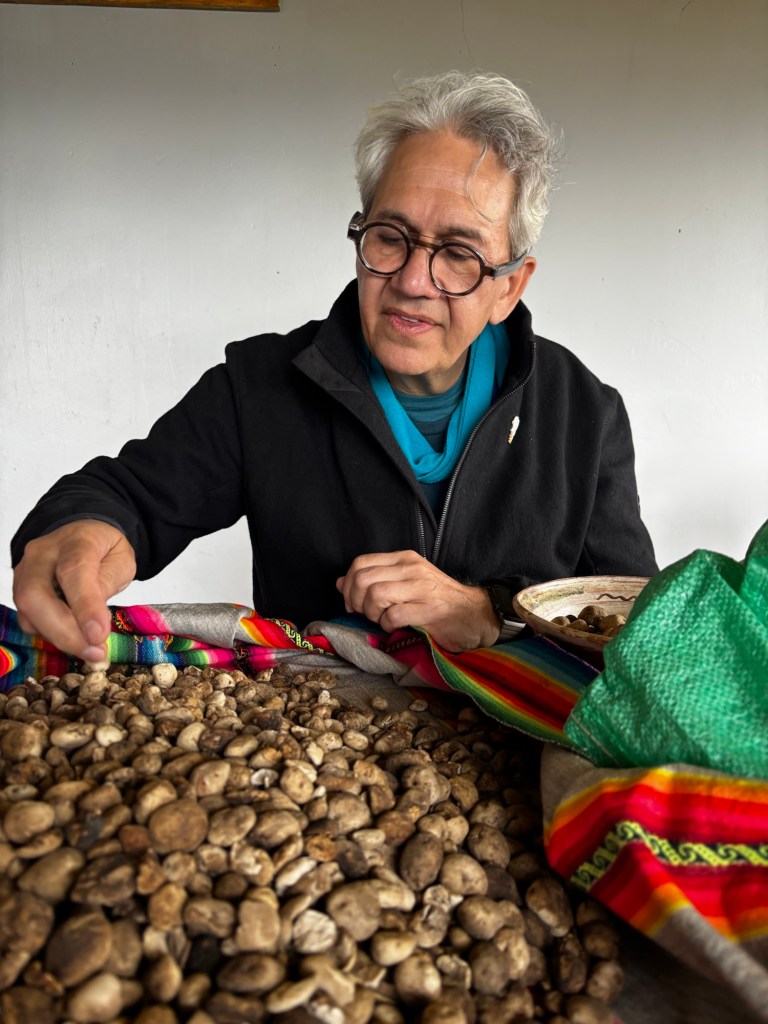
We made it back to the house where we were assigned jobs to assist the household, we got to sort dried potatoes, from those that were whole to those that were broken!


After our jobs we got together to play volleyball, locals versus visitors and talk about an ice breaker – it was so much fun and really brought everyone together!
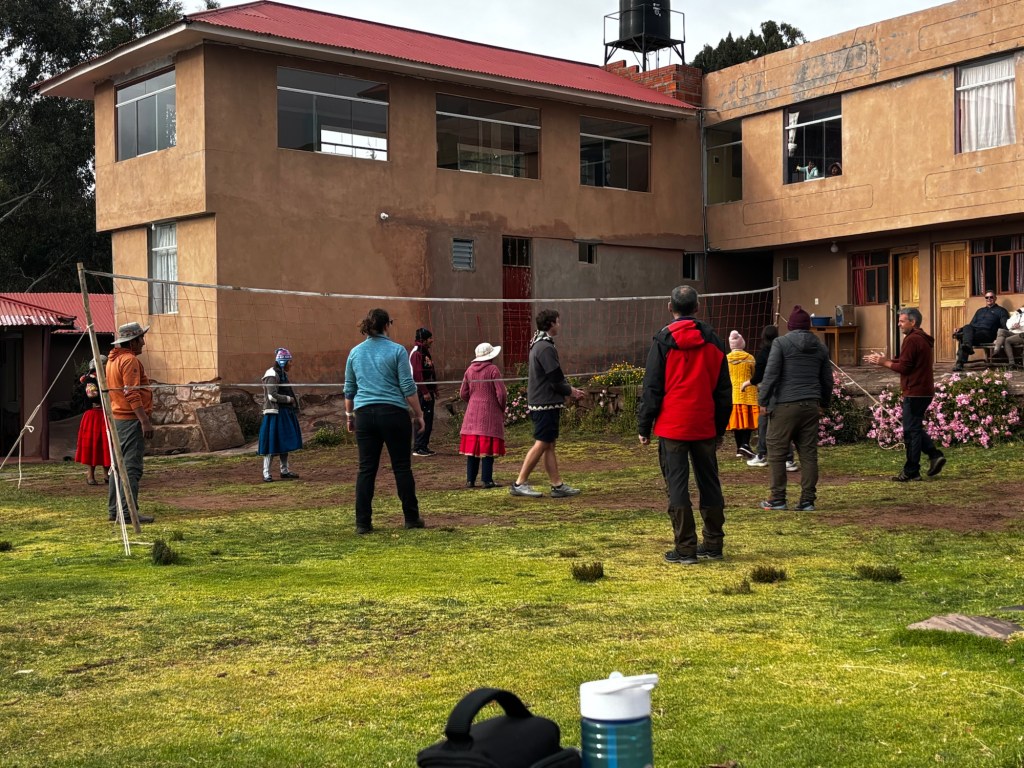
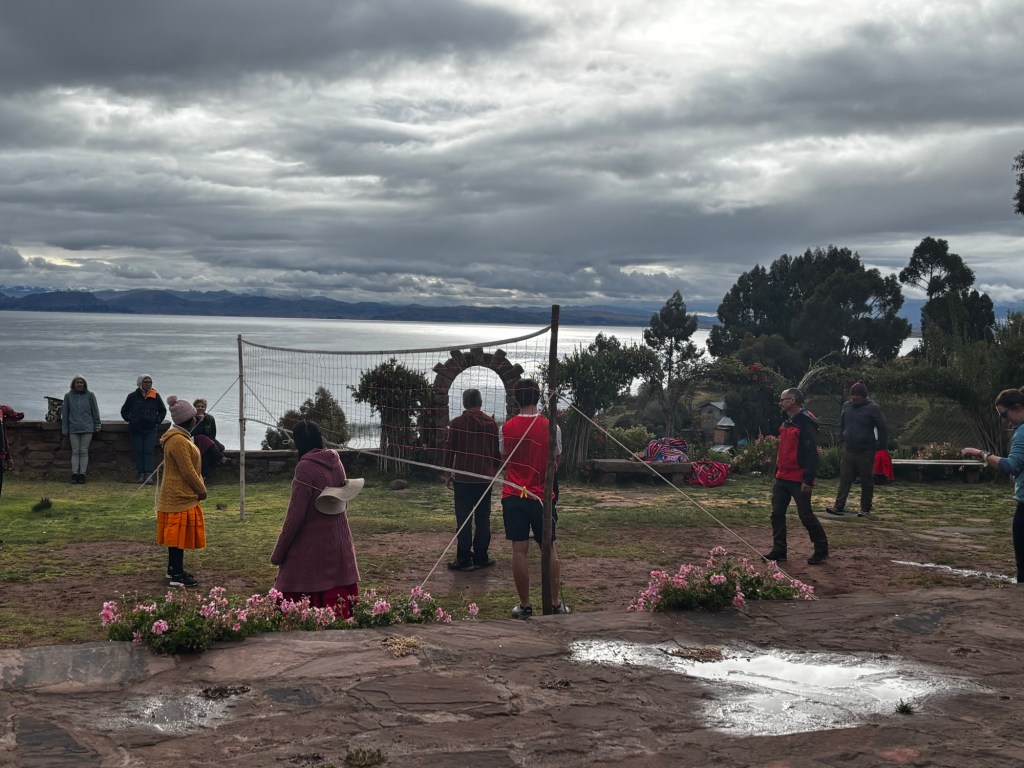
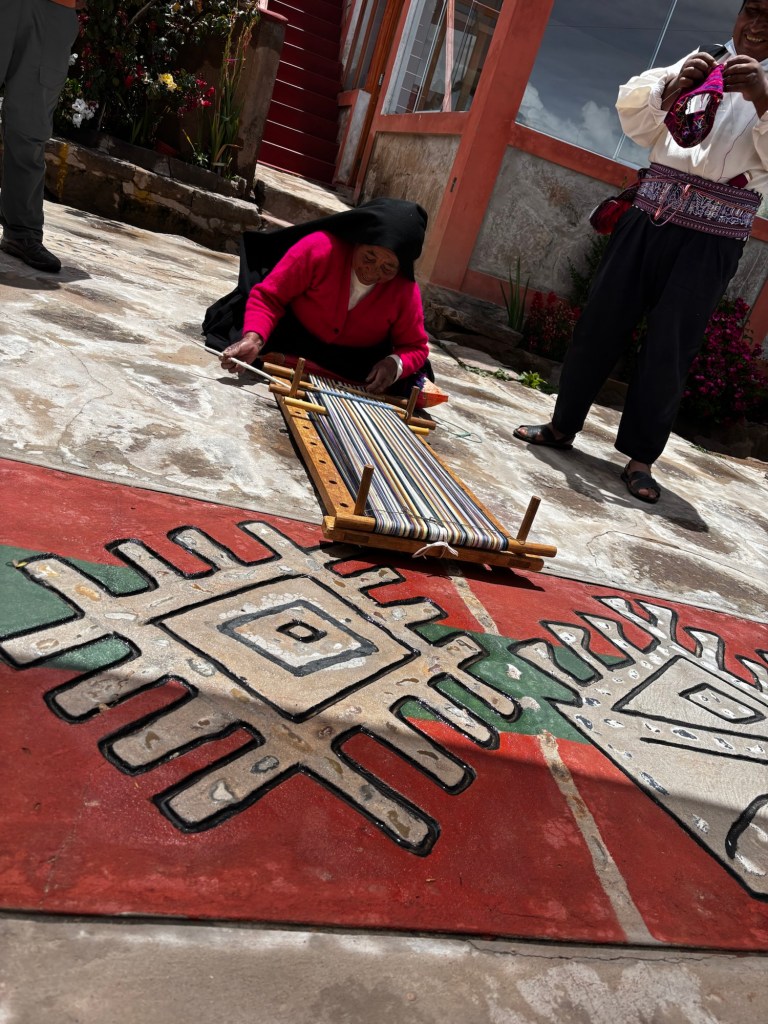
They then gave us the option of dressing up in traditional clothes , ordinarily I may have resisted but it’s incredible what a few hours of camaraderie, laughter and good will we do. Before we knew it we were all in our outfits.
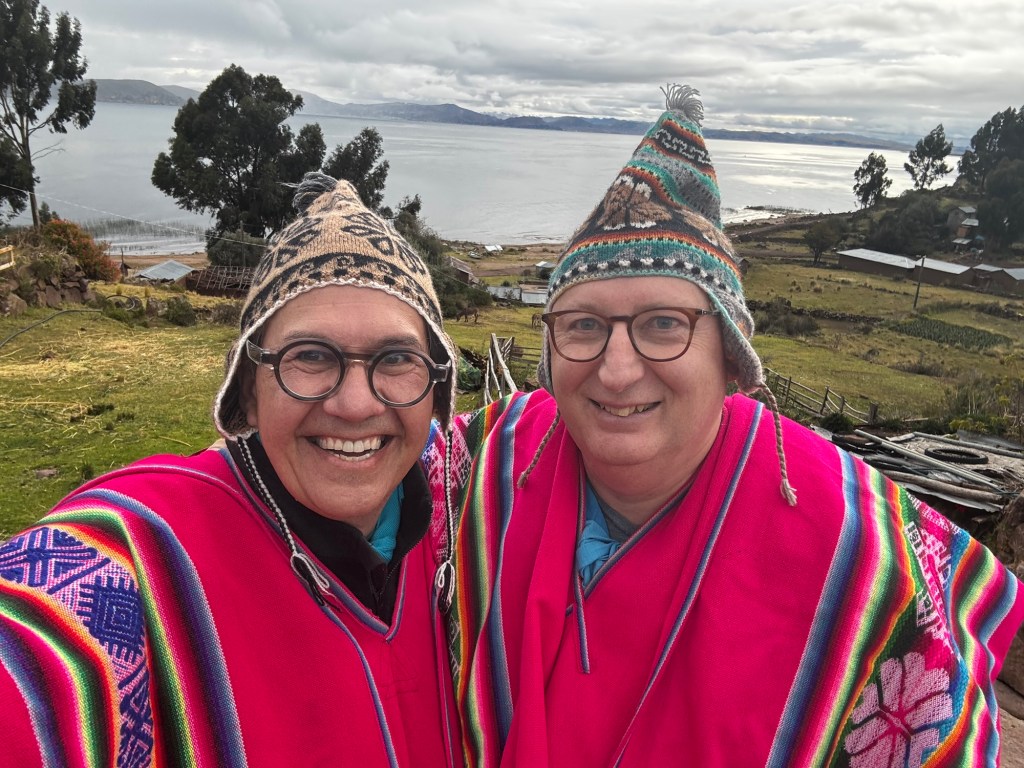
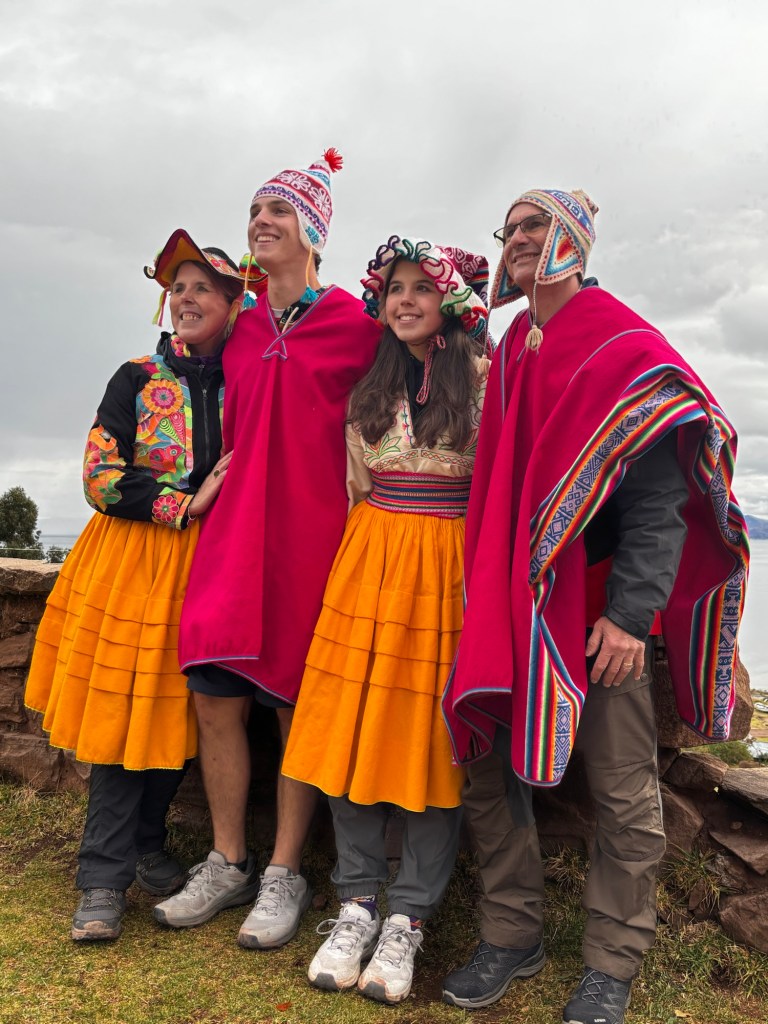
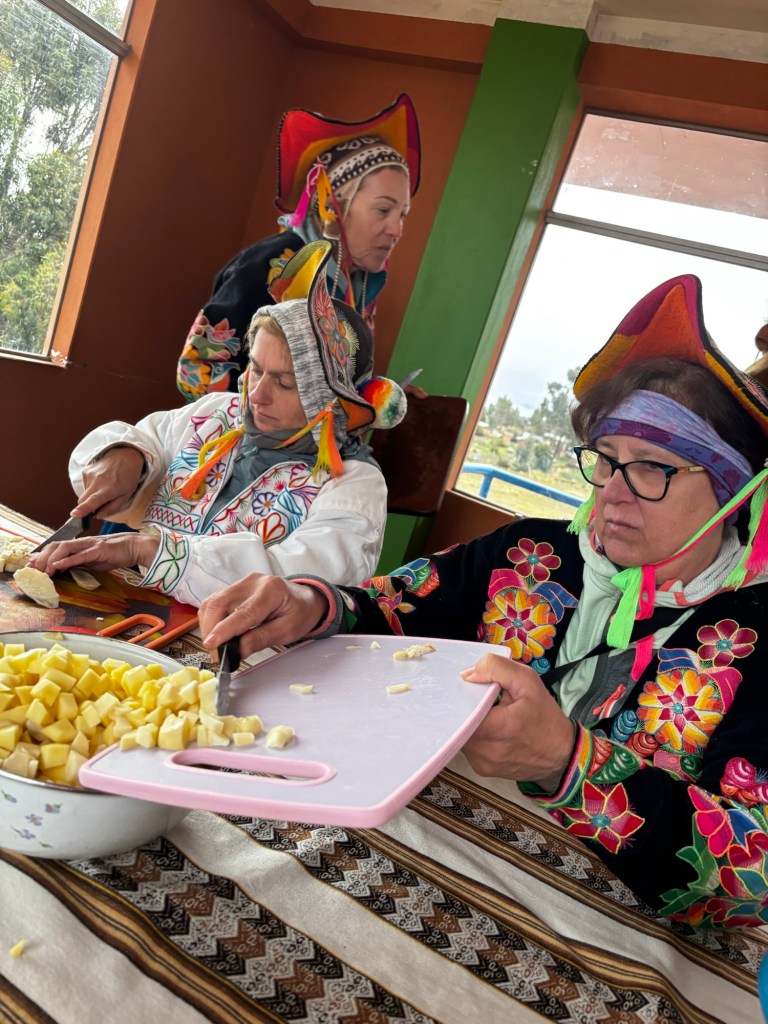
From there, while in attire we all had to go upstairs and help cook dinner , chopping, peeling vegetables,
We then ate together, laughed some more and were all back on our rooms by 8pm.
It was a wonderful experience, and so wholesome!
This has been an intrepid initiative, they have supported the set up , and done so in a respectful way, using local resources, and local guides. It doesn’t feel contrived, and the response from those we are engaging with feels genuine.
They structure thing’s themselves, so at this time of the year when it’s low season, there’s only one group a week coming through, so each community group gets rotated through so the whole community benefits. It’s been rough since Covid and with the ongoing political instability, but things will hopefully continue to recover and more people get to engage with these wonderful communities.
It was then time for dinner, which we had to help prepare.
It was a nice touch, and once we had eaten , we all had an early night. No TV , no WIFI so no choice but to sleep. Bliss.
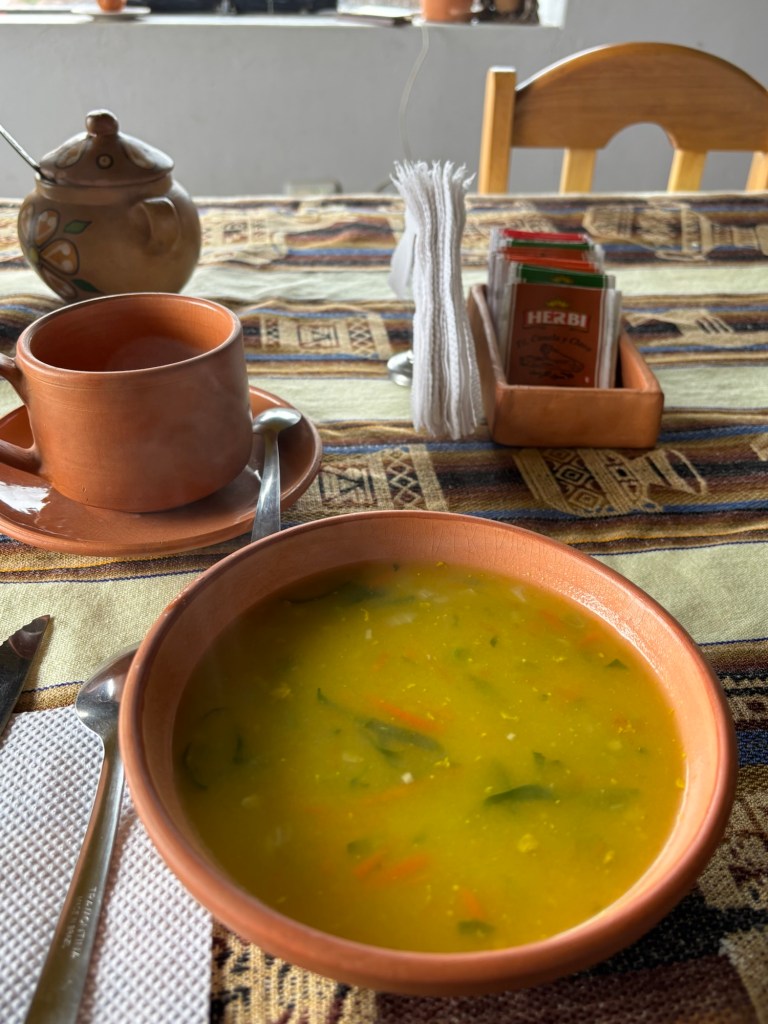
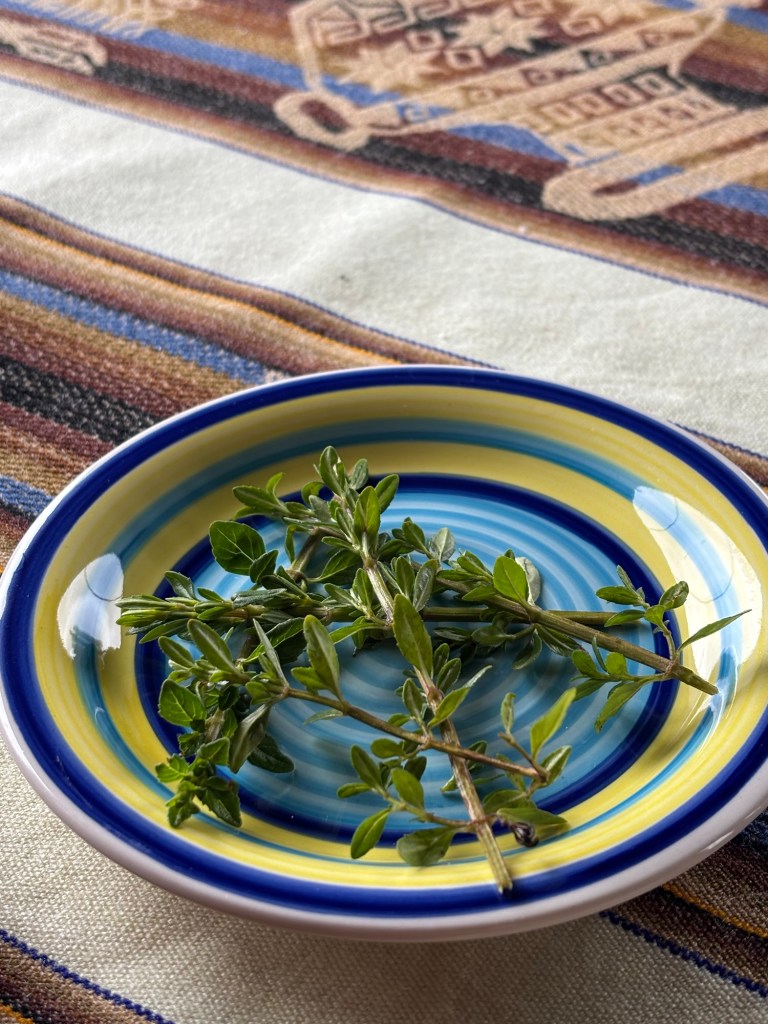
Next morning breakfast was fried bread, herbal tea and an egg.
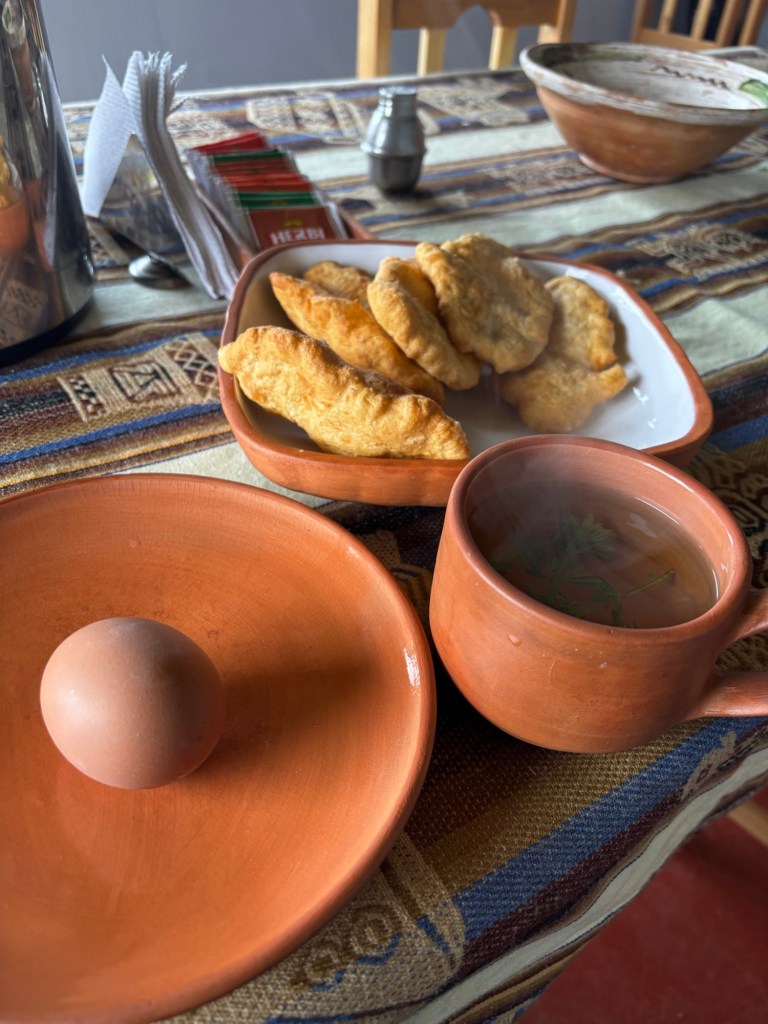
So simple yet so delicious!
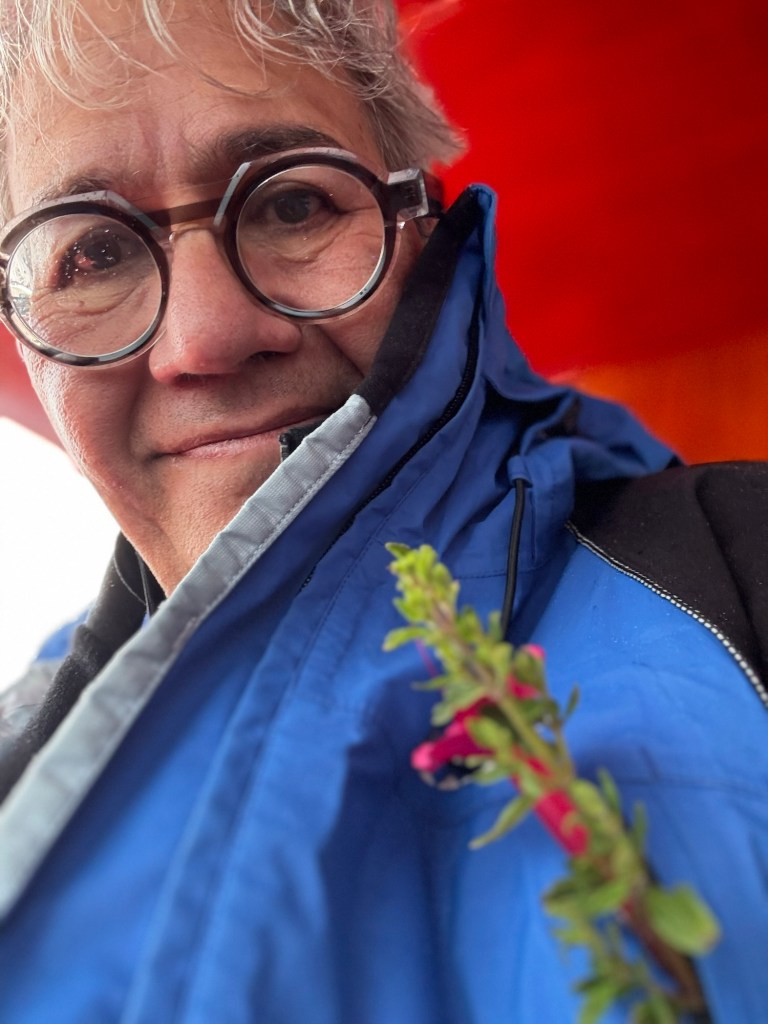
And then our host walked us back to the boat. but before she left she presented us both with a wee flower and it was hugs all round
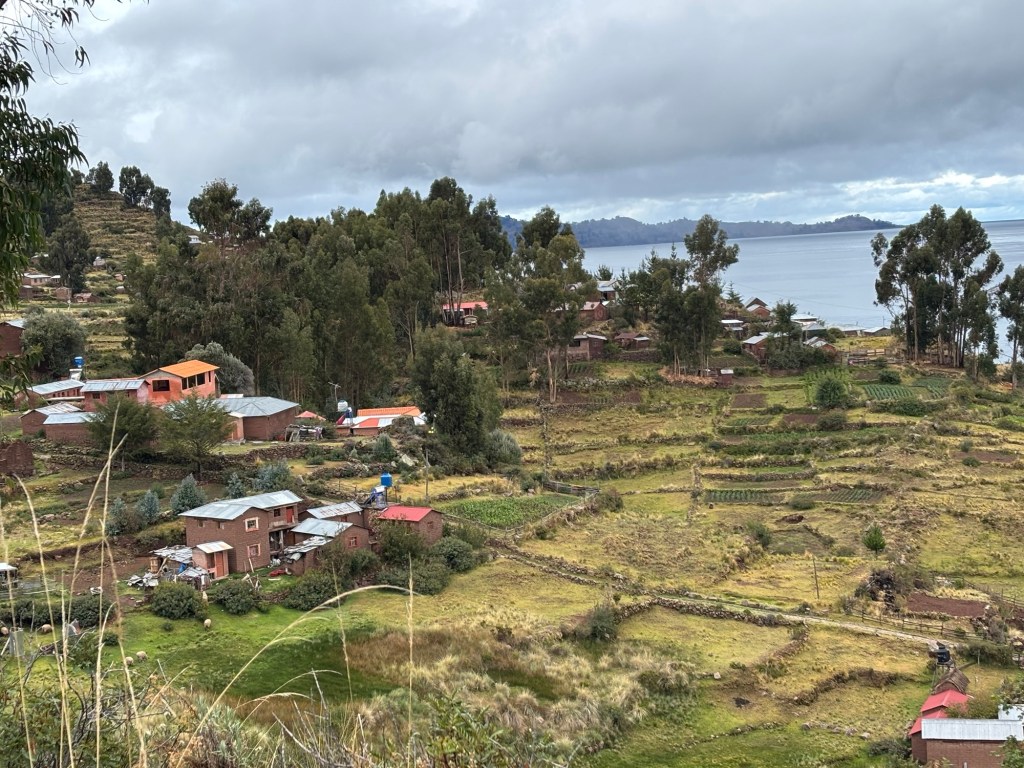
Next stop was a trip to tequil island, population 2000 about an hour away and with completely different cultural identities… extraordinary! A hike for an hour up over the hill to the main plaza. This was the hometown of our guide so he had a few things lined up.
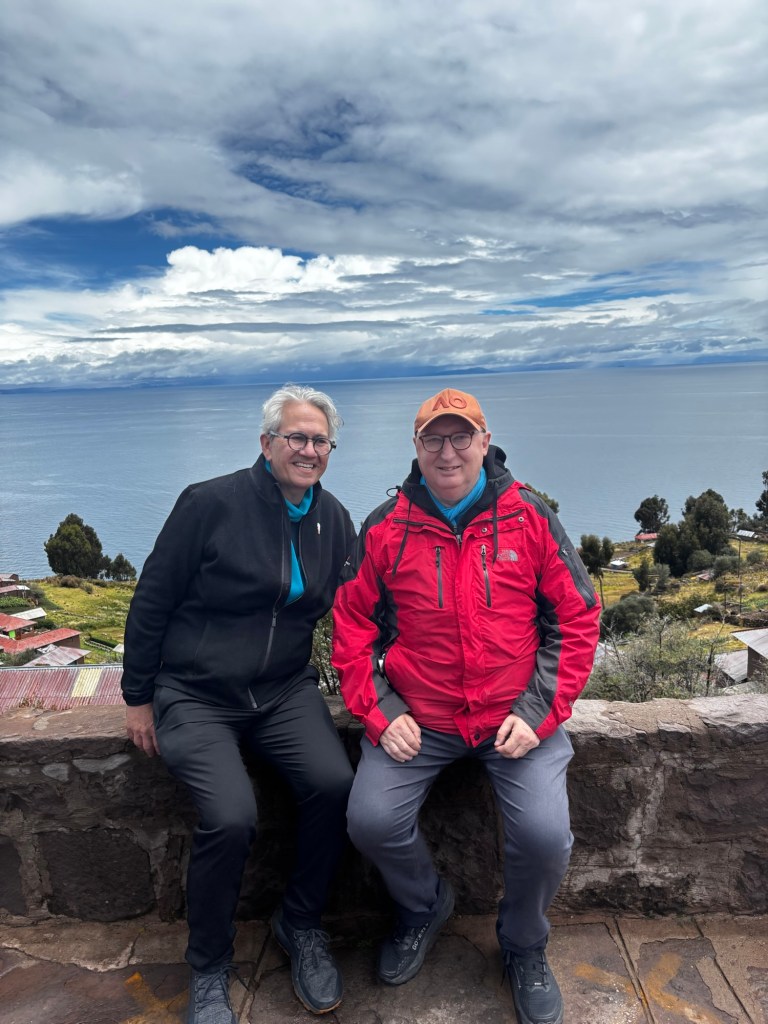
The walk is tough at altitude, at almost 4000m, slow and steady. Views were great but as it was raining it felt a wee but miserable. While I haven’t been the landscape, stone walls and clear blue water made me think this is what Greece must look like.
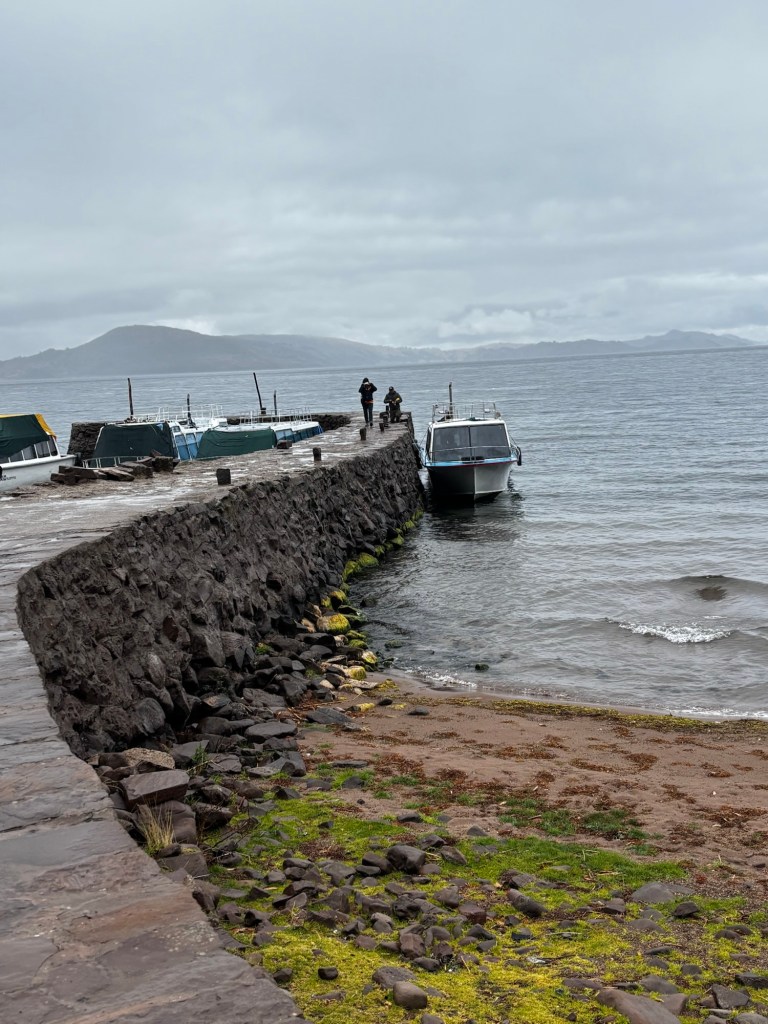
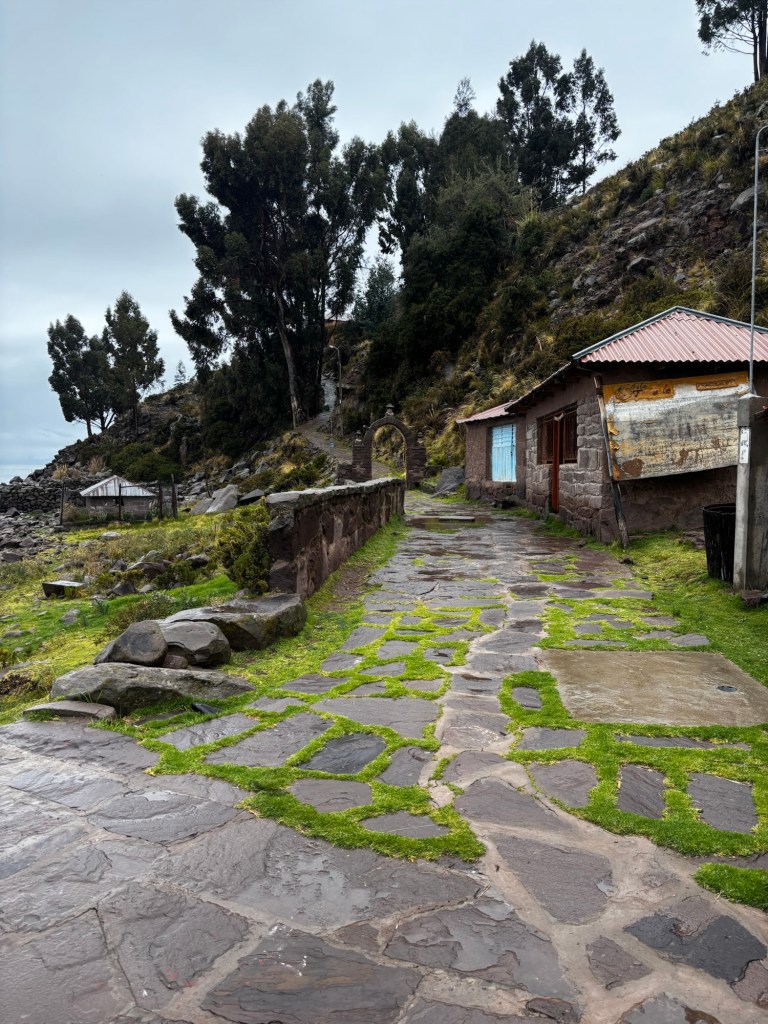
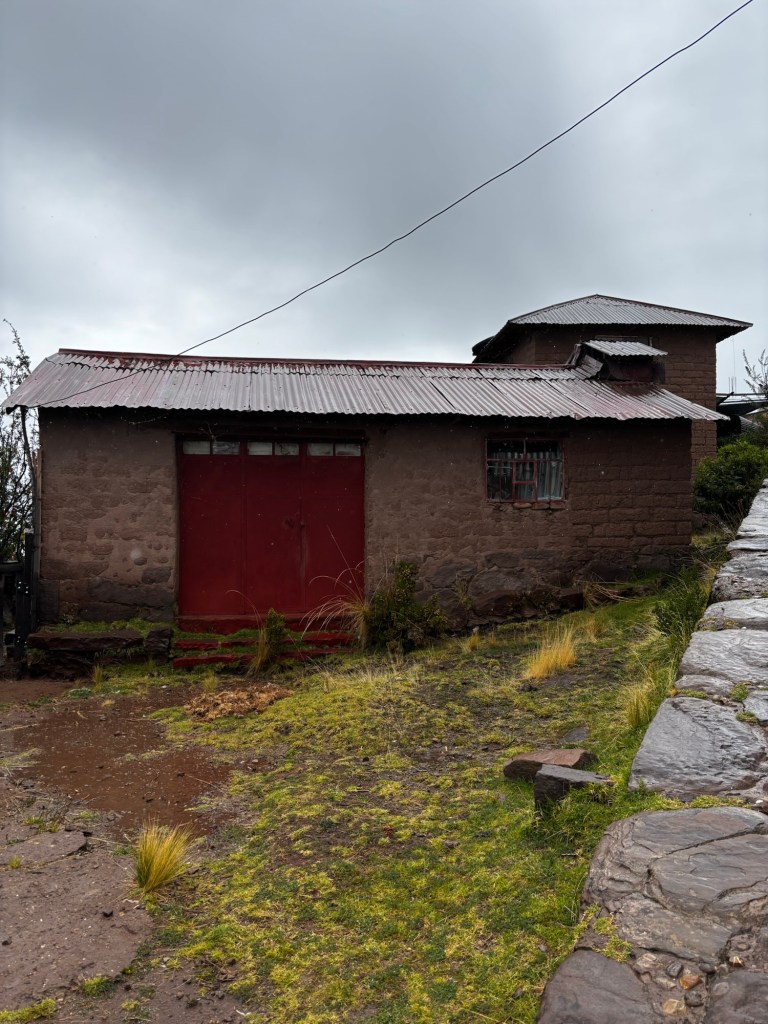
When we arrived at the plaza we inundated the tiny local cafe, especially when it was here , for the first time in weeks we heard the whir of freshly ground coffee beans. Yum!
Then the locals came out to perform. Which was fun. There were school mates and family members of the guide. The change in local dress remarkable!
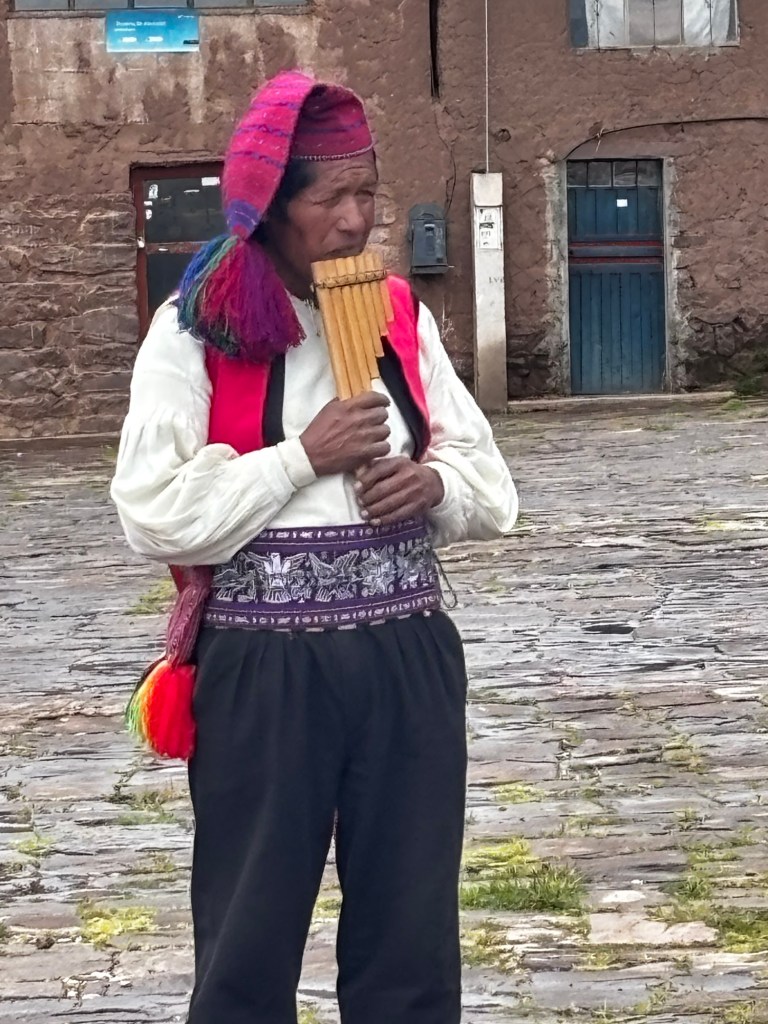
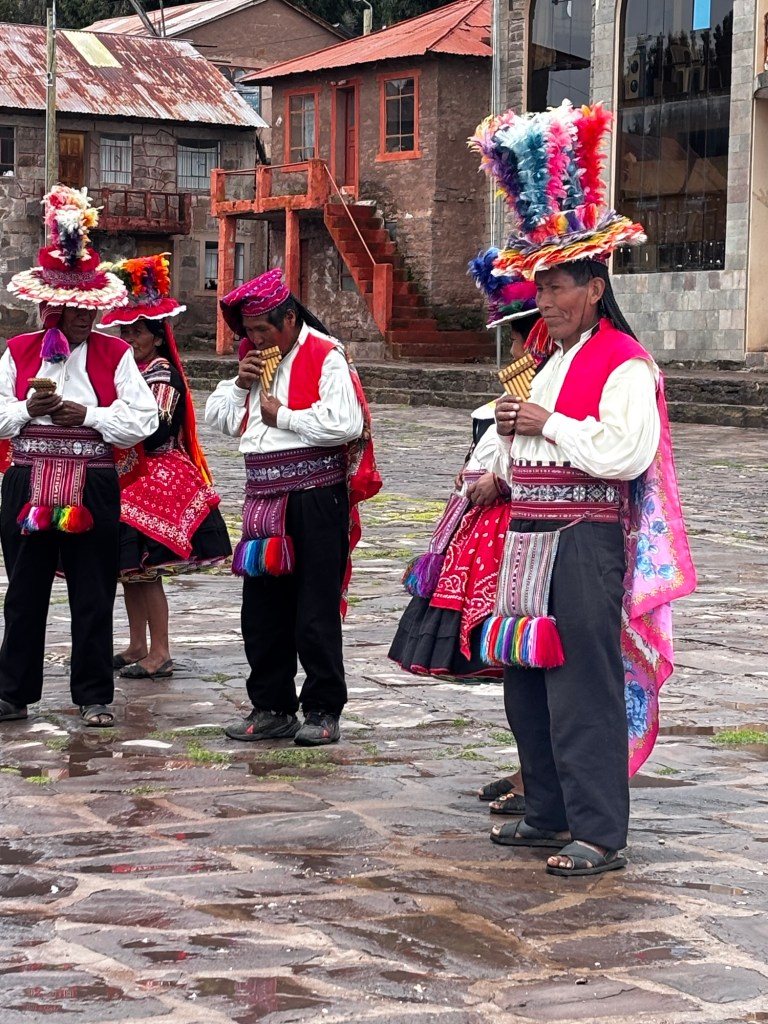
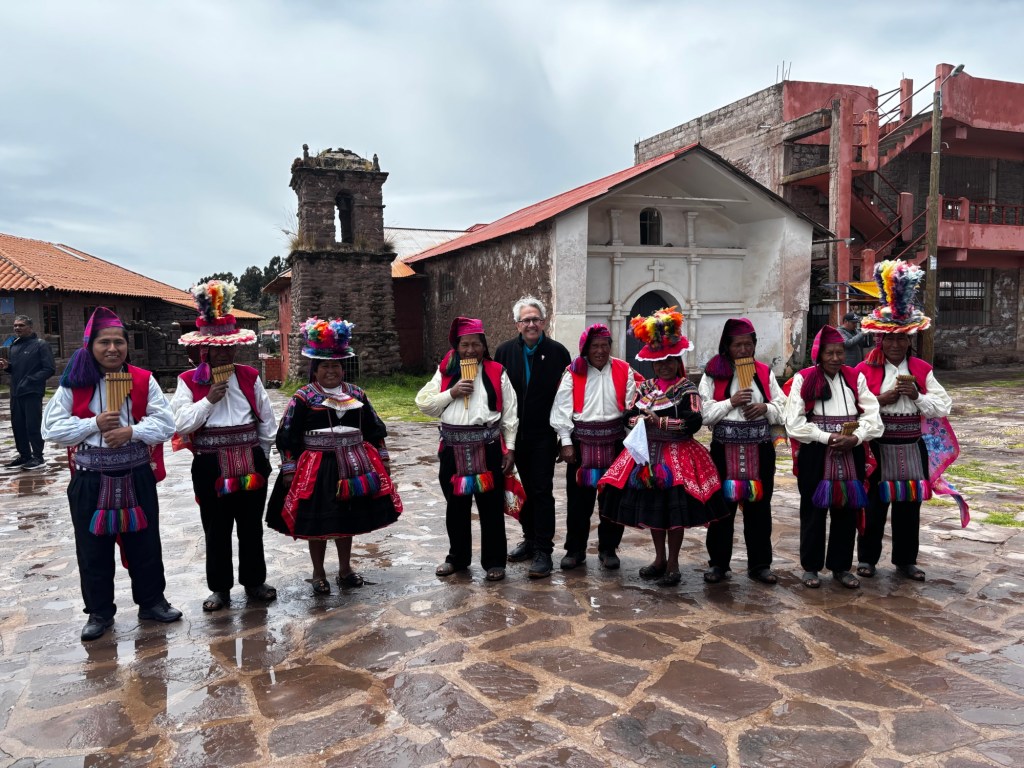
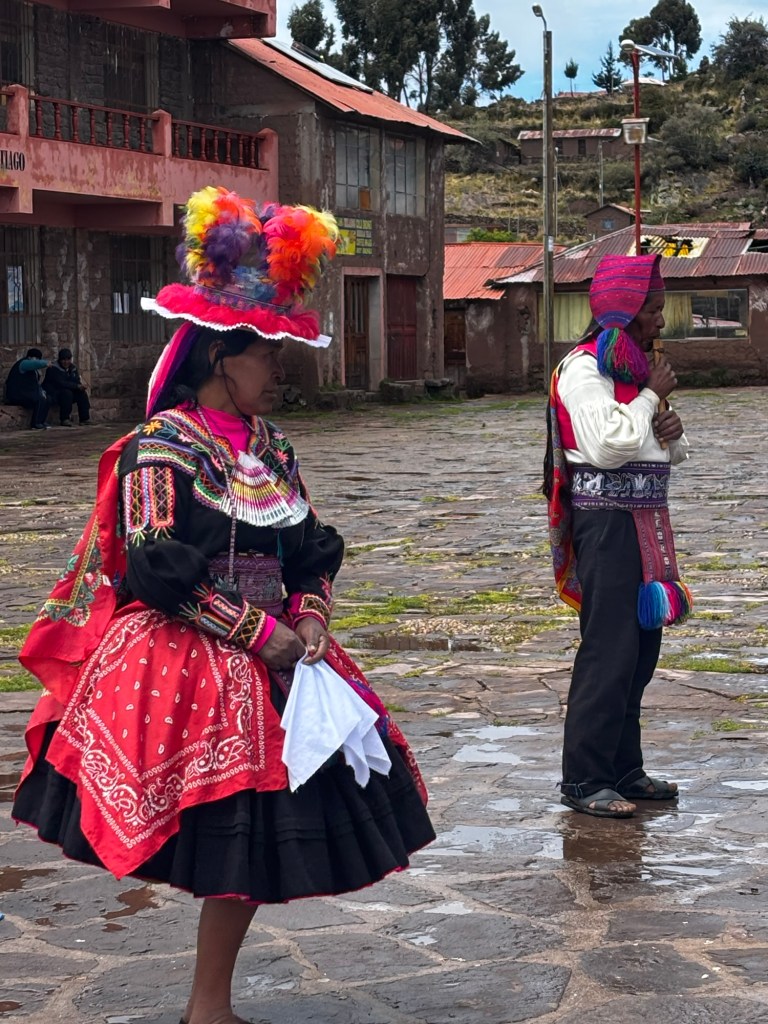
We then had some lunch and then it was back on the boat to Puno for a free afternoon, catch up some packing. Package up the latest fabric purchases and then try to find a post office to send them home.
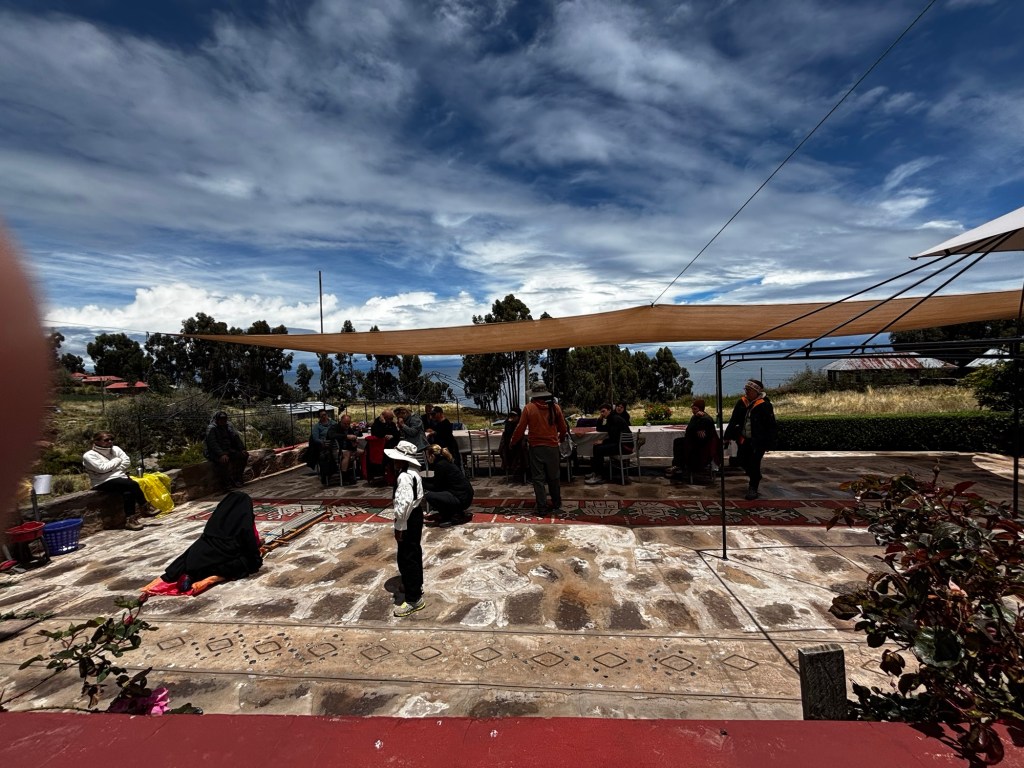
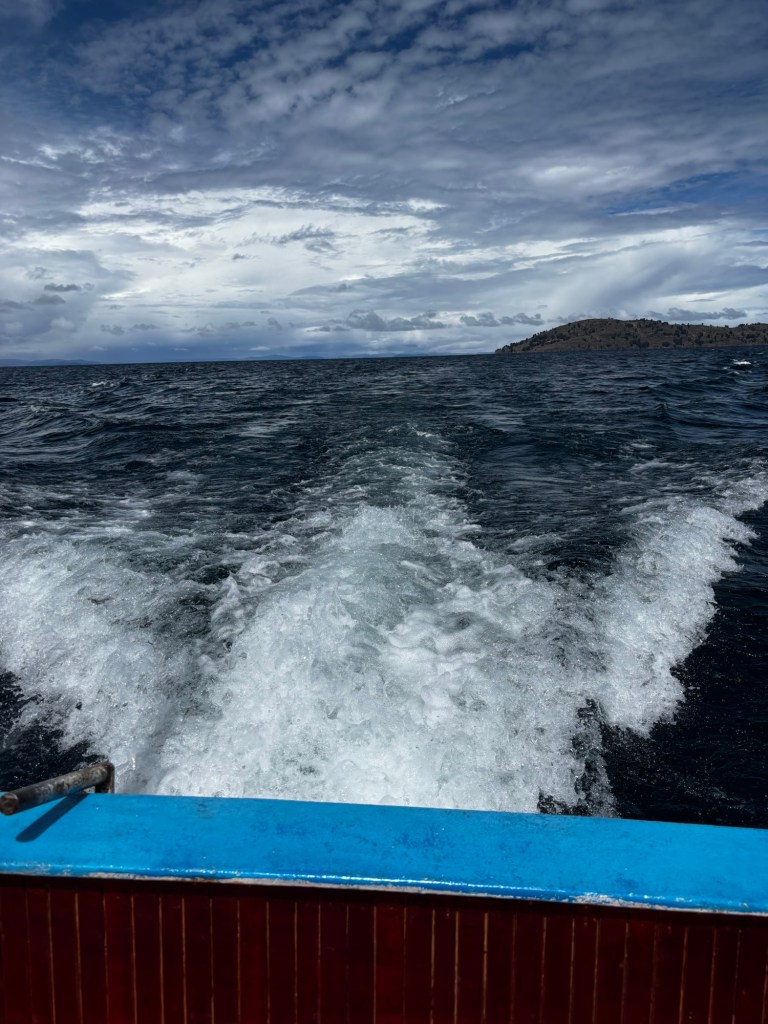
Lake Titicaca is friggin huge. 8500sqkm and shared by two nations Peru and Bolivia.
Three native fish, all very small and two introduced species , trout from Canada and kingfish from Argentina.
The lake is in serious decline, pollution is an issue from the 5 rivers that flow into her, mercury from gold mining as well as sewerage discharges. Local species are under threat. Add to that the changes from global warming where the essential rains each year are getting less and less and the largest fresh water catchment in South America is in trouble. Interestingly it’s not purely fresh water , with 1% salt it makes the water unsuitable for irrigation! It’s am amazing piece of water and we only got a glimpse. It is absolutely well worth a visit if you get the chance, Lima and Cusco get the lions share of tourist visitors.
So that’s about it for Peru. Tomorrow we are back on a luxury bus and head to the Bolivian border. It’s been an absolute blast. Can’t believe we have such a long way to go on this trip. We have 4 nights in an Airbnb before we start this all again with another Intrepid trip for 13 days.
 Hong Kong Hui